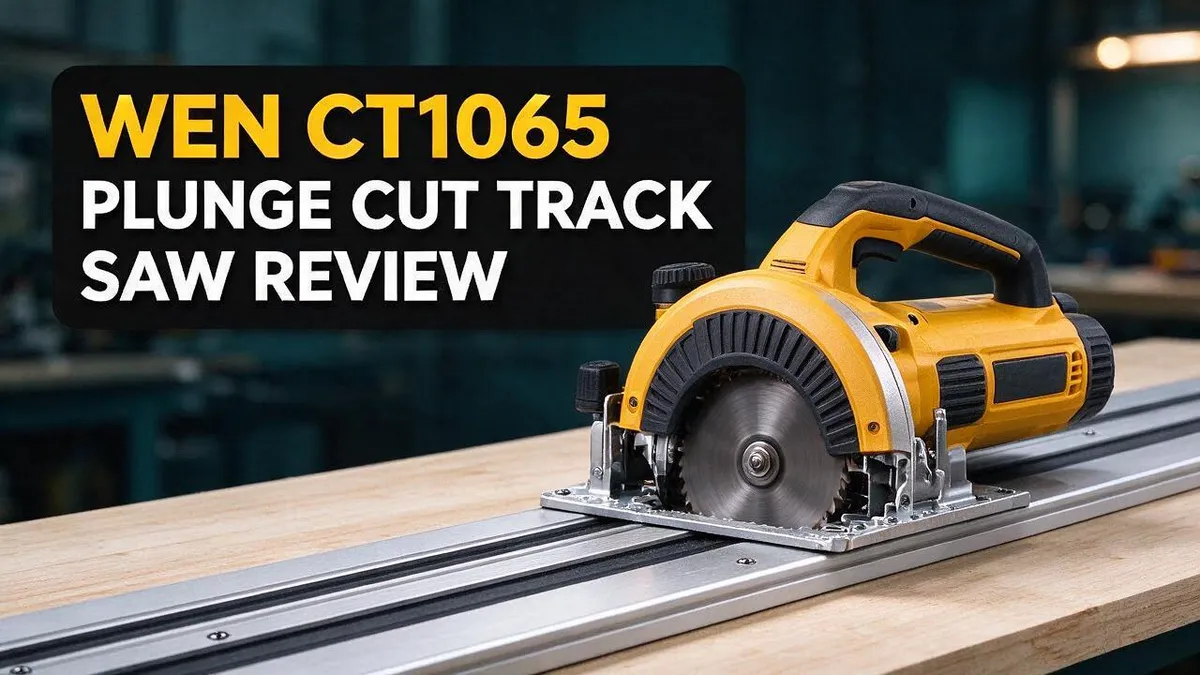
WEN CT1065 Plunge Cut Track Saw Review: Is This Worth It?
Searching for a track saw that makes clean, straight cuts? The WEN CT1065 Plunge Cut Track Saw deserves a close look. It packs a 10 amp motor and a 6.5 inch blade into one compact tool.
Many woodworkers and DIY fans want fast results without extra fuss. This saw aims to deliver just that. It powers through hardwood like cherry and handles curved cuts with ease.
Still, no tool is perfect. Some users need to adjust the saw for reliable 90 degree cuts.
Thin plywood may also need a sacrificial setup for clean plunge cuts. Knowing these details helps you decide if this saw fits your shop.
In this review, we break down the key specs, real strengths, and honest drawbacks.
In a Nutshell
-
Strong motor power: The 10-amp motor drives a 6.5″ blade at up to 5,500 RPM. It makes fast, smooth cuts through many materials.
-
Handy plunge design: This saw works on its own as a plunge saw. It also rides on a 55″ guide rail for long, straight cuts.
-
Good dust control: The dust collection keeps your workspace cleaner. Clean cuts also mean less sanding later.
-
Hardwood ready: It cuts cherry hardwood without hesitation. It also handles curved cuts with ease.
-
Simple setup: Most users find the setup quick and easy. The 12 x 6-5/8″ base glides smoothly along the track grooves.
-
Needs a little tuning: The 90° cut needs adjustment for reliable results. Plunge cuts in 1/2″ ply leave about 1/4″ uncut, so a sacrificial setup helps. It will not match premium Festool saws, but it still suits many home shops.
Motor and Cutting Power

- Ditch the table saw: rip boards up to 2-1/3 inches thick with clean, splinter-free cuts
- Create 45-degree bevel cuts in boards up to 1-5/8 inches thick

Last update on 2026-10-26 / Affiliate links / Images from Amazon Product Advertising API Some of the links on this website are affiliate links, which means that at no additional cost to you, I earn a commission if you click through and make a purchase. I only recommend products and services that I believe will add value to my readers. Thank you for your support!
Power matters most when the cut gets tough. Thick boards and dense stock test every motor. This saw handles that pressure with a calm, steady feel.
Variable speed gives you control over the blade. You can slow it down for certain materials. You can speed it up for clean finishes in softer wood.
Matching blade speed to the material helps protect both the blade and the workpiece. Faster speeds often suit thin sheet goods. Slower speeds can reduce burning on resinous wood.
The saw also handles curved cuts with ease. That point matters because a strong motor needs smooth control too. Your hands guide the path while the blade does the heavy work.
Let the blade reach full speed first. Start the motor before the blade touches the material. This simple habit prevents rough starts and helps the cut stay true.
Feed rate plays a big role in cut quality. Push gently and let the teeth do the work. Forcing the saw can strain the motor and leave burn marks.
Keep the blade sharp for the best results. A dull blade asks more from any motor. A fresh blade pulls the saw through material with less effort.
Test your settings on scrap wood first. This quick check shows how the motor responds to your material. It saves time and protects your good stock.
Brushless motors often run cooler than brushed designs. This design choice may add comfort during extended cutting days.
Compared with premium benchmarks like Festool, expectations should stay realistic. This saw delivers solid power for everyday shop work. It will not feel identical in refinement or ultimate finish quality. Still, most home shops will find the power more than enough.
Makita track saws are another point of comparison for power. Shoppers should test how each saw handles their typical materials. Try both saws on the same board if possible. Real cuts tell the story better than spec sheets.
Track System and Cut Accuracy
Track alignment decides how straight your cut will be. A track saw can only follow the path you set. The guide rail acts as your straight edge, so its position matters most.
The base of the saw rides in the grooves along the rail. Clamp the rail firmly before every pass. Even a small shift can pull your line off target.
Measure the blade offset before you cut. The blade sits a set distance from the edge of the base. Mark your cut line, then align the blade with that mark instead of the rail edge. This quick step saves material and time.
The 55″ guide rail helps with wide panels. You can cut across a full sheet with fewer repositions. Each time you move the rail, though, you add a chance for small errors.
Check the rail for straightness. Lay it on a flat surface and look for gaps underneath. A bent rail will bend your cut, no matter how careful you are.
Support the workpiece well. Place the sheet on foam board or rigid insulation so the offcut does not pinch the blade. Pinching can make the saw bind and drift off the line.
Make a test cut whenever you change your setup. Cut a scrap strip, then check it with a square. This shows drift early, before it ruins a good board.
Feed speed also affects accuracy. Keep steady, gentle pressure through the entire cut. Rushing can push the saw sideways and leave a wavy edge.
Keep the rail and base clean. Sawdust and grit slow the glide and can throw off your alignment. A quick wipe after each job keeps the track smooth and your cuts true.
Dust Collection and Cleanup
Every cut throws off dust and chips. A tidy routine after each session keeps your shop safe and your next cut accurate. Plan your cleanup before you start.
Connect a vacuum hose to the dust port before the first pass. This habit pulls chips away from the line you are marking. It also keeps the blade path visible.
Wear a dust mask anyway. Fine particles can slip past even a good seal. Safety glasses matter too, since small chips can fly from the blade area.
Clear the track grooves after every job. Sawdust packed into the grooves can make the base wobble on the rail. Use a dry brush or compressed air to clean them.
Wipe down the guide rail. Resin and fine dust build up on the rail surface. A clean rail lets the base glide smoothly, which helps keep cuts straight.
Brush out the area around the blade guard. Chips can hide behind the guard and jam the plunge action. Check that the guard moves freely before you store the saw.
Work in a space with good airflow. Open a door or run a fan nearby. Fresh air carries fine dust away from your face and your bench.
Empty your vacuum before it fills up. A full bin loses suction, and weaker suction leaves more dust on the bench. Keep a spare bag or filter handy for longer jobs.
Sweep the workpiece and the floor below it. Offcuts left on the support can scratch the next sheet. Stack finished pieces on a clean surface.
Store the saw in a dry spot. Moisture can cause rust on the base and rail. A clean saw in a dry case is ready for your next project.
Dust cleanup takes only a few minutes. Make it a habit, and your shop will stay cleaner, your cuts will stay sharper, and your tools will last longer. Keep a small brush and cloth in your kit for quick work.
Top 3 Alternatives
Festool TS 55

- Guide rail not included (available separately).
- Concentrated torque and up to twice as fast work progress with an increased saw blade service life.
Last update on 2026-10-26 / Affiliate links / Images from Amazon Product Advertising API Some of the links on this website are affiliate links, which means that at no additional cost to you, I earn a commission if you click through and make a purchase. I only recommend products and services that I believe will add value to my readers. Thank you for your support!
The Festool TS 55 is a plunge cut track saw built for clean, precise cuts. It pairs with Festool guide rails, so your cuts stay straight every time. Many woodworkers like its strong dust extraction, which keeps the workspace cleaner.
Its plunge action lets you start cuts in the middle of a board. Users also praise the smooth controls and steady feel during long rips. For fine woodworking, this saw is a strong pick.
DEWALT DWS520
The DEWALT DWS520 offers a 6-1/2 inch blade and a powerful 15-amp motor. It works well on plywood, laminate, and solid wood. The plunge mechanism helps you make accurate cuts without fuss.
Its track system lets you cut long, straight lines with ease. The tough housing handles daily jobsite use well. This saw suits DIY builders and pros who want a dependable option.
Makita SP6000J1

- 12 AMP motor with variable speed control dial (2,000 - 5,200 RPM) for optimum performance in a...
- Large cutting capacity (2-3/16" at 90° and 1-9/16" at 45°). Power Type- Corded
Last update on 2026-10-26 / Affiliate links / Images from Amazon Product Advertising API Some of the links on this website are affiliate links, which means that at no additional cost to you, I earn a commission if you click through and make a purchase. I only recommend products and services that I believe will add value to my readers. Thank you for your support!
The Makita SP6000J1 is a plunge circular saw that works with a guide rail. It gives you accurate cuts on sheet goods and dimensional lumber. Its electric brake helps the blade stop quickly for safer use.
Many users like the compact body and comfortable grip. The guide rail setup helps you cut sheet goods with clean, straight edges. It fits well in a home shop or a job site kit.
Plunge Cuts and Sheet Goods Limits
Plunge cuts open up useful options. The WEN CT1065 lets you start a cut in the middle of a panel instead of from the edge. This helps when you need a window, a notch, or a cutout in plywood.
Plunge cuts do have a limit, though. In 1/2 inch plywood, the saw leaves about 1/4 inch of material uncut. You must finish that last bit by hand or with a second pass.
That is why a sacrificial setup matters. Place a scrap board under the sheet so the blade can pass fully through the stock. The cut then releases cleanly without tearing the underside.
Sheet goods also bring size limits. A standard sheet of plywood measures 4 by 8 feet. The 55 inch guide rail covers only part of that length, so you will need to move the track for long rips. Plan your cut lines before you start.
Think about rail length first. Mark your cuts on the board. Then slide the track into place and check the overlap. A short overlap can cause the base to wander or tip during the pass.
Thick stock adds another challenge. Plunging deep into dense material puts strain on the saw. Take shallow passes instead. Your saw will stay steadier, and the edges will look cleaner.
Large panels need a steady base. If the offcut hangs free, the sheet can pinch the blade mid cut. Use sawhorses or a foam board to keep the panel flat. Clamp the rail firmly before each pass.
Keep these limits in mind before you cut full sheets. The CT1065 handles most home projects well. For very large or very thick panels, a longer rail or a more powerful saw may save you time and effort.
Pros and Cons
Pros
- Strong cuts move through hardwood like cherry with ease.
- Curved cuts come out clean and smooth.
- Setup takes little time, so you start cutting sooner.
- The battery setup lets you move around your shop freely.
- Clean edges often mean less sanding after each job.
Cons
- Square cuts need extra tuning before they stay accurate.
- Plunge cuts in thin plywood leave a small strip still attached.
- Top premium brands still deliver finer results in demanding work.
Who Should Buy It
This saw suits home woodworkers and hobbyists best. If you build shelves, cabinets, or small furniture, it can handle most of your cutting. It fits the way weekend makers actually work.
Many people run a small garage shop with little room to spare. A track saw lets you cut large boards on the floor or across sawhorses. You skip the need for a big table saw that eats up floor space.
Beginners who want a gentle learning curve should also consider it. The saw feels simple to run, and the guide rail keeps cuts on track. You can build confidence without buying a full set of specialty tools.
Renovators and DIY remodelers can also benefit. Tasks like cutting plywood for wall shelves or panels become easier. You can make long, straight rips in your own space instead of waiting for a shop to cut them.
Outdoor builders gain flexibility too. Garden boxes, sheds, and fence panels need clean cuts in tight spots. A portable saw goes where a big machine cannot.
Professional cabinet makers may want more refinement. Shops that cut full sheets all day need a sturdier tool built for heavier work. Precision work on top tier pieces may call for a premium saw.
Buyers who expect perfect results every time should plan for some tuning. Setting up the saw takes patience and a willingness to check your work. If you enjoy dialing in tools, this process feels rewarding. If you want to plug in and walk away, look at a more refined model.
Think about your typical projects before you commit. Ask yourself how often you cut sheet goods. Light weekend use fits this saw well. Heavy daily production may call for a tool made for more demanding work.
Your skill level and project list matter most. If they match the jobs above, this saw can earn a place in your shop. Read the other sections before you decide.
Final Verdict
The WEN CT1065 earns a solid place in a home shop. It cuts well, sets up fast, and handles most everyday projects with confidence.
It will not feel like a premium tool. Expect to take extra care to keep your cuts true. Patience pays off here.
Think of it as a strong starting point. You can build your skills with it before moving to a more advanced system later.
Check the squareness before your first real project. Make a few test cuts on scrap wood first. This habit saves frustration later.
Inspect the guide rail every time you use it. A straight, clean rail matters more than many buyers expect. Keep it free of sawdust and nicks.
Plan your layout before you touch the saw. Mark every piece on paper first. This simple step cuts waste on every project.
Accessories can improve your results. Clamps and a sturdy workbench keep the rail stable during each pass. Stable setups mean cleaner lines.
Keep a few spare blades on hand. Sharp teeth make the motor work less and the cuts look better. Replace dull blades quickly.
Read the manual before the first cut. It explains bevel settings and depth adjustments in plain language.
Well known rivals offer more polish. Makita and Festool bring refined finishes and deeper build quality. Those brands suit professionals who cut every day.
The WEN fits a different crowd. Hobbyists, weekend builders, and tinkerers get real capability in a simpler package.
Ask yourself what projects you plan to build. If you mostly cut small pieces, this saw will feel right at home. Larger sheet work needs more planning.
Our final take is simple. If you want a capable plunge saw for home projects, this one delivers. Go in with realistic expectations and you will be pleased.
Bottom line: it is a practical choice. It rewards careful users and gives strong results for everyday home projects.
Frequently Asked Questions
Is the WEN CT1065 good for beginners?
Yes, it suits new users who want to learn track cutting. Practice on scrap wood first. This helps you learn how the saw feels before you cut your project pieces.
Should you connect a shop vacuum to the saw?
Yes, a shop vacuum improves the workspace. Attach it to the dust port for the cleanest results. Less dust on the cut line makes your marks easier to see.
What materials can this saw cut?
It handles solid wood and sheet goods well. Test each new material on a scrap piece first. This shows you how the blade reacts and which settings work best.
How should you store the saw between jobs?
Keep the guide rail clean and dry. Wipe away sawdust after each session. Store the saw on a flat shelf so the base stays true and ready for the next project.
Can this saw work alongside a premium track saw?
Yes, the two saws can share the workload. Use the WEN for rough breakdown of plywood and panels. Save your higher end saw for fine finish work and detailed joinery.

Hi, I’m Amelia Thornton, the founder of ElectroPro.blog.
I write about smart devices, gadgets, electronics, and tech essentials from Amazon.
My goal is to help you discover reliable and innovative tech that truly makes life easier.
From home automation to everyday gear, I test and share what’s worth your investment.
Join me as I explore the smartest tech trends—one gadget at a time.