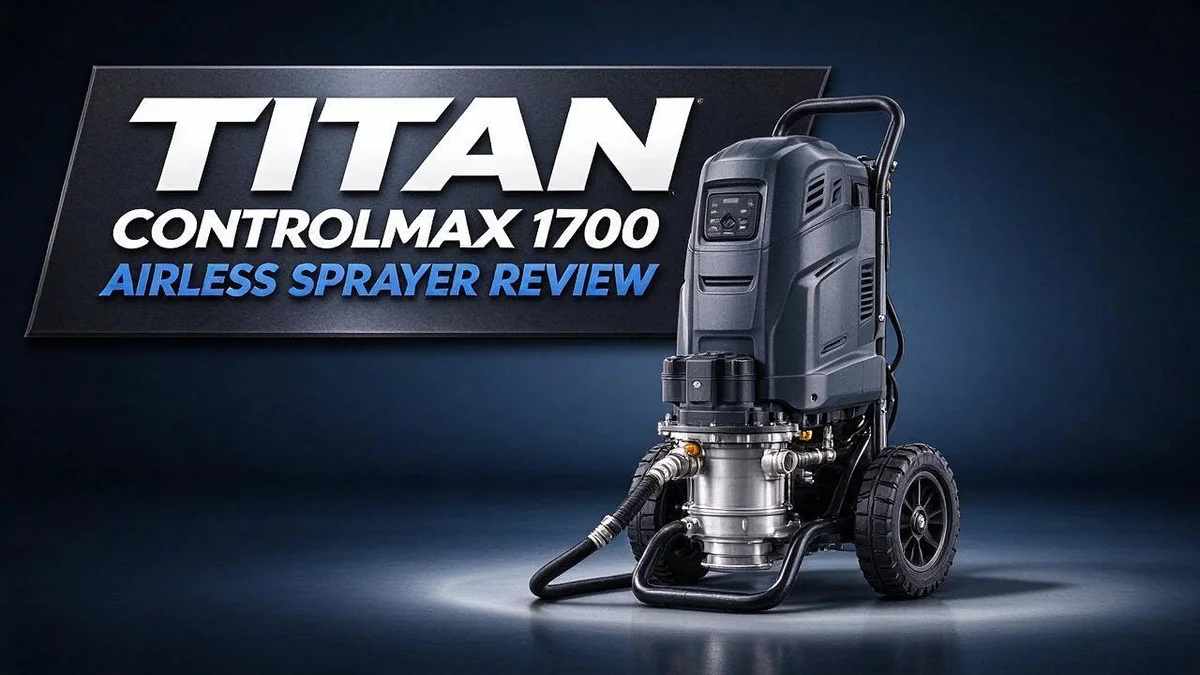
Titan ControlMax 1700 Airless Sprayer Review 2026
Painting big rooms or long fences with a brush can take forever. A good sprayer changes everything. The Titan ControlMax 1700 is built to help you finish faster.
This sprayer uses High Efficiency Airless technology. It produces up to 55 percent less overspray than standard airless sprayers. That means a softer spray and better control on every coat.
It packs a 0.60 HP motor and reaches 1500 PSI. It sprays unthinned paint and stain with ease. The 1700 Pro also feels light for its class.
Is it right for your next project? Let us look at what it does well, where it falls short, and how it compares to rivals like the Graco X5 and Impact 440.
In a Nutshell
-
Built for thin paints: The sprayer handles unthinned paint and stain without extra mixing. This saves time on prep work and keeps your project moving forward.
-
Tough diaphragm pump: Users often praise this pump for smooth finishes and long service life. It holds up well during repeat weekend projects.
-
Light for its class: The 1700 Pro is easy to carry up ladders and across job sites. Less weight means less fatigue during long spraying sessions.
-
Simple, no frills build: The design is bare bones and utilitarian. You get reliable function over fancy looks, which many everyday users prefer.
-
Not a true HVLP system: It gives a softer spray than many airless models. Still, it does not match the fine finish of a full HVLP setup.
-
Best fit for home projects: It suits residential jobs and medium to large DIY work. Shoppers often compare it with the Graco X5 and Impact 440 before they decide.
Spray Quality and Overspray Control

Last update on 2026-10-26 / Affiliate links / Images from Amazon Product Advertising API Some of the links on this website are affiliate links, which means that at no additional cost to you, I earn a commission if you click through and make a purchase. I only recommend products and services that I believe will add value to my readers. Thank you for your support!
Spray quality decides how your finished wall or fence looks. A clean, even coat means less touch up work. Good results start with the right setup.
The 515 tip plays a big role in that setup. It suits latex paint well. Choose the tip that matches your project for smooth flow.
Start with a test pass. Spray a sheet of cardboard first. Check for stripes, runs, or thin spots. Adjust before you touch the real surface.
Pressure matters just as much. Use the lowest setting that still gives a full, even fan. Too much pressure creates extra mist and more overspray.
Distance changes everything. Hold the gun about 12 inches from the surface. Move in steady, straight strokes and overlap each pass by half.
Fan width also shapes your results. A narrow pattern works well for trim and corners. A wider pattern covers open walls and long fences faster.
Overspray control comes down to technique. Keep the gun moving while the trigger is pulled.
Release the trigger at the end of each stroke. This stops heavy spots and stray mist from landing on nearby surfaces.
Masking still matters a lot. Cover windows, plants, and parked cars with plastic sheeting. Tape the edges firmly so paint stays where it belongs.
Wind is the main enemy of clean work. Spray on calm days whenever you can. Work from the top down so drips do not ruin finished areas.
Check your coverage in good light. Look for thin areas that need a second coat. Wet paint shows flaws more clearly than dry paint, so inspect each section right away.
Any sprayer rewards practice. Run a few test passes before the main job. This helps you learn how the unit responds to your speed and distance.
Good technique turns a useful sprayer into a reliable finishing tool. Take your time, stay consistent, and check each section as you go.
Motor, Pump and Output
Power sits at the center of this machine. The 0.60 HP motor drives the pump with steady force. Think of it as the engine that keeps paint moving from the bucket to the wall.
Output tells you how fast the job moves. The sprayer delivers 0.33 gallons per minute, which means a steady and even flow.
Steady flow helps you keep a wet edge on long walls and fence rails. Smooth passes leave fewer lap marks behind.
The diaphragm pump does the hard work behind the scenes. It pushes paint through the hose by moving a flexible membrane back and forth. This simple action keeps the flow smooth from start to finish.
Priming matters more than most beginners expect. Run the pump with clean water first when using water based paint. This pushes air out of the lines and helps the pump draw paint right away.
Routine care can extend the life of your sprayer. Flush the system after each session so dried paint does not clog the inlet. Wipe down the motor housing and keep the vents clear of dust.
Expect the motor to sound louder than a roller or brush. That noise comes from the pump cycling as pressure builds, which is normal for this type of machine.
Plan your breaks around the machine. Let the motor cool between long sessions, especially on warm days. A short pause protects the parts and keeps your schedule on track.
For a typical bedroom wall, the output keeps pace with a careful painter.
Longer projects, like a fence line, show the benefit of steady flow most clearly. The pump keeps feeding paint, so you can focus on technique.
Match the sprayer to your workload. Shorter jobs suit this unit well. Marathon painting days ask more from any motor, so plan regular breaks.
Spray Tip, Gun and Material Compatibility
The Titan ControlMax 1700 comes with a 515 tip. This tip sets the spray pattern and flow for your coating. Understanding those numbers helps you choose the right setup.
The first digit shows the fan width. A 5 creates a pattern near 10 inches at a standard distance. Narrow patterns suit trim, while wider ones cover walls faster.
The last two digits show the orifice size. A 15 means the opening measures about 0.015 inch. That size handles thin latex with clean, even results.
Latex stays the best match for this tip. Heavy coatings can clog the opening and cause spitting. Thin material flows through with far fewer problems.
Check the tip before every job. Look for dried paint, chips, or grit. A damaged tip creates uneven lines and a rough texture on the surface.
The all metal spray gun brings real strength to the setup. Metal parts handle high pressure better than plastic. They also hold up well to daily use.
Gun cleaning deserves a few extra minutes. Rinse the gun, filter, and tip after each session. Dried paint can stop the trigger from working smoothly.
Material choice matters as much as the tip. Read the product label before you pour anything into the bucket. Look for a recommendation for airless spraying.
Latex and most stains flow well through this system. Thick elastomeric coatings and heavy primers may not. Test a small batch before committing to a full wall.
Solvent based products need extra care. Check that the hoses, seals, and gun parts suit the chemical. Some materials can damage soft rubber.
Switching between products takes planning. Flush the system thoroughly before adding a new coating. Mixing incompatible paints can clog the pump.
Keep a spare 515 tip in your kit. Swapping tips mid job keeps you moving. It also saves time when a tip wears out.
Top 3 Alternatives
Graco Magnum X5

- Just right for DIY Homeowners and Remodelers looking for more power and mobility when tackling...
- Ideal for projects up to 10 gallons in size, allowing you tackle multiple projects every year

Last update on 2026-10-26 / Affiliate links / Images from Amazon Product Advertising API Some of the links on this website are affiliate links, which means that at no additional cost to you, I earn a commission if you click through and make a purchase. I only recommend products and services that I believe will add value to my readers. Thank you for your support!
Looking for an easy sprayer for home projects? The Graco Magnum X5 fits that need well. It handles interior walls, fences, and trim with smooth, even results. Beginners often like its simple setup, so you can start painting in less time. Cleanup is also quick, which keeps weekend projects stress free. Most homeowners find it a good match for medium-sized jobs.
Graco Magnum X7

- CONTROL PAINT FLOW: Fully adjustable pressure to give you ultimate control of paint flow for any...
- SPRAY PAINT UNTHINNED: Stainless Steel Piston Pump allows you to spray paint unthinned at high...
Last update on 2026-10-26 / Affiliate links / Images from Amazon Product Advertising API Some of the links on this website are affiliate links, which means that at no additional cost to you, I earn a commission if you click through and make a purchase. I only recommend products and services that I believe will add value to my readers. Thank you for your support!
The Graco Magnum X7 works well for bigger jobs. It offers more power and a sturdier build for longer painting sessions. Painters who tackle whole rooms or exterior siding may prefer this model. It helps you finish large surfaces faster. Its extra capacity means fewer stops to refill, so your workflow stays steady from start to finish.
Graco TrueCoat 360

- Perfect for DIYers looking for a fast and easy alternative to brushes and rollers to quickly...
- Ideal for projects up to 2 gallons in size, allowing you tackle a range of projects every year
Last update on 2026-10-26 / Affiliate links / Images from Amazon Product Advertising API Some of the links on this website are affiliate links, which means that at no additional cost to you, I earn a commission if you click through and make a purchase. I only recommend products and services that I believe will add value to my readers. Thank you for your support!
Need to reach ceilings without a ladder? The Graco TrueCoat 360 sprays from almost any angle. Its handheld design helps you cover corners, edges, and tight spaces. Many users choose it for quick touch-ups and furniture projects. It also works well for small rooms where a larger sprayer feels bulky. Lightweight handling makes it easy to control for longer periods.
Portability and Build Design
Moving this sprayer around a job site is easier than many people expect. The 1700 Pro is light for its class.
Weight matters most on long projects. Less load means fewer rest stops and less strain on your arms and back.
The build feels simple and practical. It is bare bones, so there are few extras to protect or fuss over.
Some buyers may want a more polished look. The utilitarian style favors function over appearance on the job.
Simple parts also mean easier access. You can see the main components without a long teardown. This helps when you need a quick check between coats.
Portability also depends on how you plan your setup. Keep the paint station close to your work area. Short moves save time and energy.
Storage deserves a little thought too. A dry garage shelf or workbench works well for this machine. Keep it away from damp corners and cold floors.
The machine is not a true HVLP system. Because of that, it suits larger walls and fences more than fine furniture.
Plan your route before you start. Check the path from your truck to the work area. Clear obstacles keep the sprayer moving smoothly.
Hoses and cords need the same care. Coil them loosely so they do not kink or snag on corners.
Portability and build choices shape the overall experience. Buyers who value easy carrying and simple parts will likely appreciate this design.
Think about your typical jobs before you decide. A light, simple unit fits short trips and frequent moves well.
Overall, the design favors simple handling over extras. That trade off suits many DIY users who want a dependable tool.
Weigh these traits against your own work habits. A shorter carry and simple setup can save real time on each project.
Setup and Cleanup Routine
Setting up the Titan ControlMax 1700 takes less time than you might think. Start with a clear workspace on a level surface. Lay down drop cloths before you connect anything.
Next, attach the hose to the pump outlet and the spray gun. Tighten each fitting by hand first, then snug it with a wrench.
Check the inlet filter before you add paint. A clean screen stops grit from reaching the tip and causing stripes.
Set the pressure dial low at the start. You can raise it slowly once the spray pattern looks even.
Test the pattern on a piece of cardboard. Look for a full, even fan with no heavy edges or dripping.
Adjust the spray until the stripes blend together. Small changes in pressure make a big difference.
Cleanup starts right after the last coat. Do not let paint dry inside the hose or pump, because dried material is hard to remove.
For latex, flush the system with warm soapy water. Keep the water moving until the liquid runs clear.
Oil based paints need a different approach. Use the solvent the paint maker recommends and flush the lines thoroughly.
Remove the tip and guard, then soak them in a solvent or warm water. Scrub gently with a soft brush.
Wipe down the outside of the pump and hoses with a damp rag. Dried paint on the frame can stiffen moving parts over time.
Empty the bucket and wipe the suction tube. Leftover material can dry in the tube and block the next job.
Once everything is dry, coil the hose loosely. Loose coils prevent kinks and keep the hose ready for the next project.
Take a few minutes to record your setup steps. A simple checklist helps you move faster on your next project.
Good habits make every job smoother. You will spend less time fixing problems and more time enjoying the results.
Patience during cleanup pays off. A clean sprayer performs better and lasts longer for every painter.
Pros and Cons
Pros
-
- Up to 55% less overspray than standard airless sprayers.
-
- The spray comes out softer, so you get better control on each pass.
-
- Users praise the finish quality from the diaphragm pump.
-
- It suits residential walls, trim, and fences well.
Cons
-
- The 0.33 gal/min output slows down very large surfaces.
-
- The 1500 PSI maximum limits heavy-duty thick coatings.
-
- The 0.60 HP motor may feel strained on dense materials.
Who Should Buy It
The Titan ControlMax 1700 suits homeowners who tackle big paint jobs on their own. It handles interior walls, trim, and fences with ease.
Weekend DIY painters often find that rollers take far too long. This sprayer covers wide areas in a fraction of the time.
Beginners can learn the basics in one afternoon. Practice on scrap boards first so you feel confident before you start on the main project.
Hobbyists who want a clean finish also benefit from this model. A steady, even pattern helps smooth out the final coat.
Painters who hate cleaning up messes will appreciate the controlled spray. Less drift means fewer surprise splatters on nearby furniture and floors.
Fence and deck owners get a big boost here. Spraying open slats is far quicker than brushing each board by hand.
Trim and cabinet work is another good fit. A light touch with the gun keeps edges crisp without heavy runs.
Small crews that handle several homes each year can also use it. The machine runs unthinned paint and stain, so mixing time stays low.
Some buyers will need a different tool, though. Full time contractors working on large commercial sites may want a heavier machine with more output.
Anyone chasing thick, heavy coatings should look elsewhere. Brands like Graco X5 and Impact 440 are worth comparing for tougher jobs.
Think about your project size and finish goals first. If your work stays at home or at a medium scale, this sprayer makes strong sense.
Matching the machine to the right jobs leads to better results. Choose it for residential work, and you will likely feel pleased with your next project.
Final Verdict
The Titan ControlMax 1700 earns a solid place in the home painter’s toolkit. It delivers a clean, controlled finish without much fuss.
This sprayer shines for people who want results fast. It gives a neat finish on large jobs that would otherwise eat up a full weekend.
Its looks will not win any beauty contest. The bare frame and simple controls feel more like a workhorse than a showpiece.
Think of it as a tool that trades looks for function. That trade makes sense for most homeowners.
The light build makes it easy to carry from room to room. Hauling it up a ladder or across a yard feels far less tiring.
Shoppers comparing options should also look at the Graco X5 and Impact 440. Those rivals may offer a different balance of power and features.
Someone who values a smooth finish over raw speed will likely be happy. Pick this model if clean edges matter more than covering acres in minutes.
The sprayer rewards patience. Good prep and a steady hand make the biggest difference in the final look.
Bottom line: the Titan ControlMax 1700 is a dependable choice for residential projects. It trades fancy extras for a softer spray and less mess.
Test it on scrap material first. That quick check confirms whether this machine fits your next project.
Think about your typical project size before you commit. Small touch ups and single room jobs need far less capacity than whole house exteriors.
Expect a learning curve with the first few coats. Early passes may look uneven until you tune the pressure and tip distance.
Overall, this sprayer delivers strong paint quality and speed for the right user. Your skill level and project plans should guide the final choice.
Frequently Asked Questions
Can it spray stain as well as paint?
Yes, it sprays unthinned paint and stain without extra mixing. This saves time on decks and fences. Always test a small board first, because stain soaks into wood differently than paint does. Start with a light coat and check the color before you spray the full surface.
Do I need to thin my paint first?
No, you do not need to thin it. The sprayer handles unthinned material, so you can pour paint straight from the can. Strain the paint first if it has lumps. Lumps can clog the spray tip and stop your work mid-wall.
Is it a true HVLP sprayer?
No, it is not. The Titan ControlMax 1700 uses High Efficiency Airless technology instead. You get a softer spray and less overspray. However, the finish will not match a true HVLP unit on fine furniture or detailed trim work.
Which tip should I use for latex paint?
The 515 spray tip suits latex paint well. It creates a balanced spray pattern for most walls and ceilings. Check the tip chart before you buy replacement tips. Choose a tip that matches the material you plan to spray, so your results stay clean and even.
How does it compare to the Graco X5?
The research does not give side by side numbers for these two models. Compare the motor power, pump style, and tip options on each product page. Reading hands-on tests from trusted reviewers can also help you decide which sprayer fits your project.

Hi, I’m Amelia Thornton, the founder of ElectroPro.blog.
I write about smart devices, gadgets, electronics, and tech essentials from Amazon.
My goal is to help you discover reliable and innovative tech that truly makes life easier.
From home automation to everyday gear, I test and share what’s worth your investment.
Join me as I explore the smartest tech trends—one gadget at a time.