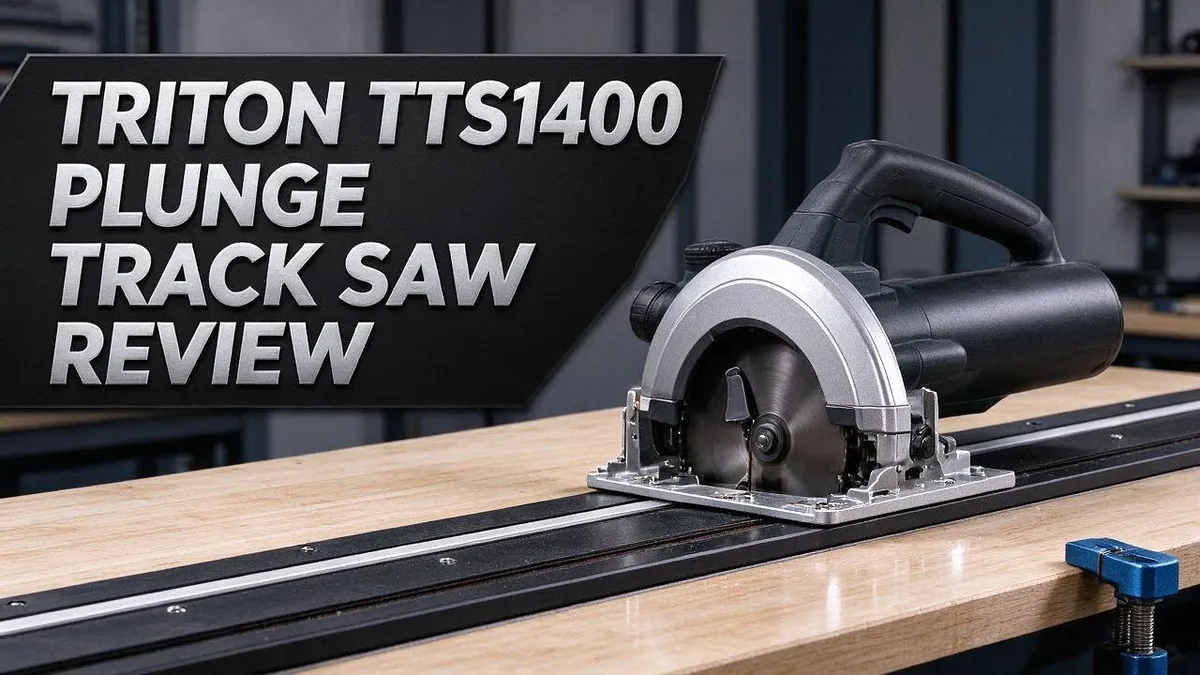
Triton TTS1400 Plunge Track Saw Review 2026
Are you looking for a saw that makes clean, straight cuts? The Triton TTS1400 plunge track saw might be the tool you need. It pairs a 1400W motor with a guide track that helps keep your cuts true.
Woodworkers often talk about kickback risk with handheld saws. A track helps reduce that risk. Many users say the saw excels at straight and bevel cuts, which makes it a good pick for sheet goods.
Here is what stands out. The spindle lock keeps the blade still during changes. The soft grips feel comfortable during longer jobs. Many people also praise its precision on both straight and angle cuts.
Is it the right choice for you? Keep reading. We will look at the key features, the pros and cons, and how it compares to rivals like Festool, DeWalt, Milwaukee, and Bosch.
In a Nutshell
- Power comes from a 1400W motor. The motor gives the saw enough strength for common cutting jobs.
- The track guides each cut. Following a track helps you keep a steady, straight line on every pass.
- Bevel cuts stand out. Wood Magazine found that this saw makes reliable angled cuts.
- Soft grips help with control. The grips feel comfortable during longer sessions, according to YouTube reviewers.
- Precision is a key strength. Reviewers mention high precision on both straight and angle cuts.
- It competes with major brands. Wood Magazine tested a range of saws that included Festool, DeWalt, Milwaukee, and Bosch, so you can compare the options side by side.
Note: Current sources do not list full specs or a formal review verdict. Check the product page for complete details before you buy.
Cutting Performance

- TRACKS SOLD SEPARATELY
- Easily accessible shaft lock for fast blade-change
Last update on 2026-10-26 / Affiliate links / Images from Amazon Product Advertising API Some of the links on this website are affiliate links, which means that at no additional cost to you, I earn a commission if you click through and make a purchase. I only recommend products and services that I believe will add value to my readers. Thank you for your support!
Big sheets feel easier with this saw. Long boards and sheet goods can be hard to handle alone. A track saw lets you move the tool, not the material.
The plunge action adds another useful skill. You can start a cut in the middle of a panel without starting at the edge. This helps when you need an opening, such as a cutout for a sink or vent.
Plunge cuts take a little practice. Set the depth before you start, and let the blade reach full speed first. Then lower it slowly into the wood.
Good edges start with good setup. Check that the track sits flat on the workpiece. Use clamps so the rail does not shift during the pass.
Chipping is a common issue with plywood. Run painter’s tape along the cut line to help protect the surface. Score the line first if the veneer looks fragile.
The depth setting affects the finish too. For thick stock, a shallow pass repeated twice can reduce strain. In general, a slower feed rate gives a cleaner edge.
Rough cuts and final cuts need different care. Make the first pass a rough cut, then take a clean finish pass. This two step method keeps the edge crisp.
Blade choice changes results. A fine tooth blade suits plywood and laminated panels. A coarser blade can work for rough framing lumber, where speed matters more than a polished edge.
Dust collection also affects visibility. Clear chips from the cut line so you can see your mark. Good visibility leads to better accuracy.
Test every new setup on scrap first. Make a short cut and check the edge with a square. This habit saves time and material on the final piece.
Overall, this saw handles a wide mix of cutting tasks. It suits cabinet builders, DIY fans, and anyone who wants neat, repeatable results. Pair it with careful setup, and the cuts should look clean.
Track System and Setup
Setup is the first big step with any track saw. Give it a few minutes before the first pass.
Clean the rail before you lay it down. Sawdust and grit can lift the track and shift your line.
Put a sacrificial board under the panel. It guards your bench and helps the cut exit clean.
Many track saws leave an offset between the blade and the rail edge. Check your manual for that distance.
Mark the cut line with the offset in mind, not the edge of the rail. This small step stops many errors.
Clamp the track at both ends when you can. Two clamps keep it from creeping during the pass.
Slide the saw onto the rail before you power it on. Make sure the base moves freely along the track.
Support both sides of the panel. A sagging sheet can pinch the blade and pull the saw off line.
Leave the offcut in place until the blade stops. Lifting it early can tear the edge you just cut.
Keep the power cord out of the cut path. A snag can knock the saw off the rail during the pass.
Store the track flat and away from heat. A warped rail will not guide the saw well.
Think about the order of your cuts too. Start with the long cuts, then trim the short pieces. This keeps the panel stable.
Watch the chips as you cut. Clear chip flow helps the blade run cleanly and keeps the track in place.
Write down your offsets for common cuts. A simple note near your bench saves time on the next project.
Practice your setup routine until it feels natural. Repeating the same steps builds speed and accuracy over time.
A second person can help with large sheets. One person can hold the panel while the other handles the saw.
Take a moment after setup to look along the rail. A clear sight line helps you line up the cut with confidence.
Safety Features
Safety matters on every cut, and the Triton TTS1400 offers helpful features to protect you. Good habits matter just as much.
The track helps lower kickback risk. Wood Magazine found that running the saw along a rail reduces kickback. Kickback happens when the saw jerks back toward the user.
A spindle lock is another useful safety feature. It holds the blade still so you can change it without fighting a spinning blade.
Always unplug the saw before you swap a blade. This simple step protects your hands from accidental startups.
Keep your hands well clear of the cut line at all times. Hold the saw only by its handles, and keep your fingers away from the blade path.
Wear safety glasses, hearing protection, and a dust mask. Flying chips and loud noise can cause harm quickly, so protect your eyes and ears.
Before each cut, check that the blade guard moves freely and returns into place. A guard that sticks can expose the blade, so fix any problem first.
Never hold a small offcut near the blade. Use a clamp or a jig instead, so your hands stay safe.
Work in good light so you can see the line and the blade path clearly. Poor light often leads to rushed or unsafe cuts.
Stay balanced and avoid reaching across the panel. Move your body instead, and keep your feet firm on the floor.
Fine dust can irritate your lungs. Connect a vacuum if you can, and take breaks in fresh air during long sessions.
The research does not list every safety feature. Read the manual to confirm the details of the brake, lock, and guard before your first use.
Safe habits make every cut more enjoyable. Take a few extra seconds for checks, and your projects will feel smoother and calmer.
Top 3 Alternatives
Makita SP6000J1

- 12 AMP motor with variable speed control dial (2,000 - 5,200 RPM) for optimum performance in a...
- Large cutting capacity (2-3/16" at 90° and 1-9/16" at 45°). Power Type- Corded

Last update on 2026-10-26 / Affiliate links / Images from Amazon Product Advertising API Some of the links on this website are affiliate links, which means that at no additional cost to you, I earn a commission if you click through and make a purchase. I only recommend products and services that I believe will add value to my readers. Thank you for your support!
The Makita SP6000J1 is a plunge track saw with a 6 1/2 inch blade. It offers a smooth plunge action and a clear view of your cut line. Its clear sight line makes it easy for beginners too. Many users like its dust collection port because it keeps the work area cleaner. It works well for ripping sheet goods and cutting laminate flooring. It suits DIY fans and pros who want steady, accurate cuts.
Festool TS 55

- Guide rail not included (available separately).
- Concentrated torque and up to twice as fast work progress with an increased saw blade service life.
Last update on 2026-10-26 / Affiliate links / Images from Amazon Product Advertising API Some of the links on this website are affiliate links, which means that at no additional cost to you, I earn a commission if you click through and make a purchase. I only recommend products and services that I believe will add value to my readers. Thank you for your support!
The Festool TS 55 is a premium plunge saw known for precision. Its rail system keeps cuts straight and clean, even on long boards. Its splinter guard helps reduce tear out on veneers and melamine. The saw also pairs well with matching guide rails for repeat work. It is a strong pick for craftsmen who value fine finishes.
DEWALT DWS520

- Zero clearance track saw cutting system delivers precise, straight, splinter-free cuts.Power Tool...
- For use with track saw dual-edged tracks for perfectly straight cuts in both directions
Last update on 2026-10-26 / Affiliate links / Images from Amazon Product Advertising API Some of the links on this website are affiliate links, which means that at no additional cost to you, I earn a commission if you click through and make a purchase. I only recommend products and services that I believe will add value to my readers. Thank you for your support!
The DEWALT DWS520 is a 6 1/2 inch plunge track saw built for job site use. It has a sturdy base and an easy to read scale for quick setup. Its electronic speed control helps maintain power under load. It handles framing, decking, and sheet cutting with ease. Most crews find it fast to set up on the jobsite. It is a good choice for contractors who need reliable everyday performance.
Build and Ergonomics
The build of the Triton TTS1400 starts with its 1400W motor. This power level suits everyday cuts through common sheet materials.
The saw body gives you a firm place to hold the tool. Good ergonomics matter because you guide the saw through every cut.
Soft grips make a real difference during longer sessions. Your hands stay more relaxed when the handles cushion your palms.
Grip position also matters. Keep one hand on the main handle and the other on the front grip.
Use both hands on the saw for steady control. Your wrists stay straighter when the saw sits close to your body.
The plunge action adds another ergonomic step. You lower the blade into the material with a smooth, controlled motion.
Let the saw do the work instead of pushing hard. Forcing the blade tires your arms and can cause a wobbly line.
Balance is key when you move the saw along the rail. Keep your body square to the track so your stance stays stable.
Stand with your feet apart and keep your weight centered. This stance helps you follow the line without strain.
The body should feel comfortable in your hand before you cut. Take a moment to test the grip without the motor running.
Controls should sit where your fingers can reach them easily. Check that the switch falls under a natural finger position.
A secure grip reduces fatigue when you work on large panels. Your arms and shoulders will thank you at the end of the job.
The research gives no formal verdict on comfort, so test the saw yourself. Hold it for a few minutes and note how your hands feel.
Adjust your position during long rips to stay comfortable. Step back and shift your feet rather than stretching your arms.
Take short breaks on big jobs. Rest your hands and shoulders before you start the next pass.
Good ergonomics lead to cleaner cuts. A relaxed body keeps the blade on line and your results more consistent.
Overall, the Triton TTS1400 gives you a solid platform for everyday cutting. Comfort and control go hand in hand with accurate results.
Pros and Cons
Pros
- Delivers clean bevel cuts that stay straight.
- Gives high precision on both straight and angle cuts.
- Earns a spot among the top saws in Wood Magazine testing.
- Works with the track system for repeatable results.
- Helps beginners get accurate cuts without a table saw.
Cons
- Few full specs are publicly confirmed yet.
- No formal expert review verdict is available.
- Setting up the track takes extra time before each job.
- Plunge depth needs practice to set accurately.
Who Should Buy It
Home woodworkers who build furniture often find this saw a useful addition. Plywood and MDF sheets are heavy and hard to cut straight by hand. A track saw makes that job easier to control.
DIY homeowners also fit the profile well. Weekend projects like shelves, cabinet boxes, and wall panels need long, clean cuts. You can handle those cuts in a garage or driveway.
Renters and shared-space users gain a lot here. Many apartments and rented garages have no room for a big table saw. A portable track saw stores easily and moves from one job to the next.
Students in woodworking classes can use it too. It teaches clean cutting habits without a large machine. Instructors often want tools that are easy to set up and easy to store.
Small workshop owners see similar benefits. Limited floor space can rule out a full table saw. This saw gives you a compact option for sheet goods and panel work.
Mobile tradespeople should take a close look. Kitchen fitters, flooring installers, and shopfitters often cut panels on site. They need a saw that works where the material sits, not only where the bench stands.
Some buyers may want a different option. Professional cabinet shops that cut sheet goods all day may need a system built for constant heavy use. Production teams often look for a wider range of accessories and support parts.
Shoppers who want exact numbers may feel stuck for now. The research does not list a full spec sheet. Comparing it side by side with rival models takes extra digging. A hands on demo or a trip to a local store can answer many questions.
The best match is someone who cuts sheet material now and then. That person wants clean, straight results without a table saw. They also want a tool that stays easy to store and carry.
Final Verdict
The Triton TTS1400 deserves a close look for sheet work. Its track system and clean results make it a strong contender.
Our research shows a positive overall picture. Wood Magazine and video reviewers both point to accurate, dependable cuts.
Safety gets a boost from the track. Wood Magazine reports that it reduces kickback risk. Keeping the saw on a fixed path matters for every cut.
Good habits matter too. Wear eye protection and clamp your sheet firmly. Always keep your hands clear of the blade path.
Accurate cuts save material over time. Fewer mistakes mean fewer ruined sheets. That benefit grows with every project you finish.
Good results start with good preparation. Mark your cut lines clearly before you start. Measure twice so each cut lands where you want it.
Before you buy, compare it with the main rivals. Wood Magazine’s test of sixteen saws lists Festool, DeWalt, Milwaukee, and Bosch as top competitors. Reddit users also note that Bosch uses the same track system as Mafell. That detail matters if you already own track parts or plan to buy more.
Plywood work may point you elsewhere. A Facebook group recommends Makita and Kreg ACS for breaking down plywood. If that is your main job, check those models too.
Think about your storage too. Track saws often take less floor space than table saws. Check where you will store the track between jobs.
A practical test helps you decide. Hold the saw in a shop if you can. Feel the weight, and check how the track locks in place.
Try a few test cuts first. Use scrap wood to learn the setup before a real project. Small practice runs build confidence quickly.
Your final choice depends on your work. Match the saw to the projects you plan to do most. This keeps your purchase sensible for your needs.
The Triton TTS1400 suits people who want straight, clean cuts. Its track system rewards careful users. It is a strong fit for sheet goods when used with patience.
Frequently Asked Questions
What materials can the Triton TTS1400 cut?
It works best on sheet materials like plywood and panels. The track keeps long rips steady, so the saw suits larger boards. Thin sheets and wide panels both benefit from this setup.
Does the spindle lock make blade changes easier?
Yes, the spindle lock holds the blade still while you loosen the nut. This means you can swap blades with less fuss. Fewer tools in your hands means a quicker job.
Are the soft grips comfortable for longer sessions?
The soft grips add comfort when you make many cuts in one afternoon. They help your hands stay relaxed, which supports steady control. Comfort matters most on busy days in the workshop.
Will the track work with other saw brands?
The research does not confirm this. One Reddit comment notes that Bosch uses the same track system as Mafell, but it does not say whether the TTS1400 fits other brands. Check the manufacturer details before you rely on a track from another company.

Hi, I’m Amelia Thornton, the founder of ElectroPro.blog.
I write about smart devices, gadgets, electronics, and tech essentials from Amazon.
My goal is to help you discover reliable and innovative tech that truly makes life easier.
From home automation to everyday gear, I test and share what’s worth your investment.
Join me as I explore the smartest tech trends—one gadget at a time.