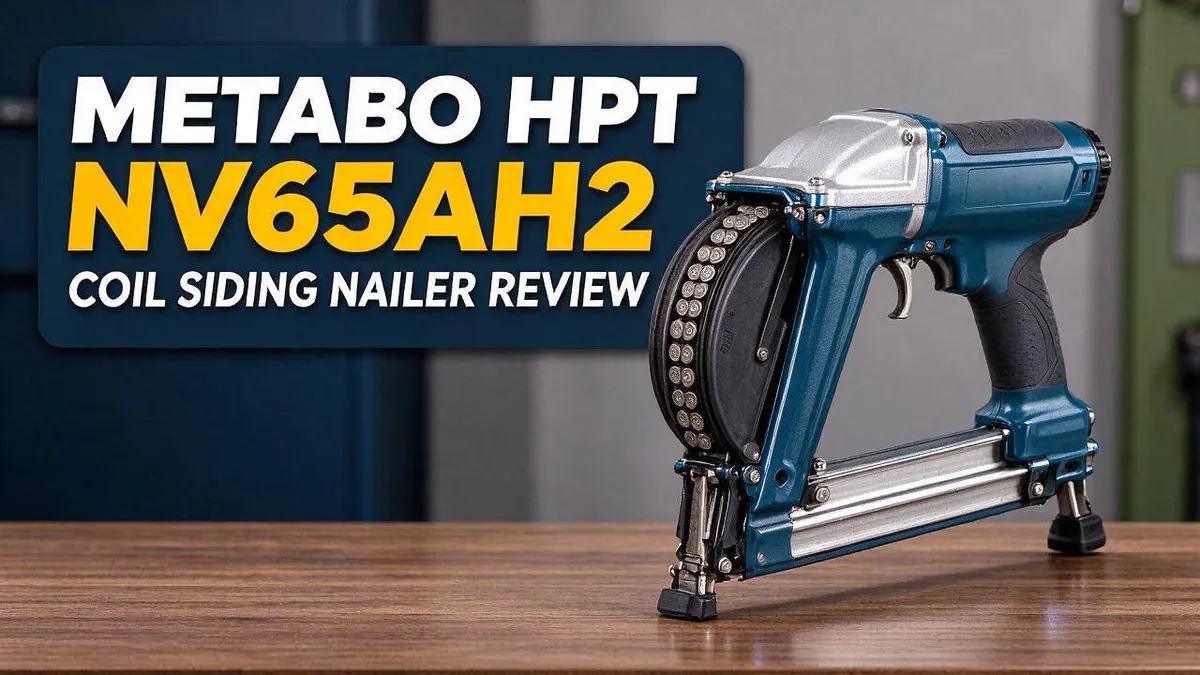
Metabo HPT NV65AH2 Coil Siding Nailer Review: Buyer’s Guide
Building a deck or wrapping a house takes serious time. Many builders want a tool that speeds up the job. The Metabo HPT NV65AH2 coil siding nailer might be the answer you need.
This pneumatic nailer drives nails without hammering. It handles two and a half inch nails and feeds wire or plastic sheet collation. It weighs about 4.8 pounds, so it stays easy to hold all day.
Users praise its tool free depth adjustment and its 360 degree exhaust diverter. Many reviewers also rate it highly, with a 4.8 out of 5 star average from over 220 reviews. Keep reading to see if this nailer fits your next project.
In a Nutshell
-
Built for siding jobs: The Metabo HPT NV65AH2 handles coil siding nails with ease. It feeds wire or plastic sheet collation, so you can pick the option that suits your project best.
-
Light and steady: This nailer weighs about 4.8 pounds and feels well balanced in your hand. A black rubberized grip keeps your hold firm during long workdays.
-
Quick reloads: The side load, tilt bottom magazine makes refilling simple. You can keep moving without fumbling with loose nails.
-
Solid reader trust: Owners rate it 4.8 out of 5 stars from 220 reviews. Hitachi also gives it 8.7 out of 10, which shows strong confidence in its performance.
-
Simple setup rules: The tool runs at 120 psi and includes a plastic shield for extra protection. Match your nails to the tool for smoother feeding every time.
-
Watch the feed: Some users find nail feeding finicky with the wrong gauge or brand. Many pros still compare it with the Max SuperSider as a top pick.
Driving Power and Nail Compatibility

- SIDING NAILER: Accepts 16º wire collated coil siding nails from 1-1/2" - 2-1/2". Also accepts...
- SELECTIVE ACTUATION: Switch between sequential or contact nailing with the simple flip of a switch

Last update on 2026-11-22 / Affiliate links / Images from Amazon Product Advertising API Some of the links on this website are affiliate links, which means that at no additional cost to you, I earn a commission if you click through and make a purchase. I only recommend products and services that I believe will add value to my readers. Thank you for your support!
Strong driving power starts with your air supply. A steady compressor keeps each nail seated at the right depth. Weak airflow can leave nails standing proud of the siding.
Your air hose matters too. A long or narrow hose can reduce pressure at the nose of the tool. Choose a hose that matches the air needs of the nailer for smooth, even drives.
The 15 degree angle plays a key role in nail compatibility. Angled collation lets the magazine hold many nails in a tight coil. This design also helps the tool reach into tight corners on window and door trim.
Coil nails come in both wire and plastic sheet collation. This nailer accepts both styles. Always confirm the collation type before you load a fresh coil.
Nail length and shank style need attention too. Longer nails suit thick siding and sheathing. Shorter nails work better for thin boards and trim. Match the length to your material every time.
Check the nail head shape as well. Round heads usually feed more reliably than clipped heads in many models. Read the label on each box to confirm the size and type.
Siding jobs often mean long days on a ladder. Consistent driving power saves time and reduces fatigue. You spend less time fixing missed nails and more time finishing the wall.
Test before you start the main job. Fire a few nails into scrap wood using the same material as your project. Watch how each nail seats and how smoothly the magazine advances. This short test shows whether your nails and air setup work together.
Depth of drive sets the final look of your siding. Use the depth adjustment dial to sink each nail flush with the surface. Make small changes and fire another test shot until the head sits right.
Max SuperSider also ranks as a top pro pick. Both tools handle coil siding well. Your choice depends on your air setup and the nails you already own.
Keep spare nails and a clean magazine nearby. Dust and debris can slow the feed. Wipe the rails often to keep your work moving.
Magazine Design and Nail Feeding
Think of the magazine as the guide for every nail. It holds the coil and pushes each nail toward the driver blade. When the path stays clear, your work keeps a steady pace.
Coil direction matters more than most people expect. Load the coil so the nails feed in the direction the magazine expects. A reversed coil often causes misfires or jams right away.
Check the feed spring before each job. A weak spring can lose its grip on the strip. Push the nails forward by hand to confirm they move smoothly.
Dust and debris build up faster than you think on a siding site. Sawdust, grit, and paint chips can collect in the channel. A quick wipe with a dry cloth removes most of these problems.
Humidity can change how collated nails behave. Damp air may swell the paper or plastic tape. Keep unused coils sealed in their box until you need them.
Jams happen to every crew sooner or later. Open the nose carefully and remove the stuck nail with pliers. Never reach near the driver while the tool has air connected.
Disconnect the air hose first. This simple step protects your hands and your eyes. Many professionals make it a habit before every clearing.
Try a short test run after each reload. Listen for a crisp, even sound with each shot. If the tool sounds uneven, stop and check the strip again.
Label each coil by length and type. Mixing nail lengths in one magazine causes confusion. Keep a small notebook or tape marker near your truck.
Refill before the magazine runs empty. Partial strips can slide out of line and jam more often. Top off the coil during a natural break.
Practice makes the feed feel natural. After a few hours, you will hear when a nail sits wrong. Trust that sound and pause to adjust it.
Good nail feeding saves time on tall walls and long days. You spend less energy fixing jams and more energy finishing the wall. Your crew will notice the difference by lunchtime.
Depth Control and Build Quality
Depth control decides how deep each nail sits in your siding. A nail that sits too high can lift the board. A nail driven too far can tear the surface.
The Metabo HPT NV65AH2 gives you a dial for this job. The updated dial sits on the tool body and lets you adjust the setting quickly.
Turn the dial one notch at a time. Small changes make a big difference on siding. Fire a test nail, check the head, then adjust again if needed.
Build quality matters just as much as settings. The silver metal body feels solid in your hand. A black rubberized grip keeps your hand steady during long work.
The metal body also handles knocks better than thin plastic housings. Dropping a tool on a ladder happens more often than anyone admits. Solid construction helps the nailer survive rough job sites.
Check the nose and housing after each day. Wipe away sawdust and grit from the trigger area. Look for loose screws or small cracks. A quick check catches small problems early.
The depth setting can shift over time. Constant vibration may loosen the adjustment. Check the dial before you start each wall section.
Match the depth to your siding type. Vinyl, fiber cement, and wood each respond differently. Softer boards often need a lighter setting. Denser boards may need a slightly deeper setting.
Write down your favorite setting for each material. Your crew can reuse it on the next job. This habit saves time and keeps the finish even across the wall.
Every nail should sit flush with the surface. A flush nail gives your siding a clean, neat look. Flush nails also hold boards tighter against the wall.
In short, the depth dial and sturdy build help you drive every nail with control. Test often, check the body, and adjust the dial with care. Good control protects both your boards and your schedule. Smooth work keeps the crew moving and the client happy.
Top 3 Alternatives
Bostitch N66C-1

- The sliding nail gun drives wire weld and plastic inserted coil nails
- Adjustable depth guide of the siding nailer sets nails to desired depths quickly and conveniently
Last update on 2026-11-22 / Affiliate links / Images from Amazon Product Advertising API Some of the links on this website are affiliate links, which means that at no additional cost to you, I earn a commission if you click through and make a purchase. I only recommend products and services that I believe will add value to my readers. Thank you for your support!
The Bostitch N66C-1 is a coil nailer that many builders use for siding work. It feeds coil nails smoothly, so you can keep a steady pace across a large wall. Its lightweight body helps your arms stay fresh during long days. Users often praise the simple controls and the easy depth adjustment. It works well for small repairs and full exterior projects alike.
Senco SCN60

- Also available o-ring kit with AC0141 and seals LB0901 and BF0203
Last update on 2026-11-24 / Affiliate links / Images from Amazon Product Advertising API Some of the links on this website are affiliate links, which means that at no additional cost to you, I earn a commission if you click through and make a purchase. I only recommend products and services that I believe will add value to my readers. Thank you for your support!
The Senco SCN60 delivers strong driving power for framing and siding tasks. It uses coil nails, so you spend less time reloading. Its jam clearing process is quick and simple. Many crews choose it for its comfortable grip and balanced feel. You can adjust nail placement without much effort, which helps on tight corners.
Makita AN611

- “Tool-less” depth adjustment with 9 detents settings engineered for more precise flush and...
- 3-mode selector switch (contact, sequential, lock) allows user control over nailing options
Last update on 2026-11-24 / Affiliate links / Images from Amazon Product Advertising API Some of the links on this website are affiliate links, which means that at no additional cost to you, I earn a commission if you click through and make a purchase. I only recommend products and services that I believe will add value to my readers. Thank you for your support!
The Makita AN611 suits roofing and light framing projects well. It shoots nails fast and keeps a consistent depth from one strike to the next. Its compact shape fits into tight spaces with ease. Homeowners who want a dependable tool often pick it for weekend jobs. It pairs well with standard coil nails for everyday use around the house.
Air Supply and Setup Requirements
Every siding job with the Metabo HPT NV65AH2 starts at the compressor. This coil nailer runs on compressed air, so your power source sets the pace. Get the compressor ready before you unroll any siding.
Set the regulator to 120 psi or less. The tool carries a 120 psi rating. Stay at or below this number at all times. Going higher can wear internal parts faster.
Pressure drops along the way. Long hose runs and tight fittings can lower the pressure at the tool. Weak pressure can leave nails sitting high. Check the gauge near the nailer, not only at the compressor.
Pick a compressor with enough capacity. A small compressor may struggle on long siding runs. Look for a tank that holds steady pressure between shots. Steady air keeps every nail driving the same way.
Add a moisture filter. Compressors release water vapor into the air line. A simple inline filter catches much of it before the air reaches the tool. Drain the compressor tank at the end of each day.
Oil the tool before you start. Many pneumatic nailers need a few drops of air tool oil. Read the owner manual for the right oil type and amount. Add oil again after long breaks or heavy use.
Test the pressure before you climb. Fire one nail with the compressor running. Listen for a clean, steady sound. If the tool stalls or sounds weak, stop and check the regulator again.
Set up a clear work zone. Place the compressor on flat ground away from the wall. Keep the air line off the ladder rungs. A tangled line can pull you off balance.
Keep spare fittings nearby. A cracked coupler or leaking fitting can drop pressure fast. Pack a few spare fittings in your toolbox before you head to the site.
Protect your ears and eyes. Coil nailers make sharp noise with every shot. Wear hearing protection and safety glasses during setup and during the entire job. Your crew should wear them too.
Pros and Cons
Pros
- Drives nails with no hammering needed.
- Light weight keeps arms fresh on long days up a ladder.
- Owners rate it highly across hundreds of reviews.
- The exhaust diverter sends air away from your face.
- A side load magazine makes mid-wall reloads quick.
Cons
- Nail feeding can act up with the wrong gauge or brand.
- Beginners may need extra practice to work at full speed.
- Some pros may prefer the Max SuperSider for their daily work.
Who Should Buy It
This coil siding nailer suits a few clear types of buyers. Let us look at who gets the most from it.
Full time siding contractors make the strongest case. They drive hundreds of nails each day, so a tool that skips hammering saves real time.
Crews that install both vinyl and fiber cement also benefit. The tool feeds wire or plastic sheet collation, so one nailer can handle more jobs.
Remodelers who switch between siding jobs also fit well. A coil holds a large supply of nails, so crews spend less time stopping to reload.
Homeowners with a large exterior project can also use it. A full house of siding can take several days of nailing. This tool keeps that work moving.
Occasional users with only a few boards to fix may find it more tool than they need. A simple hand nailer or brad nailer may suit those short jobs better.
Buyers with an existing air setup will feel at home with this tool. Shops that already run pneumatic gear can add it without a big shift in habits.
Crew leaders who plan steady exterior work should put this nailer near the top of their list. The Hitachi review score of 8.7 out of 10 adds confidence.
Contractors who bid on large siding contracts can plan crew time with more confidence. A reliable nailer makes daily targets easier to hit.
Crews that share tools also gain from this model. One nailer can move between teammates, so the whole team works from the same setup.
Buyers who compare models should test the feel in hand first. Visit a local tool shop and hold the nailer before you decide. A good fit matters more than any spec sheet.
Use this checklist before you buy. Ask whether you nail siding most weeks. Ask whether your crew needs one tool for many siding types. If both answers are yes, this nailer deserves a close look.
In short, full time contractors and busy remodelers should consider this nailer first. Casual weekend users should weigh their needs before they commit.
Final Verdict
The Metabo HPT NV65AH2 earns a strong place in our final verdict. It drives nails fast, and it keeps the workflow smooth from the first board to the last.
Most users will feel confident with this nailer after a short time. The tool combines speed, comfort, and simple setup in one package. Few tools in this class offer the same balance.
The main weak spot is nail feeding. Wrong gauge or brand choices can cause jams. Treat this as a setup issue rather than a flaw that ruins the tool.
Protect your results with a simple routine. Buy the exact collation your tool supports. Then run a short test on scrap wood before you start a full wall.
Think of this nailer as a daily workhorse. It rewards good habits like clean air, proper oiling, and steady pressure checks. Those habits keep jams low and output high.
Work pace matters as much as tool choice. Fast driving can tempt users to rush corners and trim pieces. Slow down there, because clean edges make siding look sharp and finished.
Maintenance keeps performance steady over time. Wipe the magazine after each job and check the depth dial often. Store the tool dry, since moisture can slow the mechanism.
Some buyers will still look at the Max SuperSider before deciding. That choice makes sense if you already rely on a particular brand. Otherwise, this Metabo model stands on its own.
Finally, think about your next few projects. If you expect more siding work soon, this tool will get regular use and show its strengths quickly.
Our final take is simple. The NV65AH2 delivers fast, comfortable driving when your air setup and nail supply are right. Meet those conditions, and this nailer becomes a dependable pick for serious siding work.
Start with a clean test run. Check pressure, oil the tool, and load the right nails. Then decide with confidence, knowing exactly how this tool performs on your jobs.
Frequently Asked Questions
What nails should I load into this nailer?
Always match the nail size to the tool’s guide. Choose coil nails from one trusted maker. Mixing brands often causes feed trouble and slows your crew down. Check the nail path after each reload to keep the strip moving smoothly.
Can I use this nailer in cold weather?
Cold air can slow the tool and thicken the lubricant inside. Keep the nailer indoors until you are ready to start. Let it warm up for a few minutes before you begin driving nails on a chilly morning.
Is this nailer meant for roofing or trim?
This nailer is built for siding work. Roofing needs a tool made for shingles. Fine trim work often looks cleaner with a finish nailer, so keep one on hand for detail jobs.
What should I do if a nail jams?
Disconnect the air hose first. Open the nose latch, then remove the stuck nail with pliers. Look for bent pieces in the nail path before you reload and reconnect the air.
Does the nailer need special safety gear?
Wear safety glasses at all times on the job site. Hearing protection helps on long days with many shots. Keep your fingers away from the nose and never point the tool at people.

Hi, I’m Amelia Thornton, the founder of ElectroPro.blog.
I write about smart devices, gadgets, electronics, and tech essentials from Amazon.
My goal is to help you discover reliable and innovative tech that truly makes life easier.
From home automation to everyday gear, I test and share what’s worth your investment.
Join me as I explore the smartest tech trends—one gadget at a time.