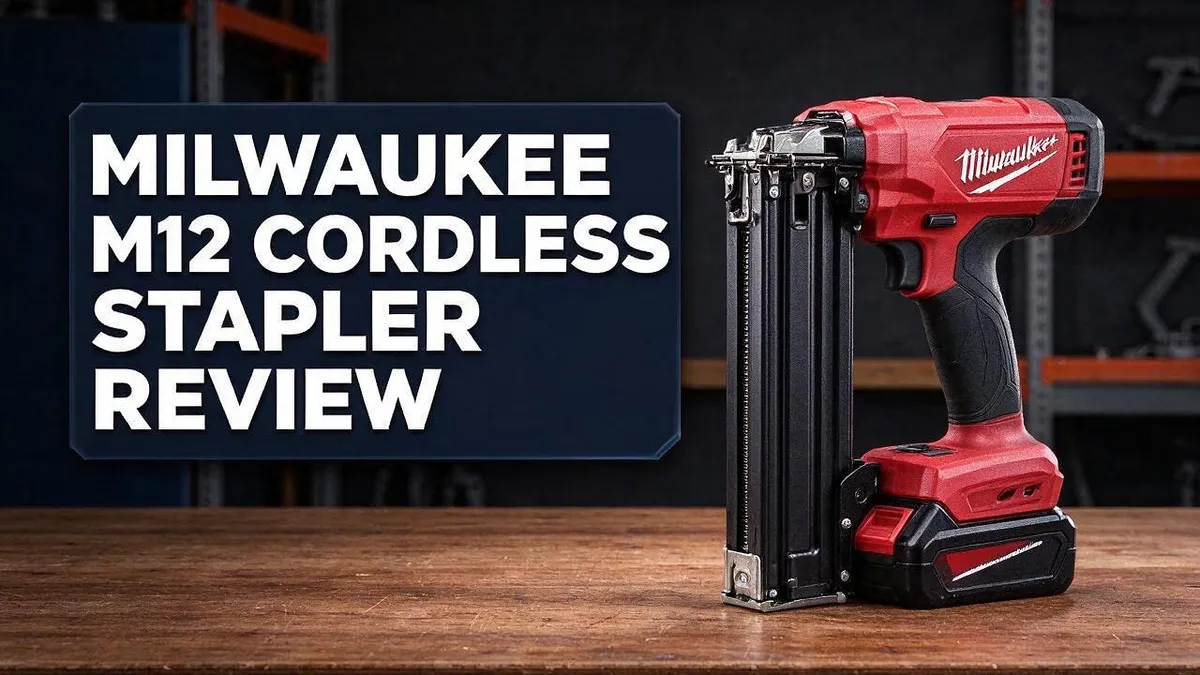
Milwaukee M12 Cordless Stapler Review: Skip or splurge?
Tired of hand stapling jobs that take forever? The Milwaukee M12 cordless stapler might be the upgrade you need. It lets you drive staples fast without a cord in the way.
This compact tool fits well in tight spaces. Its adjustable power dial helps you set the right depth for different materials. Many users say it feels light and well balanced, even during long overhead work.
Whether you run a busy workshop or handle home projects, this stapler can keep up. The model 2447-20 offers up to 1,500 staples per charge. Keep reading to see the key features, real strengths, possible drawbacks, and who should consider this tool.
In a Nutshell
-
Power dial for clean results: The stapler has an adjustable power dial. You can set the force so staples sit flush across different materials. This helps you avoid staples that sink too deep or stick out.
-
High staple capacity: One battery charge can drive up to 1,500 staples. Long sessions keep moving without frequent pauses.
-
Shared battery platform: The stapler works with every M12 battery. If you already own M12 packs, you can use them right away.
-
Comfortable overhead work: The tool feels light and well balanced in your hand. It stays comfortable to use overhead for hours.
-
Cable stapler option: A separate cable model drives up to 1,200 staples on a 2Ah battery. It suits wiring and insulation jobs.
-
Possible cycling issue: One Reddit user reported intermittent failure to cycle, even with multiple batteries. Test the tool thoroughly before starting a big project.
Driving Power and Flush Stapling

- M12 12-Volt Lithium-Ion Cordless Cable Stapler (Tool-Only)

Last update on 2026-11-24 / Affiliate links / Images from Amazon Product Advertising API Some of the links on this website are affiliate links, which means that at no additional cost to you, I earn a commission if you click through and make a purchase. I only recommend products and services that I believe will add value to my readers. Thank you for your support!
Driving power decides how well every staple seats. A strong drive sinks the fastener cleanly into the surface. Weak power leaves staples standing proud, where they can snag clothes or tools.
The Milwaukee M12 stapler aims for flush stapling across many materials. A flush staple sits even with the surface. Nobody wants a staple that pokes out after the job is done.
Flush results depend on more than raw power. The surface, the material density, and the staple length all play a role. Soft pine accepts staples easily. Dense hardwood may need more force to seat the staple properly.
Here is a simple way to test the setting. Fire a staple into a scrap piece of the same material. Check the crown. If it sits proud, raise the setting. If it dimples the wood, lower it.
Overdriving causes its own problems. A staple driven too deep can tear thin fabric or crush the surface fibers. It may also weaken the hold. Small adjustments usually fix the issue quickly.
The crown width matters too. The 3/8 inch crown on the 2447-20 model spreads the load across more fibers. A wider crown helps hold thin sheets. It also lowers the chance of tearing paper or fabric.
Consistency matters on long jobs. Each strike should look the same on every board. Power may shift slightly as the battery charge drops. Check the first few staples after each battery swap to confirm the setting still works.
The 9.2 out of 10 score from a 2017 review suggests strong flush results. Still, your own material tells the real story. Every surface behaves a little differently.
Test first, then staple the whole job. A few scrap pieces save time, wasted staples, and frustration. Your finished project will look cleaner for it.
Ergonomics and Overhead Handling
Overhead stapling tests your arms and shoulders fast. Smart body position matters as much as the tool itself.
Stand close to the work surface whenever possible. Keep the tool near your body instead of stretching it far away. Long reaches strain your back and wrists.
Keep your elbow slightly bent rather than locked straight. A locked arm tires faster and shakes more. Let your legs and core carry some of the load.
Plant your feet wide for a steady base. Shift your weight evenly between both feet. A balanced stance keeps the nose of the stapler aimed square at the surface.
Rest your free hand on a stable beam or ladder rail. Support helps you press firmly without leaning out. Only use a secure ladder that sits on level ground.
Check the battery before you climb. Seat it fully so it does not wiggle during a job. A loose connection can interrupt the drive and force you to press again.
Take a short break every thirty minutes. Roll your shoulders and shake out your hands. Fresh muscles usually produce more consistent staples.
Practice a few shots at waist height first. This builds a feel for the trigger and the grip. You will feel more confident when you start working overhead.
Wear safety glasses for every overhead session. Loose debris and staple fragments can drop into your eyes. Protection matters more than most people expect.
Plan your work in short zones. Move the ladder often rather than stretching too far. Smaller zones keep your posture steady and your staples more even.
Keep spare staples within easy reach. Hunting for them mid-task wastes energy and breaks your rhythm. A small pouch on your belt helps a lot.
Watch for signs of fatigue. Shaking hands, tight shoulders, or sloppy staples mean it is time to rest. Listen to your body early.
Work with a partner when possible. One person can hold the ladder while the other focuses on the stapler. This teamwork protects both people on the job.
Comfortable habits make overhead work safer and less tiring. Your body stays fresher, and your results look cleaner on every board.
Staple Capacity and Staple Types
Crown staples are the main fastener for this tool. They have a flat top and two legs. They grip well in wood, fabric, foam, and light sheathing.
The crown width matters for the material you choose. Narrow crowns suit delicate trim and thin fabric. Wider crowns hold better on heavier materials. Match the crown to the surface before you start.
Staple length matters as much as crown width. Choose a length that matches the thickness of your material. A short staple may not hold, while a long one can poke through the other side.
Check your staple pack before every job. Bent or damaged staples can cause misfires. Stick with quality staples from a known brand for steady results.
Cable staples serve a different purpose. The separate cable model handles electrical wire and thin cable runs. These jobs need staples that hold firmly without crushing the sheathing.
Mixing staple brands can cause trouble. Small differences in wire thickness can change how deep each staple drives. Test a few shots on scrap wood after you switch brands.
Storage makes a difference. Keep staples dry and sealed. Moisture can rust the wire and lead to jams. Store the strips flat in a small bin near your workbench.
Loading the staples takes only seconds. Open the magazine, slide in a fresh strip, and close it firmly. Confirm the strip sits flat before you fire.
Your supply can run low faster than you expect. Count your staples before you start a large project. Running out in the middle of a job wastes time.
Keep a simple log of your staple use. Note the material, the staple length, and the number of staples used. This record helps you plan future projects and restock at the right time.
Think of staples as part of the tool. Good staples help the stapler perform its best. Pick the right type for each job, and your results will look cleaner and last longer.
Top 3 Alternatives
Looking for a different stapler? These three options work well for many jobs. Each one offers a unique feel and strong performance.
Arrow T50 Staple Gun

- SAVE TIME AND ENERGY: This stapler is great for professional or household projects like installing...
- COMFORT AND CONSISTENCY: The high leverage handle on this stapler provides a comfortable experience...
Last update on 2026-11-24 / Affiliate links / Images from Amazon Product Advertising API Some of the links on this website are affiliate links, which means that at no additional cost to you, I earn a commission if you click through and make a purchase. I only recommend products and services that I believe will add value to my readers. Thank you for your support!
The Arrow T50 is a classic choice for light upholstery and craft projects. It uses a simple squeeze handle. Many home users like its compact size and easy loading. It drives staples cleanly into wood, fabric, and cardboard. Its trigger requires little force, so it suits beginners. You can use it for short projects or longer tasks. It works well for quick home repairs.
Bostitch Heavy Duty Stapler

- STAPLES 2 – 215 SHEETS – This high capacity stapler is so versatile that it can handle the small...
- NO JAM TECHNOLOGY – Stapling a lot of paper is frustrating enough. The last thing you want to deal...
Last update on 2026-11-24 / Affiliate links / Images from Amazon Product Advertising API Some of the links on this website are affiliate links, which means that at no additional cost to you, I earn a commission if you click through and make a purchase. I only recommend products and services that I believe will add value to my readers. Thank you for your support!
Bostitch makes sturdy staplers built for daily office work. This model handles thick stacks of paper with less effort. Its metal frame feels solid in your hand. It is a great pick for busy desks. Many users say it jams less often than basic models. The staples feed smoothly through the magazine. It also fits neatly on a shelf when not in use.
Swingline 747 Stapler

- PREMIUM PERFORMANCE – A performance driven stapling mechanism and inner rail always delivers...
- TOUGH AND DURABLE – This all-metal stapler is made for even your biggest jobs. The durable...
Last update on 2026-11-24 / Affiliate links / Images from Amazon Product Advertising API Some of the links on this website are affiliate links, which means that at no additional cost to you, I earn a commission if you click through and make a purchase. I only recommend products and services that I believe will add value to my readers. Thank you for your support!
The Swingline 747 is a famous desktop stapler. It has a smooth action and a clear base for easy stapling. Many people use it at home, school, and work. Its simple design suits almost anyone. Its sturdy base stays put during heavy use. Many schools choose it for classroom needs. It also has a classic look that fits any space.
Model Lineup and Compatibility
The Milwaukee M12 cordless stapler lineup includes a few models for different jobs. Knowing each model helps you choose the right tool. Compatibility also matters if you already own M12 gear.
The 2447-20 is the crown stapler. It handles everyday fastening with standard crown staples. Its compact body fits tight spaces where larger tools struggle.
The 2448-20 is the cable stapler. It drives cable staples for wire runs and similar tasks. Choose this model when your work centers on cable rather than crown staples.
The 2447-21 is an older version. A 2017 review measured it at 3.4 lbs with a seven and a quarter inch length. You may still see it listed online, so check the model number carefully.
Battery compatibility is the biggest advantage. The 2447-20 works with all M12 batteries. If you own an M12 drill or impact driver, you can share the same battery pack.
Cable stapler users should pair the 2448-20 with an M12 2Ah battery. That combination supports up to 1,200 staples on a single charge.
Check the kit contents before you order. Some packages include a battery and charger. Others offer the bare tool only, which suits owners who already have M12 batteries.
Read the model number on the box. Model numbers separate the crown and cable versions. This simple step keeps the wrong tool from showing up at your job site.
Stanley and WEN also sell battery staplers. Milwaukee fits best for people already invested in its M12 platform. Compare model lists side by side before you decide.
Model lineups change over time. Check the current listing on the official Milwaukee website. This confirms the exact features and included parts for each model.
Reliability and Jam Reports
Reliability decides whether a stapler earns a spot in your daily kit. Jam reports show how a tool behaves after months of real use, not just on the first day.
The feedback so far looks mostly positive. One customer reported no jams at all. That single story does not prove much, but it shows the tool can run clean.
The most cited concern comes from one Reddit user. That person saw intermittent failure to cycle, even after switching between several batteries. The stapler did not fire every time the trigger was pulled.
Intermittent problems are tricky. They may come from the tool, the staples, or the way the magazine is loaded. Testing each cause one at a time saves time later.
Try a simple check before blaming the hardware. Fire several staples into scrap wood, then repeat the test with a second battery. If the problem follows the tool, contact support.
The power dial may also play a role. A setting that is too low can leave a staple partly set, which can look like a jam. Test the dial on scrap material first.
Owners who work in dense framing lumber should watch closely. Hard materials put more load on the drive mechanism, so test runs matter more there.
A 2017 review gave the model a score of 9.2 out of 10. Older scores do not reflect newer production batches, so read recent owner comments too.
Look for patterns, not single posts. If several owners describe the same fault, treat it as a warning sign. If reports are scattered, the issue may be rare.
Keep a short note of every jam or misfire. Write down the date, battery charge, staple type, and dial setting. These notes help support teams find the cause quickly.
Overall, the reliability reports look encouraging. The lone cycling complaint deserves attention, but simple tests can narrow it down. Careful use and good habits keep the tool running smoothly for years.
Pros and Cons
Pros
- The power dial helps drive staples flush across different materials.
- The tool feels light and balanced for long overhead work.
- The compact, ergonomic body fits into tight spaces.
- A single charge can drive up to 1,500 staples.
Cons
- Some owners report the tool fails to cycle at random.
- A sudden failure to cycle can stop a job at a bad moment.
- Limited user feedback makes long term reliability hard to judge.
- The model may not suit every fastening task.
Who Should Buy It
This stapler fits some people better than others. Think about your daily work before you decide.
Homeowners who tackle occasional projects often gain the most. Going cordless means no tangled wires across the garage floor.
Weekend builders who already own M12 batteries will feel right at home. Their charged packs can power the stapler, so there is no need to start a new battery collection.
Renters and apartment dwellers can also benefit. They can work without extension cords or hunting for open outlets.
Anyone who fixes fences, shed walls, or garden beds will find plenty of use here. A stapler handles quick repairs faster than a hammer and nails.
Electricians and low voltage installers may find the cable model useful. Running wire through attic spaces or behind walls often calls for quick fastening. A cordless option keeps the work moving in tight spots.
Trim carpenters and shop workers may enjoy the adjustable power dial. A quick turn switches between soft pine and hard oak. This helps prevent overdriven staples that mar finished surfaces.
Upholsterers and craft makers can use the crown model for fabric and light panels. Its steady feel helps keep staples lined up along a seam.
Busy professional crews should think carefully. A tool that stops at a bad moment can slow an entire day. Crews with strict deadlines may want to test the stapler on a few jobs first.
Skip this model if you rarely use a stapler. A simple manual stapler needs no charging and may serve you well for light tasks.
Think of this tool as a helper for steady, mid-sized fastening work. Match it to your actual tasks, and you will know quickly whether it belongs in your kit.
Final Verdict
The Milwaukee M12 stapler makes a strong case for people who want flexibility. It fits the M12 battery system, so it suits smaller jobs around the house. Your final decision should depend on how you plan to use it. Think about your toughest workday, not your easiest one.
Before you commit, check the return policy at your chosen store. Keep the receipt and packaging for at least a few weeks.
Run your own test once the tool arrives. Fire a few dozen staples into scrap wood that matches your real project. Load the magazine the same way each time, and note any misfires.
Keep notes on the date and the job. Patterns show up quickly when you record each session. This helps you spot trouble early and decide with facts.
A spare battery changes the experience. Because the tool shares the M12 platform, a charged spare keeps you working through a long session. Swap packs before the first one runs low.
Heavy daily framing may call for a tougher machine. If that describes your routine, compare other models before you decide.
Think about support and replacement parts too. Check that staples and accessories are easy to find near you. Easy access keeps small problems from stopping a project.
Storage matters as well. Keep staples dry and sorted, and store the tool in a clean case. Good habits protect the stapler and help it run smoothly.
Overall, this stapler suits weekend builders, renters, and crafters. It rewards people who test carefully and maintain it well. Watch for patterns in owner feedback, and trust your own results most of all.
Make your choice with clear eyes. Start small, track performance, and expand your use as confidence grows. That approach gives you the strongest answer.
Frequently Asked Questions
Which type of staples does it use?
The crown model fires 3/8 inch crown staples. These work well for panels, fabric, and light trim. The cable model drives cable staples, so it suits wiring jobs. Always check the label on the staple box before you buy.
Does it work with any M12 battery?
Yes, the crown model works with all M12 batteries. You can share packs with your other M12 tools. A larger capacity pack gives you longer sessions between charges. Keep at least one fully charged pack on hand for busy days.
What should I do if it stops cycling?
Start with the simple checks. Swap in a fully charged battery and look at the staple feed. Clear any debris from the nose. If the problem continues, contact Milwaukee support. Keep your receipt ready in case you need a warranty claim.
Is it easy for beginners to learn?
Yes, most new users pick up the basics in one short session. The controls stay simple, and the power dial makes it easy to set the depth. Start on a low setting with soft wood, then adjust slowly. Practice on scrap material first. This habit saves time and protects your finished work.
Hi, I’m Amelia Thornton, the founder of ElectroPro.blog.
I write about smart devices, gadgets, electronics, and tech essentials from Amazon.
My goal is to help you discover reliable and innovative tech that truly makes life easier.
From home automation to everyday gear, I test and share what’s worth your investment.
Join me as I explore the smartest tech trends—one gadget at a time.