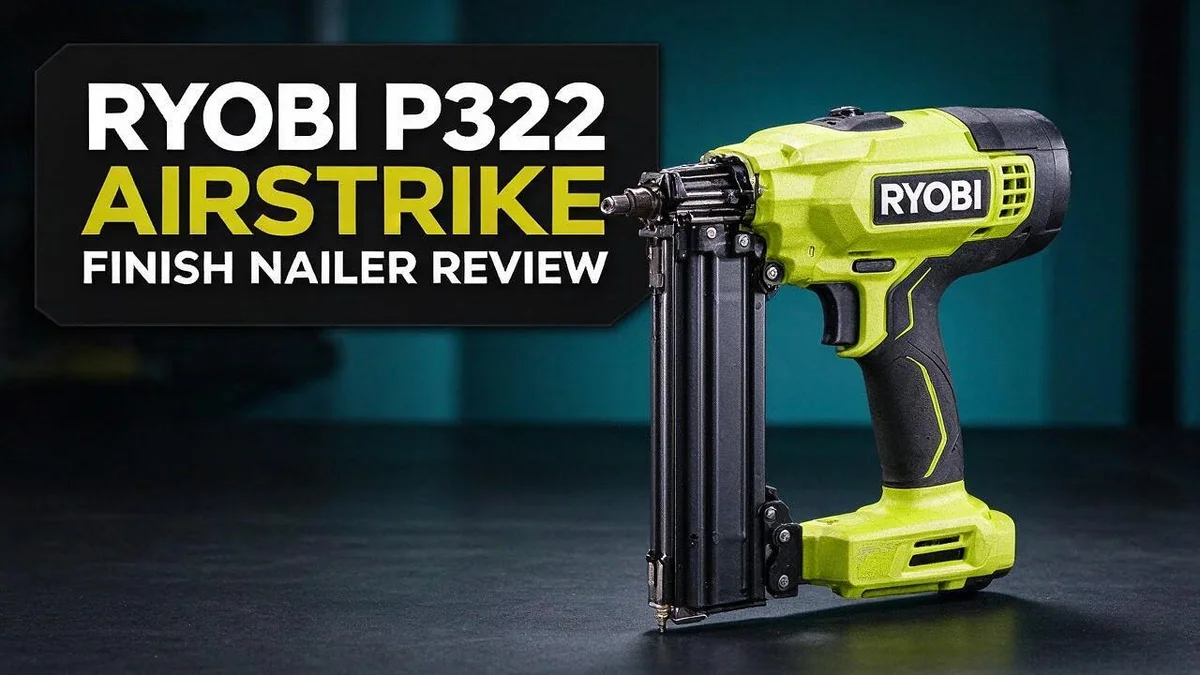
Ryobi P322 Airstrike Finish Nailer Review: Final Verdict
If you want a nailer that skips the air hose, the Ryobi P322 Airstrike Finish Nailer is worth a close look. It runs on Ryobi 18V power.
Many DIYers struggle with bulky compressors and tangled hoses. This tool removes that hassle. It is cordless, and it needs no compressor at all.
Under the hood, a brushless motor drives each nail. Ryobi says it delivers up to 60% more driving power than the prior model.
In a Nutshell
- Easy to learn: Many users find this nailer intuitive right away. New DIYers can start driving nails without a long learning curve.
- More driving power: The maker claims about 60 percent more force than the prior model. That extra punch helps when you drive nails into denser wood.
- Shares your batteries: It runs on the 18V ONE+ platform. Owners can use the same batteries across other Ryobi tools they already own.
- Handy for household tasks: Many people use it for everyday repairs and projects around the house. It acts like a true workhorse for those jobs.
- Heavier than expected: An 18V battery adds real weight. Long overhead jobs or repetitive work may tire your arms, so short breaks help.
- Noise and jams to watch: One user found it loud, so hearing protection makes sense. Some owners also report misfires and jamming. A related P321 model drew a complaint about nails not driving fully, so check your nails often.
Driving Power and Performance

- (1) P322 RYOBI 18V ONE+ HP Brushless Cordless AirStrike 18-Gauge Brad Nailer
- (2) Non-Marring Pads
Last update on 2026-11-22 / Affiliate links / Images from Amazon Product Advertising API Some of the links on this website are affiliate links, which means that at no additional cost to you, I earn a commission if you click through and make a purchase. I only recommend products and services that I believe will add value to my readers. Thank you for your support!
The Ryobi P322 aims to handle finish work without a compressor. Many shoppers want to know how it performs when the nails need to sink deep. Real results depend on the material and the setup.
Softwood and hardwood tell different stories. Pine trim usually takes nails with ease. Oak and maple can need more force, so test a few nails first.
Test on scrap before the real cut. Shoot several nails into a spare board. Check whether each nail sits flush or stands proud. This quick step saves filling holes later.
Battery charge can change results. A tool may feel strong on a full pack. As the charge drops, drives may slow down. Keep a spare battery nearby for long sessions.
Misfires and jams can also affect performance. One related model sometimes fails to drive nails fully. Clear any jam slowly and follow the manual. Keep the nose clean and check the nail strips for bent nails.
Nail length sets the holding strength. Finish nails in the right length grip deeper into the wood. A nail that is too short may pull out over time. Match the length to the trim thickness every time.
Angle matters more than many people expect. Hold the nailer square to the surface. A tilted nose can bend a nail or leave a crooked hold. Steady pressure gives cleaner results.
Plan your shots for a smoother flow. Start near the center of a board and work outward. This habit reduces splitting near the edges. Slow, steady shots also help you spot problems early.
Good technique helps the tool do its best work. Pair the nailer with the right nail size for each project. With practice, most users find the P322 suits light to medium finish work well.
Build, Balance and Ergonomics
Balance decides how the nailer feels in your hand. A tool that sits evenly between the grip and the nose is easier to aim. Your wrist does less work over time.
A battery mounted at the rear usually pulls the weight back toward your palm. This shift can help the nose stay steady when you press it against trim. Many people find this layout feels natural during quick, repeated shots.
Grip size affects fatigue. A comfortable handle lets your fingers wrap fully without strain. A thin or awkward grip can leave your hand sore after a long session of baseboards or cabinet doors.
Overhead and low work test your posture. Holding the nailer up to a ceiling line or down near a floor board tires the arm fast. Rest your elbow against your side or a ladder rail to steady each shot.
Trigger reach matters for your fingers. Your index finger should rest on the trigger without stretching. A short reach keeps your grip firm while you pull the trigger again and again.
Test the feel before you commit to a long project. Pick up the tool, hold it at arm’s length, and mimic a few shots. Notice whether your wrist aches or your shoulder rises. These quick checks reveal comfort issues that a product photo never shows.
Keep the nose clean and the contact tip visible. Dust and sawdust can hide the tip line, which makes aiming harder. Wipe the nose often so you can see exactly where each nail lands.
Consider how you store and carry it. A nailer that hangs well on a belt or sits neatly in a bag saves steps. Less fumbling means more focus on the work.
Small comfort changes add up. Padded gloves can soften grip pressure, though they may reduce feel for fine aiming. Take short breaks every half hour so your hand and arm recover before the next batch of nails.
Good ergonomics protect your joints over time. Repeated jolts from nailing can strain wrists and elbows. Shorter sessions and a relaxed stance help you finish projects without soreness the next day.
Nail Compatibility and Magazine Capacity
Nail compatibility matters before your first shot. The Ryobi P322 fires 18 gauge brad and finish nails. These nails are thin, so they leave small holes that are easy to fill.
The tool holds a range of nail sizes. That range gives you room to pick the right length for trim, molding, or cabinet work. Always check the owner’s manual for the exact length limits.
Stick to nails that match the gauge and the strip style the tool needs. Nails made for other tools may not sit right in the magazine. A poor fit can lead to misfires or jams.
Look at the nail strip before you load it. The nails should sit straight and stay tightly bound. Bent or loose nails can stop the tool in the middle of a job.
Magazine capacity shapes how often you pause to reload. The research does not give a set count, so check the spec sheet before you buy. A larger magazine means fewer breaks during long trim jobs.
Plan your loads before you start a big project. Count the pieces you need to nail and bring enough strips to cover them. This habit keeps your rhythm steady and your hands moving.
Keep spare nails in a small case. Running out in the middle of a board is frustrating. A spare strip in your apron saves a trip to the truck.
Store your nails in a dry spot. Damp or rusty nails can jam the magazine and wear down the feed. Keep the box sealed between jobs.
Label each nail box by length. Clear labels help you grab the right size fast. You will waste less time digging through mixed boxes.
Top 3 Alternatives
DeWalt DCN680B

- 100 percent battery powered. Eliminates the hassle of using gas, compressor, and hose.
- Brushless motor maximizes runtime and durability.
Last update on 2026-11-24 / Affiliate links / Images from Amazon Product Advertising API Some of the links on this website are affiliate links, which means that at no additional cost to you, I earn a commission if you click through and make a purchase. I only recommend products and services that I believe will add value to my readers. Thank you for your support!
The DeWalt DCN680B is a cordless finish nailer. It fires 16 gauge nails with steady force.
Its 20V MAX battery platform gives you freedom to work without a cord. Many carpenters like its balanced grip and simple controls.
It works well for trim, baseboards, and cabinet frames. Its trigger responds fast when you need quick shots.
It also sits comfortably in your hand during long days.
Milwaukee M18 Fuel Nailer

- Tool Free Depth Adjustment Tool Free Jam Clearing Latch Sequential and contact actuation firing...
- Tip Storage On Magazine LED Work Light Reversible Belt Hook
Last update on 2026-11-24 / Affiliate links / Images from Amazon Product Advertising API Some of the links on this website are affiliate links, which means that at no additional cost to you, I earn a commission if you click through and make a purchase. I only recommend products and services that I believe will add value to my readers. Thank you for your support!
The Milwaukee M18 Fuel Nailer offers strong power for trim and cabinet work.
It uses a brushless motor that helps the battery last longer.
Its depth adjustment lets you set each nail with care. Its clear dial makes changes quick and simple.
This tool suits people who handle bigger projects every day. It also fits well in tight spaces.
Metabo HPT NT1865DMA

- CORDLESS NAILER: 15 Gauge Cordless Nailer
- INCLUDES: NT1865DMAS, (1) Compact 3.0Ah Lithium Ion Battery, Charger, Contractor Bag, Safety Glasses
Last update on 2026-11-24 / Affiliate links / Images from Amazon Product Advertising API Some of the links on this website are affiliate links, which means that at no additional cost to you, I earn a commission if you click through and make a purchase. I only recommend products and services that I believe will add value to my readers. Thank you for your support!
The Metabo HPT NT1865DMA is an 18 gauge brad nailer.
It runs on compressed air, so you never need to charge a battery.
Its slim body helps you work in tight spots.
It is a smart pick for delicate trim and small molding. It feels light in hand, which reduces fatigue on long jobs. Hobbyists often choose it for light home projects.
Misfires, Jams and Reliability
Reliability matters most when a deadline is close. A stalled nailer can throw off your whole schedule. Some owners report that the Ryobi P322 sometimes misfires or jams, so knowing the likely causes helps you respond fast.
Always remove the battery before clearing a jam. This step keeps the trigger from firing by accident. Then open the jam release and lift out the stuck nail with pliers.
Debris is a common culprit. Sawdust, paint flakes, and glue residue can build up in the nose. Wipe the nose and the driver path after each session so nails travel straight.
Watch for nails that stop short. A nail that sits above the surface often signals weak drive force. Owners of the sister model, the Ryobi P321, describe this same problem. Recheck the depth setting before you continue.
Do not keep pulling the trigger. Repeated attempts can frustrate the tool and waste nails. Stop, clear the path, and reload with fresh fasteners. Patience protects both your workpiece and the nailer.
An aging battery may lose punch. A tired pack can deliver uneven force. Swap to a fully charged pack from the Ryobi 18V line if shots start to weaken mid project.
Build a simple maintenance habit. Clean the tool after every big job. Store it in a dry case so grit stays out of the mechanism. Check the owner’s manual for any lubrication steps the maker recommends.
Track patterns in your own use. Write down which wood types or nail lengths cause trouble. Patterns reveal whether the issue sits with the tool or the material.
Know when to stop and get help. Frequent jams after proper cleaning suggest a deeper fault. Pause the project and contact Ryobi support or a service center. A proper repair saves more time than fighting a faulty tool every day.
Ryobi ONE+ Ecosystem Value
One battery can power a whole workshop. The Ryobi ONE+ system lets you move one pack between tools. Your drill, saw, and light can share the same power source.
That shared setup changes how you plan a project. You can switch from drilling pilot holes to nailing trim without hunting for another charger.
Fewer chargers mean less clutter. One charger can keep your spare packs ready. Your bench stays neat, and your batteries stay in one place.
Growing your kit takes time. Many people start with a single tool. Later, they add a saw or sander when a new job appears.
The P322 fits well into that plan. It suits trim work, cabinets, and light framing around the house.
Check tool compatibility before you buy. Confirm that your existing tools use the same 18V ONE+ battery. Batteries from other product lines will not fit.
Pick the right battery for each task. A larger pack lasts longer on a big day. A smaller pack keeps the tool lighter for quick fixes.
Think about your home projects first. Many homeowners already own a drill. Adding this nailer means you reuse batteries you already have.
Plan for jobs outside the shop. Cordless tools suit ladders, attics, and spots without outlets. A shared battery keeps your whole kit moving.
Keep spare packs charged before big weekends. A fully charged pack helps you finish trim in one session. Stored packs hold their charge better when kept in a cool spot.
Consider your crew. Friends or family members may already own Ryobi tools. You can share batteries and chargers when projects overlap.
Shared batteries create the real advantage. Buy into the platform once. Then you use the same packs across many tasks.
Pros and Cons
Pros
- It feels intuitive to use right away.
- The brushless motor delivers about 60% more driving power than the prior model.
- It handles everyday household jobs like trim and cabinet work.
- No air compressor or hose means a simple, portable setup.
- It drives up to 2,250 nails on a single charge.
Cons
- The tool feels heavy, especially with an 18V battery on long jobs.
- Some users report noise during use.
- Misfires can happen and slow your progress.
- The closely related P321 sometimes fails to drive nails fully.
Who Should Buy It
The Ryobi P322 Airstrike Finish Nailer fits best for weekend DIY fans who tackle small upgrades around the house. It suits people who want clean results without a bulky setup.
Renters often find this kind of tool useful. Apartment dwellers rarely have room for a compressor. A cordless finish nailer can sit in a closet and come out when a project calls for it.
Crafters and hobbyists also benefit from this nailer. Picture frames, small wooden boxes, and model projects need light, precise nails. A brad nailer handles delicate pieces that could split under a heavier tool.
Trim and molding fans planning a home refresh will see the benefit too. Baseboards, door casings, and crown molding show every flaw. Steady nail placement keeps the finished look tidy.
Furniture builders who glue and nail joints can use it for quick holds. Clamps hold the piece while the glue sets. The nailer adds fast reinforcement, so you spend less time waiting between steps.
Beginners can practice on scrap pieces before a real project. Short practice sessions build confidence fast and reveal how the tool feels in your hands.
Who should skip it? Full time framers need faster, heavier nailers for rough construction. Anyone driving hundreds of structural nails each day may prefer a framing model built for that pace.
Shoppers with tight deadlines should also plan carefully. This tool suits steady, planned jobs better than rushed site work. Test it on scrap wood first so you know what to expect.
Bottom line: if your projects involve trim, crafts, or light furniture, this nailer makes a strong match. Heavy construction crews should look elsewhere. Think about your typical project before you decide.
Final Verdict
The Ryobi P322 earns a solid spot in a home toolbox. It handles light trim, crafts, and small furniture work with ease.
Think of it as a precision helper rather than a heavy hitter. Its brushless motor drives finish nails cleanly, but it will not replace a framing gun on a big build.
The biggest question for most buyers is reliability. Reported jams and misfires mean you should test each nail size before a deadline.
Keep a spare box of nails nearby so one jam never stops your day. Small delays add up fast on a tight schedule.
A quick check goes a long way. Load a few nails into scrap wood, adjust the depth setting, and see how the tool feels in your hand.
The tool holds a range of nail sizes, so match the length to your material. Short nails hold thin moldings, while longer nails grip thicker stock.
Weight matters more than many shoppers expect. A short session feels fine, but a full afternoon of overhead trim can tire your arm. Take breaks often and switch hands when you can.
Choose this nailer if precision matters more than speed. Finish work rewards clean, neat holes and controlled shots, and this tool delivers both for most home projects.
If you plan to build a large deck or frame a wall, look at a heavier tool instead. Matching the tool to the job saves time and frustration. Your results will look better too.
Start with a small project this weekend and learn how the nailer behaves. Small wins build confidence before you tackle bigger work.
Bottom line: the P322 suits hobbyists and homeowners who want a cordless finish nailer for everyday upgrades. Check your nail needs, test it on scrap, and enjoy a simpler workshop.
Frequently Asked Questions
Can beginners use the Ryobi P322 easily?
Yes, most beginners find it easy to learn. The controls feel simple, and the tool does not need a compressor or hose. Practice on scrap wood first. This helps you learn the trigger feel and how deep the nail sets before you start a real project.
What nail sizes work with this nailer?
It holds a range of nail sizes, so you have options for different jobs. Match the nail length to your material. Shorter nails suit thin trim and delicate molding. Longer nails hold thicker boards with a secure grip.
Does it work with other Ryobi tools?
Yes, it runs on Ryobi 18V ONE+ batteries. If you already own Ryobi tools, you can share one battery across your toolbox. This saves space, and you spend less time waiting on chargers.
Is this nailer good for rough construction?
Not really. It works best for light finish work like trim, crafts, and small furniture. For framing walls or building a deck, choose a heavier tool with more driving force. Using the right tool keeps your project safe and your results clean.
How can I avoid jams?
Keep a spare box of nails nearby so one jam never stops your day. Load clean, straight nails and check the magazine before each session. Store the nailer in a dry place so dust and debris stay out of the mechanism.

Hi, I’m Amelia Thornton, the founder of ElectroPro.blog.
I write about smart devices, gadgets, electronics, and tech essentials from Amazon.
My goal is to help you discover reliable and innovative tech that truly makes life easier.
From home automation to everyday gear, I test and share what’s worth your investment.
Join me as I explore the smartest tech trends—one gadget at a time.