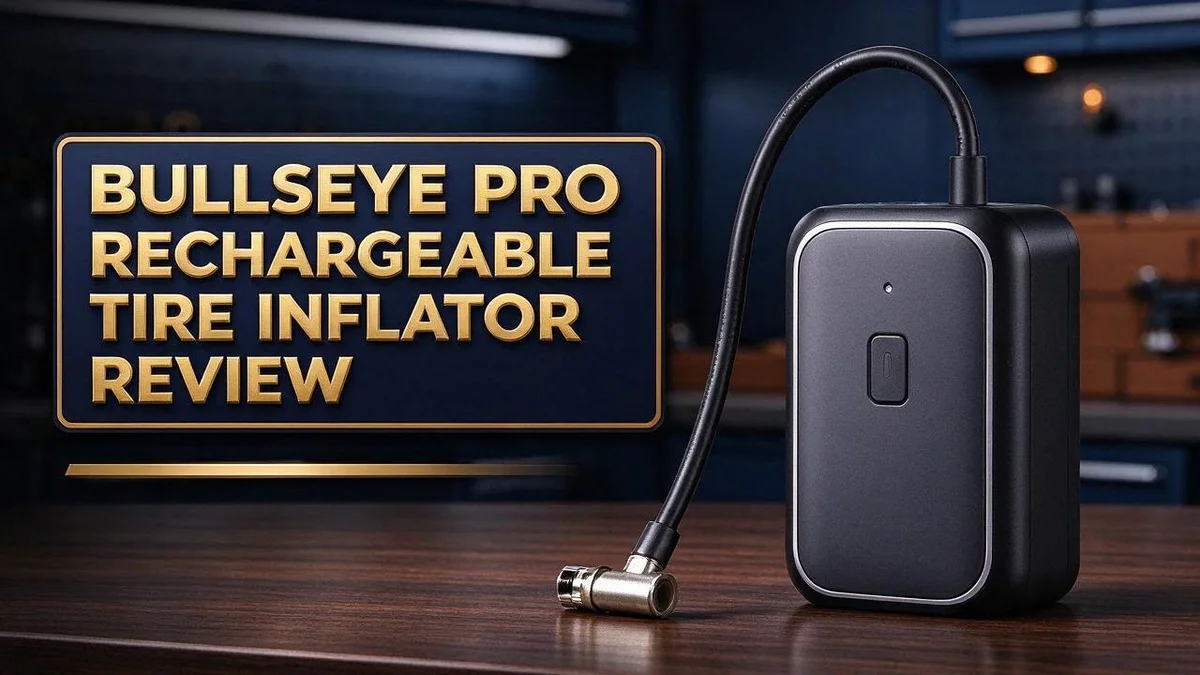
BULLSEYE PRO Rechargeable Tire Inflator Review: 150 PSI Performance
The BULLSEYE PRO Rechargeable Tire Inflator aims to be that quick fix. It reaches up to 150 PSI and includes a digital pressure gauge. Three nozzle attachments let you use it on car and bicycle tires.
It runs on a rechargeable battery or plugs into a 12V car outlet. The automatic shutoff stops at your set pressure. The manufacturer claims it can raise a tire from 24 to 34 PSI in under 2 minutes.
Some online shoppers have asked if it really works. This review covers the features, performance, and everyday use so you can decide for yourself.
In a Nutshell
- Strong pressure range: The unit reaches 150 PSI, so it can handle car tires, SUV tires, and bicycle tires. Many reviewers say it works well in emergencies on the road.
- Quick fill claim: The maker says it lifts a tire from 24 to 34 PSI in under 2 minutes. That speed matters when you are stuck on the shoulder of a busy road.
- Auto stop feature: You set the pressure you want, and the unit shuts off once it reaches that level. This helps you avoid overinflating your tires.
- Easy readout: A digital gauge with a battery indicator shows your pressure and power level at a glance. You can also choose from three nozzle attachments for different valves.
- Charging time: Recharging the battery can take up to 3 hours, so plan ahead. Keep the 12V car charger in your vehicle for backup power.
- Mixed feedback: One Reddit user asked if it is “real or trash,” so read several reviews first. Rivals like the Avid Power Pistol Grip and AstroAI L7 also attract buyers.
Inflation Speed and Performance

- 𝗣𝗿𝗲-𝐒𝐞𝘁 𝗣𝗿𝗲𝘀𝘀𝘂𝗿𝗲 𝘄/ 𝗔𝘂𝘁𝗼 Shut off : Simply...
- 𝗥𝗲𝗰𝐡𝐚𝐫𝐠𝐞𝐚𝐛𝐥𝐞 – comes with 3.3 ft. USB-C type home charging...
Last update on 2026-11-22 / Affiliate links / Images from Amazon Product Advertising API Some of the links on this website are affiliate links, which means that at no additional cost to you, I earn a commission if you click through and make a purchase. I only recommend products and services that I believe will add value to my readers. Thank you for your support!
Inflation speed depends on how much air your tire needs. A small bicycle tire holds far less air than an SUV tire. So the time you see will change a lot from one job to the next.
Think of the claim as a best case. The maker says the unit lifts a tire from 24 to 34 PSI in under 2 minutes. That is a small jump. A bigger gap, like a nearly empty tire, will take longer.
Running your engine also matters. Many drivers start the car before they plug the unit into the 12V outlet. This can reduce strain on your car battery during a longer fill.
Heat and pressure slow things down. As the tire fills, the pump works harder against rising air pressure. Expect the last few PSI to take a bit more time than the first few.
The maker says four tires may need about 10 to 15 pounds each. Those numbers show how much air a full set can take. Plan for a longer session if all four tires are low.
Check the pressure before you start. Read the gauge first, then set your target. This keeps you from running the unit longer than needed.
Good habits help you get the best speed. Keep the hose tight on the valve. Pick the nozzle that fits your valve type. A loose connection can leak air and slow the fill.
Real results matter more than claims. Test the unit at home before a trip. Time one fill so you know what to expect when a real flat happens.
Compare speed with other options on your list. The AstroAI L7 also offers 150 PSI and a cordless design. Speed in your own garage may still differ from the numbers printed on the box.
Digital Pressure Gauge and Auto Cut-Off
Your tire placard is the best starting point. Most vehicles list the recommended cold pressure on a sticker inside the driver door frame. Use that number as your target, not a guess.
Cold weather changes the reading. Air shrinks when temperatures drop, so tires often lose pressure overnight. Check the gauge on cold mornings for the most accurate number.
The digital display is easy to read, but bright sunlight can hide small digits. Stand in the shade or tilt the screen toward the light. This simple step prevents misreading the number on a busy roadside.
Keep a second gauge in your glovebox. Gauges can drift over time, and two readings help you spot a problem. If the numbers differ, check again and trust the result that matches your placard.
Bicycle tires need their own limit. Road bike tires can handle much higher pressure than car tires. Check the sidewall for the maximum rating, then stay below it.
Automatic shutoff stops the air at your chosen target, but it cannot judge your tire. Always confirm the final reading yourself before you drive away.
Let the air settle before you trust the number. Air warmed by the pump can make a tire read higher than it really is. Wait a few minutes, then check again.
Small adjustments beat big jumps. Add air in short bursts and check often. This habit protects you from overfilling by accident. An overfilled tire rides harshly and wears the center of the tread faster.
Writing down your readings helps too. A quick note in your phone shows patterns over time. A tire that keeps losing pressure may have a slow leak that needs a closer look.
Portability and Charging Options
Portability is one of the strongest reasons to buy this unit. It is small enough to fit in a trunk, gear bag, or bike pack. You do not need a bulky compressor to get started.
Your car can power it on the road. The 12V DC car charger lets you run the unit from your vehicle. This gives you a second power source when home charging is not possible.
Charge at home before every trip. A full battery means you can handle a tire issue without delay. Make charging part of your packing routine.
Good storage keeps the unit ready to use. Store it in a dry spot inside your trunk or garage. Avoid leaving it in direct sun or freezing cold for long periods.
Pack every accessory together. Keep the three nozzles in the same pouch as the unit. A missing nozzle can slow you down when time matters.
Cord care is a small detail that matters. Wrap the power cord loosely after each use. Tight wraps and sharp bends can damage the wire over time.
Think about your daily routine. Commuters can keep the unit in the car all week. Weekend riders may prefer a bag they can grab fast. Choose the setup that fits how you travel.
Compare charging styles before you buy. Some rivals run on different power options or built-in batteries. The AstroAI L7 is a cordless choice worth checking. Look at how you plan to charge before you decide.
Plan for long trips. Carry a small backup charger if you drive far from home. Long drives can leave you far from a power outlet. Pack the car adapter so it is always within reach.
Portability works best when it fits your habits. Check your charger, cord, and nozzles every few months. A quick check keeps your inflator ready for the next trip.
Top 3 Alternatives
AstroAI Tire Inflator

- ADVANCED TRUEGAUGE SCREEN: This battery tire inflator includes updated sensor technology, capable of...
- EASY TO USE: You can choose 4+N smart modes (car, motorcycle, bicycle, ball, and custom) and...
Last update on 2026-11-22 / Affiliate links / Images from Amazon Product Advertising API Some of the links on this website are affiliate links, which means that at no additional cost to you, I earn a commission if you click through and make a purchase. I only recommend products and services that I believe will add value to my readers. Thank you for your support!
Looking for a simple way to fill your tires at home? This model is a strong pick for everyday drivers. It plugs into your car’s power outlet and reaches your target pressure fast.
Its digital gauge makes reading pressure easy. You set your target PSI, and the unit shuts off once you hit it. It also comes with a carrying bag, so you can keep it in your trunk for surprise flats.
VIAIR 88P

- PORTABLE 12V AIR COMPRESSOR: Keep dependable inflation power in your vehicle with the VIAIR 88P...
- VERSATILE TIRE AND EQUIPMENT INFLATION: Use this tire inflator portable air compressor for vehicle...

Last update on 2026-11-22 / Affiliate links / Images from Amazon Product Advertising API Some of the links on this website are affiliate links, which means that at no additional cost to you, I earn a commission if you click through and make a purchase. I only recommend products and services that I believe will add value to my readers. Thank you for your support!
Need a tool that handles heavy duty jobs? The VIAIR 88P is built for trucks, SUVs, and off road trips.
Many drivers trust this brand for years of service. It runs on a 12 volt outlet and can inflate larger tires with ease. Its metal housing feels sturdy in your hand.
Expect a bit more noise than smaller units. Still, the extra power is worth it for bigger vehicles.
Kensun Tire Inflator
No products found.
Want a compact option for your glove box? The Kensun model is light and simple to store.
It offers a clear display and a few preset modes for different vehicles. It also works well for bikes, balls, and air mattresses. Use the included nozzles to switch tasks quickly. Charge it before a long trip so it’s ready when you need it.
Nozzle Attachments and Included Accessories
Nozzle attachments make this inflator far more useful. Each tip fits a different job, so one unit can handle many items around your home and car.
The three nozzles help you match the right fit to each valve. A snug seal stops air from leaking during filling.
Start by looking at your valve type before you connect anything. Car tires often use a wider valve, while bicycle valves can be narrower.
Press the nozzle straight onto the valve stem and hold it firmly. A tilted connection can cause a hissing sound and a false gauge reading.
Sports equipment is another great use for the extra tips. A thin needle style tip can fill basketballs, soccer balls, and pool toys.
Go slowly with small items like balls. They can overfill quickly, and a gentle pace gives you better control.
Dirt and grit can block airflow or scratch a valve. Wipe each tip with a dry cloth after use to keep the connection clean.
Check the small rubber seals on each nozzle now and then. Worn seals can cause air leaks, so replace them when they look cracked.
Some owners also use the attachments for camping gear and air mattresses. Always confirm the maximum pressure on the item first.
Read the included booklet or product page to confirm each tip shape. Knowing exactly what comes in the box helps you plan for every task.
Keep a short list of your items next to the unit. A simple note tells you which tip belongs to each valve, so you never have to guess.
Nozzle changes take only a few seconds. Turn the unit off before swapping tips to avoid an accidental start.
Trying each tip at home first builds confidence. You learn how each fit feels before a roadside emergency.
Build Quality and Durability
Build quality shapes how long this inflator lasts. A solid body handles bumps, heat, and cold better over time.
Start with the housing. Hold the unit in your hand and press gently on the case. It should feel firm, not creaky or loose. A tight shell helps protect the internal parts.
The case takes the most abuse. A trunk gets tossed around, and a gear bag often lands on pavement. A tougher exterior keeps the pump and battery safer during daily use.
Check the hose and the connection point. The hose links the pump to the valve. Bend it slowly and watch for kinks, cracks, or soft spots near the joints.
The junction between the hose and the body sees constant stress. Each time you twist a nozzle onto a valve, that spot takes the pull. A weak joint often fails first, so inspect it before each trip.
Battery life is the quiet test. Rechargeable batteries lose capacity as they age. After many months of use, you may notice a shorter run time. Keep an eye on how long a full charge lasts.
Charging habits affect that aging process. Avoid leaving the battery fully drained for long periods. Recharge it after each use so the cells stay healthier for longer.
Heat matters during long sessions. Inflating several tires back to back can warm the motor. Give the unit a short rest between tires so it cools down. This simple pause reduces wear on the internal parts.
Cold weather adds its own challenge. Low temperatures can slow the battery and stiffen rubber parts. Store the unit inside your cabin on winter mornings when you can.
Test the display after rough handling. A cracked screen or loose panel can hide key readings. Turn the unit on and confirm that the digits show clearly and respond to button presses.
Moisture is another risk to watch. Wipe the body after wet roadside repairs. Let the unit and nozzles dry fully before you seal them in a bag.
Overall, expect a sturdy tool with regular care. Treat it like any other electronic tool in your vehicle. Simple habits help it keep working well for years to come.
Pros and Cons
Pros
- Auto cut-off stops inflation at your set pressure.
- The maker claims it fills a tire from 24 to 34 PSI in under 2 minutes.
- It works on bicycle tires as well as car tires.
- Reviewers often recommend it for roadside emergencies.
- It suits drivers who want a simple way to check tire pressure.
Cons
- Some online users ask if the brand is real or low quality.
- A full recharge can take up to 3 hours.
- The maker says four tires need 10 to 15 PSI each, so plan your charge for multi-tire jobs.
Who Should Buy It
This inflator suits people who want quick and simple tire care. It fits busy households, new drivers, and anyone tired of long waits at public air pumps.
New drivers often feel unsure about tire pressure. A compact unit with a clear digital gauge makes regular checks feel less stressful. Learning the basics becomes easier when the tool stays in the car.
Parents with kids will find it especially handy. Bikes, scooters, and sports balls all need air at different times. One unit covers every item, so nobody waits for the family pump.
Frequent road trippers also gain a lot from it. Long drives raise the chance of a slow leak far from home. Keeping this inflator in the trunk gives peace of mind on quiet back roads.
Rural drivers often find it useful too. Service stations may sit many miles apart in farm country. A portable unit lets them handle small problems without a long detour.
Apartment dwellers without a garage often appreciate the size. Storing a small unit in a closet is much easier than keeping a bulky air compressor. It also keeps tires ready for quick checks before weekend trips.
Rideshare drivers and delivery workers benefit from fast checks between shifts. Low tire pressure can affect fuel use and handling. Regular checks help keep the vehicle safe and steady.
Owners of large trucks, vans, or heavy trailers may need more power. Bigger tires take longer to fill and may need a stronger machine. Check your tire size before you decide.
Some people may prefer a simple manual gauge instead. Anyone who checks pressure only once a year may not need extra features. Still, most everyday drivers will enjoy the speed and convenience.
The right choice depends on your habits, your vehicles, and how often you need air.
Final Verdict
The BULLSEYE PRO is a handy tool for most everyday drivers. It packs 150 PSI into a small body. That power covers most passenger cars with room to spare.
Think of it as a backup you keep in the trunk. It lives there until you need it. Then it does the job without fuss.
The real value shows up in the small moments. A quick check before school drop off saves a trip to the gas station. A pressure reading on the display tells you what you need to know.
Is it the best choice for every garage? Not quite. Owners of large trucks or heavy trailers will want a stronger unit. Some people also like the feel of a traditional gauge in their hand.
Our verdict leans positive. The inflator earns a spot in your car kit. Its features match what most people need. Its size keeps it out of the way.
Before you buy, match the tool to your habits. If you check tires once a month, this unit works well. If you run a fleet or inflate many large tires each day, look at heavier options.
Compare it with the Avid Power Pistol Grip and the AstroAI L7 for a side by side view. Both are strong names in this category. Read a few owner reviews too.
Here is the bottom line. The BULLSEYE PRO works for quick fixes and regular checks. It keeps your tires closer to the right pressure. That simple habit can help your tires last longer and your fuel go further.
Keep a few habits in mind for best results. Check pressure when tires feel cool. Write the readings in a notebook or phone app. This habit helps you spot slow changes early.
Good tire care takes little time. A few minutes each month keeps you safer on the road.
Frequently Asked Questions
How do I know when the tire is full?
Set your target pressure on the digital gauge before you start. Check the number on the sticker inside your driver door, since it shows the correct PSI for your vehicle. Then watch the display and let the unit stop at your target.
Can I check the battery before a trip?
Yes. The battery indicator on the gauge shows how much charge remains. Charge the unit fully before a long drive so it is ready when you need it. Keep the 12V car charger in your glovebox for easy recharging.
Which nozzle should I use first?
The kit includes three nozzle attachments. Start with the one that fits your tire valve. Press it on firmly and keep it straight. A loose fit can leak air and slow the process.
Is it a good pick for a new driver?
Yes, it works well for beginners. Read the pressure on the gauge and compare it with your owner manual. Quick checks once a month help you spot low tires early and build a simple habit.

Hi, I’m Amelia Thornton, the founder of ElectroPro.blog.
I write about smart devices, gadgets, electronics, and tech essentials from Amazon.
My goal is to help you discover reliable and innovative tech that truly makes life easier.
From home automation to everyday gear, I test and share what’s worth your investment.
Join me as I explore the smartest tech trends—one gadget at a time.