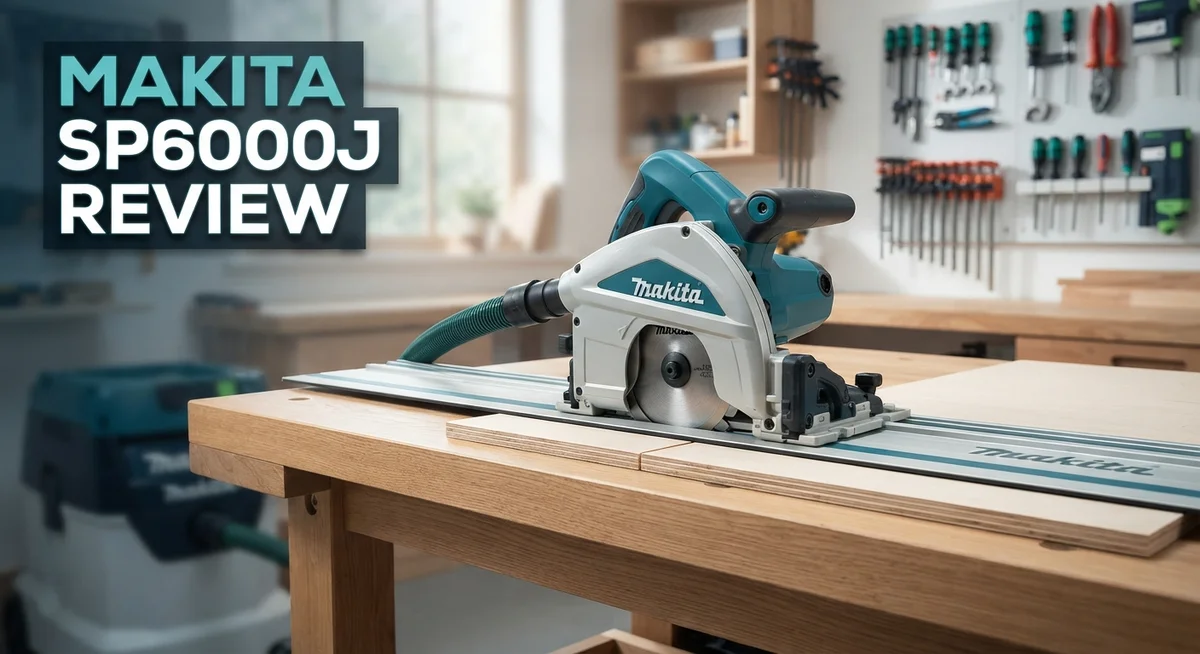
Makita SP6000J Track Saw Review: Live Up To The Hype?
Cutting plywood often feels tricky. Straight lines can wobble. Edges can splinter.
The Makita SP6000J track saw promises to fix that problem. It brings a 12 Amp motor to every cut you make.
This tool offers variable speed control. You can adjust it from 2,000 to 5,200 RPM. That means you get the right speed for different materials.
Many woodworkers want smooth, clean cuts. This saw delivers that with its electronic speed control. A soft start feature also protects your grip and control.
In a Nutshell
- Power and speed: The 12 amp motor pushes through cuts with ease. Speed ranges from 2000 to 5200 RPM, so you can match power to material.
- Cutting depth: This saw handles up to 2 3/16 inches at 90 degrees. That covers most sheet goods without strain.
- Smooth starts: Electronic speed control gives a soft start every time. No jerky movement when you pull the trigger.
- Built in protection: A current limiter guards the motor during heavy use. This helps the tool last longer under stress.
- Some rough edges: Bevel play shows up when locked in place. Thick stock can also cause blade deflection and burn marks.
- Missing safety gear: There is no riving knife here. That means less protection against kickback on tougher cuts.
- Where it shines: This saw performs best on sheet goods. It struggles once you move beyond that zone.
Motor Power and Speed Control

- Powerful 12.0 AMP motor for optimum performance in a wide variety of materials
- Precision accurate cutting delivers a splinter-free mirror finish

Last update on 2026-09-13 / Affiliate links / Images from Amazon Product Advertising API Some of the links on this website are affiliate links, which means that at no additional cost to you, I earn a commission if you click through and make a purchase. I only recommend products and services that I believe will add value to my readers. Thank you for your support!
The 12 amp motor in the SP6000J delivers consistent power for most cutting jobs. This engine size sits right in the sweet spot for track saws that handle sheet goods regularly. You get reliable cutting force without excessive weight or complexity.
Variable speed control ranges from 2,000 to 5,200 RPM, which means you can adjust the blade speed to match your material. Thicker plywood benefits from slower speeds. Thinner veneers work better at higher speeds. This flexibility helps you get cleaner cuts across different wood types.
The electronic speed control system includes soft start technology. When you flip the power on, the blade ramps up gradually instead of jerking to full speed instantly. This gentle startup protects the motor and reduces strain on your hands and arms. You maintain better control during those first critical seconds of cutting.
A built in current limiter acts as an automatic safety feature. If the blade hits something hard or gets stuck, this limiter kicks in to protect the motor from damage. You won’t blow out the motor if you accidentally bind the blade on a knot or nail.
Real world performance shows mixed results beyond sheet goods. The motor handles plywood and MDF beautifully. Dense hardwoods or thick materials can cause blade deflection, which leads to burn marks on the cut surface. This limitation matters if you plan to crosscut solid wood regularly.
The speed control works smoothly in practice. You can feel the motor responding to RPM adjustments without sudden jumps or dips in power. Cuts feel steady and predictable when you match the speed to your material thickness.
One concern surfaces during extended use on demanding cuts. The motor performs well, but blade deflection becomes noticeable when pushing through material thicker than what sheet goods typically offer. This doesn’t mean the motor is weak. It means the saw’s overall design favors precision work on flat panels rather than heavy ripping or thick stock cutting.
For sheet goods work, the motor and speed control system work together effectively. You get the power you need with the control you want.
Cutting Capacity and Precision
The cutting capacity of the SP6000J sits at 2 3/16 inches at 90 degrees. This depth works well for most standard plywood and sheet goods projects.
Precision matters when you make crosscuts or rip cuts. The variable speed system helps here by letting you slow down the blade for delicate work. You can dial in speeds from 2,000 to 5,200 RPM depending on your material.
Bevel cuts reveal some challenges. When you lock the bevel angle in place, noticeable play develops in the mechanism. This looseness can affect your accuracy on angled cuts. Many users report that the bevel doesn’t stay as rigid as they’d like during operation.
Blade deflection becomes apparent on thicker materials. When you push the saw through dense stock, the blade can bend slightly under pressure. This deflection shows up as burn marks on the cut surface, especially on demanding jobs. The saw performs best when you stay within sheet goods territory where the blade doesn’t face extreme stress.
The track system itself contributes to precision. The saw rides along the track to keep cuts perfectly straight. This design eliminates the guesswork of freehand circular saws. You get consistent line following, which means your crosscuts stay square and your rip cuts stay parallel.
Electronic speed control helps cut quality. Slower speeds reduce vibration and produce cleaner edges. Faster speeds work better for softer materials where you need less resistance. You adjust the speed before you start, then the soft start feature brings the blade up smoothly.
Current limiting protects the motor during tough cuts. When the blade bogs down, the system automatically reduces power to prevent damage. This feature keeps the saw running longer and prevents sudden stalls that ruin your workpiece.
For sheet goods and standard crosscutting tasks, the SP6000J delivers solid precision. The track keeps everything aligned, and the speed control lets you optimize for each job. Beyond these applications, the bevel play and blade deflection become more noticeable concerns that affect your final results.
Build Quality and Design
The Makita SP6000J shows solid construction from the moment you unbox it. The 12 amp motor sits at the heart of this design, delivering consistent power without unnecessary bulk. The variable speed system ranges from 2,000 to 5,200 RPM, which lets you match blade speed to your specific material.
The track saw features an electronic speed control system with soft start technology. This means the motor ramps up gradually rather than jerking to full power. A built in current limiter acts as an automatic safety feature, protecting the motor when you hit resistance during cuts.
Where the design shows its limitations becomes clear in the bevel mechanism. When you lock the bevel angle in place, you’ll notice some play in the connection. This looseness can affect accuracy on angled cuts, especially when working with thicker materials. The blade deflection issue compounds this problem on demanding jobs.
The track system itself contributes positively to the overall design. The rails keep your cuts straight and true on sheet goods like plywood and MDF. The connection between the motor head and track remains stable during operation, which matters for repeatability across multiple cuts.
One notable gap in the design is the missing riving knife and kickback protection. Most track saws include these safety features as standard. Their absence here limits your options for certain cutting applications and reduces built in safeguards.
The housing and grip design feel comfortable during extended use. The saw sits naturally in your hands, and the controls respond predictably. The compact footprint makes storage easier than larger track saw models.
The SP6000J prioritizes sheet goods work, and the design reflects this focus. The motor, speed control, and track alignment all work together effectively for crosscutting and ripping plywood. For thicker hardwoods or demanding angle cuts, the design shows its constraints. The bevel play and blade deflection become more noticeable when you push beyond standard sheet material applications.
Overall, the build quality reflects a practical approach to track saw design. You get solid fundamentals without premium refinements.
Top 3 Alternatives

- Zero clearance track saw cutting system delivers precise, straight, splinter-free cuts.Power Tool...
- For use with track saw dual-edged tracks for perfectly straight cuts in both directions
Last update on 2026-09-13 / Affiliate links / Images from Amazon Product Advertising API Some of the links on this website are affiliate links, which means that at no additional cost to you, I earn a commission if you click through and make a purchase. I only recommend products and services that I believe will add value to my readers. Thank you for your support!

- Rip boards and create plunge cuts up to 2.6 inches thick or 45-degree bevel cuts up to 1.85 inches...
- Variable speed operation goes anywhere from 2000 to 6000 RPM
Last update on 2026-09-13 / Affiliate links / Images from Amazon Product Advertising API Some of the links on this website are affiliate links, which means that at no additional cost to you, I earn a commission if you click through and make a purchase. I only recommend products and services that I believe will add value to my readers. Thank you for your support!

- Powerful 15-amp motor delivers 5 300-RPM for greater speed and faster cuts
- 7-1 4-inch carbide-tipped blade included. Spindle lock for easy blade changes.
Last update on 2026-09-13 / Affiliate links / Images from Amazon Product Advertising API Some of the links on this website are affiliate links, which means that at no additional cost to you, I earn a commission if you click through and make a purchase. I only recommend products and services that I believe will add value to my readers. Thank you for your support!
Safety Features and Limitations
The Makita SP6000J comes with several safety features built into its design. The electronic speed control system includes soft start technology. This means the blade ramps up gradually instead of jerking to full speed immediately. A sudden start can cause kickback or loss of control, so soft start reduces this risk significantly.
The saw also features a built in current limiter. This automatic safety device protects the motor when you push too hard on thick materials. If the blade binds or stalls, the current limiter kicks in before the motor overheats or burns out.
However, the SP6000J has notable safety gaps. The saw lacks a riving knife and kickback protection system. A riving knife sits behind the blade and prevents the kerf from closing around the blade. Without it, the blade can grab the workpiece and throw it toward you. This is a serious limitation for safety conscious users.
The bevel mechanism shows another concern. When you lock the bevel angle in place, noticeable play develops in the mechanism. This loose connection can cause the blade to shift during cuts, leading to unpredictable results. Blade deflection becomes apparent on thicker materials, which means the blade wanders instead of following a straight path.
You may also notice burn marks on thick material. This happens because the blade struggles with denser woods and the friction generates heat. Slower speeds help reduce vibration and produce cleaner edges, but the saw performs best with sheet goods rather than solid lumber.
The track system itself contributes positively to safety by keeping the blade aligned. However, the overall design shows this saw focuses on sheet goods work. If you plan to cut thick hardwoods or need maximum safety features, you should consider the missing riving knife a serious limitation. For standard crosscutting tasks on plywood and MDF, the safety features work adequately.
Real-World Performance on Different Materials
The Makita SP6000J performs differently depending on what material you cut. Sheet goods like plywood and MDF are where this saw excels. The motor delivers consistent power, and the variable speed control lets you dial in the right RPM for clean edges without chipping.
When you work with solid wood on standard thickness cuts, results remain solid. The track keeps the blade perfectly aligned, which means your crosscuts and rip cuts stay straight. The electronic speed control helps here too. You can slow down the blade to reduce vibration and heat, which produces cleaner surfaces on hardwoods.
Thicker materials reveal where the SP6000J shows its limitations. Blade deflection becomes noticeable when you push the saw beyond its comfort zone. The motor has enough power, but the blade itself starts to wander slightly under heavy resistance. You may also see burn marks on thick stock, especially if you move too slowly or the blade binds.
The bevel mechanism adds another challenge with denser materials. When you lock the bevel angle and make angled cuts on thick wood, that play in the mechanism becomes more apparent. The saw still cuts, but precision drops compared to sheet goods work.
For laminate and veneer, the SP6000J handles these materials well. The variable speed lets you run higher RPMs for smooth, splinter free cuts. The track system keeps everything stable, which matters when you work with delicate surfaces.
One material type where performance really struggles is anything beyond sheet goods thickness. The saw was designed with plywood and similar materials as its primary focus. Push it into heavy ripping or deep cuts through solid timber, and you’ll notice the limitations. Blade deflection and inconsistent cut quality become real problems.
The bottom line: use the SP6000J for what it was built to do. Sheet goods, standard crosscutting, and general workshop tasks work great. Specialty materials and thick stock demand a different tool. Understanding these boundaries helps you get the best results from this track saw.
Pros and Cons
The Makita SP6000J offers genuine strengths that make it worth considering for specific cutting tasks. The 12 amp motor delivers consistent power across a wide range of applications. You’ll appreciate the variable speed control that lets you adjust from 2,000 to 5,200 RPM based on your material. This flexibility means you can slow down for delicate cuts and speed up when tackling tougher jobs.
The track system keeps everything aligned and stable during operation. This design choice directly improves cut accuracy and helps reduce blade wandering. The soft start technology prevents sudden jerks when you power on the saw. The current limiter works quietly in the background to protect your motor from strain.
However, the SP6000J has real limitations you should know about. The bevel mechanism shows excessive play even when locked down. This looseness affects precision when you need angled cuts. You’ll notice blade deflection becomes a problem with thicker materials, leading to burn marks on the edges.
The missing riving knife represents a significant safety gap. This component normally prevents kickback and protects your hands during operation. Without it, you lose an important layer of protection. The lack of kickback protection means you need extra caution when cutting.
Performance struggles beyond sheet goods thickness. If your projects involve solid wood pieces, dimension lumber, or anything thicker than typical plywood, expect compromised results. The blade deflection issue gets worse as material thickness increases.
For laminate and veneer work, the saw performs admirably. The track keeps everything stable, and the variable speed helps prevent chipping on delicate surfaces. This is where the SP6000J truly shines.
The bottom line: this saw excels at sheet goods and standard crosscutting. If you work primarily with plywood, MDF, and thin materials, the benefits outweigh the drawbacks. Plan your projects around its strengths rather than pushing it beyond its design limits. Understanding these pros and cons helps you make the right decision for your workshop needs.
Who Should Buy It
The Makita SP6000J is a smart choice for specific types of woodworkers. If you spend most of your time cutting sheet goods like plywood and MDF, this saw delivers solid results. The track system keeps your cuts straight and clean on these materials.
Hobbyists working in small shops will appreciate the compact design. You get a capable tool without needing a massive workspace. The variable speed control lets you adjust performance based on your material, which adds flexibility to your projects.
DIY enthusiasts tackling crosscutting and ripping tasks will find the SP6000J reliable for standard thickness work. The electronic speed control with soft start means smooth operation every time you power on. This feature reduces strain on your motor and extends the saw’s lifespan.
Laminate and veneer workers should seriously consider this model. The saw handles these materials exceptionally well, producing clean edges without excessive chipping. If your projects focus on these finishes, the SP6000J performs admirably.
However, avoid this saw if you regularly work with thick hardwoods or dense materials. The blade deflection and burn marks on thicker stock reveal real limitations. You’ll encounter frustration when pushing beyond sheet goods thickness.
Professional contractors cutting solid wood on heavy jobs should look elsewhere. The SP6000J simply isn’t built for that demanding work. The bevel mechanism shows excessive play when locked, which creates accuracy concerns for precision work.
This saw is NOT for you if safety features are your top priority. The missing riving knife and lack of kickback protection represent significant gaps. You’ll need to compensate with careful technique and extra caution.
Budget conscious builders focused on sheet goods work will feel satisfied with this purchase. The saw excels at what it was designed to do. Just understand its boundaries before buying.
In summary, the SP6000J fits woodworkers who cut sheet goods, laminates, and veneers regularly. It works well for standard crosscutting on typical material thickness. Skip it if you need a versatile saw for heavy hardwood work or demand maximum safety features.
Final Verdict
The Makita SP6000J earns its place as a dependable track saw for everyday cutting tasks. Its smooth motor and stable track system make it a joy to use on standard projects. This tool shines brightest when matched with the right jobs.
Build quality stands out as a genuine strength. Makita designed this saw with care, and it shows in daily use. The soft start feature and current limiter add a layer of control that many users appreciate.
That said, this saw is not a perfect match for every woodworker. The missing riving knife remains a real concern for safety conscious buyers. Anyone cutting thick or dense materials will likely feel frustrated by the blade deflection issues.
Think of the SP6000J as a specialist rather than an all rounder. It handles sheet goods, laminate, and standard crosscutting with confidence. Push it beyond those boundaries, and performance drops noticeably.
Weigh your typical projects before making a decision. Do you mostly cut plywood, MDF, or veneer? Then this saw fits your workflow well. Do you regularly tackle thick hardwoods on demanding jobs? Then you may want to look at other options.
Safety should also guide your choice. The lack of kickback protection means extra caution is needed at all times. Experienced users who understand track saw safety can work around this gap.
New users or those prioritizing built in safety features might feel less comfortable with this tradeoff.
In short, the Makita SP6000J delivers solid performance within its intended scope. It rewards users who match the tool to the right tasks. Buyers who understand its limitations will find a reliable saw for years of sheet good cutting and standard woodworking projects.
Choose this saw with clear expectations, and it will serve you well.
Frequently Asked Questions
Does the SP6000J come with a riving knife?
No, it does not. The SP6000J lacks a riving knife, which is a safety device that prevents kickback. This is a significant gap if you prioritize built in safety features. You’ll need to work around this limitation or add aftermarket protection.
Can this saw handle thick hardwood?
The SP6000J struggles with thick material. Blade deflection and burn marks appear when you push beyond standard sheet goods thickness. Avoid this saw if your projects involve dense hardwoods regularly. It performs best on plywood, MDF, and laminate instead.
What’s the bevel adjustment like?
The bevel system has excessive play when locked. This means the angle can shift slightly during cuts, affecting precision. It’s a real weakness compared to other track saws in this class. You’ll notice this most on angled crosscuts.
Is this saw good for laminate and veneer work?
Yes, absolutely. The SP6000J handles laminate and veneer exceptionally well. The track system keeps everything stable, and the blade speed works nicely for these materials. This is one area where the saw truly shines.
Who should actually buy this saw?
This saw fits hobbyists, DIY enthusiasts, and laminate workers best. Small shop owners will appreciate the compact design. Skip it if you work with thick solid wood regularly or need maximum safety features built in. Think of it as a specialist tool, not an all rounder.

Hi, I’m Amelia Thornton, the founder of ElectroPro.blog.
I write about smart devices, gadgets, electronics, and tech essentials from Amazon.
My goal is to help you discover reliable and innovative tech that truly makes life easier.
From home automation to everyday gear, I test and share what’s worth your investment.
Join me as I explore the smartest tech trends—one gadget at a time.