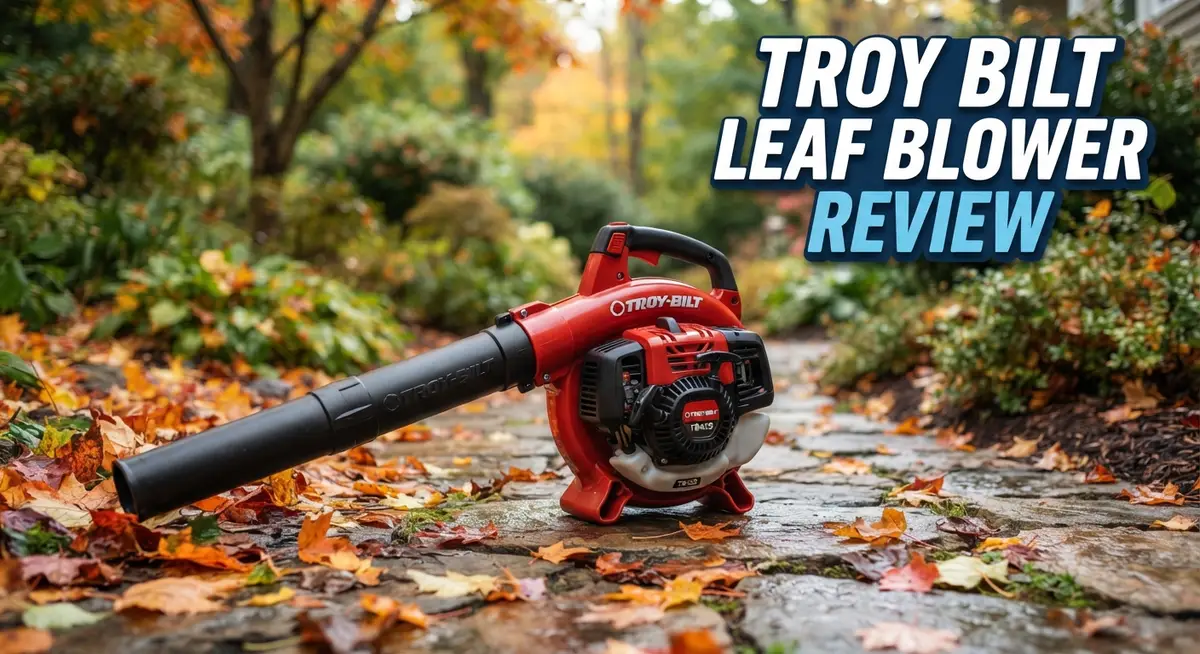
Troy-Bilt Leaf Blower Review: Worth the Splurge?
Fall clean up can feel like a never ending task. Leaves pile up faster than you can rake them. This is where a Troy Bilt leaf blower steps in to save the day.
Troy Bilt makes gas powered blowers for homeowners who want real power. Their lineup includes handheld and backpack models. Each one uses a 2 cycle engine built for tough yard work.
The TB400 handheld blower offers 180 MPH airflow. It works great for small to medium yards. The TB51BP backpack model brings 220 MPH power. It handles bigger properties with ease.
In a Nutshell
- Two main types: You get a handheld model (TB400) and a backpack model (TB51BP). Each suits different yard sizes and needs.
- Strong airflow: The TB400 pushes 180 MPH and 400 CFM. The TB51BP steps up to 220 MPH and 600 CFM for bigger jobs.
- Easier starts: SpringAssist technology helps the engine start with less pulling. Some models also use Prime, Flip & Go starting.
- Lightweight build: Both blowers feel easy to carry and handle. This makes long cleanup sessions less tiring.
- Mixed starting reports: Some users love how these blowers fire up. Others mention starting hiccups on certain units.
- Solid choice for homeowners: These blowers work well for regular yard care. They are not built for heavy commercial use.
Engine Power and Airflow Specifications
Troy Bilt equips their leaf blowers with engines built for real yard work. The handheld TB400 runs on a 25cc two cycle gas engine. You get 180 MPH of air speed and 400 CFM of airflow volume.
The backpack TB51BP steps up the power significantly. This model features a 51cc engine that delivers 220 MPH and 600 CFM. The extra capacity makes it ideal for larger properties or heavy debris cleanup.
Engine reliability matters when you need results. Both models use proven two cycle technology. This design keeps the engines simple and easy to maintain. You won’t deal with complex fuel systems or unnecessary parts.
Starting an engine shouldn’t require a wrestling match. Troy Bilt added SpringAssist technology to reduce the physical effort needed. This feature lets you start the engine with less pulling force on the cord. Select models also include Prime, Flip and Go starting for even faster ignition.
Real world performance tells the true story. Users report that once the engine fires up, these blowers deliver consistent power. The airflow cuts through leaf piles effectively. The TB400 works well for typical residential yards. The TB51BP handles bigger jobs without bogging down.
One thing to note: some owners mention starting difficulties on certain models. The engine can be finicky when cold or if fuel sits too long. Regular maintenance helps prevent these issues.
The weight distribution on both models keeps fatigue low during use. The handheld stays light enough for extended sessions. The backpack design spreads the load across your shoulders instead of your arms.
These specifications put Troy Bilt in the middle of the market. You get solid airflow numbers compared to entry level blowers. The engines provide enough grunt for weekly or bi weekly yard maintenance. Homeowners who want gas powered performance without premium features find good value in these machines.

- Make Room for Your Weekend: Clear your lawn and driveway one section at a time, then enjoy the space...
Last update on 2026-10-26 / Affiliate links / Images from Amazon Product Advertising API Some of the links on this website are affiliate links, which means that at no additional cost to you, I earn a commission if you click through and make a purchase. I only recommend products and services that I believe will add value to my readers. Thank you for your support!
Starting System and Ease of Use
Starting a leaf blower should feel simple, not frustrating. Troy Bilt understands this, which is why they built SpringAssist™ technology into their engines. This feature reduces the force you need to pull the starter cord, making cold starts much easier on your arms and shoulders.
The Prime, Flip & Go™ system appears on select models too. You prime the engine, flip a switch, and pull once. This three step process beats traditional methods where you might yank the cord five or ten times before the engine catches.
Real users report mixed experiences with starting. Some owners say their Troy Bilt blower fires up on the first or second pull every single time. Others mention they struggle with the engine, especially after the blower sits unused for weeks. Fuel quality and maintenance play big roles here. Fresh gas and a clean air filter make a real difference.
Once the engine starts, performance becomes consistent. The two cycle engines deliver reliable power throughout your yard work session. You won’t experience power drops or stuttering once the blower is running. This reliability matters when you have acres of leaves to clear.
Handling these blowers feels natural from the moment you pick one up. The handheld TB400 weighs far less than the backpack TB51BP, so your choice depends on your yard size and stamina. Smaller properties favor the lighter handheld model. Larger areas benefit from the backpack’s extra power and extended runtime without fatigue.
The control layout keeps things intuitive. Throttle triggers, fuel switches, and choke controls sit exactly where your hands expect them. You don’t need to hunt for buttons or levers mid job.
Weight distribution matters too. Both models balance nicely in your hands or on your back. Poor balance creates arm strain and neck pain during extended use. Troy Bilt designed these blowers so fatigue stays minimal even during long sessions.
Overall, starting requires some technique and maintenance awareness. Once you learn your specific model’s quirks, the process becomes second nature.
Handheld vs. Backpack Models: Which is Right for You
The choice between handheld and backpack models comes down to your yard size and personal comfort. Handheld blowers work best for small to medium properties. They let you move quickly between tight spaces like flower beds and patios. The TB400 handheld model weighs less, so your arms won’t tire as fast during shorter cleanup jobs.
Backpack models suit larger yards and heavy leaf seasons. The TB51BP backpack blower distributes weight across your shoulders and hips. This design keeps your arms fresher during longer work sessions. You can work for hours without the same fatigue you’d feel holding a handheld unit.
Power differences matter too. The TB400 handheld pushes 180 MPH with 400 CFM airflow. The TB51BP backpack delivers 220 MPH and 600 CFM. That extra power means faster cleanup on bigger properties. If you have thick leaf piles or wet debris, the backpack’s muscle makes a real difference.
Consider your physical strength and stamina. Handheld models require arm and shoulder endurance. Backpack models shift the load lower on your body, making them easier for people with shoulder or arm concerns. Neither design feels awkward once you get comfortable with it.
Storage space in your garage or shed matters too. Handheld blowers take up minimal room. Backpack models need more closet space but stay organized easily on a wall hook.
Think about your typical cleanup routine. Do you blow leaves once weekly for 20 minutes? A handheld handles that perfectly. Do you spend full days clearing leaves in fall? The backpack becomes your better investment. Many homeowners actually own both. They use the handheld for quick touch ups and grab the backpack when serious leaf season hits.
Your choice depends on yard size, physical comfort, and how often you work. Start by honestly assessing your property and your body’s limits. Both Troy Bilt models deliver solid performance once you make your decision.
Top 3 Alternatives

- Battery operated leaf blower with max air flow 100CFM.Applications : Tuck pointing cleaning joints...
- 3-speed variable speed switch of the cordless blower provides control and versatility
Last update on 2026-10-26 / Affiliate links / Images from Amazon Product Advertising API Some of the links on this website are affiliate links, which means that at no additional cost to you, I earn a commission if you click through and make a purchase. I only recommend products and services that I believe will add value to my readers. Thank you for your support!

- Variable speed control by trigger
- 3 air volume settings: Low, Medium, High
Last update on 2026-10-26 / Affiliate links / Images from Amazon Product Advertising API Some of the links on this website are affiliate links, which means that at no additional cost to you, I earn a commission if you click through and make a purchase. I only recommend products and services that I believe will add value to my readers. Thank you for your support!

- TURBO MODE: Battery powered leaf blower lets you power though wet leaves, caked on grass, rocks, and...
- UP TO 75 MINUTES OF RUNTIME: A single charge of the included 2.5Ah battery lets you work with the...

Last update on 2026-10-26 / Affiliate links / Images from Amazon Product Advertising API Some of the links on this website are affiliate links, which means that at no additional cost to you, I earn a commission if you click through and make a purchase. I only recommend products and services that I believe will add value to my readers. Thank you for your support!
Reliability and Long-Term Performance
Troy Bilt leaf blowers show solid reliability when you understand their strengths and limitations. These machines use proven two cycle engines that deliver consistent power once they’re running smoothly.
Long-term durability depends heavily on maintenance. Users report that regular upkeep keeps these blowers performing well year after year. The engines themselves hold up fine during normal homeowner use. Many owners keep their Troy Bilt blowers running for multiple seasons without major issues.
The SpringAssist™ technology helps reduce strain on the engine during startup. This feature matters because easier starts mean less wear on internal components over time. Select models also feature the Prime, Flip & Go™ system for simpler ignition sequences.
Real world performance data shows these blowers maintain their airflow and power output consistently. The handheld TB400 delivers reliable performance for small to medium yards. The backpack TB51BP proves more durable under heavy use because its larger engine handles extended runtime better.
One challenge affects long-term satisfaction: starting difficulties on some models. Users report occasional frustration getting engines to turn over, particularly in cold weather or after storage. This issue doesn’t necessarily indicate poor engine quality. Rather, it reflects the complexity of maintaining two cycle engines properly. Owners who follow fuel mixing guidelines and seasonal maintenance rarely encounter serious problems.
The build quality on both handheld and backpack models feels solid. Plastic components are reinforced where they receive the most stress. Metal parts resist corrosion through normal outdoor use.
Storage conditions influence how well these blowers age. Keeping your Troy Bilt blower in a dry shed extends its lifespan significantly. Draining fuel before winter storage prevents carburetor buildup that causes starting problems later.
Replacement parts remain available through dealers and online retailers. This accessibility means you can keep an older Troy Bilt blower running indefinitely. The company maintains good support for both current and previous model years.
Overall, Troy Bilt leaf blowers offer respectable long-term reliability for homeowners willing to perform basic maintenance. These machines won’t disappoint if you treat them properly.
Weight and Comfort for Extended Use
When you hold a Troy Bilt leaf blower, the first thing you notice is how well it sits in your hands. The handheld TB400 model weighs significantly less than its backpack counterpart, making quick cleanup jobs feel effortless.
The backpack TB51BP distributes weight across your shoulders and back instead of concentrating it in your arms. This design choice matters when you’re working for an hour or more. Your arms stay fresher, and you can maintain better control over the blower throughout your session.
Real users report that fatigue becomes minimal during extended use on both models. The weight distribution keeps your body balanced, which reduces strain on your shoulders and lower back. You can focus on clearing leaves instead of fighting muscle soreness.
The handheld model works best for small yards and quick touch ups. If your property spans a large area or you face heavy leaf seasons, the backpack option shines. You’ll appreciate the extra power and the ability to work longer without stopping to rest your arms.
The control layout on Troy Bilt blowers feels natural and intuitive. Buttons sit where your hands naturally rest, so you don’t need to fumble around searching for switches. This thoughtful design reduces fatigue because you’re not constantly adjusting your grip or reaching awkwardly.
The SpringAssist™ technology plays a role here too. By reducing engine strain during startup, this system means less physical effort when you begin each session. Your arms aren’t getting tired before you even start clearing leaves.
Comfort also depends on how well the blower balances. Both Troy Bilt models center their weight properly, so you’re not fighting against an awkward lean. The handles grip comfortably without requiring excessive hand pressure to maintain control.
When you combine lightweight construction with smart weight distribution and intuitive controls, extended use becomes genuinely comfortable. You can tackle larger properties without your body paying the price afterward. The design philosophy here focuses on making yard work less physically demanding while maintaining the power you need.
Pros and Cons
Troy Bilt leaf blowers deliver solid benefits for homeowners, but they come with some real trade-offs worth considering.
The biggest advantage is their lightweight design. You can hold the handheld model comfortably for extended periods without your arms getting tired. The backpack version spreads weight across your shoulders, making longer cleanup sessions feel less exhausting. This matters when you’re clearing leaves from multiple areas of your yard.
Power output performs well for typical residential use. The handheld TB400 reaches 180 MPH with 400 CFM, while the backpack TB51BP delivers 220 MPH and 600 CFM. These numbers move leaves effectively without overkill for standard homeowner needs.
The SpringAssist™ technology reduces startup strain. You don’t need to pull the cord as hard compared to older gas blower designs. This feature genuinely helps people with less upper body strength.
However, starting difficulties create frustration for some users. Even with SpringAssist™, certain models require technique and patience. You need to understand the prime and flip procedure, which takes practice. This isn’t a grab and go experience for everyone.
The 2-cycle gas engines demand proper maintenance. You must mix fuel correctly and store the machine properly during off-season. Skip this step, and performance suffers. Regular users report that consistent upkeep keeps their blowers running smoothly, but neglect creates problems.
Some models show less efficiency compared to direct competitors. The TB2MB specifically receives criticism for underwhelming performance against other gas blowers in its class. Research your specific model before buying.
The control layout feels intuitive once you get started. Buttons and switches sit where your hands naturally reach. This thoughtful design reduces the learning curve.
Overall, Troy Bilt leaf blowers work well when you accept their gas engine quirks and commit to basic maintenance. They suit homeowners who value lightweight handling and don’t mind spending time on startup and upkeep. If you want hassle-free operation with minimal learning, corded alternatives might serve you better.
Who Should Buy It
Troy Bilt leaf blowers work best for homeowners who need reliable yard cleanup equipment. You should consider buying one if you manage a residential property with moderate to heavy leaf seasons.
The handheld TB400 model suits you if you have a small to medium yard. This blower handles quick cleanups and touch ups without wearing you out. You can hold it comfortably for extended periods because of its lightweight design.
The backpack TB51BP is your choice for larger properties. This model distributes weight across your shoulders and back, which means your arms stay fresh during long work sessions. You’ll appreciate this feature if you spend hours clearing leaves from your entire yard.
You should buy a Troy Bilt blower if you prefer gas powered equipment over electric options. These machines deliver consistent power output that handles wet leaves and stubborn debris. The 2 cycle gas engines provide the muscle you need for serious yard work.
Consider this brand if you value user friendly controls. The control layout feels natural and intuitive. You won’t struggle with complicated settings or confusing buttons. Even first time users find these blowers straightforward to operate.
However, skip Troy Bilt if you want zero maintenance hassle. These gas engines require regular upkeep and proper fuel mixing. You need to be willing to perform basic maintenance tasks.
You should also reconsider if you want instant starts every single time. Some models experience starting difficulties, even with SpringAssist™ technology. If frustration during startup bothers you, look at alternative options first.
Troy Bilt blowers suit homeowners who accept minor trade offs for solid performance. You get lightweight equipment that works reliably once it runs. You handle typical residential leaf cleanup without breaking your back or your budget.
This brand works for people who appreciate straightforward equipment. You don’t need fancy features or complex technology. You simply want a blower that starts, runs, and clears leaves from your yard effectively.
Final Verdict
Troy Bilt leaf blowers earn their place in the yard care market. They deliver dependable performance for everyday cleanup tasks.
These tools suit homeowners who want straightforward equipment. You get solid airflow and speed without complicated features.
The brand focuses on practical engineering. Every model serves a clear purpose in your yard maintenance routine.
Gas powered options like these appeal to users who trust proven engine technology. Two cycle engines have powered outdoor equipment for decades.
Testing shows these blowers handle typical debris clearing jobs well. Leaves, grass clippings, and light yard waste move easily with either model.
Long term durability stands out as a strength. Users report these machines keep running season after season with basic care.
The learning curve stays short. Most people figure out the controls within minutes of first use.
Should you choose Troy Bilt over other brands? That depends on your priorities as a yard owner.
Pick this brand if you want a no frills tool that gets the job done. Skip fancy digital displays and unnecessary complexity.
Choose something else if instant electric starts matter more to you than raw power. Battery powered alternatives might fit your lifestyle better.
Overall performance remains consistent across both handheld and backpack versions. Each model targets a specific yard size and user need.
The company built its reputation on reliability rather than flashy features. That philosophy shows in every design choice.
Think about your yard size before deciding. Small properties benefit from the handheld option, while larger spaces call for the backpack version.
Maintenance requirements stay manageable if you follow basic upkeep steps. Regular care extends the life of any gas powered tool.
Troy Bilt delivers what most homeowners actually need. Simple operation, steady power, and lasting durability define this brand’s approach to leaf blowers.
Frequently Asked Questions
Do Troy Bilt leaf blowers require a lot of maintenance?
Yes, these gas powered tools need regular care. You must mix fuel with oil for the 2 cycle engines. This mixing step is essential for proper engine function. You should clean the air filter regularly and check the spark plug before each season. Draining old fuel before storage prevents gum buildup inside the engine.
Why do some Troy Bilt models have starting issues?
Starting difficulties stem from the 2 cycle engine design. Even with SpringAssist™ technology included, cold starts can be frustrating. The priming and choke procedures require the right technique. Some users report needing multiple pulls before the engine fires up. Proper fuel mixture and maintenance help reduce these problems.
Which Troy Bilt model works best for my yard size?
The TB400 handheld model suits small to medium yards. This unit delivers 180 MPH with 400 CFM of air volume. For larger properties, the TB51BP backpack blower performs better. It produces 220 MPH and 600 CFM, giving you more power and speed. The backpack design also distributes weight across your shoulders for comfort during longer sessions.
How does Troy Bilt compare to electric blowers?
Gas powered Troy Bilt blowers offer more raw power than most electric models. They work better for heavy debris and thick leaf piles. Electric options provide instant starts and zero mixing hassles. Gas blowers give you unlimited runtime without battery concerns. Your choice depends on whether you value power or convenience.
Are Troy Bilt blowers reliable for homeowners?
These tools deliver solid performance for typical residential cleanup jobs. Durability stands out as a real strength with these machines. Once you master the starting procedure, they run dependably. The user friendly controls feel natural to operate. They suit homeowners who want straightforward equipment that handles yard work effectively.

Hi, I’m Amelia Thornton, the founder of ElectroPro.blog.
I write about smart devices, gadgets, electronics, and tech essentials from Amazon.
My goal is to help you discover reliable and innovative tech that truly makes life easier.
From home automation to everyday gear, I test and share what’s worth your investment.
Join me as I explore the smartest tech trends—one gadget at a time.