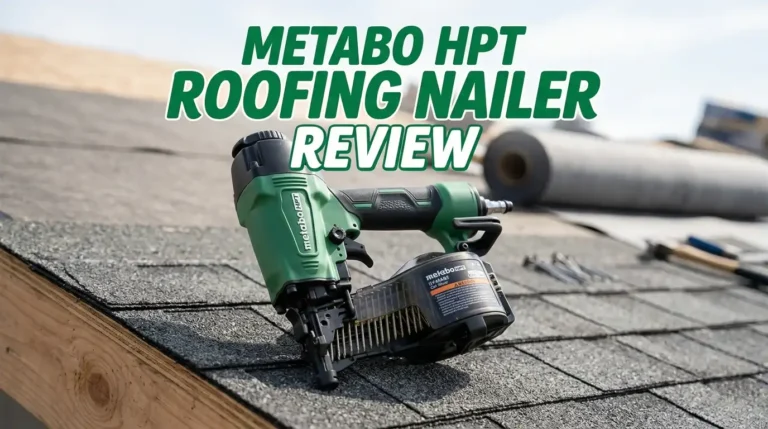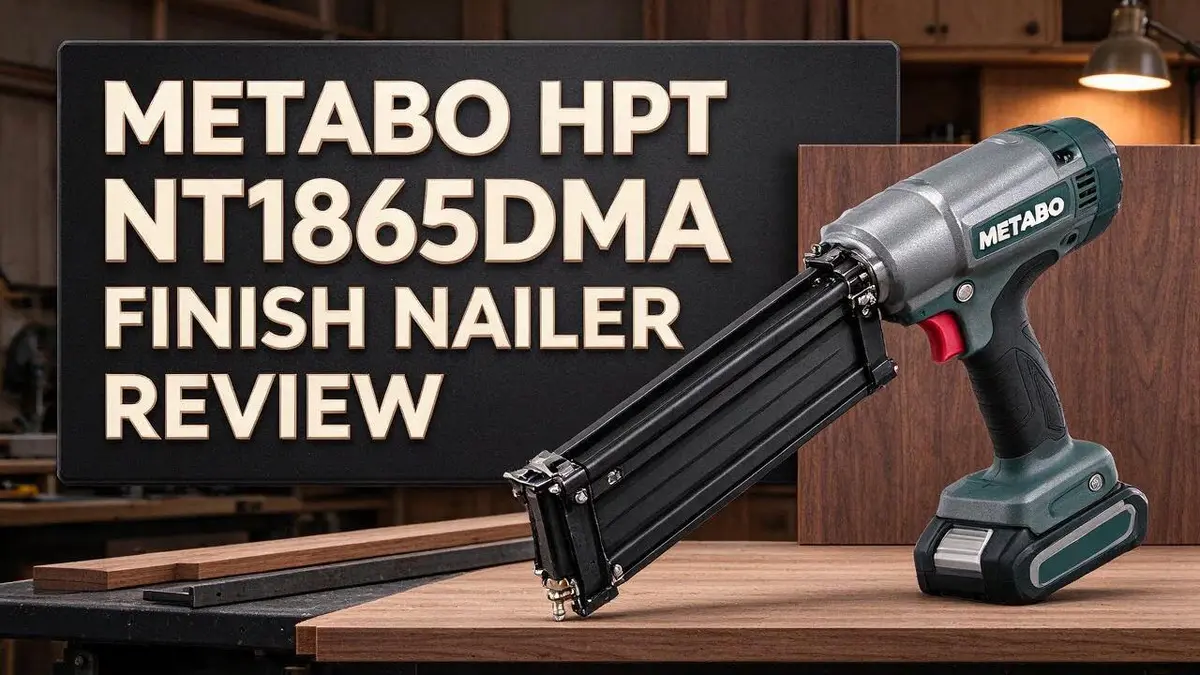
Metabo HPT NT1865DMA Finish Nailer Review: Complete Guide
Tired of hauling an air compressor and hose to every job? The Metabo HPT NT1865DMA finish nailer offers a cordless option for trim and cabinet work.
Cordless freedom makes a real difference on job sites. You grab the tool, load it, and start driving nails right away.
This 18V MultiVolt nailer uses a brushless motor and a 3.0Ah lithium ion battery. It fires 16 gauge straight finish nails with zero ramp up time.
In a Nutshell
- Fires right away. This nailer has zero ramp up time, so each trigger pull drives a nail immediately.
- Built for trim work. It suits moldings, chair rails, and cabinetry, where clean results matter most.
- Flush, neat finishes. The nailer drives nails flush, which helps trim look polished with less cleanup.
- Long run per charge. Users can expect about 950 nails per charge, so one battery covers a good stretch of work.
- Detailed guidance included. The 96 page manual explains setup, loading, and safe operation in depth.
- Check the exact model. The specs come from sibling models NT1865DMST and NT1865DMAS, so confirm details for the NT1865DMA before you buy.
- Compare before you choose. Many shoppers weigh it against DEWALT, Milwaukee, Makita, Bostitch, Hitachi, and Craftsman nailers.
Build and Ergonomics

- CORDLESS NAILER: 15 Gauge Cordless Nailer
- INCLUDES: NT1865DMAS, (1) Compact 3.0Ah Lithium Ion Battery, Charger, Contractor Bag, Safety Glasses
Last update on 2026-11-24 / Affiliate links / Images from Amazon Product Advertising API Some of the links on this website are affiliate links, which means that at no additional cost to you, I earn a commission if you click through and make a purchase. I only recommend products and services that I believe will add value to my readers. Thank you for your support!
Build quality matters a lot when you swing a nailer all day long. This model follows a cordless design, so you carry one tool instead of a heavy setup.
Without an air compressor and hose, your workspace feels simpler. You can move from wall to wall without dragging gear behind you.
A battery powered tool often carries weight near the back, so keep a firm grip and let the tool sit steady. Weight distribution changes how long you can work without a break. Short rests between boards keep your wrists fresh and your aim sharp.
The grip should feel natural in your hand. Test the handle before a long job, and check how the nailer sits when you hold it at arm’s length.
Ergonomics also affects fatigue. A nailer that feels comfortable helps you keep steady aim, which supports clean trim lines over a full workday.
Hand fit matters for smaller users too. Check that your fingers reach the trigger without stretching or pinching.
Trigger control matters as well. Light, steady pulls help you place each nail where you want it on delicate moldings.
Access to the nose and magazine also counts for daily use. Check how easily you reach these areas when a jam happens.
Plan your work area before you start. A clear, flat surface keeps the nose steady and helps each nail sit square.
Spend a few minutes with the tool before your first project. Hold it, feel the weight, and get a sense for its balance on your own wrist.
Confirm the weight and fit yourself. The specs in this review come from sibling models, so try the exact NT1865DMA in hand if you can.
Overall, the build suits people who value freedom of movement and steady control. Comfort in the hand makes every trim job feel easier.
Driving Power and Speed
Power matters most when the wood changes. Softwood like pine takes a nail with ease. Hardwood like oak asks for more force, so test your nailer before you start.
Grab a scrap piece from your project. Fire a few nails into it. Check whether each nail sinks flush or stops short.
Adjust the depth setting to suit the material. A setting that works on pine may leave a nail sitting proud on maple. Small changes make a big difference on finish work.
Speed depends on your rhythm. The nailer keeps pace with a steady worker who moves from board to board. It rewards a smooth routine more than a rushed one.
Misfires slow you down more than tool speed does. Each misfire means you stop, check the nail, and fire again. Keep spare nails in your apron so reloading stays quick.
Plan each cut before you pick up the nailer. Measure once, mark the spot, then drive. This habit saves time and cuts down on wasted nails.
Ask yourself what kind of finish you need. Trim that shows every flaw needs slower, careful drives. Rough trim in hidden areas can move faster.
Your wrist affects pace too. Keep it relaxed and let your arm move the tool in short, smooth motions. A relaxed wrist keeps each nail on target and keeps your speed high over a long day.
Work in batches for best results. Load the nailer, cut and fit several pieces, then drive nails in one run. Batching reduces stops and keeps your flow strong.
Keep the nose clear and the magazine loaded before each run. Small checks prevent stops in the middle of a task. Speed grows as you learn the tool, so your first hour may feel slow. By the end of a project, you will find your own steady beat.
Runtime and Power Source
The power source shapes how this nailer performs on your project. The NT1865DMA runs on an 18V MultiVolt platform. This setup gives you a cordless tool that moves freely around your work area.
A brushless motor sits inside the tool. Brushless motors run cooler and often last longer than brushed designs. They also deliver steady power when you drive a long line of nails.
The nailer uses a 3.0Ah lithium ion battery. A higher amp hour rating means more run time before you need a swap. Keep a spare pack nearby so your work keeps moving. Swap packs during breaks so the work never stops.
Runtime also depends on your habits. Constant trigger pulls drain the pack faster than short bursts of work. Pause between cuts and you stretch each charge further.
Zero spin up time means the motor reaches full speed the moment you pull the trigger. You never wait for the tool to spin up. Those saved moments add up across a full day of trim work.
Lithium ion packs hold a charge well when you store them properly. Keep the battery indoors and away from direct heat. Cold weather and extreme heat can both reduce battery output.
Let a warm battery cool before you return it to the charger. Charging a hot pack can shorten its life over time. Give each pack a short rest between sessions.
Pneumatic nailers still keep a speed edge on big jobs. Cordless power trades a little pace for freedom. For many small projects, that trade feels worth it.
Match the battery to the job in front of you. Light trim work needs less stored energy. Long cabinet runs call for a pack that lasts through the whole session.
Pick a pack that fits your daily schedule and project size. A fully charged spare keeps your bench running without delay. Small habits like these protect your power and your progress.
Top 3 Alternatives
DeWalt 16 gauge Finish Nailer
The DeWalt 16 gauge finish nailer suits trim, molding, and cabinet projects. It drives nails cleanly into both hardwood and softwood. Many DIY builders like its comfortable grip and simple depth control.
Its lightweight body helps during long jobs. Overhead work feels easier with less fatigue. This model works well for homeowners who want steady results on weekend projects.
Bostitch 16 gauge Finish Nailer
The Bostitch 16 gauge finish nailer offers a strong option for daily use. Its firing mechanism stays consistent across many nails. Contractors often pick it for interior trim and baseboards.
The tool clears jams with a simple release, so work keeps moving. Users appreciate the clear view of the nail magazine. It fits well in a busy workshop or on a job site where speed matters.
Milwaukee 16 gauge Finish Nailer
The Milwaukee 16 gauge finish nailer targets professionals who need reliable performance. It handles heavy workloads with less downtime. The design focuses on balance, so the nailer feels stable in the hand.
Adjustable depth settings help with flush nail placement. Crown molding and door casing jobs go smoothly with this model. Buyers who want a dependable tool for frequent use often choose it for their crews.

- This cordless finish nailer that is 100% battery powered eliminates need for a compressor, hose or...
- Brushless motor of the 16 gauge finish nailer maximizes runtime and durability
Last update on 2026-11-24 / Affiliate links / Images from Amazon Product Advertising API Some of the links on this website are affiliate links, which means that at no additional cost to you, I earn a commission if you click through and make a purchase. I only recommend products and services that I believe will add value to my readers. Thank you for your support!

- Drive 16 GA finish nails from 1-1/4-inch to 2-1/2-inch length with this pneumatic nailer
- Oil-free operation of the 16 gauge finish nailer reduces the risk of oil stains

Last update on 2026-11-24 / Affiliate links / Images from Amazon Product Advertising API Some of the links on this website are affiliate links, which means that at no additional cost to you, I earn a commission if you click through and make a purchase. I only recommend products and services that I believe will add value to my readers. Thank you for your support!

- The product is manufactured in china
Last update on 2026-11-24 / Affiliate links / Images from Amazon Product Advertising API Some of the links on this website are affiliate links, which means that at no additional cost to you, I earn a commission if you click through and make a purchase. I only recommend products and services that I believe will add value to my readers. Thank you for your support!
Finish Quality and Accuracy
Clean finish work starts with the nail head. The Metabo HPT NT1865DMA drives 16 gauge straight nails that sit flush with the surface. Flush nails mean less filler work later.
Visible trim shows every flaw. Chair rails and cabinet face frames catch the eye fast. A clean nail line keeps the final coat smooth.
Accuracy depends on how the nose meets the wood. Hold the nose square to the board. A tilted shot can bend thin molding or split the edge.
Always test on a scrap piece first. Fire two or three nails into the same wood you plan to use. Check the head height and the angle before you start the real job.
Misfires hurt finish quality more than most people expect. A missed shot can leave a crooked hole in the trim. Some users report misfires with this tool, so inspect the nose often.
Dust is a hidden threat. Sawdust can push a nail off line inside the nose. Wipe the tip with a dry cloth before each session.
Match the nail length to the joint. Short nails may hold weak trim poorly. Long nails can poke through thin stock and ruin the face.
Keep the trim balanced. Even spacing between nails looks neat across a long wall.
Good light helps too. Work near a window or a bright lamp so you can spot gaps and high nail heads. Shadows hide flaws that show up later under paint or stain.
Paint and stain reveal every mistake. A nail that sits a little proud can ruin a glossy finish. Take your time on the last few shots.
Many woodworkers judge a nailer by the quality of each shot. Clean, repeatable results matter more than raw power on trim. This model aims for that consistent look.
Plan the finish steps in order. Set the nails, fill the small holes, then sand lightly. Each step builds on the last and saves time.
Step back and check your work from a distance. Small flaws show up fast in good light. Your eye is the best judge of a flawless finish.
Misfires and Long-Term Reliability
Some owners report misfires, so reliability deserves a closer look. Most misfires trace back to a few simple causes. They are usually easy to fix.
A low battery is one common cause. A weak charge can leave a nail half driven.
Nail quality plays a role too. Bent or poorly collated strips can jam the feed.
Check each strip before you load it. Look for bends, rust, and loose collation.
The brushless motor has fewer parts that wear out. Less friction means less heat over time.
Keep a simple maintenance routine. Wipe off resin and sap from the nose after heavy use.
Look at the nailer after every full day. Check the housing for cracks. Tighten any loose screws you spot.
Watch the trigger and contact trip. A sticky trigger can cause double fires or none at all.
Store the tool in a dry place. Humidity can rust the nail path over time.
Log every misfire for one week. Note the battery level, nail type, and surface. A pattern often reveals the cause quickly.
Battery life matters for the long haul. Lithium packs lose capacity after many charge cycles. Plan to replace a worn pack sooner than the tool itself.
Expect some wear on a busy crew. Heavy daily use shortens the life of any tool. Plan for parts replacement on a yearly basis.
Read the full manual once before your first job. It explains warning lights and common fixes.
Keep in mind that the specs come from sibling models. Ask the seller about warranty coverage before you buy.
Pneumatic nailers skip the battery and motor entirely. Some pros trust them for constant daily work.
A reliable nailer saves time and frustration. Good habits keep misfires rare. Stay consistent with checks and your tool will serve you well.
Final tip: Keep a spare battery on hand for long days.
Pros and Cons
Pros
- Works with 16 gauge straight finish nails for clean trim jobs.
- Needs no gas cartridges, so you can skip the refill routine.
- Drives nails fast, accurate, and flush to the surface.
- Handles moldings, chair rails, and cabinetry with ease.
- Runs reliably on the job for everyday finish work.
Cons
- Works only with 16 gauge straight nails, so angled options are out.
- Some specs come from sibling models, so double check the details before you buy.
- Less suited to heavy framing work than to trim and finish projects.
Who Should Buy It
Think about who will use this tool most. Some buyers get far more value from it than others, so it helps to know your own habits first.
Weekend DIYers form a large group of ideal buyers. They might add casing, a chair rail, or new trim once a month, and a cordless setup keeps those jobs simple.
Renters and apartment dwellers also gain a lot here. A cordless tool means no air hose snaking across the floor. It also means no loud compressor kicking on while neighbors are home.
Small shop owners often like this style of nailer too. One person can carry the tool, a battery, and a box of nails to any job site. Setup takes seconds, so the work starts fast.
Pro crews that rely on pneumatic guns may need time to adjust. This nailer runs at a slower pace, so the switch can feel strange at first. Many experienced carpenters still find it useful for the finish stage.
Homeowners with a small workspace should also take a close look. A cordless tool fits neatly in a closet, a garage corner, or a spare room. You can store it on a shelf with no hoses to coil.
Think honestly about how often you plan to swing the tool. Occasional users may find the speed more than enough for a few projects each year. Daily professionals may want more speed than this model offers.
Hobbyists who enjoy learning new skills also make good owners. The tool rewards careful setup and steady technique. Each project teaches you a little more about how the nailer behaves.
If your projects match these profiles, this nailer deserves a spot on your shortlist. Compare the fit with your daily routine. Then decide with confidence and get back to your next project.
Final Verdict
The Metabo HPT NT1865DMA is a solid pick for trim work. It drives 16 gauge straight nails cleanly and sets them flush. For most finish carpenters, it earns a spot on the shortlist.
This nailer suits careful, detail-focused jobs. It shines on moldings, chair rails, and cabinet face frames. It may feel less useful on heavy framing, so plan your toolbox around that.
Before you buy, confirm the exact model details. The specs in this review come from sibling listings, not the NT1865DMA itself. Check the product page for battery size, nail capacity, and included accessories.
Compare it with your current setup. If you already own a pneumatic gun, a cordless tool may feel slower at first. Many users find that trade is worth it for the freedom from hoses and compressors. Still, hold it in your hands and test the balance.
Shop around among major brands. DEWALT, Milwaukee, Makita, Hitachi, and Craftsman all offer cordless finish nailers. Bostitch’s N62FNK2 remains a popular pneumatic option. Compare nail capacity, weight, and warranty terms before you decide.
Try a few test boards first. Shoot scrap pieces of your trim and check the nail depth. This simple step shows how the tool handles your wood type. It also helps you adjust the depth settings before a big project.
Who should buy it? Weekend builders, renters, and small shop owners will likely find it a good match. Heavy daily framing crews may want a stronger pneumatic option instead. Choose the tool that fits your actual projects.
The bottom line is simple. This nailer delivers clean, fast results for finish work without gas cartridges. Pick it if trim is your main job, and skip it if framing is your focus. Your projects should make the final call.
Frequently Asked Questions
Do I need an air compressor to run it?
No. This nailer runs on a battery, so you skip the hose and compressor completely. You can carry it up a ladder or into a tight closet. The motor also starts right away, so there is no waiting time before each shot.
How many nails can one charge handle?
The research lists about 950 nails per charge. That figure comes from sibling models, so check it against your own pace. Long trim days may call for a spare battery. Keep one charged and ready so your work does not stop.
Does the manual help a beginner?
Yes. The manual runs 96 pages and covers setup, depth adjustment, and battery care. Read the safety section first. A short read now can save you frustration later.
What should I do if it misfires?
Start by charging the battery fully and reloading the nail strip. Then check that the nails sit straight in the magazine. Next, fire a few nails into scrap wood to see if the problem is gone. If misfires continue, stop using the tool and review the manual’s troubleshooting steps.

Hi, I’m Amelia Thornton, the founder of ElectroPro.blog.
I write about smart devices, gadgets, electronics, and tech essentials from Amazon.
My goal is to help you discover reliable and innovative tech that truly makes life easier.
From home automation to everyday gear, I test and share what’s worth your investment.
Join me as I explore the smartest tech trends—one gadget at a time.