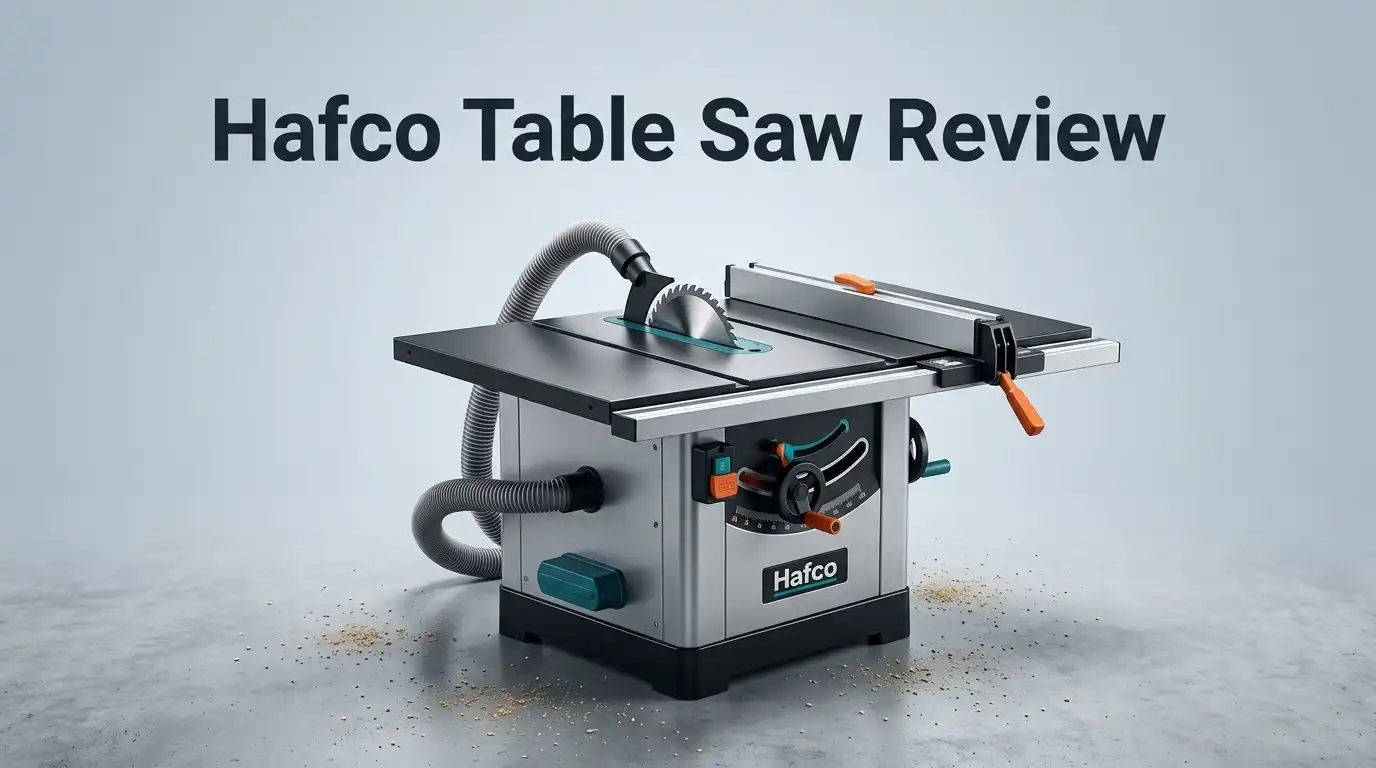
Hafco Table Saw Review 2026: Worth Buying?
Buying a table saw feels like a big commitment. You spend real money, you give up floor space, and you trust the machine with your fingers. So the Hafco name comes up fast in Australian and New Zealand workshops, mostly because it sits in that sweet middle price band between flimsy benchtop saws and expensive European cabinet saws.
I spent time with the Hafco Woodmaster ST254, the model most hobby woodworkers actually consider. I also read owner feedback going back years, including the angry reviews. This post covers what the saw does well, what it does badly, and whether the 2026 price still makes sense.
You will get the unboxing story, the honest cutting results, the dust collection truth, and a clear list of who should walk away. No hype. Let me show you the whole picture before you spend two thousand dollars.
In A Nutshell:
- The Hafco ST254 is a hybrid cabinet saw, not a jobsite saw. It weighs 190.5kg, uses a cast iron table measuring 560 x 800mm, and grows to 1170 x 800mm with the cast iron wings fitted. It is a stationary machine that lives in one spot forever.
- Power is genuinely good for a 10 amp plug. The 2.2kW (3hp) induction motor gives 75mm depth of cut at 90 degrees and 60mm at 45 degrees. It runs quietly, starts softly, and does not bog down in 45mm hardwood.
- The rip fence is better than the price suggests. You get 950mm rip capacity, micro adjustment, cam locking front and rear, plus a detachable high and low fence face.
- Dust collection is the weak spot. The 100mm port at the rear works fine, but sawdust still piles up inside the cabinet under the blade, so you will clean it out often.
- Accessory compatibility frustrates experienced users. The arbor is a 25.4mm size with limited length, so many off the shelf dado stacks and some blades need shims or simply will not fit.
- Value is strong at around $1,815 for the saw alone, or roughly $2,475 for the package deal with the 1500mm sliding table. Prices shift, so check current stock before you plan.
What Is The Hafco Table Saw Range?
Hafco is the machinery brand sold by Hare and Forbes Machinery House. The woodworking line carries the Woodmaster badge. The saws are made overseas and sold direct through Machinery House stores and their website.
The range spreads wide. At the cheap end sits the HS120 with a sliding table, a light 65kg saw with a 315mm blade. It costs a few hundred dollars and suits occasional sheet work.
Then comes the SB12, a 137.5kg saw with a 305mm blade and 100mm depth of cut. It rips deep but the table is smaller and the fence arrangement is simpler.
The ST254 sits in the middle and gets the most attention. It is the first Hafco saw that feels like a real cabinet saw, mostly because of the mass and the enclosed steel stand.
Above that you find the ST12D at 249kg with a 305mm blade and 1220mm rip capacity, then the PS1810 panel saw, then genuine industrial machines that cost five figures.
The pattern is clear. Hafco competes on weight and cast iron for the money. You get more mass per dollar than most imported brands sold through hardware chains.
The tradeoff shows up in the details. Fit and finish, accessory support, and fine tuning quality all sit behind premium brands. You are buying iron, not refinement.
Unboxing And First Impressions
The delivery is the first reality check. The ST254 arrives on a pallet in a plywood crate, and the whole thing weighs close to 200kg once you count packaging.
You will not carry this into a shed alone. Plan for two or three people, or an engine crane, or a tail lift truck and a pallet jack. Sort this out before delivery day, not during it.
The crate opens with a pry bar and a socket set. Inside you find the main body already assembled on its steel stand, with the cast iron extension wings, fence rails, and hardware boxed separately.
Everything wears a coat of shipping grease. It is thick, brown, and stubborn. Mineral turps and rags remove it, and you will use more rags than you expect.
The first honest impression is weight. The cast iron table feels dense and dead under your hand, which is exactly what you want for vibration control.
The second impression is less flattering. Casting quality on the wings varies, and paint runs show on the cabinet in places. This is a value machine and it looks like one up close.
Handwheels for height and tilt feel solid. The magnetic switch box has a real emergency stop paddle. Small touches like that build confidence.
Assembly And Setup Experience
Expect a full afternoon. Bolting the cast iron wings on is the heavy part, and lining them flush with the main table takes patience.
Use a long straight edge across the joint. Loosen, tap with a dead blow hammer, retighten, then check again. This step decides how accurate your saw feels for the next ten years.
The fence rails go on next. The front rail carries the scale, so square it to the table before you trust any printed measurement.
Then comes the important tuning work most owners skip. Check that the blade sits parallel to the mitre slots, because the factory setting is close but rarely perfect.
On the ST254 you adjust this by shifting the trunnion assembly inside the cabinet. It is fiddly work through the throat plate opening and it needs a dial indicator for good results.
Blade to fence parallel comes after that. The fence has micro adjustment, which makes this easier than on cheaper saws.
Many owners report the throat plate sits slightly low. Shims fix it, and a shop made zero clearance insert fixes it better.
The manual is functional but plain. Machinery House provides parts diagrams, which helps years later when you need a specific bolt or gear.
Top 3 Alternative for Hafco ST254 Table Saw

- Rack & Pinion Telescoping Fence System Make fence adjustments fast, smooth and accurate
- Patented material support, can be used for narrow rip cuts.

Last update on 2026-10-21 / Affiliate links / Images from Amazon Product Advertising API Some of the links on this website are affiliate links, which means that at no additional cost to you, I earn a commission if you click through and make a purchase. I only recommend products and services that I believe will add value to my readers. Thank you for your support!
DEWALT DWE7491RS 10 Inch Table Saw with Rolling Stand

- NEW VERSION AVAILABLE: GTS15-10
- POWERFUL TABLE SAW: Has 15-Amp saw with 4.0 max HP and 3,650 rpm, for rip-cutting and cross-cutting...
Last update on 2026-10-21 / Affiliate links / Images from Amazon Product Advertising API Some of the links on this website are affiliate links, which means that at no additional cost to you, I earn a commission if you click through and make a purchase. I only recommend products and services that I believe will add value to my readers. Thank you for your support!
BOSCH 4100XC 10 Worksite Table Saw with Gravity Rise Wheeled Stand

- RACK AND PINION FENCE RAILS - Ensures fence stays parallel to blade for fast smooth, and accurate...
- INTEGRATED FOLDING STAND - Legs quickly fold in to provide portability and convenient storage
Last update on 2026-10-21 / Affiliate links / Images from Amazon Product Advertising API Some of the links on this website are affiliate links, which means that at no additional cost to you, I earn a commission if you click through and make a purchase. I only recommend products and services that I believe will add value to my readers. Thank you for your support!
SKIL 15 Amp 10 Inch Portable Jobsite Table Saw TS6307 00
Motor Power And Cutting Performance
The 2.2kW induction motor is the strongest argument for this saw. It draws 240V at 10 amps, so it plugs into a normal household outlet with no electrician involved.
That matters more than spec sheets suggest. Many 3hp cabinet saws need a 15 amp or 20 amp circuit, which means wiring work and extra cost.
Cut quality was the biggest surprise. With a good 80 tooth blade fitted, the saw sliced 45mm thick hardwood with clean faces and no burn marks.
Ripping is where the belt driven induction motor earns its keep. It holds speed under load instead of screaming and slowing like a direct drive universal motor.
Noise levels sit low for a saw this size. You hear the blade cutting more than the motor running, which is the sign of a well balanced drive.
The soft start feels smooth. The saw spools up over a second or two instead of jerking the whole cabinet sideways.
Depth of cut is 75mm at 90 degrees. That handles 70mm hardwood and every sheet good you will meet, but it falls short of the 100mm class saws.
Bevel cuts hold accuracy well once you set the stops. The arbor tilts right, which suits the optional sliding table.
Vibration deserves a note. Some owners report bad shake with the blade raised high. In most cases this traces back to a cheap blade or a loose arbor nut rather than the motor itself.
Cast Iron Table And Build Quality
The table is the reason people buy this saw instead of a plastic topped alternative. Cast iron kills vibration, resists dents, and gives you a slick surface that timber glides across.
The main table measures 560 x 800mm. The 800mm depth is generous, so you get a long lead in before the workpiece reaches the blade.
That extra depth genuinely improves crosscut safety. You have more control of the board before the teeth touch it.
Both wings are cast iron rather than stamped steel or webbed aluminium. That takes the total surface to 1170 x 800mm, which supports a full sheet edge better than most saws in this price band.
Two mitre slots sit either side of the blade. They are T slots, so hold down accessories and shop made sleds register properly.
The enclosed stand uses heavy gauge box section steel. It feels stiff, and it also traps dust inside the cabinet, which becomes a maintenance job.
Surface flatness on the review machine measured well within acceptable tolerance. Owner reports vary here, so check yours with a straight edge on arrival while returns remain easy.
Rust prevention is your job. Wax the table every few months, because bare cast iron in a humid shed turns orange fast.
Rip Fence And Mitre Gauge Accuracy
Cheap saws usually fail at the fence. The Hafco fence is not premium, but it is far better than expected at this price.
It runs the full 950mm rip capacity and locks with cam levers at the front and rear. The double lock stops the tail from drifting under pressure.
Micro adjustment is the standout feature. You unlock a small knob, nudge the fence by fractions, then relock. Setting a precise dimension takes seconds instead of minutes.
The fence works on either side of the blade. Left side ripping helps with awkward offcuts and bevel work.
A detachable high and low face comes included. Drop it to the low position for thin stock and for feather boards, or raise it for tall panels.
The mitre gauge is basic. It has clear detents and it works, though it lacks the fine vernier scale of aftermarket gauges.
Most serious owners build a crosscut sled and stop using the mitre gauge entirely. The double T slots make that easy.
One honest complaint. The printed scale on the front rail drifts out of truth if you bump the rail, so measure from the blade with a tape for anything critical.
Best Blade Upgrade For The Hafco Table Saw

- High-Performance TiCo Carbide - Ensures a sharp and durable cutting edge, designed for both rip cuts...
- Perma-SHIELD Non-Stick Coating - Protects the blade from heat, gumming, and corrosion, extending the...
Last update on 2026-10-21 / Affiliate links / Images from Amazon Product Advertising API Some of the links on this website are affiliate links, which means that at no additional cost to you, I earn a commission if you click through and make a purchase. I only recommend products and services that I believe will add value to my readers. Thank you for your support!
The blade shipped with a budget saw is never the blade you keep. Hafco includes a serviceable 254mm TCT blade, and it cuts, but it is a general purpose tool at a general purpose price.
Fitting a quality 40 to 50 tooth combination blade changes the machine. Cuts get cleaner, feed pressure drops, and burn marks mostly disappear.
Check arbor size before you buy anything. The ST254 runs a 25.4mm (1 inch) arbor, while many blades sold locally use a 30mm bore.
This is the single biggest ownership frustration reported by owners. Some blades need bushings or shims, which adds a step and a small risk of runout if you use poor quality bushings.
Buy the bushing from a reputable supplier, not the cheapest one you find. A sloppy bushing puts the blade off centre and creates the vibration people blame on the saw.
Arbor length also limits you. Wide dado stacks do not fit, so grooving work has to happen in multiple passes or on a router table.
Thin kerf blades work well here because the motor has power to spare. You lose less timber and the cut clears faster.
Keep two blades minimum. A 40 tooth combination blade for daily work and a 60 to 80 tooth blade for finish crosscuts covers almost everything.
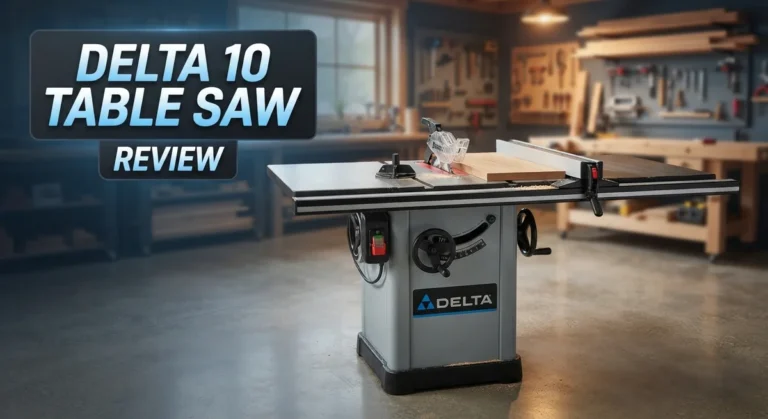
Hafco ST254 vs DEWALT DWE7491RS
These two saws serve different people, and comparing them shows what your money actually buys.
- Rack & Pinion Telescoping Fence System Make fence adjustments fast, smooth and accurate
- Patented material support, can be used for narrow rip cuts.
Last update on 2026-10-21 / Affiliate links / Images from Amazon Product Advertising API Some of the links on this website are affiliate links, which means that at no additional cost to you, I earn a commission if you click through and make a purchase. I only recommend products and services that I believe will add value to my readers. Thank you for your support!
The DEWALT DWE7491RS is a jobsite saw. It weighs about 50kg with the rolling stand, folds up, and moves between sites in a ute tray.
The Hafco ST254 weighs 190.5kg and never moves again. That is a feature, not a flaw, if you have a dedicated shed.
Mass wins on cut quality. The Hafco produces less vibration, holds settings longer, and handles long ripping sessions without heating up.
The DEWALT wins on convenience and on fence precision. Its rack and pinion fence is quick, repeatable, and stays square with almost no fuss.
Rip capacity favours the Hafco at 950mm against roughly 825mm on the DEWALT. Depth of cut is close, with 75mm versus around 79mm.
The DEWALT uses a universal motor. It is loud, it bogs down in thick hardwood, and its brushes wear out eventually.
The Hafco induction motor runs quieter and lasts longer, but it needs a permanent home and a real dust extractor.
Choose the DEWALT if you build on site or share a garage with a car. Choose the Hafco if you have space and cut hardwood regularly.
Dust Collection Performance
Hafco advertises dual dust collection, and the design looks smart on paper. A 100mm port sits at the rear of the cabinet, and the overhead blade guard carries its own port that plumbs into the same line.
One hose connection running both pickups is a genuinely good idea. When connected to a proper extractor with real airflow, the above table capture works reasonably well.
Then reality arrives. Dust still collects inside the cabinet under the blade, and it needs regular manual cleaning.
This is the most common owner complaint after arbor compatibility. The internal ramp guides some dust toward the port, but fine powder settles in corners and around the trunnions.
A shop vacuum will not do the job. You need an extractor moving serious volume through 100mm ducting, ideally 1hp or more.
Buildup inside the cabinet causes real problems over time. Dust packs into the rise and fall gears and the tilt mechanism, which makes adjustment stiff and accelerates wear.
Plan a monthly blow out with compressed air. Open the access panel, clear the trunnions, and wipe down the height mechanism.
The overhead guard also blocks your view slightly and gets in the way when you use a crosscut sled. Many owners remove it and lose the top pickup entirely, which is a safety step backwards.
Safety Features And What Is Missing
The safety package is adequate rather than modern. A dust proof magnetic switch with an emergency stop paddle sits on the front of the cabinet, and it kills power fast.
The magnetic starter also prevents restart after a power cut. That stops the saw from jumping to life when electricity returns.
A riving knife and overhead guard come standard. The guard is large and clear, which helps visibility during ripping.
Now the honest gaps. The review machine had no anti kickback pawls on the guard assembly, which is a real omission on a saw that rips hardwood.
Owners also report the riving knife assembly is long enough to interfere with crosscut sleds. You remove it for sled work and refit it for ripping, and that constant swapping tempts people to leave it off.
Leaving a riving knife off is how kickback injuries happen. If you buy this saw, budget time to build a low profile splitter for sled use.
There is no flesh detecting brake technology here. That is normal at this price, but worth stating plainly.
Add your own safety layers. A pair of feather boards, a decent push block, a shop made splitter, and eye and ear protection cost little and matter more than any factory feature.
What The Hafco Table Saw Does Not Do Well
Every review should say this part out loud. Here is where the ST254 disappoints real owners.
Accessory compatibility is the biggest failure. The arbor size and length limit your blade choices and rule out most dado stacks, so you cannot simply buy standard upgrades off the shelf.
Internal dust management is the second failure. The cabinet fills with fine dust and demands cleaning that better designed saws do not need.
Small fit issues appear regularly. Throat plates sitting low, scales drifting out of calibration, and paint finish flaws all show up in owner reports.
The rise and fall mechanism has a known weakness. Forcing the blade past its upper limit chews the gear teeth, and once damaged the height adjustment feels rough forever.
Vibration complaints exist and they are not all user error. A few owners describe serious shake with the blade fully raised, enough to feel unsafe.
Sliding table travel of 1500mm looks impressive but the sliding surface is only 500 x 400mm. That mismatch wastes floor space without adding much crosscut support.
Availability is regional. Hafco sells through Machinery House in Australia and New Zealand, so parts and service outside that region get difficult.
Finally, resale value is modest. Cheap cabinet saws hold less value than premium brands when you upgrade later.
Is The Sliding Table Attachment Worth It?
The ST254T sliding table costs around $792 on its own, or you buy the ST254PT package deal for about $2,475 and save a little.
The mechanism uses roller bearings on a steel rail guide. Travel feels smooth and consistent, and the 1500mm stroke handles long panels.
You get an aluminium table surface measuring 500 x 400mm, a crosscut fence with a scale, a mitre guide for angles, a cam lock hold down clamp, and a flip down stop.
The cam lock clamp and flip down stop are the useful parts. Clamping a workpiece to the slider and cutting repeat lengths is faster and safer than freehand crosscutting.
The honest criticism is proportion. A 1500mm stroke paired with a 400mm deep table means large panels still overhang badly and need outfeed support.
Floor space is the real cost. The package needs roughly 2750 x 2280mm of clear area, which is a lot for a home shed.
Who should buy it? People cutting cabinet parts and sheet goods regularly will use it every day.
Who should skip it? Furniture makers working with solid timber get more value from a well built crosscut sled that costs almost nothing.
The right tilting arbor suits the slider properly, so the two components do work together as intended.
Price, Value And Warranty In 2026
At the time of writing the ST254 lists around $1,650 excluding GST, or roughly $1,815 including GST. The sliding table package deal sits near $2,475 including GST.
Prices move with freight costs and exchange rates. Check the current Machinery House listing before you set your budget, because these numbers shift more than once a year.
Warranty coverage is two years, which is generous for a value brand. Parts availability through Machinery House stores is a genuine advantage over online only imports.
Value depends entirely on what you compare it against. Against a $600 portable saw, the Hafco is a huge step up in mass, accuracy, and cutting power.
Against a $3,000 cabinet saw with a premium fence and proper dust design, it looks like what it is. A capable machine with rough edges.
Cost of ownership adds up though. A quality blade, arbor bushings, a real dust extractor, and outfeed support all sit outside the sticker price.
Budget an extra $500 to $800 to get the saw working properly. That is not unique to Hafco, but it is easy to forget.
Second hand units appear regularly and hold reasonable prices. Inspect the rise and fall mechanism carefully on any used example.
Who Should Buy The Hafco Table Saw
This saw fits a specific person. Getting that match right decides whether you love it or resent it.
Buy it if you have a dedicated shed and a 10 amp outlet. The power to plug requirement ratio here is the single best thing about the machine.
Buy it if you cut Australian hardwood. The induction motor and cast iron mass handle dense timber far better than any portable saw.
Buy it if you want a stationary saw and cannot stretch to $3,000. It delivers most of the cabinet saw experience for well under that.
Buy it if you live in Australia or New Zealand. Local parts and warranty support genuinely matter with machinery.
Skip it if you need to move the saw. At 190.5kg it is permanent.
Skip it if you plan heavy dado work with stacked blade sets. The arbor will block you.
Skip it if you cannot run a proper dust extractor. The design assumes real airflow and punishes you without it.
Skip it if you already own quality 30mm bore blades and refuse to deal with bushings.
Be honest about your workshop before you order. The Hafco rewards a settled shed and frustrates a cramped garage.
Pros And Cons
Here is the summary in plain terms.
Pros
- Strong 2.2kW (3hp) induction motor that runs on a standard 240V 10 amp outlet, so no electrical work is needed
- Heavy 190.5kg build with a full cast iron table plus cast iron extension wings for excellent vibration control
- Large 1170 x 800mm working surface with 950mm rip capacity, which handles sheet goods better than most saws at this price
- Micro adjustable rip fence with cam locks front and rear, usable on either side of the blade, plus a detachable high and low face
- Quiet operation with a soft start, and clean cuts in 45mm hardwood when a quality blade is fitted
- Two T slots for mitre gauges and shop made sleds, with a right tilting arbor that suits the optional slider
- Two year warranty with local parts support through Machinery House stores
Cons
- Arbor size and length limit blade choice and block most dado stacks, so shims and bushings become part of life
- Dust builds up inside the cabinet despite the 100mm port, requiring frequent manual cleaning
- No anti kickback pawls on the guard assembly, which is a notable safety gap
- Riving knife assembly interferes with crosscut sleds, so owners remove it too often
- Rise and fall gears can strip if the blade is forced past its upper limit
- Fit and finish issues appear regularly, including low sitting throat plates and inaccurate rail scales
- Heavy delivery needs planning, extra hands, and possibly hired equipment
- Regional availability limits buyers outside Australia and New Zealand
Frequently Asked Questions
Is The Hafco ST254 A Real Cabinet Saw?
It is best described as a hybrid. The enclosed steel stand, cast iron table, and belt driven induction motor come from cabinet saw design, but the trunnions mount to the table rather than the cabinet like a true cabinet saw. That makes alignment fiddlier than on premium machines.
What Blade Size Does The Hafco ST254 Use?
It runs a 254mm (10 inch) blade on a 25.4mm (1 inch) arbor. Many blades sold locally use a 30mm bore, so check the bore size and buy a good quality bushing if needed.
Can I Run A Dado Stack On It?
Generally no. The arbor is too short for most stacked dado sets, so plan on multiple passes with a single blade or use a router table for grooves and rebates.
How Much Power Does It Need?
It runs on a standard 240V 10 amp household circuit. This is a genuine advantage, because most 3hp saws demand a 15 amp or 20 amp outlet and an electrician.
Does It Vibrate Badly?
Most owners report smooth running, but some describe significant vibration with the blade raised high. Check the arbor nut, the blade quality, and any bushing you fitted before blaming the machine.
Is The Sliding Table Worth The Extra Money?
For sheet goods and cabinet work, yes. For solid timber furniture, a shop made crosscut sled gives similar accuracy at almost no cost and takes far less floor space.
How Long Does Assembly Take?
Allow a full afternoon for unpacking, degreasing, fitting the wings and rails, then tuning blade alignment. Rushing the alignment step is the most common regret owners mention.
Where Can I Buy A Hafco Table Saw?
Hafco machines sell through Hare and Forbes Machinery House in Australia and New Zealand. Outside those countries, availability and parts support become difficult, which is why many buyers look at the DEWALT, BOSCH, and SKIL alternatives listed above.

Hi, I’m Amelia Thornton, the founder of ElectroPro.blog.
I write about smart devices, gadgets, electronics, and tech essentials from Amazon.
My goal is to help you discover reliable and innovative tech that truly makes life easier.
From home automation to everyday gear, I test and share what’s worth your investment.
Join me as I explore the smartest tech trends—one gadget at a time.