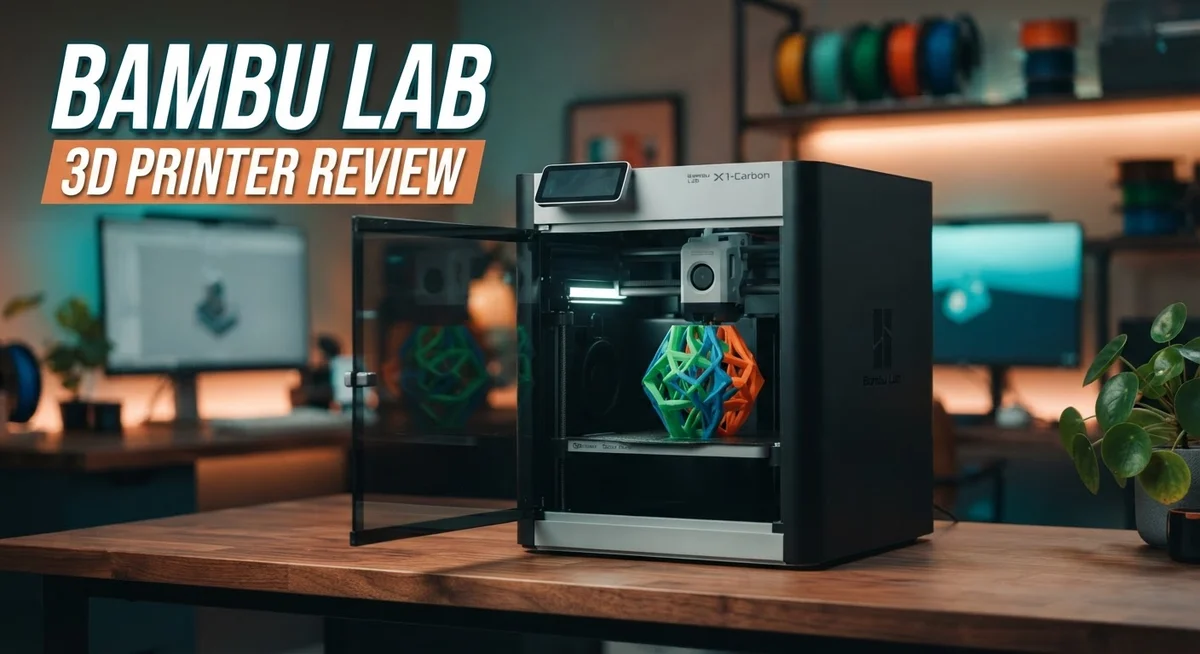
Bambu Lab 3D Printer Review: Comprehensive Guide
Are you ready to print your own creations at home? The Bambu Lab 3D printer makes this dream simple. It brings together smart features that fit both new and skilled makers.
This printer uses a dual nozzle system. It prints multiple materials and colors in one job. You get creative freedom without extra hassle.
The heated bed helps your prints stick and stay smooth. Filament cooling sensors keep every layer neat. These small details add up to big quality gains.
In a Nutshell
- Beginner friendly setup: The software uses color coded steps. New users learn fast without confusion.
- Smart filament cooling sensors: These sensors watch each layer closely. They help stop warping and keep prints smooth.
- Reliable multi filament printing: Switching colors or materials feels effortless. The system handles complex jobs without much fuss.
- Regular software updates: The cloud link keeps your printer current. New features and fixes arrive automatically.
- Strong performance for hobbyists: Many fans say if you enjoy printing, this brand fits right in. It builds confidence for bigger projects.
- Printer focused design: Some users note it leans more toward machine engineering than pure printing creativity. This is worth knowing before you buy.
- Stands out among rivals: Brands like Prusa, Creality, and Qidi Tech offer options too. Still, Bambu Lab holds its own with smart features.
Key Features and Specifications
Bambu Lab’s hardware architecture centers on dual nozzle technology that handles multiple materials and colors simultaneously. This system eliminates the need for manual filament swaps between prints, saving time and reducing setup hassles.
The heated bed maintains consistent temperatures throughout your print. This keeps layers bonding properly and prevents warping on larger projects. Temperature control happens automatically, so you focus on design rather than adjustments.
Filament cooling sensors monitor each layer as it emerges from the nozzles. These sensors detect print quality issues in real time. If something goes wrong, the system alerts you immediately instead of wasting material on a failed print.
The touchscreen interface puts all controls at your fingertips. Navigation feels intuitive, and beginners pick it up quickly without studying manuals for hours. Menu layouts follow logical patterns that match how users actually think about printing.
Cloud connectivity keeps your printer constantly updated. New features and improvements arrive automatically through software updates. You can also monitor prints remotely and download designs directly to the machine from anywhere.
The multi filament capability deserves special attention. Switching between materials happens smoothly without clogging or alignment problems. Whether you want flexible TPU, rigid ABS, or standard PLA, the system handles transitions reliably. This opens creative possibilities like printing flexible phone cases or multi color prototypes in one session.
The overall design philosophy emphasizes machine reliability over artistic freedom. Some users prefer printers that encourage creative experimentation, while others appreciate Bambu Lab’s focus on consistent, predictable results. Your preference depends on whether you want a workhorse or an experimental platform.
Integration with existing software ecosystems matters too. The printer communicates with popular slicing applications, so your current workflow doesn’t need complete rebuilding. This compatibility reduces the learning curve significantly.
These specifications combine into a system that performs consistently across different projects and skill levels. Whether you’re printing functional parts, miniatures, or prototypes, the hardware supports your goals without constant troubleshooting.

- Up to 16 Colors: Bring your designs to life with vibrant multi-color/multi-material printing...
- 500mm/s and 20000 mm/s² Acceleration True High Speed: Don't wait around for your masterpieces...
Last update on 2026-09-17 / Affiliate links / Images from Amazon Product Advertising API Some of the links on this website are affiliate links, which means that at no additional cost to you, I earn a commission if you click through and make a purchase. I only recommend products and services that I believe will add value to my readers. Thank you for your support!
Print Quality and Multi-Material Performance
When you load a new filament into the Bambu Lab printer, the dual nozzle system springs into action. Each nozzle operates independently, which means you can switch between materials or colors without stopping your print job. This capability opens up creative possibilities that single nozzle printers simply cannot match.
The print quality remains consistent across color transitions. The heated bed works together with the filament cooling sensors to ensure each layer bonds properly. You get smooth surfaces and sharp details whether you print in one color or five. The sensors actively monitor temperatures as material exits the nozzles, preventing common issues like warping or layer separation.
Multi material printing works differently here than on competitor machines. Instead of pausing to swap filaments manually, the Bambu Lab handles material changes automatically. Your design can call for flexible TPU on one section and rigid PLA on another. The printer manages these switches without user intervention, saving you time and reducing print failures.
The touchscreen gives you real time feedback during multi material jobs. You watch as the nozzles coordinate their movements. The software displays which material is currently printing and estimates time remaining for each section. This transparency helps you catch problems early if something goes wrong.
Cloud connectivity adds another dimension to print quality control. Software updates arrive automatically, often improving how the printer handles specific material combinations. Bambu Lab releases updates that enhance nozzle calibration and cooling performance. You benefit from these improvements without doing anything manually.
One practical advantage emerges when you print complex designs. The dual nozzle system reduces failed prints compared to single nozzle alternatives. Support material prints from one nozzle while your main design uses the other. This separation means cleaner final pieces and easier post processing.
The bottom line: Bambu Lab delivers reliable multi material performance that beginners can understand immediately. You get professional quality results without needing advanced technical knowledge. The printer handles the complexity so you focus on your creative vision.
User Interface and Software Experience
The software experience on Bambu Lab printers starts with a clean, intuitive design that welcomes new users immediately. The touchscreen interface responds quickly to your inputs and displays information in a logical order.
Bambu Studio serves as your main control hub. This software lets you prepare files, monitor prints, and adjust settings without confusion. The layout follows a straightforward workflow: import your 3D model, position it, add supports if needed, then send it to print.
The color coding system deserves attention here. When you work with multiple materials or colors, the software uses visual cues that make sense at first glance. You don’t need to memorize complex commands or navigate buried menus to switch between nozzles.
Real-time monitoring becomes possible through cloud connectivity. Your printer sends live updates to your phone or computer while the job runs. You can watch progress, pause the print, or adjust settings remotely from anywhere. This feature removes the anxiety of leaving a long print unattended.
Software updates arrive automatically through the cloud connection. Bambu Lab releases improvements regularly, and your printer receives them without manual intervention. This keeps your machine current with new features and stability fixes.
The interface handles multi-material printing smoothly. When you load different filaments, the system guides you through each step. The touchscreen shows which nozzle is active and what comes next in your print sequence.
One practical strength emerges during troubleshooting. Error messages appear in plain language rather than cryptic codes. If something goes wrong, the software suggests fixes or walks you through solutions.
The learning curve stays shallow for beginners. Most users report feeling comfortable with basic operations within their first session. Advanced features remain accessible once you gain confidence, but they don’t clutter the main interface.
The software philosophy emphasizes clarity over complexity. Every button has a clear purpose. Every menu contains only the options you actually need at that moment. This approach makes Bambu Lab stand out in an industry often known for overwhelming control panels.
Top 3 Alternatives
Creality Ender 3

- 【250mm/s High-speed Printing】Creality Ender 3 V3 SE 3d printer supports a maximum printing speed...
- 【Powerful ""Sprite"" Direct Extruder】Ender 3 V3 SE is the upgrade of ender 3, ender 3 v2, ender...
Last update on 2026-09-17 / Affiliate links / Images from Amazon Product Advertising API Some of the links on this website are affiliate links, which means that at no additional cost to you, I earn a commission if you click through and make a purchase. I only recommend products and services that I believe will add value to my readers. Thank you for your support!
The Creality Ender 3 remains a popular choice for people starting their 3D printing journey. This printer uses FDM technology and builds objects layer by layer with melted plastic filament. Users appreciate its simple setup process and large online community that shares tips and modifications.
The build plate measures 220 x 220 x 250mm, giving you decent space for most projects. Many owners report consistent print quality once they calibrate the nozzle properly. The printer works well for miniatures, prototypes, and functional parts.
Prusa i3 MK3S

- [REWARDING DIY BUILD EXPERIENCE] Assemble your own high-performance 3D printer with a detailed...
- [HIGH-SPEED FDM PERFORMANCE] Delivers fast, precise printing with excellent surface quality...

Last update on 2026-09-17 / Affiliate links / Images from Amazon Product Advertising API Some of the links on this website are affiliate links, which means that at no additional cost to you, I earn a commission if you click through and make a purchase. I only recommend products and services that I believe will add value to my readers. Thank you for your support!
The Prusa i3 MK3S offers a more refined printing experience compared to budget options. This machine includes automatic bed leveling, which removes one major frustration point for beginners. The printer comes mostly assembled, so you spend less time building and more time printing.
Print quality tends to be excellent out of the box. Users love the intuitive menu system and reliable performance across different filament types. The active Prusa community provides extensive documentation and support resources. This printer suits people who want fewer calibration headaches and more successful prints.
Anycubic Vyper

- 【 Newest Level - 19-Color with 4 ACE 2 Pro】Why settle for one color when you can have...
- 【 Savings 2X Time】Stop wasting hours and filament on purging! Kobra X impresora 3D reduces the...
Last update on 2026-09-17 / Affiliate links / Images from Amazon Product Advertising API Some of the links on this website are affiliate links, which means that at no additional cost to you, I earn a commission if you click through and make a purchase. I only recommend products and services that I believe will add value to my readers. Thank you for your support!
The Anycubic Vyper features an innovative leveling system that saves setup time. This printer uses a unique auto-leveling probe that adjusts the nozzle height automatically before each print. The CoreXY motion system moves quickly and smoothly, reducing print times.
The build platform heats up fast, which helps with adhesion and print quality. Many users report that the Vyper produces clean, detailed prints from the start. The printer handles various materials including PLA, PETG, and TPU filament. This makes it flexible for different project needs and creative applications.
Setup, Calibration, and Ease of Use
Getting your Bambu Lab printer ready involves a straightforward process. The color coded setup system guides you through each step without confusion. Most users report completion within an hour or two.
Calibration happens automatically on this machine. You don’t need to manually level the bed or adjust nozzle height. The printer handles these tasks during its startup sequence, which saves time and reduces frustration for beginners.
The first layer calibration runs without your intervention. Sensors detect the bed surface and adjust positioning instantly. This automation means your initial prints start with proper adhesion right away.
Loading filament follows a simple procedure. The extruder accepts spools with a quick click mechanism. The touchscreen walks you through each action with clear prompts. Multi material setups work the same way, just with additional filament slots.
The heated bed reaches temperature quickly and maintains it throughout printing. Temperature consistency prevents warping and improves overall print reliability. You set your desired temperature once, and the system holds it steady.
Real time feedback appears on the touchscreen during calibration steps. You see live sensor readings and adjustment progress. This visibility helps you understand what the printer does behind the scenes.
Software setup connects your machine to the cloud network. Bambu Studio software on your computer syncs with the printer automatically. This connection enables remote monitoring and software updates without manual intervention.
Troubleshooting becomes easier with cloud diagnostics. If problems occur, the system logs data that helps identify issues quickly. Support staff can review these logs to provide targeted solutions.
The learning curve stays gentle throughout the setup process. Beginners can operate this printer confidently after their first session. Experienced users appreciate the automation that eliminates repetitive calibration tasks.
Overall, setup and calibration emphasize speed and simplicity. The printer handles most technical work automatically. You focus on loading materials and starting your designs. This approach makes 3D printing accessible to users at any skill level.
Cloud Connectivity and Smart Features
Bambu Lab printers connect to the cloud, which changes how you manage your prints. The system lets you monitor your machine from anywhere using your smartphone or computer. You can watch your print progress in real time without standing next to the printer.
The cloud connection brings several practical benefits to your workflow. Software updates arrive automatically, so your printer always has the latest features and fixes. You don’t need to manually download files or restart your machine. The updates happen quietly in the background.
Remote diagnostics work through the cloud connection. When something goes wrong, the system sends error data to your account. You can review these reports to understand what happened. This feature saves time compared to manually troubleshooting mechanical issues.
Bambu Lab’s cloud platform stores your print history and settings. You can access previous jobs and reuse configurations for future prints. This matters when you print similar objects repeatedly. The system remembers your preferences automatically.
Camera integration enhances the remote monitoring experience. The built-in camera streams live footage to your phone. You see exactly what’s happening on the print bed. This visual feedback helps you catch problems early.
The touchscreen works alongside cloud features. You control prints directly on the machine or through the app. Both options give you flexibility depending on your situation. The interface keeps everything synchronized across devices.
Cloud connectivity also enables community features. You can share prints with other Bambu Lab users. The platform lets you download designs from the community library. This creates an ecosystem where users help each other succeed.
Smart notifications alert you when prints finish or encounter issues. You receive messages on your phone immediately. This means you don’t waste time wondering about your printer’s status.
The system prioritizes security with encrypted connections. Your printer data stays private. Bambu Lab uses standard cloud security practices to protect your information.
Overall, cloud connectivity on Bambu Lab transforms your printing experience from isolated to connected. You gain visibility, automation, and community access. The features work together to make printing simpler and more enjoyable.
Pros and Cons
Pros
- Multi material printing works reliably with dual nozzles for color and material switching
- Beginner friendly setup means you get printing fast without frustration
- Automatic calibration handles first layer leveling without your input
- Strong overall performance makes this a solid choice if you enjoy 3D printing
- All in one system handles design, slicing, and printing from one platform
Cons
- Printer focused design means the machine itself drives your workflow rather than your printing goals
- Limited advanced customization options for experienced users who want deeper control
- Community documentation could be more extensive for troubleshooting edge cases
Who Should Buy It
Bambu Lab printers work best for people who want to jump into multi-color and multi-material printing without spending months learning the system. If you enjoy 3D printing and want a machine that handles both, this is your answer.
Beginners find this printer welcoming. The color-coded setup process removes confusion. You don’t need previous experience to get your first print done. The automatic calibration means you skip the frustrating leveling step that stops many new users. Loading filament takes just seconds, and the touchscreen guides you through each action.
Makers who print regularly benefit from the dual-nozzle system. You can switch between materials mid-print or create color designs without manual intervention. The heated bed works fast, so you spend less time waiting and more time creating. Real-time feedback on the touchscreen keeps you informed without hovering over the machine.
Hobbyists who want convenience appreciate the all-in-one approach. Design, slice, and print all happen through one connected system. The cloud platform stores your settings and print history. Remote monitoring through the camera lets you check progress from anywhere. Smart notifications tell you when your print finishes or if something needs attention.
People who print frequently gain from reliable performance. The machine handles demanding projects without constant babysitting. Community features let you share designs and learn from other users. The system stays current with cloud software updates that improve functionality over time.
However, this printer might not suit experienced users seeking deep customization. The printer-focused design philosophy means the machine drives your workflow rather than adapting to your specific goals. Advanced users who want granular control over every parameter may find the system limiting.
If you want straightforward multi-color printing, enjoy learning as you go, or need a machine that works the first time you plug it in, Bambu Lab delivers. The focus stays on getting you printing fast rather than overwhelming you with options. This approach makes it ideal for anyone ready to move beyond single-color, single-material work.
Final Verdict
Bambu Lab earns its place as a top choice for anyone who wants a smooth 3D printing experience. This printer blends smart technology with practical design. It feels like a machine built for the future of home manufacturing.
Compared to brands like Prusa Research or Creality, Bambu Lab stands out through its seamless integration of hardware and software. Many competitors require more manual setup or third party tools. Bambu Lab simplifies this entire process into one connected system.
Qidi Tech and Sovol 3D offer solid alternatives, but they often lack the same level of polish. Voron Design and Snapmaker appeal to different audiences who enjoy building or customizing their machines from scratch. Bambu Lab instead focuses on delivering results right out of the box.
If you value consistency over deep customization, this printer fits your needs well. It handles complex prints without demanding constant supervision. That reliability makes it a trustworthy tool for both learning and creative projects.
People who print occasionally will appreciate how little maintenance this system needs. Those who print often will enjoy how it keeps pace with frequent use. Either way, the printer adapts to different levels of experience.
Some users may miss the flexibility that fully open source printers provide. If you love tweaking firmware or building your own upgrades, other brands might suit you better. However, most users care more about results than tinkering.
In the bigger picture, Bambu Lab represents where 3D printing is heading. It shows how automation and smart connectivity can make creation easier for everyone. This shift benefits hobbyists, teachers, and small business owners alike.
Final thought: Bambu Lab succeeds by turning a technical hobby into an approachable experience. It rewards curiosity without punishing mistakes. For most people exploring 3D printing today, this printer offers a dependable and rewarding path forward.
Frequently Asked Questions
Can I print in multiple colors at once?
Yes. Bambu Lab printers come with dual-nozzle capability. This means you can load two different filaments and switch between them during a single print job. The system handles the switching automatically based on your design file.
You don’t need to pause and swap filaments manually. The software guides the process, making multi-color printing straightforward for beginners.
What makes Bambu Lab different from Prusa or Creality?
Bambu Lab focuses on seamless hardware and software integration. Your entire workflow lives in one platform. You design, slice your model, and print without jumping between different tools.
Prusa Research offers more open source flexibility. Creality provides budget-friendly options. Bambu Lab sits in the middle, prioritizing smooth user experience over deep customization options.
Is this printer good for beginners?
Absolutely. The color-coded setup removes guesswork. The touchscreen interface feels intuitive. Automatic calibration handles first layer leveling without your input.
You won’t spend hours troubleshooting before your first print. The system works out of the box, which keeps frustration low for new users.
What about cloud connectivity and updates?
Your Bambu Lab printer connects to the cloud. This means the software receives updates automatically. New features and improvements arrive without you lifting a finger.
You can also monitor prints remotely and manage settings from your phone or computer.
Who should NOT buy this printer?
Experienced makers seeking deep customization might feel limited. If you want full control over every printer parameter, an open source option like Voron Design gives you more freedom.
People who print rarely may not need the dual-nozzle system. Occasional hobbyists could find simpler, single-nozzle alternatives sufficient for their needs.

Hi, I’m Amelia Thornton, the founder of ElectroPro.blog.
I write about smart devices, gadgets, electronics, and tech essentials from Amazon.
My goal is to help you discover reliable and innovative tech that truly makes life easier.
From home automation to everyday gear, I test and share what’s worth your investment.
Join me as I explore the smartest tech trends—one gadget at a time.