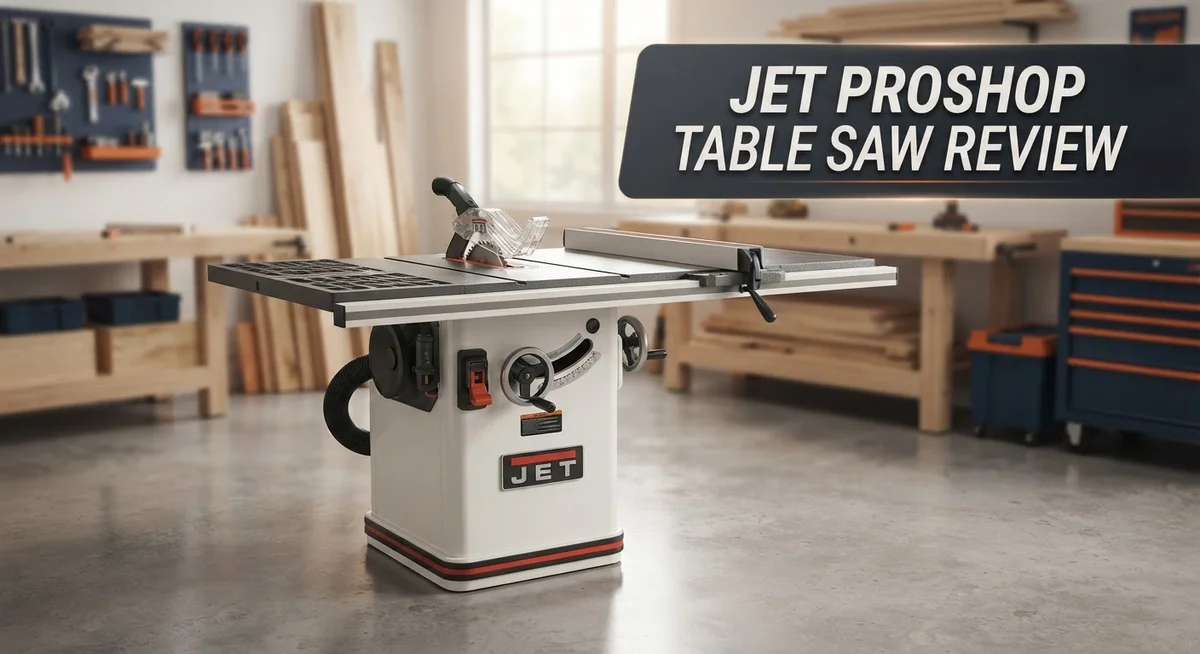
Jet ProShop Table Saw Review 2026: Is It Worth Buying?
Looking for a table saw that fits a home workshop? The Jet ProShop Table Saw might be the answer. This tool blends solid performance with hobbyist friendly features.
It comes with a 10 inch blade and a 1.75 HP motor. You get a 30 inch rip capacity thanks to sturdy cast iron wings. These specs make it a strong pick for DIY builders and weekend woodworkers.
Setup is simple with this saw. It arrives factory aligned, so you can start cutting fast. Users often praise its smooth operation and clean cuts with minimal tearout.
In a Nutshell
- Cut quality is impressive. You get smooth edges with minimal tearout on most materials.
- Setup takes no time at all. The saw arrives factory aligned, so you skip the usual hassle.
- Operation stays smooth throughout. Vibration stays low, and the motor runs quietly during use.
- The fence system works great. It locks in place and stays accurate cut after cut.
- Dust collection needs improvement. This is one area where the saw falls short.
- Cutting speed feels slow. The 110V motor limits how fast you can push through dense stock.
Motor Power and Cutting Performance
The 1.75 HP motor on this saw delivers consistent power for most hobby and DIY cutting tasks. You get reliable performance without unnecessary bulk or complexity. The motor runs on standard 115V single phase power, which means you can plug it into any home workshop outlet.
Cutting performance shines when you’re working with solid wood and plywood. The saw produces minimal tearout, and edges come out clean without extra sanding. This quality matters because it saves you time on finishing work. Rip cuts stay straight, and crosscuts feel precise. The 10 inch blade handles stock up to 3 1/8 inches deep at 90 degrees, giving you flexibility for various project sizes.
Speed is where limitations appear. The 115V system restricts blade velocity compared to heavier 220V models. You’ll notice slower cutting rates, especially when pushing thick hardwoods. This isn’t a dealbreaker for occasional users, but production shops would struggle. The saw prioritizes accuracy over rapid output.
The cast iron table and wings keep everything stable during cuts. Vibration stays minimal, which helps maintain those clean edges. The fence system locks down firmly and stays put. Repeatability is strong, so multiple identical pieces come out matching.
One real concern involves dust management. The 4 inch dust port connects to most shop vacuums, but collection efficiency lags behind premium models. You’ll want a good vacuum running to keep your space clean. Dust still escapes around the blade area more than ideal.
The lack of a true riving knife limits safety slightly. The saw uses a simpler splitter design instead. This works fine for standard ripping, but some users prefer the security of a full riving knife system.
For occasional woodworking and DIY projects, this motor and blade combo performs admirably. You get respectable cut quality and dependable operation. Heavy production work or commercial use would demand a more powerful machine. The real strength here lies in delivering solid results for home workshops without overwhelming complexity.

- Quick-release riving knife for hassle free riving knife changes
- Redesigned arbor lock to change blades quickly and easily

Last update on 2026-10-21 / Affiliate links / Images from Amazon Product Advertising API Some of the links on this website are affiliate links, which means that at no additional cost to you, I earn a commission if you click through and make a purchase. I only recommend products and services that I believe will add value to my readers. Thank you for your support!
Table Size, Rip Capacity, and Work Surface
The work surface on the Jet ProShop is where this saw shows its practical design. The main table measures 20″ by 27″, which gives you solid footing for standard crosscuts and rip work. When you add the cast iron wings, the total surface expands to 40 to 48 inches side to side.
This expansion matters. Wider wings mean better support for longer boards. You get stable, flat support without wobbling. The cast iron construction resists warping over time, so your cuts stay true even after months of use.
The 30 inch rip capacity handles most hobby projects with ease. You can rip a standard 2×12 board or process plywood sheets without fighting the fence. The fence system locks down firmly and doesn’t drift during the cut. This consistency makes repetitive cuts feel reliable.
Depth of cut reaches 3 and 1/8 inches at 90 degrees. At 45 degree angles, the depth reduces slightly, but you still get clean bevels for basic joinery and edge work. The arbor size of 5/8 inch fits standard blades without adapters or hassle.
One practical note: the 4 inch dust port connects to most shop vacuums, though actual collection performance lags behind the port size. You’ll want a decent vacuum running alongside this saw to keep chips manageable.
The overall table design reflects Jet’s focus on hobbyist needs. Everything feels balanced. The work surface doesn’t feel cramped, yet the saw doesn’t demand a huge footprint in your shop. Setup comes factory aligned, so you spend time cutting wood instead of adjusting machinery.
For DIY woodworkers and occasional users, this table size and rip capacity hit the sweet spot. You get enough room to work comfortably without buying an industrial footprint. The cast iron wings stay flat and true, supporting your projects from start to finish. Most users report that the surface stays accurate through years of regular use.
Fence System and Precision Alignment
The fence system on the Jet ProShop stands out as one of its strongest features for precision work. The aluminum fence slides smoothly along the front rail and locks down securely when you tighten the lever. You get consistent, repeatable cuts because the fence stays parallel to the blade.
Setup happens quickly right out of the box. Most users report the fence arrives factory aligned, which means you skip the frustrating calibration process. The rip capacity of 30 inches gives you plenty of room for standard woodworking tasks. Whether you’re ripping boards or making repeat cuts, the fence holds its position without drift.
The cast iron table and wings create a flat, stable foundation for the fence system. This matters because even small surface irregularities affect cut accuracy. The extended wing area helps support longer pieces as they pass through the blade. You’ll notice the difference when working with 8 and 10 foot boards.
The fence has a clear measurement scale printed on the rail. Reading distances becomes simple, and you can make quick adjustments without second guessing your setup. The scale stays accurate because the fence mechanism is rigid. Alignment stays consistent through repeated use, which is exactly what hobbyists need.
One practical consideration involves the fence design on older ProShop models. Some users mention that the fence can require occasional adjustment if you transport the saw frequently. However, the adjustment process remains straightforward. The mechanism responds quickly to fine tuning.
For general woodworking and DIY projects, this fence system delivers the precision you need. You won’t struggle with binding or misaligned cuts. The fence integrates well with the overall table design. It performs reliably whether you’re making crosscuts with a miter gauge or running long rip cuts.
The fence system reflects Jet’s practical approach to hobbyist tools. It balances ease of use with solid accuracy. You get professional results without complicated adjustments or special techniques. This combination makes the Jet ProShop attractive for anyone building their first serious workshop.
Top 3 Alternatives
DeWalt DWE7491RS Table Saw

- Rack & Pinion Telescoping Fence System Make fence adjustments fast, smooth and accurate
- Patented material support, can be used for narrow rip cuts.
Last update on 2026-10-21 / Affiliate links / Images from Amazon Product Advertising API Some of the links on this website are affiliate links, which means that at no additional cost to you, I earn a commission if you click through and make a purchase. I only recommend products and services that I believe will add value to my readers. Thank you for your support!
Makita 2705 Table Saw

- Left extension table with smooth sliding action
- Right and rear extension table enables greater cutting capacity
Last update on 2026-10-21 / Affiliate links / Images from Amazon Product Advertising API Some of the links on this website are affiliate links, which means that at no additional cost to you, I earn a commission if you click through and make a purchase. I only recommend products and services that I believe will add value to my readers. Thank you for your support!
Bosch 4100-09 Table Saw

- RACK AND PINION RIP FENCE: This BOSCH table saw 10 inch size features color-coded index pins that...
- BOSCH TOOLS SAW: 15-Amp portable table saw with 3,800 rpm for rip-cutting and cross-cutting of fine...
Last update on 2026-10-21 / Affiliate links / Images from Amazon Product Advertising API Some of the links on this website are affiliate links, which means that at no additional cost to you, I earn a commission if you click through and make a purchase. I only recommend products and services that I believe will add value to my readers. Thank you for your support!
Dust Collection and Workshop Cleanliness
The dust collection system on the Jet ProShop table saw presents a real challenge for workshop cleanliness. The 4 inch dust port connects easily to most standard shop vacuums, which sounds convenient on paper.
However, actual collection performance falls short of expectations. You’ll notice sawdust escaping around the blade area during cuts. The port design doesn’t capture all the fine particles that a well-sealed system would trap.
This means your workshop stays messier than you’d like. Dust settles on your work surface, tools, and floor more quickly than with better-equipped saws. If you’re sensitive to sawdust or have respiratory concerns, this becomes a real issue during extended cutting sessions.
The blade itself generates significant dust volume. Without a true riving knife, airflow patterns around the cut aren’t optimized for collection. Sawdust tends to scatter upward and sideways rather than being pulled toward the port.
You can improve collection with aftermarket solutions. Some users add custom shrouds around the blade area. Others upgrade to more powerful shop vacuums with better suction. These modifications help, but they require extra investment and effort.
For occasional DIY projects, the dust situation remains manageable. You’ll sweep up more often than with premium saws, but it’s not a dealbreaker for hobbyist work. Just don’t expect a clean workshop if you’re running this saw for hours daily.
The table wings and base do trap some debris naturally. Sawdust collects in corners rather than spreading everywhere. You can periodically brush these areas clean, which helps maintain a reasonably organized workspace.
If workshop cleanliness matters significantly to you, consider this a limitation. The Jet ProShop works best in shops where you don’t mind doing extra cleanup. Pair it with a decent shop vacuum, keep a broom handy, and manage your expectations about dust containment.
For serious production work or professional shops, this dust collection weakness points toward other options. Hobbyists and DIY users can work around it with basic cleanup habits and regular vacuuming between projects.
Setup, Assembly, and Out-of-Box Experience
Getting your Jet ProShop table saw ready for work takes minimal effort. The saw arrives with most components pre assembled, which saves you significant setup time compared to many competitors.
Factory alignment comes standard on this model. You don’t need to spend hours adjusting the blade, fence, or table before making your first cut. The cast iron table and wings ship flat and stay flat, eliminating a common frustration with budget saws.
The assembly process focuses on a few key steps. You’ll attach the fence rail to the table, connect the motor assembly, and secure the dust collection port. Most users complete this in under an hour without special tools. The instruction manual provides clear diagrams that guide you through each stage.
The wings deserve special attention during setup. These expandable work surfaces bolt securely to the main table, and the connection points align properly from the factory. Once attached, they stay rigid during operation without wobbling or shifting. This stability matters when you’re ripping longer boards.
Electrical setup requires basic precautions. The 115V cord measures 6 feet long, so plan your workshop layout accordingly. You’ll need a standard outlet with adequate amperage for the 1.75 HP motor. The power switch sits in an accessible location on the base, making it easy to reach during operation.
The base itself feels solid underfoot. Heavy cast iron construction keeps vibration minimal, and the legs sit flat on uneven shop floors without rocking. Some users add rubber feet or shims for additional stability on concrete surfaces.
One practical consideration involves the dust port connection. The 4 inch opening accepts standard shop vacuum hoses without adapters. Connect your vacuum before powering on the saw, as this setup takes just seconds.
Out of the box, the Jet ProShop performs like a saw ready for work. You won’t encounter misaligned components or loose fasteners that plague cheaper models. This attention to pre assembly quality means you start making cuts faster and spend less time troubleshooting problems.
Pros and Cons
Pros
- Cuts with excellent quality and minimal tearout on most materials
- Operates smoothly and quietly during regular use
- Arrives factory aligned, so you skip the frustrating adjustment phase
- Cast iron table and wings provide a stable, flat work surface
- Fence system includes a clear measurement scale for accurate rip cuts
Cons
- 115V motor limits cutting speed, making rip cuts slower than 220V alternatives
- Dust collection underperforms, leaving your workshop messier than expected
- No true riving knife included, which affects safety during certain cuts
- Better suited for hobby work than continuous production runs
Who Should Buy It
The Jet ProShop table saw works best for hobbyists and DIY woodworkers who tackle occasional projects at home. You’ll find this saw perfect if you build furniture, cut lumber for home repairs, or create small decorative pieces.
This saw suits you if you have a garage or small workshop. The 20″ x 27″ base table (40-48″ with wings) fits comfortably in tight spaces. You won’t need a massive shop to store and operate it effectively.
Casual woodworkers appreciate the easy setup. Factory alignment means you skip frustrating adjustments. The smooth operation and excellent cut quality impress users who value clean results without spending hours on maintenance. If tearout bothers you, this saw delivers minimal damage on most materials.
The Jet ProShop fits your needs if you prioritize cut quality over speed. The 115V motor runs slower than industrial 220V alternatives, but this matters less for hobby projects. You’re not rushing through production runs or building kitchen cabinets daily.
You should consider this saw if you’re willing to work around dust collection limitations. Aftermarket solutions can help, but you’ll accept more sweeping than premium models require. For weekend projects, this trade-off feels manageable.
Skip this saw if you need heavy production capability. Professional shops and cabinet makers need faster cutting speeds and better dust management. A riving knife absence also concerns users who make frequent crosscuts or rip hardwoods regularly.
The Jet ProShop isn’t ideal if you demand the latest safety features. Traditional fence systems work well, but they lack modern conveniences found on premium saws. You accept older technology in exchange for reliable performance.
This saw calls to you if you value straightforward operation. No complex electronics or confusing adjustments. You simply want to plug in, measure twice, and cut once.
The 30″ rip capacity handles most hobby projects comfortably. You won’t feel limited when building bookcases, shelving units, or small furniture pieces. Larger rip cuts might frustrate you, but they rarely come up in home workshops.
Consider the Jet ProShop your solid entry point into serious woodworking. It bridges the gap between cheap circular saws and professional cabinet saws perfectly.
Final Verdict
The Jet ProShop table saw earns its place in a home workshop. It delivers clean cuts and steady performance for everyday projects.
This saw shines brightest for weekend builders. If you build furniture, cabinets, or shop projects on your own time, this tool fits your pace.
Think about your typical project load before you decide. Occasional use suits this saw perfectly. Daily, heavy cutting sessions will expose its motor limits.
Your workspace matters too. A garage or spare room setup works well with this saw’s footprint and power needs. It won’t strain a standard home outlet.
Consider your safety priorities as part of this decision. Some woodworkers want the newest safety tech built into their tools. Others feel comfortable with standard guards and careful habits.
If you fall into the second group, this saw won’t hold you back. Just stay alert and follow safe cutting practices every time.
Dust collection deserves one more thought here. Pair this saw with a shop vacuum or dust collector for better results. That small addition solves most of the mess issue.
This table saw rewards patience over speed. You get clean, accurate cuts, but you trade away rapid production. That tradeoff works fine for hobby projects.
Compare your goals against what this saw offers. Ask yourself if quality matters more to you than raw cutting speed. Your answer points toward the right choice.
For most home woodworkers, this saw checks the right boxes. It handles common tasks without fuss. It sets up fast and cuts true.
Professional shops should look elsewhere for faster, heavier duty machines. Hobbyists and DIYers, though, will likely find this saw meets their needs well.
In the end, matching the tool to your actual work matters most. This saw fits a specific user well. Know your needs first, then decide if this saw answers them.
Frequently Asked Questions
Does the Jet ProShop handle crosscuts as well as rip cuts?
Yes, the saw cuts across the grain smoothly. The 10″ blade delivers clean crosscuts with minimal tearout on most woods. You’ll get accurate results if you use a stop block or miter gauge. The cast iron table stays flat, which helps precision. However, rip cuts remain the stronger suit here since the motor runs at full power for lengthwise cuts.
What’s the real dust collection situation?
Honest answer: dust collection underperforms on this model. The 4″ dust port connects to a shop vac, but fine dust still escapes into your air. You’ll notice sawdust around the base and wings more than you’d like. Running a separate air filter in your workshop helps manage this weakness. If you hate cleaning up after each session, plan for extra cleanup time or invest in a separate dust solution.
Can I use this saw for production work or only occasional projects?
This saw works best for occasional use. The 115V single phase motor limits how fast you can push material through. If you run continuous cuts all day, you’ll hit speed limitations quickly. The saw also lacks a true riving knife, which matters for safety during heavy production runs. Stick with this model for weekend projects and hobby builds rather than daily shop output.
Is the fence system accurate enough for fine woodworking?
Yes, the fence delivers solid accuracy. The clear measurement scale lets you dial in rip widths quickly. The system stays parallel to the blade without constant fussing. Most hobbyists find it reliable for furniture and cabinet work. Just check alignment occasionally since vibration can shift things over time.

Hi, I’m Amelia Thornton, the founder of ElectroPro.blog.
I write about smart devices, gadgets, electronics, and tech essentials from Amazon.
My goal is to help you discover reliable and innovative tech that truly makes life easier.
From home automation to everyday gear, I test and share what’s worth your investment.
Join me as I explore the smartest tech trends—one gadget at a time.