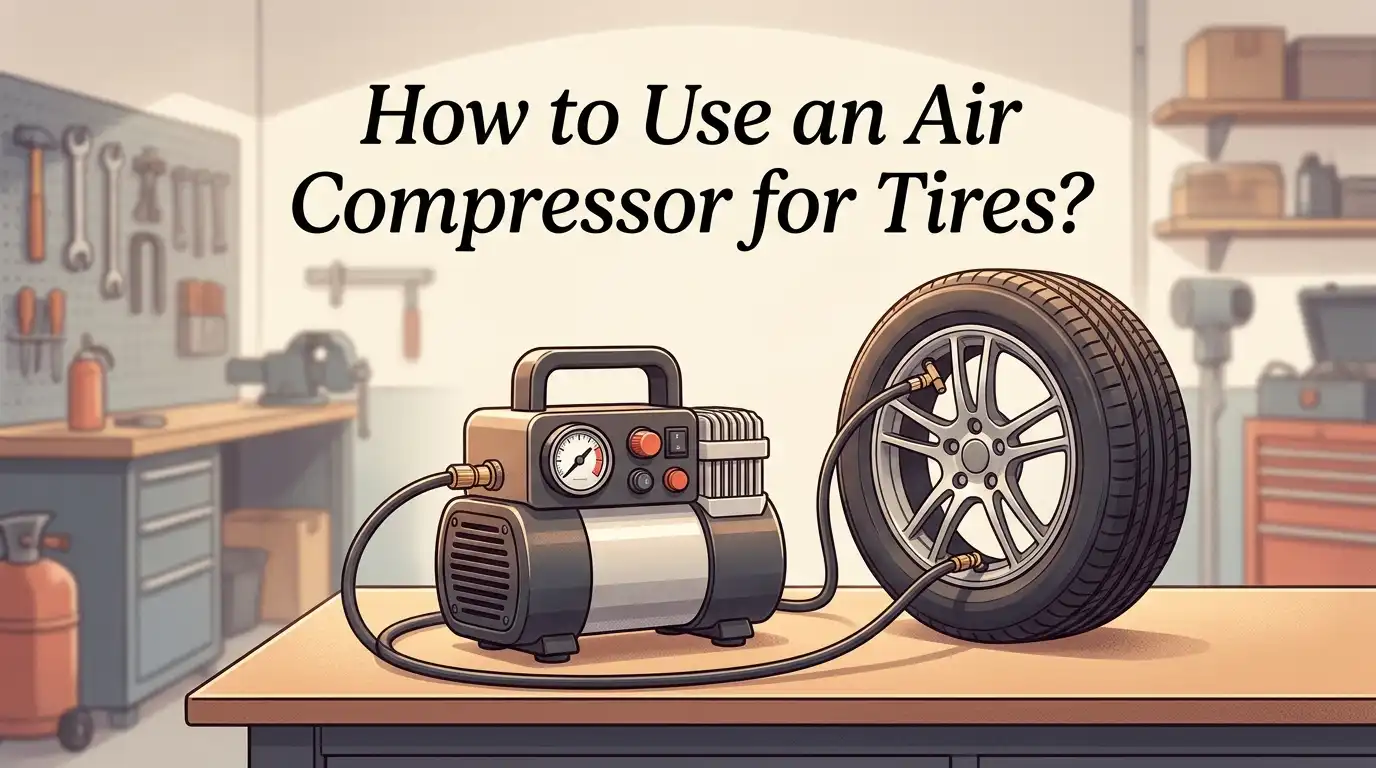
How to Use an Air Compressor for Tires? Complete Guide
Have you ever walked out to your car on a Monday morning only to find a tire looking flat and saggy? You know the feeling. You glance at the clock, realize you’re already late, and panic sets in. The good news is that a simple air compressor can save your day in minutes.
Knowing how to use an air compressor for tires is one of the most useful skills any driver can have. It saves you money, keeps you safe on the road, and gives you control over your vehicle’s health.
Most passenger car tires require 28 to 36 PSI (pounds per square inch) to perform at their best. A properly inflated tire improves fuel economy, extends tread life, and provides better handling.
Key Takeaways
- Always check your vehicle’s recommended PSI before inflating. You can find this number on the sticker inside the driver’s side door jamb or in your owner’s manual. Do not rely on the number printed on the tire sidewall, as that is the maximum pressure the tire can handle, not the ideal operating pressure.
- Measure tire pressure when tires are cold. Driving heats up the air inside your tires and temporarily raises pressure by 4 to 6 PSI. For an accurate reading, check pressure before you drive or wait at least 30 minutes after stopping.
- Use a reliable pressure gauge every time. Built in gauges on some compressors can be inaccurate. A standalone digital or dial gauge gives you a more precise measurement and protects you from overinflation.
- Never walk away while the compressor is running. Overinflating a tire can cause a blowout, uneven tread wear, or reduced traction. Stay with the tire and monitor the gauge closely during inflation.
- Portable tire inflators and standard air compressors both work, but they serve different situations. Portable inflators are great for emergencies on the road. Pancake or garage compressors deliver faster airflow for home use.
- Check your tire pressure at least once a month. Tires naturally lose about 1 to 2 PSI per month. Regular checks catch slow leaks early and keep your fuel efficiency high.
Why Proper Tire Pressure Matters
Tire pressure affects almost every part of your driving experience. Underinflated tires create more friction with the road surface. This extra friction generates heat, wears the tread unevenly, and forces your engine to work harder. The result is lower gas mileage and a shorter tire lifespan.
Overinflated tires are equally dangerous. Too much air makes the tire rigid and reduces the contact area with the road. This leads to poor grip, a rough ride, and a higher chance of a blowout on hot pavement.
The National Highway Traffic Safety Administration (NHTSA) reports that about 11,000 tire related crashes occur each year in the United States. Many of these could be prevented by maintaining correct PSI levels. Keeping your tires at the right pressure is one of the simplest and cheapest safety steps you can take.
Understanding Your Tire’s Recommended PSI
Every vehicle has a specific recommended tire pressure set by the manufacturer. This number accounts for the car’s weight, suspension design, and tire size. Most passenger vehicles call for pressures between 30 and 35 PSI.
You can find your vehicle’s recommended PSI in three places. The most common location is a sticker on the inside of the driver’s side door frame. You can also check the owner’s manual or sometimes the inside of the fuel filler door.
Do not confuse this with the “Max PSI” printed on the tire sidewall. That number represents the maximum safe pressure the tire can hold, not the pressure your car needs. Inflating to the max PSI will overinflate the tire for most vehicles. Always follow the manufacturer’s recommendation, not the tire’s max rating.
Types of Air Compressors You Can Use
There are several types of air compressors suitable for tire inflation. Each one has different strengths depending on your situation.
Portable 12V tire inflators plug into your car’s cigarette lighter or power outlet. They are small, lightweight, and fit easily in your trunk. They work well for topping off a low tire or handling a slow leak on the road.
Pros: Very portable, affordable, easy to store.
Cons: Slow inflation speed, may overheat during extended use, limited to low volume tasks.
Pancake compressors are compact units with a flat, round tank. They plug into a standard 120V wall outlet and hold 1 to 6 gallons of compressed air. They inflate tires much faster than portable models.
Pros: Faster inflation, more powerful, useful for other tasks around the home.
Cons: Heavier, require an electrical outlet, louder during operation.
Full size garage compressors are large units with bigger tanks. They deliver high volume airflow and can fill a tire in seconds.
Pros: Extremely fast, professional level performance.
Cons: Expensive, heavy, take up significant space.
What Tools and Equipment You Need
Before you start inflating, gather a few basic items. You need a tire pressure gauge, either digital or dial type. Digital gauges are easier to read and usually more accurate. A quality gauge will display pressure readings within 0.5 PSI of the actual value.
You also need the air compressor itself along with an air hose and a tire chuck or nozzle that fits your tire’s valve stem. Most compressors come with these accessories included. If your hose is too short, you can buy an extension.
A valve stem cap remover is helpful if caps are stuck. Keep a flashlight handy for nighttime situations. If you are using a 12V portable inflator, make sure your car battery is in good condition, as these units draw power directly from your vehicle.
How to Check Your Current Tire Pressure
Checking pressure is a quick process that takes less than a minute per tire. Start when the tires are cold for the most accurate reading. Remove the valve stem cap from the tire and set it somewhere you will not lose it.
Press the tire pressure gauge firmly onto the valve stem. You should hear a brief hiss of air as the gauge connects. Hold it steady until the gauge displays a stable number. That number is your current PSI.
Compare this reading to your vehicle’s recommended PSI. If the number is lower than the recommendation, the tire needs air. If it is higher, you will need to release some air by pressing the small pin inside the valve stem. Write down the readings for all four tires so you know exactly how much air each one needs.
Step by Step Guide to Inflating Your Tires
This is the core process. Follow these steps carefully for a safe and accurate fill.
Step 1: Park your vehicle on a flat, level surface and turn off the engine. If you are using a portable 12V inflator, you may need to keep the ignition in the “accessory” position to power the outlet.
Step 2: Remove the valve stem cap from the tire you want to inflate. Store the cap in your pocket.
Step 3: Attach the air chuck or nozzle onto the valve stem. Push it on firmly until the hissing sound stops. A secure connection prevents air loss during inflation.
Step 4: Turn on the compressor. Watch the pressure gauge as air flows into the tire. Add air in short bursts of 5 to 10 seconds, then check the pressure with your standalone gauge.
Step 5: Once you reach the recommended PSI, turn off the compressor. Disconnect the chuck from the valve stem. Replace the valve cap immediately.
Step 6: Repeat this process for each tire that needs air.
How to Avoid Overinflating Your Tires
Overinflation is one of the most common mistakes people make. A tire with too much air becomes stiff and bouncy. It loses grip on the road, wears out the center of the tread faster, and becomes more likely to burst on a hot day.
The best way to avoid overinflation is to add air slowly and check pressure frequently during the process. Do not try to fill the tire in one long burst. Short bursts of 5 to 10 seconds followed by a pressure check give you full control.
If you accidentally add too much air, press the small metal pin inside the valve stem with a tool or the back of your gauge. Release air in short taps until the gauge reads the correct PSI. Some digital inflators have an auto shutoff feature that stops adding air once the target pressure is reached. This feature makes the process almost foolproof.
How to Use a Gas Station Air Compressor
Gas station air machines work differently from home compressors, but the process is similar. Most stations have a coin operated or free air pump near the parking area. Some newer machines let you set your desired PSI, and they beep when the tire reaches that level.
Pull your car close enough so the hose reaches all four tires. Insert coins or press the start button, depending on the machine. You usually have a limited amount of time, often 3 to 5 minutes, before the machine shuts off.
Attach the nozzle firmly to the valve stem and let the machine fill the tire. Check the built in gauge or use your own portable gauge for a more accurate reading. Move quickly between tires to use your time well. If the machine shuts off before you finish, you may need to restart and pay again.
Pros: Convenient, no equipment to carry, widely available.
Cons: Gauges can be inaccurate, time pressure, may cost money, hoses are sometimes damaged.
Special Tips for Inflating Tires in Cold Weather
Cold weather causes tire pressure to drop. For every 10 degree Fahrenheit drop in temperature, tire pressure decreases by about 1 PSI. This is why your tire pressure warning light often appears on the first cold morning of fall.
Check your pressure more often during winter months. Inflate tires to the recommended PSI in the morning before driving. If you check pressure after the car has been running, the heat from driving will give you a falsely high reading.
If you are using a portable 12V inflator in freezing conditions, be aware that batteries perform worse in cold weather. Your car’s electrical system may deliver less power to the inflator. A fully charged battery helps ensure the inflator works at full speed. Also, cold rubber is stiffer and may make it harder to get a tight seal on the valve stem, so press the chuck on firmly.
How to Handle a Completely Flat Tire with an Air Compressor
A fully flat tire presents a bigger challenge than a low tire. First, inspect the tire for visible damage like nails, screws, cuts, or sidewall bulges. If you see a large gash or sidewall damage, do not attempt to inflate the tire. It is not safe to drive on and needs replacement.
If the tire looks intact, you can attempt to inflate it with a compressor. A portable 12V inflator will take significantly longer on a flat tire, sometimes 10 to 15 minutes or more. Pancake compressors and full size units work faster for this job.
Start inflating and listen for air escaping from the tire. If you hear a steady hiss, the tire has a puncture and will not hold air. In that case, a tire sealant kit can temporarily plug small puncture holes so you can drive to a repair shop. If the tire holds air successfully, drive directly to a service center to get it inspected.
Pros of inflating a flat yourself: Avoids towing costs, gets you moving quickly.
Cons: Does not fix the root cause, may not work on punctured or damaged tires, flat tire inflation stresses portable inflators.
Maintaining Your Air Compressor for Long Term Use
Your compressor needs basic care to keep working well. Drain the moisture from the tank after each use if you own a tank style compressor. Moisture builds up inside the tank from compressed air and causes rust over time. Most tanks have a drain valve at the bottom.
Check the air filter regularly and clean or replace it when it looks dirty. A clogged filter reduces airflow and makes the compressor work harder. Inspect the power cord and air hose for cracks or wear before each use.
Store your compressor in a dry, clean location away from extreme temperatures. If you own a portable 12V inflator, keep it in a protective case inside your trunk. Replace worn nozzles and connectors as needed to maintain a tight seal during inflation.
Common Mistakes to Avoid When Using an Air Compressor for Tires
Many drivers make simple errors that lead to inaccurate pressure or even tire damage. The most frequent mistake is inflating hot tires. Always wait for tires to cool before adding air.
Another common error is relying solely on the compressor’s built in gauge. These gauges, especially on cheaper models, can be off by several PSI. Always verify with a separate gauge.
People also forget to replace the valve stem cap after inflation. The cap keeps dirt, water, and debris out of the valve. Without it, the valve can corrode or leak over time.
Finally, some drivers set the wrong target pressure by reading the number on the tire sidewall instead of the door placard. This mistake leads to overinflation on almost every vehicle. Double check your source before you start inflating.
Frequently Asked Questions
How often should I check my tire pressure?
Check your tire pressure at least once a month and before any long road trip. Tires lose 1 to 2 PSI naturally each month through the rubber. Temperature swings also affect pressure. A monthly check catches slow leaks and helps you stay at the recommended PSI level for your vehicle.
Can I use any air compressor to fill car tires?
Yes, most air compressors can fill car tires as long as they deliver enough PSI. Standard car tires need 30 to 35 PSI, which even small portable units can provide. The main difference between compressors is speed. Smaller units take longer, while larger tank compressors fill tires in seconds.
Is it bad to overinflate tires by a few PSI?
Being 1 to 2 PSI above the recommendation is usually harmless and may happen naturally on warm days. However, going 5 or more PSI above the recommendation causes problems. It reduces traction, causes center tread wear, and increases blowout risk. Always aim for the exact recommended number.
Can a portable tire inflator fix a completely flat tire?
A portable inflator can fill a flat tire, but it will take much longer than filling a slightly low tire. If the tire has a puncture, the inflator alone will not fix it. You would also need a tire sealant to plug the hole temporarily. Always drive to a repair shop after using sealant.
Should I inflate my tires to the max PSI listed on the sidewall?
No. The number on the sidewall is the maximum pressure the tire can safely hold, not the ideal operating pressure. Your vehicle’s recommended PSI is listed on the door jamb sticker or in the owner’s manual. This number is almost always lower than the sidewall maximum.
Why does my tire keep losing air after I inflate it?
Repeated air loss points to a problem. Common causes include a slow puncture from a nail or screw, a damaged valve stem, a cracked rim, or a poor bead seal between the tire and wheel. If you refill a tire and it loses pressure again within a day or two, take it to a tire shop for a proper inspection.

Hi, I’m Amelia Thornton, the founder of ElectroPro.blog.
I write about smart devices, gadgets, electronics, and tech essentials from Amazon.
My goal is to help you discover reliable and innovative tech that truly makes life easier.
From home automation to everyday gear, I test and share what’s worth your investment.
Join me as I explore the smartest tech trends—one gadget at a time.