Craftsman Torque Wrench Review 2026: Best for DIY and Automotive Work
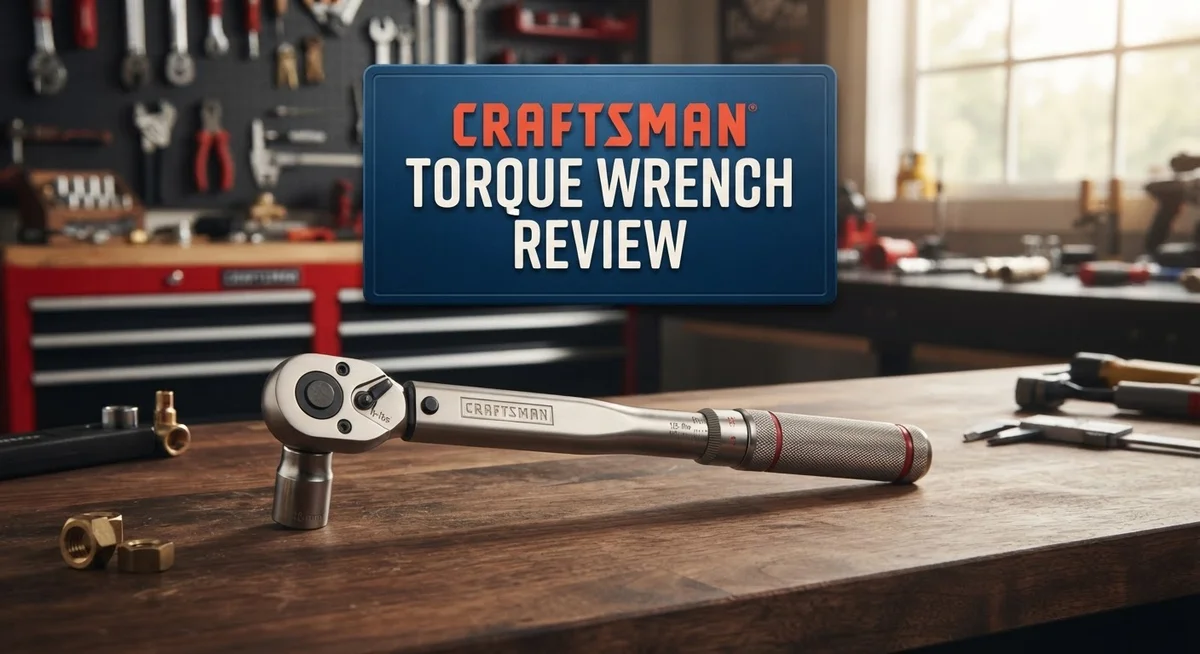
Do you need a torque wrench that just works? The Craftsman torque wrench might be your answer. Many DIYers and home mechanics trust this brand for everyday jobs. It promises simple function without extra fuss.
This tool comes in three drive sizes. You get 1/4″, 3/8″, and 1/2″ options. Each one fits different tasks around your garage.
The chrome finish gives it a clean look. It also helps the wrench resist rust over time. You can choose from micrometer, digital, or click style versions. Each type offers a different way to hit your target torque.
In a Nutshell
- Best suited for occasional DIY tasks. This wrench handles home projects and light automotive work well. It does not match up to professional grade tools.
- Portability makes it a solid pick for a home garage. You can move it around easily. It fits well in a basic toolbox setup.
- Durability is a real concern for heavy users. Some parts, like the bending beam, may wear out fast. Plastic components can fail under repeated stress.
- Compared to brands like Husky, Icon, and SK, Craftsman sits at a more basic level. Tool truck brands offer more strength for daily professional use. Craftsman works better for lighter, less frequent jobs.
- If you need a wrench for weekend projects, this tool fits the bill. Professionals who need constant reliability should look elsewhere.
- Overall, this wrench offers a decent starting point for beginners. It is not built for heavy, daily wear and tear.
Build Quality and Materials
Craftsman builds their torque wrenches with a full polish chrome finish that catches the eye and resists rust. This coating protects the metal underneath and keeps the tool looking clean over time. The shiny surface also makes it easy to spot on your workbench.
The wrench uses a combination of metal and plastic in its construction. The main shaft and head are steel, which handles the core job well. However, plastic components appear throughout the design. These plastic parts include the grip handle and some internal mechanisms. This choice keeps the tool lightweight and easy to hold, but it introduces a weakness.
Users report that plastic elements can crack or break under stress. The grip may become loose after repeated use. Internal plastic gears in digital models sometimes fail without warning. For occasional DIY work, this rarely becomes a problem. For frequent users, it becomes a real concern.
The bending beam design on some Craftsman models presents another durability issue. This beam flexes to measure torque, which is smart engineering. Over time, repeated bending can weaken the beam. It may lose accuracy or snap completely. Professional mechanics who use their tools daily often encounter this problem faster than weekend DIYers.
The micrometer adjustment dial sits on top of the wrench. It clicks into place with a locking feature. This mechanism works smoothly at first, but some users notice it becomes stiff or unreliable after months of use. The scale markings are printed on, not engraved, so they can fade.
Compared to competitors like SK or tool truck brands, Craftsman cuts corners on material quality. Those premium options use reinforced polymers and better steel grades. They cost more upfront but last significantly longer.
For light work around your home garage, the build quality is acceptable. You get a functional tool that performs its job. Just know that heavy professional use will expose the weaknesses faster. The plastic and beam durability issues mean you may need replacement sooner than with other brands.

- Portability: durable case for portability or storage
- Added comfort: bi-material handle for comfort and grip

Last update on 2026-09-17 / Affiliate links / Images from Amazon Product Advertising API Some of the links on this website are affiliate links, which means that at no additional cost to you, I earn a commission if you click through and make a purchase. I only recommend products and services that I believe will add value to my readers. Thank you for your support!
Torque Range and Drive Sizes
Craftsman offers torque wrenches in three main drive sizes to match different fastening tasks. You get 1/4 inch, 3/8 inch, and 1/2 inch options. This range covers most home garage work and light automotive jobs.
The 1/4 inch drive works best for small fasteners and delicate assemblies. Think about working on electronics or precision equipment. The 3/8 inch drive sits in the middle and handles general purpose tasks. You’ll use this size for many household repairs and car maintenance jobs. The 1/2 inch drive tackles larger bolts and heavy duty fastening. This size gives you more leverage for stubborn fasteners.
Maximum torque capacity reaches up to 100 foot pounds across Craftsman’s lineup. This level suits occasional DIY projects and weekend repairs. Professional mechanics who work daily may find this ceiling limiting. Heavy industrial applications definitely exceed what this wrench can deliver.
Craftsman packages these drives into three style options. Micrometer wrenches feature a rotating collar for precise adjustments. Digital models display the torque value on a small screen. Click style wrenches produce an audible click when you reach the set torque. Each style appeals to different users based on how they work.
The easy to read scale on Craftsman models helps you set the correct torque quickly. You won’t struggle to find the number you need. This matters when you’re working on multiple fasteners in one session.
One useful feature is the locking mechanism for fast adjustments. You can lock the setting in place without fumbling with multiple components. This saves time when switching between different torque values.
However, the drive sizes and torque range tell only part of the story. Users report that plastic components on these wrenches can crack or fail. The bending beam design on certain models shows durability concerns over time. If you plan occasional use, these limitations may not affect you. Heavy users should consider whether this wrench can survive frequent use in your workshop.
Ease of Use and Readability
Reading the scale on a Craftsman torque wrench takes just a few seconds. The micrometer adjustment dial sits right on top where you can see it clearly. Numbers are printed in large, bold text so your eyes don’t strain during setup.
The click-style models offer a different experience. You twist the handle until you hear a distinct click sound. This audible feedback tells you when the torque value is reached. Many users find this method faster than staring at a dial.
Digital versions display the torque reading on a small screen. Numbers appear instantly as you apply force. This eliminates any guesswork about whether you’re reading the scale correctly. The screen is bright enough to use in dimly lit garages.
Adjusting the torque setting happens quickly with the locking feature. You rotate the grip, lock it in place, and you’re ready to work. No fumbling or complicated steps slow you down. This design works well for people who switch between different bolt sizes frequently.
The handle grip is textured and comfortable to hold. Your hand won’t slip during use, even if your palms are slightly sweaty. The overall weight feels balanced, so fatigue doesn’t set in during longer work sessions.
One drawback appears when comparing readability to professional-grade models. The numbers on the scale are smaller than those on SK or tool truck brands. If you have vision issues, you might need to position the wrench at different angles to read it clearly.
The plastic components on the dial and handle can become scratched over time. Deep scratches may make numbers harder to read. Regular cleaning keeps the surface clear and legible.
For occasional DIY projects, readability works well enough. You can set the correct torque without confusion. The straightforward design means new users pick it up quickly. However, if you work in low light conditions regularly, a digital model would serve you better than the micrometer style.
Top 3 Alternatives
Snap-on Torque Wrench

- QUICK IDENTIFICATION: Torque wrench 1/2 inch drive has a durable clear case for quick tool...
- FAST TORQURE CHANGES: CRAFTSMAN 1/2 torque wrench converts torque from ft./lb. to in/lb. to Nm at...
Last update on 2026-09-17 / Affiliate links / Images from Amazon Product Advertising API Some of the links on this website are affiliate links, which means that at no additional cost to you, I earn a commission if you click through and make a purchase. I only recommend products and services that I believe will add value to my readers. Thank you for your support!
The Snap-on torque wrench stands out as a professional-grade option for mechanics who need accuracy and durability. This wrench delivers consistent torque readings across different fastening tasks. The build quality reflects Snap-on’s reputation in the automotive industry.
Users appreciate the clear measurement scale and reliable click mechanism. The wrench works well for engine work, suspension adjustments, and critical fastening jobs. Its design makes it comfortable to grip during extended use.
DeWalt Digital Torque Wrench

- Ensure professional results with 3/8 in. drive torque range of 20-100 lbs.
- AT-A-GLANCE VISIBILITY Delivers clear readouts on a backlit LED screen.
Last update on 2026-09-17 / Affiliate links / Images from Amazon Product Advertising API Some of the links on this website are affiliate links, which means that at no additional cost to you, I earn a commission if you click through and make a purchase. I only recommend products and services that I believe will add value to my readers. Thank you for your support!
DeWalt’s digital torque wrench brings modern technology to fastening work. The digital display shows precise torque values in real time. You get instant feedback on whether you’ve reached the correct setting.
This model works great for DIY enthusiasts and professionals alike. The battery-powered system eliminates guesswork during assembly tasks. The wrench stores multiple torque settings in memory, which saves time on repetitive jobs. Its lightweight design reduces hand fatigue compared to traditional models.
Husky Click Torque Wrench

- 【9-in-1 Torque Solution】Complete set includes 1/4", 3/8", and 1/2" drive click torque wrenches...
- 【High Precision & Dual Scales】Factory-calibrated to ±3% accuracy with included certificate...
Last update on 2026-09-17 / Affiliate links / Images from Amazon Product Advertising API Some of the links on this website are affiliate links, which means that at no additional cost to you, I earn a commission if you click through and make a purchase. I only recommend products and services that I believe will add value to my readers. Thank you for your support!
The Husky click torque wrench offers practical performance at a value-conscious price point. This wrench features a simple click mechanism that signals when you’ve reached your target torque. The straightforward design makes it easy to adjust settings.
Home mechanics and occasional users find this wrench reliable for general maintenance. It handles tire rotations, brake work, and basic engine fastening without complications. The wrench resists rust and maintains accuracy over time. Its simple operation means fewer things can go wrong, making it a solid choice for garage storage and regular use.
Accuracy and Calibration
Accuracy matters when you tighten bolts. The Craftsman torque wrench delivers consistent readings for most DIY applications. The micrometer adjustment dial gives you precise control over your torque settings.
The scale readability stands out as a strength. You can see the torque value without squinting or holding the wrench at odd angles. This matters when you work in tight engine bays or confined spaces. The markings stay visible even after repeated use.
Calibration accuracy depends on how often you use your Craftsman wrench. Occasional garage projects? The tool maintains its accuracy well. Heavy professional use? Accuracy tends to drift over time. This is normal wear for tools in this category.
The click style models produce an audible click when you reach your target torque. This feedback system helps prevent over tightening. You feel and hear when the wrench reaches the set value. Many users appreciate this simple, reliable mechanism.
Digital models add another dimension to accuracy. The electronic display shows your exact torque reading in real time. Some users prefer this method because it removes guesswork. The screen updates as you apply pressure to the fastener.
Recalibration becomes necessary after extended use. Craftsman doesn’t include calibration services with most consumer models. You’ll need to send the wrench to a service center if accuracy drifts. This adds time and effort to maintenance.
The bending beam design on certain Craftsman models affects long term accuracy. Bending beams flex slightly during use. Over months and years, this flexing can reduce calibration precision. The effect is gradual but measurable for demanding applications.
Comparing accuracy to competitors reveals trade offs. Professional grade wrenches from SK hold tighter tolerances. Husky models offer similar performance to Craftsman at comparable levels. Icon wrenches fall somewhere in the middle range.
For weekend mechanics, Craftsman accuracy meets your needs. The wrench performs well on standard automotive bolts and fasteners. You won’t encounter the precision issues that plague heavily used professional tools. The accuracy stays stable across typical DIY torque ranges from 10 to 100 foot pounds.
Durability and Longevity
Craftsman torque wrenches face real durability challenges that users should understand before purchasing. The plastic components on the dial and handle tend to crack or break under regular use, especially in workshop environments where tools experience constant handling and occasional drops.
The bending beam design on certain Craftsman models shows weakness over extended periods. These beams can develop permanent bends after months of heavy use, which directly impacts accuracy and performance. This is why Craftsman suits occasional DIY work rather than professional applications where tools get used daily.
Chrome plating on the shaft provides decent corrosion resistance, but the finish can wear away with frequent cleaning or exposure to harsh chemicals. Once the chrome deteriorates, rust can develop underneath, compromising the internal mechanisms that keep your wrench functioning properly.
The click-style mechanisms depend on small internal springs and detents. These components can weaken or fail after thousands of clicks, meaning your wrench may stop producing that satisfying audible signal or fail to trigger at the correct torque setting. Replacement of these internal parts often costs more than purchasing a new entry-level wrench.
Quality control issues reported by users suggest inconsistent manufacturing standards across batches. Some users report their Craftsman wrenches lose accuracy within the first year, while others experience problems immediately out of the box. This unpredictability makes it difficult to rely on these tools for critical fastening tasks.
Recalibration becomes necessary after extended use, but many owners find that sending a Craftsman wrench for professional calibration exceeds the cost of replacement. This economic reality means most users simply buy a new wrench rather than restore an old one.
For light work around your home garage where you tighten fasteners occasionally, a Craftsman wrench lasts reasonably well. However, if you need a tool that withstands heavy professional use or frequent applications, you’ll want to explore options from competitors like SK or tool truck brands that prioritize longevity and internal component durability.
Pros and Cons
Pros
- Easy to read scales let you check torque values without straining your eyes
- Works well for automotive repairs and general mechanical tasks
- Locking feature speeds up torque adjustments between jobs
- Compact and light enough to carry in your toolbox
- Click-style models give you an audible alert when you hit your target torque
Cons
- Plastic components on the dial and handle scratch easily and can fail with regular use
- Users report inconsistent quality across different batches
- Bending beam models lose accuracy over time and may bend under stress
- Not suited for heavy professional work or frequent daily use in shops
Who Should Buy It
A Craftsman torque wrench works best for DIY enthusiasts and home mechanics. You tackle occasional projects in your garage. You fix your car on weekends. You work on small engines or bicycles at home. This tool fits your needs perfectly.
Automotive hobbyists find real value here. You perform routine maintenance on your vehicles. You change oil, swap spark plugs, or work on suspension components. You need accurate torque specifications without professional-grade demands. Craftsman delivers what you need.
Casual mechanics benefit from the straightforward design. You don’t need complex features. You want something simple to grab and use. The easy-to-read scales let you work quickly. You appreciate the locking feature for fast adjustments between tasks.
Homeowners doing basic repairs should consider this option. You assemble furniture or equipment that requires precise fastening. You work on outdoor power equipment. You perform light maintenance tasks. Craftsman handles these situations well.
However, this wrench is not for professional technicians. You work in a busy shop all day. You need durability through hundreds of uses monthly. Professional mechanics require tools that withstand constant use. Craftsman models show weakness under that pressure. The plastic components fail too quickly. The bending beam design loses accuracy over time with heavy work.
Skip this tool if you demand extreme precision. You calibrate instruments or work on sensitive equipment. You cannot tolerate any deviation from exact specifications. Professional-grade alternatives serve you better.
Frequent commercial users should look elsewhere. You operate in a high-volume environment. You need consistent accuracy across every single use. Quality control issues reported by users make Craftsman risky for your business. Tool truck brands or SK options provide the reliability you require.
Occasional users win with Craftsman. You don’t need industrial strength. You want reliable performance for weekend projects. You appreciate straightforward operation. You work in your own space without daily pressure. This wrench matches your actual usage patterns and expectations perfectly. Buy it for home use. Skip it for the shop.
Final Verdict
Craftsman torque wrenches deliver a mixed bag of results. They shine in simple garage settings but struggle under constant strain.
Think about your actual tool usage pattern before buying. A wrench that sits in a drawer most of the year has different needs than one used daily.
Warranty support matters here. Craftsman backs many tools with solid coverage, which helps offset some durability concerns you might face down the road.
If a part fails, replacement options exist through retail stores. This makes ownership less stressful compared to niche professional brands with limited parts access.
Resale value stays modest for this brand. Buyers know they are getting a consumer grade tool, so expect lower returns if you sell it later.
Consider your project scope too. Seasonal maintenance, small engine work, and household repairs all fit well within what this wrench offers.
Long term satisfaction depends on your expectations from day one. Buyers who understand the limitations report fewer frustrations than those expecting shop grade performance.
Weigh this tool against your actual toolbox needs, not against premium brand hype. A realistic mindset leads to a happier purchase experience.
Final recommendation stands clear. Choose this wrench if you want a functional tool for personal projects and light repairs around the house.
Skip it if your work demands constant precision under heavy loads. Professional shops need tools built for that kind of stress.
Overall, this torque wrench earns its place in a home toolbox. It handles everyday tasks without unnecessary complications.
Buyers seeking a simple, functional option will likely walk away satisfied. Those needing industrial strength should look at higher tier brands instead.
In short, know your use case first. Then decide if this tool matches your real world needs.
Frequently Asked Questions
Will a Craftsman torque wrench stay accurate over time?
Craftsman wrenches lose accuracy with regular use. The bending beam models bend under stress, and plastic dial components wear down faster than metal ones. Professional calibration services can restore accuracy, but many owners find this process inconvenient. For occasional DIY work, you’ll get decent results for the first year or two. Heavy users should expect recalibration needs sooner.
Can I use a Craftsman torque wrench for professional automotive work?
Not really. These wrenches work best for home repairs and hobby projects. Professional technicians need tools that handle constant daily use without losing precision. Craftsman models have plastic components that fail under repeated stress. If you’re running a shop or doing this work full time, look at tool truck brands instead.
What size drive do I need?
Craftsman offers three main options: 1/4 inch, 3/8 inch, and 1/2 inch drives. Most home mechanics grab the 3/8 inch for general automotive tasks. The 1/4 inch works for smaller fasteners on electronics or light assembly. The 1/2 inch handles heavy truck work and suspension repairs. Pick based on your actual projects, not what sounds impressive.
How do Craftsman torque wrenches compare to Husky or Icon?
All three sit in the same consumer tier. Husky and Icon offer similar reliability with comparable accuracy levels. The real difference comes down to local availability and warranty support. Craftsman has wider retail distribution, which matters when you need quick replacement parts. None of these brands match SK or professional-grade tool truck options.
Should I buy a click style or digital model?
Click models give you an audible alert and require no batteries. Digital models show exact readings on a screen. Click styles last longer because they have fewer electronics to fail. Digital wrenches appeal to users who want precision feedback instantly. For home use, either works fine. Pick whichever feels more comfortable in your hands.

Hi, I’m Amelia Thornton, the founder of ElectroPro.blog.
I write about smart devices, gadgets, electronics, and tech essentials from Amazon.
My goal is to help you discover reliable and innovative tech that truly makes life easier.
From home automation to everyday gear, I test and share what’s worth your investment.
Join me as I explore the smartest tech trends—one gadget at a time.