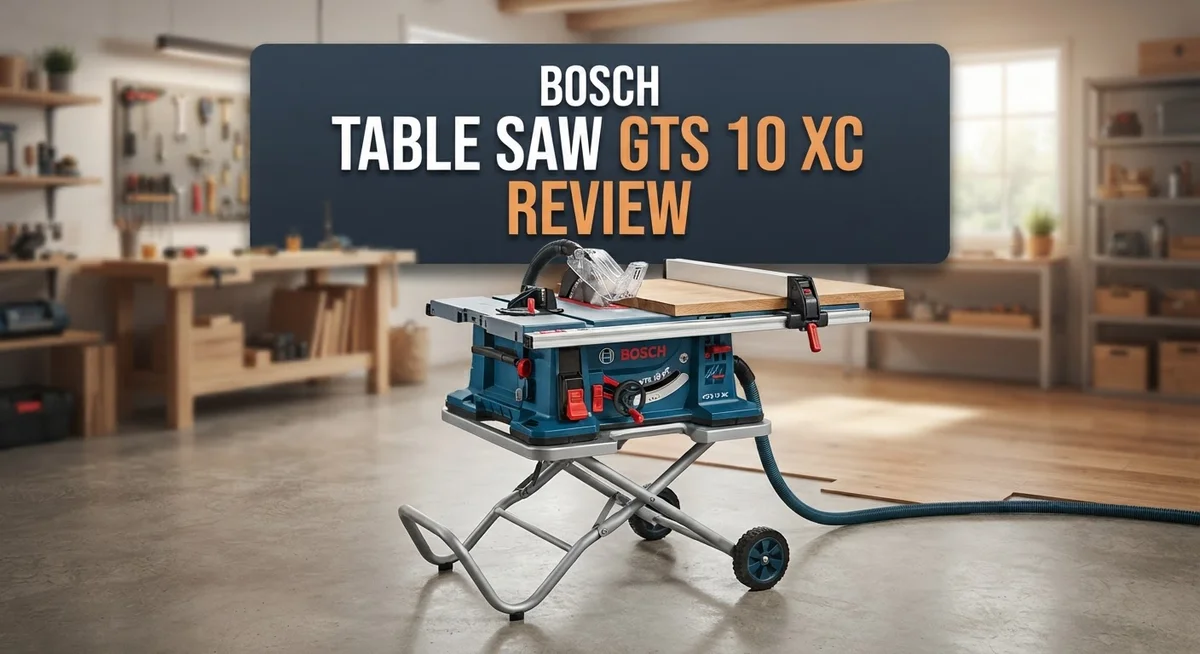
Bosch GTS 10 XC Table Saw Review 2026: Worth the Splurge?
Looking for a table saw that handles big cuts with ease? The Bosch GTS 10 XC might be your answer. This machine brings serious power to your workshop.
It packs a 2,100W motor with Constant Speed technology. This means the blade keeps cutting smoothly, even under heavy load. You get clean cuts every time.
The sliding carriage system sets this saw apart from basic models. It helps you guide larger pieces with better control. Your accuracy improves on every project.
In a Nutshell
- Constant Speed motor keeps cutting smooth even under heavy loads. It handles thick hardwood without slowing down.
- The sliding carriage makes crosscuts more accurate. You get cleaner results on wider boards.
- Table widener and extension give solid support. Big sheets of plywood or MDF feel stable during cuts.
- Some users find the learning curve steep. It takes time to get comfortable with all the features.
- Regular maintenance matters here. Keeping the arbor and blade clean is critical for smooth performance.
- The stock fence and dust collection could be better. Many owners choose to upgrade these parts early on.
- Compared to rivals like the DeWalt DWE7491 or Metabo TS 254, this saw holds its own. But it’s not a perfect fit for everyone.
Motor Power and Cutting Performance
The 2,100W motor in the Bosch GTS 10 XC delivers consistent cutting force across different materials and thicknesses. This power level sits in the mid to upper range for compact table saws, making it suitable for serious DIY work and light professional use.
What sets this motor apart is the Constant Speed feature. This technology maintains blade rotation speed even when you feed material under load. Your cuts stay smooth and clean instead of bogging down or producing tear-out on delicate surfaces.
The sliding carriage system works with the motor to improve cutting accuracy. Instead of pushing material across a stationary blade, you move the entire blade carriage toward the workpiece. This design reduces binding and gives you better control, especially on crosscuts and angled cuts.
Performance across material types remains solid. The saw handles plywood without splintering excessively. Hardwood cuts come out clean when you use sharp blades and proper feed rates. Softwood and MDF also perform well, though MDF does require dust collection to manage the fine particles effectively.
Real users report that the saw maintains power throughout most cutting tasks. Heavy ripping jobs do demand patience and proper technique. You cannot force material through quickly, but the motor responds well to steady, controlled feeding.
One practical note: blade and arbor cleanliness directly impact performance. Buildup reduces cutting efficiency and can cause vibration. Regular inspection and cleaning take just a few minutes but make a noticeable difference in cut quality.
The integrated table widener and extension support longer boards during cutting. This reduces wobbling and helps you maintain straight, accurate cuts on larger workpieces.
Some users mention the learning curve affects how quickly you achieve optimal results. Understanding the sliding carriage motion and fence alignment takes practice. Once you master these basics, the saw performs reliably for repetitive tasks.
Overall, the motor and cutting system work together to deliver performance that meets expectations for a saw in this category. You get power, precision, and consistent results when you use proper technique and maintenance habits.

- RACK AND PINION RIP FENCE: This BOSCH table saw 10 inch size features color-coded index pins that...
- BOSCH TOOLS SAW: 15-Amp portable table saw with 3,800 rpm for rip-cutting and cross-cutting of fine...

Last update on 2026-10-21 / Affiliate links / Images from Amazon Product Advertising API Some of the links on this website are affiliate links, which means that at no additional cost to you, I earn a commission if you click through and make a purchase. I only recommend products and services that I believe will add value to my readers. Thank you for your support!
Sliding Carriage System and Precision
The sliding carriage system on the Bosch GTS 10 XC represents a significant upgrade from standard table saws. This mechanism moves the entire blade assembly along a track, allowing you to make crosscuts without manually pushing the workpiece.
Precision starts with the carriage design. The system glides smoothly across the table surface. You control the cut by moving the carriage toward you or away from you. This approach keeps your hands safer and farther from the blade. The carriage moves in a straight line, which means your crosscuts come out square and accurate every time.
Real workshop users report that the carriage makes a noticeable difference in cut quality. Plywood edges come out cleaner. Hardwood crosscuts stay perpendicular. MDF pieces require less sanding afterward. The system handles boards up to the table’s width without forcing you to stand at awkward angles.
Accuracy depends on proper setup and maintenance. The parallel fence system works alongside the carriage to lock your measurements in place. Once you set your fence distance, the carriage guides the blade at that exact position. This consistency matters when you’re cutting multiple pieces to the same length.
Some users mention that learning the carriage motion takes practice. You need to understand how much pressure to apply and when to let the mechanism do the work. The learning curve isn’t steep, but it’s real. Watching demonstration videos or reading the manual helps you get comfortable faster.
Dust management affects carriage performance too. Sawdust buildup on the tracks can cause the carriage to bind or move unevenly. Regular cleaning keeps the system running smoothly. A quick wipe with a dry cloth after each session prevents issues.
The sliding carriage system makes this saw different from basic models. It gives you crosscutting accuracy that hand pushing cannot match. Combined with the 2,100W motor and Constant Speed feature, the carriage ensures your cuts stay true and consistent. This system appeals to users who value precision in their workshop projects.
Build Quality and Design
The Bosch GTS 10 XC shows solid engineering throughout its frame and mechanical systems. The cabinet design feels sturdy and supports the weight of the motor and blade assembly without wobbling during operation.
The materials used in construction matter significantly here. The base uses cast iron components that resist vibration. Steel reinforcements on the frame keep everything aligned. Users report that the overall structure feels stable even when pushing the saw hard.
The sliding carriage system sits at the heart of this design. It moves smoothly along precision rails. The carriage connects directly to the cutting head, which means your blade stays perpendicular to the table surface. This mechanical approach reduces drift during crosscuts. The system requires clean rails and proper lubrication to work at its best.
Dust collection integration is built into the design rather than added as an afterthought. The saw has a dust port that connects to your shop vacuum. However, the stock dust collection doesn’t capture everything. Many users upgrade to a separate dust extraction system for better workshop cleanliness.
The table itself measures 254mm and sits at a comfortable working height. The integrated table widener extends your support surface. The extension slides out when you need extra room for longer stock. This modular approach keeps the footprint manageable when not in use.
The fence system uses a parallel design that locks firmly in place. The fence slides along the table edge and stays square to the blade. Adjustment feels straightforward once you understand the mechanism. Some users mention that fence accuracy improves after breaking in the locking mechanism.
Control placement and ergonomics deserve attention too. The power switch sits within easy reach. The emergency stop button is clearly marked. Adjustment knobs and levers use simple mechanical systems. You can operate most functions without removing your hands from the table.
The overall design philosophy emphasizes accessibility and reliability over flashy features. Everything serves a practical purpose. Maintenance points are easy to reach. This straightforward approach appeals to serious woodworkers who value function over complexity.
Top 3 Alternatives
DeWalt DWE7491RS

- Rack & Pinion Telescoping Fence System Make fence adjustments fast, smooth and accurate
- Patented material support, can be used for narrow rip cuts.
Last update on 2026-10-21 / Affiliate links / Images from Amazon Product Advertising API Some of the links on this website are affiliate links, which means that at no additional cost to you, I earn a commission if you click through and make a purchase. I only recommend products and services that I believe will add value to my readers. Thank you for your support!
Makita 2705 Table Saw

- Left extension table with smooth sliding action
- Right and rear extension table enables greater cutting capacity
Last update on 2026-10-21 / Affiliate links / Images from Amazon Product Advertising API Some of the links on this website are affiliate links, which means that at no additional cost to you, I earn a commission if you click through and make a purchase. I only recommend products and services that I believe will add value to my readers. Thank you for your support!
Festool Kapex KS 120

- Include a 3-year wear-and-tear warranty, 2-day standard repair time, and 1-month satisfaction...
- The KAPEX features a rail forward design which increases precision and creates a compact footprint...
Last update on 2026-10-21 / Affiliate links / Images from Amazon Product Advertising API Some of the links on this website are affiliate links, which means that at no additional cost to you, I earn a commission if you click through and make a purchase. I only recommend products and services that I believe will add value to my readers. Thank you for your support!
Dust Collection and Maintenance Requirements
The Bosch GTS 10 XC requires active dust collection management to perform at its best. The saw includes a dust port that connects to standard workshop vacuums. Most users find that a mid-range vacuum handles the volume well during regular cutting tasks.
Dust buildup affects more than just cleanliness. When sawdust accumulates around the blade and arbor, cutting accuracy drops noticeably. The sliding carriage system becomes sluggish if dust settles in the tracks. Regular clearing prevents this performance decline and extends the life of moving parts.
The maintenance routine involves several simple steps. First, empty the dust collection bag or vacuum after each session. Second, wipe down the carriage tracks weekly with a dry cloth. Third, check the blade for resin buildup every few uses. A soft brush works well for removing stubborn dust from hard to reach spots.
The fence system needs regular attention too. Dust collects along the fence rails and affects alignment. Wiping these rails takes just a few minutes and keeps cuts straight and true. The parallel fence locks firmly when clean, but performs poorly when clogged with debris.
Some users upgrade the stock dust collection setup. Adding a better vacuum or installing a dust hood improves capture rates significantly. The factory port works adequately but leaves room for improvement. Workshop air quality improves noticeably with these upgrades.
Blade maintenance matters for both performance and safety. Keep the blade sharp and free from pitch and resin. A dull blade forces the motor to work harder and produces more heat. Cleaning the blade monthly with appropriate cleaner prevents buildup that dulls the teeth.
Storage conditions also impact maintenance needs. Keep the saw in a dry location away from moisture. Humidity causes rust on the table surface and fence rails. A light coat of machine oil protects these metal surfaces between uses.
The arbor requires occasional inspection. Check that it spins freely without wobbling. Any unusual sounds or vibrations suggest the arbor needs professional service. Most users find that basic maintenance takes less than 30 minutes monthly.
Fence System and Ease of Setup
The fence system on the Bosch GTS 10 XC uses a parallel design that delivers solid performance right out of the box. This fence locks firmly in place and stays put during cutting operations. The parallel mechanism keeps the fence perfectly aligned with the blade, which means your cuts stay straight and true.
Setting up the fence takes just a few minutes. You move it to your desired distance from the blade and engage the locking mechanism. The process feels intuitive once you understand how the system works. Most users get comfortable with it after their first few cuts.
The fence rails need regular attention to maintain peak performance. Sawdust accumulates along these rails and can affect how smoothly the fence glides. A quick wipe down with a dry cloth keeps things running smoothly. Some workshops prefer to use compressed air to blow out debris.
Initial setup of the entire saw system requires patience and care. The sliding carriage needs proper alignment before you make your first cut. Take time to check that the table surface sits flat and level. Verify the blade runs perpendicular to the table. These steps matter because they affect everything that follows.
Many users find the learning curve steeper than expected. The carriage system works differently from basic table saws. You need to understand how it moves and how that movement affects your cuts. Spending an hour reading the manual pays off in better results. Online tutorials also help speed up the learning process.
The fence adjustment mechanism responds well to minor tweaks. You can make small shifts to get exactly the distance you want. This precision proves valuable when you’re ripping multiple pieces to the same width. The locking system holds firm once you set it, so there’s no drift during operation.
New owners should practice on scrap wood first. This lets you get comfortable with the fence operation before tackling important projects. The system becomes second nature after a few hours of use. Once you master the basics, the fence system delivers consistent, reliable results.
Pros and Cons
Pros
- 2,100W motor maintains consistent speed even during demanding cuts through hardwood and plywood
- Sliding carriage system significantly improves crosscut accuracy and repeatability
- Parallel fence locks firmly and requires minimal adjustment for straight, reliable cuts
- Handles diverse materials including MDF, softwood, and thick hardwood without strain
- User-friendly layout makes daily operation straightforward once you learn the carriage mechanics
Cons
- Steep learning curve exists because the sliding carriage works differently from standard table saws
- Dust collection needs upgrading beyond the stock setup to prevent arbor and blade buildup that reduces accuracy
- Fence rails require regular cleaning and maintenance to stay properly aligned and functioning smoothly
- Mixed user feedback suggests some owners question whether the machine delivers what they expected
Who Should Buy It
The Bosch GTS 10 XC works best for woodworkers who want precision and power in one machine. If you make crosscuts regularly, this saw delivers. The sliding carriage system gives you accuracy that basic table saws cannot match.
You should buy this saw if you work with mixed materials. The 2,100W motor handles plywood, hardwood, softwood, and MDF without breaking a sweat. The Constant Speed feature keeps blade rotation steady even during tough cuts.
This machine suits experienced DIYers and semi-professional shops. You need some woodworking knowledge to get the best results. The learning curve is real because the carriage system works differently than standard saws. Beginners might struggle at first, but practice makes it easier.
The Bosch GTS 10 XC fits your needs if you have space for a larger saw. The integrated table widener and extension take up room, but they give you flexibility for bigger projects. Make sure your workshop can accommodate it before buying.
You should avoid this saw if you want something simple and quick to set up. The fence system and carriage mechanics require attention and care. Dust collection needs upgrades too, which means extra investment beyond the machine itself.
Hobbyists who make occasional cuts might find this overkill. If you only cut straight lines on small pieces, a basic portable saw works fine. However, if accuracy matters and you cut regularly, this Bosch performs.
Choose this saw if maintenance doesn’t bother you. The arbor and blade need regular cleaning to keep cuts sharp and true. The fence rails collect dust and need attention. Some users prefer a saw that requires less upkeep.
Woodworkers who value repeatability should seriously consider this model. The parallel fence locks firmly, and the carriage system ensures consistent results across multiple cuts. If your projects demand tight tolerances and clean edges, the Bosch GTS 10 XC delivers what you need.
Final Verdict
The Bosch GTS 10 XC stands out as a serious tool for woodworkers who demand accuracy. It rewards patience with clean, repeatable cuts that few saws in its class can match.
This saw shines brightest in shops where consistency matters more than convenience. Professional carpenters and serious hobbyists will appreciate the results once they master the carriage system.
Compared to models like the DeWalt DWE7491 or DeWalt DWE7492, the Bosch offers a different approach to precision. The sliding carriage sets it apart from typical jobsite saws.
The Metabo TS 254 and SawStop Compact also compete in this space, but each brings its own strengths. Bosch focuses on carriage-driven accuracy rather than simple portability.
Build quality feels solid throughout the machine. The frame stays stable during heavy cuts, and the motor delivers consistent power across different wood types.
Long term ownership means staying on top of upkeep. Regular cleaning keeps the saw performing at its best, and this commitment pays off in cut quality.
If you already own basic power tools and want to step up your woodworking game, this saw makes sense. It bridges the gap between hobbyist equipment and professional grade machinery.
Casual users who cut wood a few times a year should look elsewhere. The complexity here rewards frequent use, not occasional projects.
Think about your workflow before buying. Do you build furniture, cabinets, or detailed projects regularly? If yes, this saw fits naturally into that routine.
Overall, the Bosch GTS 10 XC earns its place among serious table saws. It demands respect and attention, but delivers precision that justifies the investment of time to learn it.
Woodworkers who value long term reliability over instant gratification will find a trustworthy partner here. This tool grows with your skills rather than holding you back.
Choose this saw if you’re ready to commit to mastering its systems. The payoff comes in consistently accurate cuts, project after project.
Frequently Asked Questions
Can I use the Bosch GTS 10 XC for crosscutting plywood?
Yes, absolutely. The sliding carriage system makes crosscutting plywood smooth and accurate. You get repeatable cuts every time because the carriage moves in a fixed path.
The 254mm blade handles plywood thickness without bogging down. Just set your measurement, lock the fence, and slide. The parallel fence system keeps everything square and true.
What’s the learning curve like for this saw?
Expect a steep initial learning curve. The sliding carriage works differently than standard table saws. Once you understand how it moves, operation becomes intuitive.
Most users need 5 to 10 hours of practice before they feel confident. Watch the manual videos first. Your hands will develop muscle memory quickly after that.
Does this saw need regular maintenance?
Yes, maintenance is important. Keep the arbor and blade clean to maintain accuracy. Dust buildup reduces cutting quality and can affect motor performance.
Check the fence alignment regularly. Wipe down the sliding carriage tracks weekly if you use the saw often. These simple steps keep everything running smoothly.
Is the dust collection adequate out of the box?
Stock dust collection is basic. It captures some debris but misses a lot of fine dust. Most owners upgrade to an external dust collector or a shop vacuum with better suction.
An upgrade costs extra effort and money, but your shop stays cleaner and the saw performs better.
Who should buy the Bosch GTS 10 XC?
This saw suits experienced DIYers and semi-professional shops. Buy it if you work with mixed materials regularly and value precision over simplicity.
Skip it if you want quick setup or make cuts only occasionally. Hobbyists who prioritize convenience might find this machine overkill.

Hi, I’m Amelia Thornton, the founder of ElectroPro.blog.
I write about smart devices, gadgets, electronics, and tech essentials from Amazon.
My goal is to help you discover reliable and innovative tech that truly makes life easier.
From home automation to everyday gear, I test and share what’s worth your investment.
Join me as I explore the smartest tech trends—one gadget at a time.