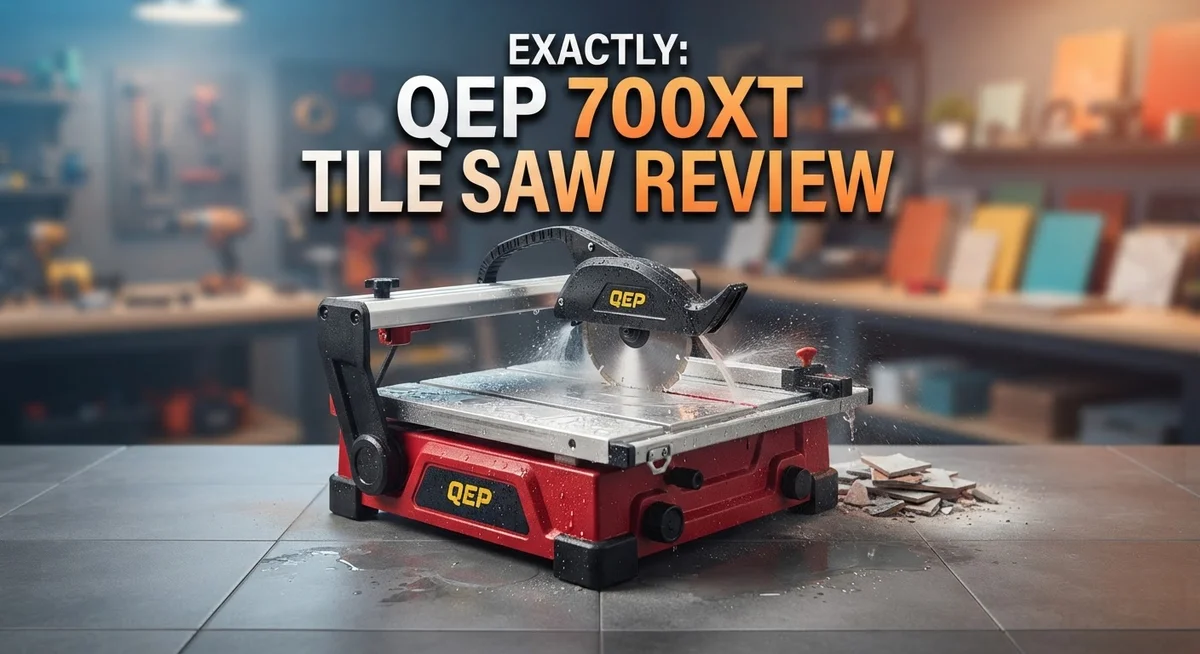
QEP 700XT Tile Saw Review: Worth the Splurge?
Cutting tiles at home can feel tricky. You need a tool that is simple to use and gives clean results every time. The QEP 700XT Wet Tile Saw aims to do just that for small home projects.
This saw comes with a 3/4 HP motor and a 7 inch blade. It handles tiles up to 1 1/4 inch thick with ease. That makes it a solid pick for smaller tiling jobs around the house.
Many users like how easy it is to set up. You can start cutting tiles within minutes. The saw also folds down for simple storage, so it won’t take up much space in your garage.
Of course, no tool is perfect. This saw is not built for heavy duty or professional work. It works best for light, small scale projects rather than big renovation jobs.
In a Nutshell
- Best for light use. This saw works well for small tiles and quick home fixes. It is not built for heavy or professional jobs.
- Simple to use. Even beginners can set it up fast. You do not need special skills to start cutting.
- Clean results on small tiles. The cuts look neat and precise for smaller pieces. Larger or thicker tiles may need a different tool.
- Compact and easy to store. This saw takes up little space in your garage or shed. You can tuck it away when not in use.
- Mixed feedback from users. Some buyers love it. Others feel it falls short for bigger projects.
- Not a match for heavy duty tools. Compared to saws like the Ridgid 7 inch or Kobalt 10 inch, this one stays in a lighter class. Think of it as a helper for smaller tasks, not big renovations.
Motor Power and Cutting Capacity
The motor sits at the heart of this machine’s performance. You get a 3/4 HP motor running at 3600 RPM with 550 watts of power. This setup delivers enough force to handle most home tile projects without strain.

- Easily cuts tile up to 1- .25 in. thick
- Compact and portable with built-in handle

Last update on 2026-09-10 / Affiliate links / Images from Amazon Product Advertising API Some of the links on this website are affiliate links, which means that at no additional cost to you, I earn a commission if you click through and make a purchase. I only recommend products and services that I believe will add value to my readers. Thank you for your support!
The 7 inch blade pairs well with the motor’s output. It cuts through tiles up to 1 1/4 inches thick, which covers standard ceramic and porcelain tiles you’ll find in bathrooms and kitchens. The 5/8 inch arbor keeps the blade secure and stable during cuts.
Cutting capacity matters when you pick a saw. This model works best for smaller tiles and DIY jobs around your home. You can make straight cuts across tile faces smoothly. The blade stays cool thanks to the water circulation system, which also keeps dust down and makes cleanup easier.
Real users report clean, precise cuts on small to medium sized tiles. The motor doesn’t bog down on standard residential tiles. You won’t hear excessive noise or vibration when the blade engages. This makes it comfortable to use for extended periods during a home project.
One thing to understand: this motor class has limits. Heavy duty work requires more power. Professional contractors and large scale projects demand higher amperage and horsepower. The 3/4 HP motor wasn’t built for cutting thick natural stone or running all day in a commercial setting. It’s designed for homeowners who need reliable performance on occasional projects.
The motor’s 4.8 amp draw means you can plug it into a standard household outlet. No special electrical setup is needed. This convenience factor appeals to most DIYers who lack dedicated workshop power.
Compared to larger competitors like the Ridgid 7 inch or Kobalt 10 inch models, this saw sits in a different category. Those machines pack 9 to 15 amps and handle tougher materials. But they also take up more space and cost significantly more.
The real question is matching the tool to your needs. If you’re cutting a few tiles for a bathroom update, this motor delivers the power you need. The blade cuts clean lines without struggle. For occasional home use, the 3/4 HP motor proves more than adequate. It won’t win speed contests against industrial equipment, but it handles what homeowners throw at it reliably.
Blade Size and Cutting Precision
The 7 inch blade on the QEP 700XT delivers consistent cutting performance for small to medium tiles. This blade size works well for residential projects where precision matters more than speed.
Blade precision depends on several factors. The saw maintains a steady cut line when you guide tiles straight into the blade. Users report that edges come out clean without excessive chipping or cracking. The blade spins at 3600 RPM, which keeps vibration low during operation.
The saw cuts tiles up to 1 1/4 inches thick. This thickness range covers most standard ceramic and porcelain tiles you’ll find at home improvement stores. Thicker stone materials may struggle, but they fall outside this saw’s intended use anyway.
What makes the cuts so clean? The water cooling system plays a huge role. Water flows across the blade while it cuts, which reduces dust and heat. This keeps the blade sharp longer and prevents tile edges from cracking due to thermal stress.
The table extension comes standard with this model. This extra surface gives you more support when positioning larger tiles before the cut. Better support means more accurate cuts and fewer mistakes.
One thing to note: blade quality affects results. The included blade works fine for general cutting. If you want even sharper cuts, upgrading to a premium blade is simple and affordable.
Compared to larger saws, how does precision stack up? The 7 inch blade cannot match the cutting speed of 10 inch models. However, for detailed work on smaller tiles, this saw often performs better. Precision comes from control, not just blade size.
The saw handles diagonal cuts and angled cuts without trouble. The angle adjustment works smoothly, so you can cut beveled edges for trim work or decorative patterns.
Users cutting bathroom tiles or kitchen backsplashes report excellent results. The blade stays true throughout the cut, which means professional looking edges. This matters when visible tile edges show in your finished project.
For DIY tile work around your home, the 7 inch blade provides the precision you need. It cuts straight, clean lines on the tiles it’s designed for. Matching the right tool to your project ensures you get results that look great.
Assembly and Ease of Use
Getting the QEP 700XT ready for action takes minimal effort. Most users report they can have this saw operational within 15 to 20 minutes straight out of the box.
The motor assembly connects easily to the base unit. You’ll attach the blade and arbor nut without needing special tools or technical knowledge. The instruction manual walks you through each step in clear language. Beginners find this process straightforward and stress free.
Water system setup requires just a few minutes. You fill the reservoir with tap water and connect the pump to the motor. The water cooling feature activates immediately once you power on the machine. No complex plumbing or advanced setup steps are needed here.
The table extension arrives pre assembled. You simply slide it into place and secure it with the provided clips. This addition gives you more surface area for supporting tiles during cuts. Most people appreciate having this feature ready to go without extra assembly work.
Operating controls feel intuitive once you start using them. The power button sits in an easy to reach location. The water flow dial lets you adjust spray intensity with one hand. Beginners can master basic operation after just one or two test cuts.
The blade guard design allows quick access when you need to change blades. You don’t need to remove multiple components or spend time on complicated disassembly. Swapping out a dull blade takes roughly five minutes total.
Storage and transport remain hassle free. The compact footprint means this saw fits easily on a workbench or shelf. The handle design lets you carry it comfortably from one location to another. No heavy lifting or awkward maneuvering required.
Water drainage happens through a simple valve at the base. You can empty the reservoir quickly when finished for the day. Cleanup takes just a few minutes with a damp cloth and brush.
One thing to note: this saw works best when you follow the manual’s guidance on water levels and blade tension. Skipping these simple checks can affect cut quality and machine longevity. Overall, the QEP 700XT prioritizes user friendly design over complicated mechanics, making it accessible for DIY enthusiasts tackling home tile projects.
Top 3 Alternatives

- Stens replacement parts have become a favorite among lawn and landscape professionals thanks to...
Last update on 2026-09-10 / Affiliate links / Images from Amazon Product Advertising API Some of the links on this website are affiliate links, which means that at no additional cost to you, I earn a commission if you click through and make a purchase. I only recommend products and services that I believe will add value to my readers. Thank you for your support!

- Powerful BL Brushless motor delivers 57 CFM and 27 inches water lift of suction using an 18V LXT...
- Filter cleaning system is designed to maintain optimum suction efficiency and longer filter life...
Last update on 2026-09-10 / Affiliate links / Images from Amazon Product Advertising API Some of the links on this website are affiliate links, which means that at no additional cost to you, I earn a commission if you click through and make a purchase. I only recommend products and services that I believe will add value to my readers. Thank you for your support!

- Your purchase includes One Dewalt 10-Inch Wet Tile Saw, Wet Tile Saw Stand, 10-Inch XP4 Porcelain...
- Tool dimensions: 36” L x 29” W x 24” H. Tool weight: 69 lbs. Voltage – 120V. Peak Horsepower...
Last update on 2026-09-10 / Affiliate links / Images from Amazon Product Advertising API Some of the links on this website are affiliate links, which means that at no additional cost to you, I earn a commission if you click through and make a purchase. I only recommend products and services that I believe will add value to my readers. Thank you for your support!
Portability and Storage
The QEP 700XT stands out when you need to move your tile cutting setup from room to room. This saw weighs significantly less than full-size professional models, making it easy to carry with one hand. The compact design means you can store it in a garage corner, closet, or under a workbench without taking up much space.
Transporting this saw feels simple and straightforward. The base unit stays stable during movement, and nothing shifts or rattles around inside. You can load it into a truck bed or van without needing special equipment or assistance. The water tank sits securely attached, so you don’t have to worry about spills during transport.
Storage works well in tight spaces. The saw’s footprint measures roughly the size of a small cooler, which lets you tuck it away when you’re not actively cutting. Many homeowners keep it on a rolling cart, which adds another layer of convenience for moving between projects. The table extension doesn’t detach, but it doesn’t add much bulk to the overall profile.
One practical consideration: the water drainage system requires attention before storage. You’ll want to empty the tank to prevent mold or stagnant water from developing. The simple valve at the base makes this process quick. Once drained, the saw sits ready for next time without any hassle.
Setup and takedown both happen in minutes. You don’t need to reassemble major components each time you use it. The blade guard provides quick access when you want to change blades or inspect the cutting surface. Everything stays connected and ready to go.
The saw’s lightweight construction actually benefits portability without sacrificing stability during cuts. When the motor runs, the base stays firmly planted thanks to its low center of gravity. This means you get reliable performance even though the unit remains easy to move.
For homeowners tackling bathroom renovations or kitchen backsplash projects, this portability factor makes a real difference. You can work in different rooms without dragging around heavy equipment. The QEP 700XT adapts to your workspace rather than forcing you to adapt to it.
Pros and Cons
The QEP 700XT brings real advantages to homeowners and small DIY enthusiasts. Clean, straight cuts come naturally when you guide tiles properly into the blade. The water cooling system keeps dust down and produces smooth edges on ceramic and porcelain tiles. Assembly takes minutes, not hours. You connect the motor to the base, fill the water reservoir, and you’re ready to work. The blade guard lets you swap blades quickly without frustration.
Portability stands out as a major strength. This saw weighs far less than professional models, so moving it between rooms or storing it in a closet works without strain. The compact footprint fits easily on workbenches. The stable base keeps tiles steady during cuts, even though the unit itself stays lightweight. Water drainage through the base valve happens cleanly before you pack it away.
However, real limitations exist. The 3/4 HP motor and 7 inch blade mean this saw handles small to medium tiles best. You won’t cut thick stone or large format tiles efficiently. Contractors and professionals should look elsewhere. The blade speed cannot match 10 inch saws, so production work takes longer.
User reviews show mixed results. Some owners report excellent performance for bathroom tile projects. Others mention that blade quality matters significantly. A dull blade creates rough edges and slows your work. You’ll need to replace blades more often than with higher end equipment.
The saw works best when you follow manual instructions on water levels and blade tension. Neglecting these steps leads to poor cuts and potential damage. This isn’t a tool you can abuse and expect to last.
Think of this as a starter saw. It excels for occasional kitchen backsplash work, small bathroom renovations, or one time projects. The learning curve stays gentle. Controls feel intuitive. Water system setup requires only minutes. But if you plan heavy duty work or professional installations, this model will frustrate you. The motor will strain. The blade will dull quickly. You’ll outgrow it fast.
For weekend warriors and homeowners tackling specific projects, the QEP 700XT delivers solid performance. Just understand its boundaries before you buy.
Who Should Buy It
The QEP 700XT works best for specific homeowner situations. You should buy this saw if you tackle occasional tile projects around your home. Bathroom renovations, kitchen backsplash installations, and small repair jobs fit perfectly within this saw’s capabilities.
DIY enthusiasts with weekend projects benefit most from this model. You get a saw that handles light to medium tasks without overwhelming complexity. The 7 inch blade cuts tiles up to 1 1/4 inches thick, which covers most residential needs. If your projects happen a few times per year rather than daily, this saw matches your usage pattern.
Homeowners who value portability and storage find real value here. You can move this saw between rooms easily. It fits on workbenches or shelves without taking up excessive space. If your home workshop has limited room, the compact footprint solves a genuine problem.
People new to tile cutting appreciate the intuitive operation. You don’t need extensive experience to get clean results on smaller tiles. The controls feel straightforward once you start using them. Assembly takes minimal effort, so you spend less time preparing and more time cutting.
Do not buy this saw if you run a tile business or handle constant professional work. Contractors need heavier duty equipment with more power. The 3/4 HP motor simply cannot sustain heavy production schedules. If you cut tiles daily or work with extremely thick materials regularly, you need a different solution.
This saw is not ideal for large format tiles or commercial projects. The 7 inch blade has limitations that professionals quickly outgrow. You should rent larger equipment or invest in a rail saw for those situations.
Renters and people who move frequently find this model practical. You can transport it easily between homes. Storage remains simple when space matters. The lightweight construction doesn’t sacrifice stability during actual cutting.
Skip this purchase if you expect professional grade performance. User reviews show mixed results from those expecting industrial capabilities. This saw delivers best when expectations match its actual design purpose: light residential use.
In summary, buy the QEP 700XT for occasional home projects, limited workspace, and straightforward tile cutting tasks. It solves real problems for homeowners and weekend warriors tackling specific jobs.
Final Verdict
The QEP 700XT earns its place as a smart pick for casual tile projects. It handles small jobs with ease and gives clean results without much fuss.
This saw shines brightest in simple, everyday scenarios. Think tile trim work, small floor patches, or a quick backsplash update. It gets the job done without complications.
Compared to heavier machines like the Ridgid 7 inch or Kobalt 10 inch, the 700XT plays in a different league. Those saws pack more power and handle bigger tiles with ease. The 700XT simply isn’t built for that kind of demand.
If your project involves large format tiles or stone, look elsewhere. This saw stays true to its purpose: light cutting for light tasks.
Maintenance matters here more than people expect. Keep the blade clean and check water levels often. Small habits like these extend the saw’s life and keep cuts sharp.
Some buyers report inconsistent results straight out of the box. This isn’t universal, but it’s worth noting before you commit. A quick check of blade alignment after unboxing helps avoid early frustration.
For anyone comparing options, think about your project scope first. A single bathroom remodel differs greatly from ongoing renovation work. Match the tool to the task, not the other way around.
This saw won’t replace professional equipment, and it never claims to. It fills a specific gap for casual users who want reliable results without complexity.
If you fall into that category, the 700XT delivers real value for your time and effort. It won’t overwhelm you with settings or components to learn.
Simplicity remains its biggest selling point. Anyone can pick this up and start cutting within minutes, even without prior experience.
In the end, this saw fits a clear niche. It serves homeowners, hobbyists, and small project doers well. Anyone stepping outside that niche should consider a stronger alternative.
Choose the QEP 700XT if your tile cutting needs stay modest and occasional. It handles that role with confidence and keeps things simple along the way.
Frequently Asked Questions
Can the QEP 700XT handle thick tiles?
The QEP 700XT cuts tiles up to 1-1/4″ thick. This works fine for standard ceramic and porcelain tiles used in bathrooms and kitchens. However, if your project involves thicker stone or large format tiles, you’ll need a more powerful machine.
The 3/4 HP motor runs at 3600 RPM and pairs with a 7″ blade. This combo handles light to medium projects well. For heavy stone or professional jobs, consider renting a larger saw instead.
Is assembly difficult for beginners?
No. The QEP 700XT assembles quickly and easily. Most users report they get it running in under 30 minutes without special tools.
The manual explains each step clearly. The table extension installs without confusion. Even if you’ve never used a tile saw, the setup process feels straightforward and intuitive.
What maintenance does this saw need?
Keep the blade clean after each use. Check water levels frequently because the pump needs consistent flow. Inspect the blade tension before cutting to ensure clean, straight cuts.
Inconsistent results sometimes happen right out of the box. Taking 10 minutes to review the manual’s water and tension settings makes a real difference. Regular upkeep prevents most problems people report online.
Who should skip this saw?
Professional tile contractors and commercial operations should look elsewhere. If you run a tile business or handle constant cutting work, this saw won’t meet your durability needs.
Also skip it if your projects involve large format tiles or thick stone. Renters who move frequently and homeowners with occasional weekend projects find it perfect. Casual DIYers get the most value from this model.

Hi, I’m Amelia Thornton, the founder of ElectroPro.blog.
I write about smart devices, gadgets, electronics, and tech essentials from Amazon.
My goal is to help you discover reliable and innovative tech that truly makes life easier.
From home automation to everyday gear, I test and share what’s worth your investment.
Join me as I explore the smartest tech trends—one gadget at a time.