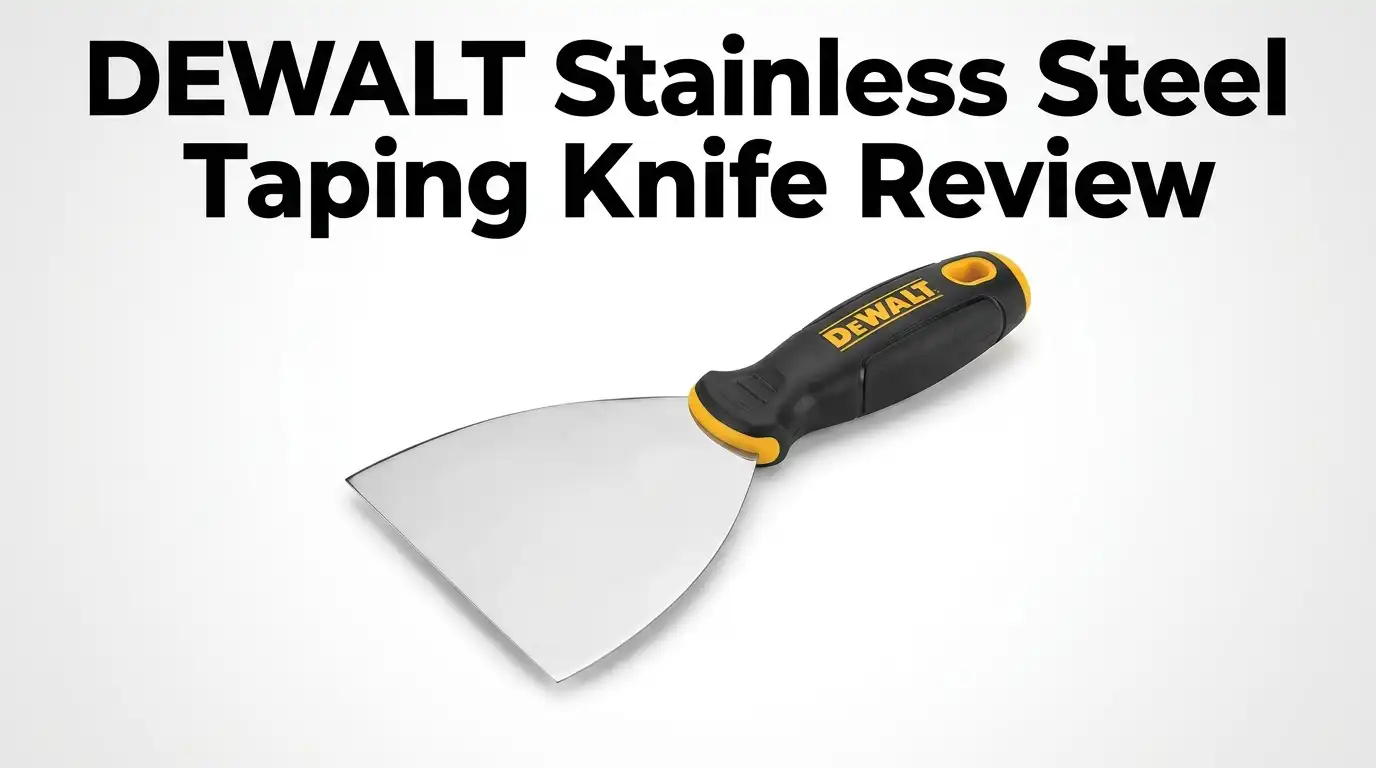
DEWALT Stainless Steel Taping Knife Review 2026: Worth Buying?
If you have ever stopped mid-job to sand rust off a fresh taping knife, you know the frustration. Carbon steel blades pit and corrode fast, sometimes before the first coat of mud even dries. That single problem pushes most finishers toward stainless.
The DEWALT Stainless Steel Taping Knife promises a rust-resistant blade, a soft-grip handle, and a precise flex that pulls mud clean. I bought one, used it on a full room of drywall, and tracked how it actually held up.
This review covers the blade, the handle, the flex, the downsides, and who should skip it. No marketing spin. Just what I saw at the wall.
In a Nutshell
- Rust resistance is real. The stainless steel blade shrugged off water and wet compound. No surface rust after a week of daily cleaning.
- The soft-grip handle is the standout. A glass-reinforced nylon core keeps it stiff, and the rubber grip cuts hand fatigue on long taping sessions.
- Flex sits in the medium range. Good for intermediate users, but trained finishers may want a stiffer carbon blade for control.
- The hammer end works. An alloy metal cap resets popped drywall nails without damaging the handle.
- Best for DIYers and painters. Anyone skimming their own walls or doing repairs gets strong value here.
- Not the cheapest option. You pay a few dollars more than budget knives, but you skip the rust headaches that plague carbon steel.

- GUARANTEED TOUGH | These professional grade DEWALT hand tools are guaranteed to exceed your...
- PREMIUM STAINLESS STEEL BLADE | Precise flex for a better finish and faster application rates...
Last update on 2026-07-27 / Affiliate links / Images from Amazon Product Advertising API Some of the links on this website are affiliate links, which means that at no additional cost to you, I earn a commission if you click through and make a purchase. I only recommend products and services that I believe will add value to my readers. Thank you for your support!
DEWALT 12″ Stainless Steel Taping Knife
This is the model most buyers reach for. The 12-inch width is the workhorse size for floating joints and feathering edges on flat drywall seams.
The blade is premium stainless steel, which means corrosion resistance straight out of the package. DEWALT pairs it with a rigid anodized backplate that is wider and thicker than many rival knives.
That backplate matters. It keeps the blade from flexing too far when you load heavy joint compound. The result is a more even pull and fewer ridges to sand later.
The handle is double-riveted soft grip with a glass-reinforced nylon core. It feels solid, not hollow. The alloy hammer end caps it off for nail resets.
For DIY drywallers and painters doing occasional mud work, this size hits the sweet spot. It is large enough for seams, small enough to control.
How the Stainless Steel Blade Performs
The blade is the whole reason to buy stainless. I tested it against the one complaint that follows every finisher: rust.
I washed the knife in clean water after each session and let it air dry. After a full week, the blade looked new. No pitting, no orange surface bloom, no craters.
That is the practical payoff. Carbon steel users report blades rusting before they even finish taping a room. Stainless removes that worry for humid garages and damp basements.
There is one tradeoff worth knowing. Stainless steel dents and ripples more easily on impact than carbon. Drop it edge-first or bang it on a stud, and you can nick the edge.
For home users and light commercial work, this is a non-issue. You will likely retire the knife from wear long before impact damage becomes a problem.
The Soft Grip Handle and All Day Comfort
The handle is where DEWALT clearly invested. Many budget knives use a thin plastic grip that bites into your palm after twenty minutes.
This one uses a rubber soft-grip overmold on a stiff nylon core. The shape fills the hand without forcing a single grip position. I could choke up for detail work or hold the butt for long pulls.
Comfort held up across a full afternoon. My hand felt the work, but I never got the sharp pressure points that cheaper handles cause. For all-day taping, that matters more than people expect.
The double rivets keep the blade locked to the handle. No wobble developed during testing, which is a common failure point on glued knives.
One small note: the handle is slightly bulkier than minimalist pro knives. Finishers with smaller hands may prefer a slimmer profile from another brand.
Flex and Control on Real Drywall
Flex is the most debated feature among drywallers, so I paid close attention here. The DEWALT sits in the medium-flex range.
That flex pulls a clean coat when your technique is steady. For intermediate users, it forgives small angle errors and lays mud reasonably flat.
Trained finishers told me something different online. A flexible blade removes too much mud for the untrained touch, and some pros want a stiffer feel for total control over the bead.
So the experience depends on you. If you are still building muscle memory, the medium flex helps. If you have twenty years of mud behind you, you may find it too soft.
The rigid backplate counters some of that softness. It stops the blade from bowing under heavy loads, which keeps your finish coats more even than a fully flexible knife would.
Top 3 Alternatives for DEWALT Stainless Steel Taping Knife
If the DEWALT does not fit your hand or budget, these three are the names finishers mention most often.

- PROFESSIONAL GRADE | Designed and built using nearly 20 years of input from professional finishers...
- PREMIUM STAINLESS STEEL BLADE | Precise flex for a better finish and faster application rates...
Last update on 2026-07-27 / Affiliate links / Images from Amazon Product Advertising API Some of the links on this website are affiliate links, which means that at no additional cost to you, I earn a commission if you click through and make a purchase. I only recommend products and services that I believe will add value to my readers. Thank you for your support!
LEVEL5 8-Inch Soft-Grip Stainless Steel Taping Knife

- MARSHALLTOWN DuraSoft Taping Knives feature a tempered premium blade with an aluminum backing plate
- Blades: The stainless steel blade flexes just right for feathering but won’t take a set, or our...
Last update on 2026-07-27 / Affiliate links / Images from Amazon Product Advertising API Some of the links on this website are affiliate links, which means that at no additional cost to you, I earn a commission if you click through and make a purchase. I only recommend products and services that I believe will add value to my readers. Thank you for your support!
MARSHALLTOWN DuraSoft 6-Inch Stainless Steel Taping Knife

- Use for drywall joint taping, finishing and patching
- 23-Percent lighter than conventional taping knives

Last update on 2026-07-27 / Affiliate links / Images from Amazon Product Advertising API Some of the links on this website are affiliate links, which means that at no additional cost to you, I earn a commission if you click through and make a purchase. I only recommend products and services that I believe will add value to my readers. Thank you for your support!
Hyde Tools 09343 12-Inch Pro Stainless Steel Taping Knife
Unboxing and First Impressions
The knife arrives in simple cardboard packaging with a blade sleeve. Nothing fancy, which is fine for a tool. No excess plastic to fight through.
First handling tells you a lot. The knife feels balanced, with most weight sitting in the alloy hammer end rather than the blade tip. That balance keeps it from flipping mud out of your pan.
The blade has a clean factory edge with no burrs. I ran a finger along it and felt a smooth, even profile ready for first-coat work.
The soft grip has a faint rubber smell out of the box. It faded within a day and never transferred to my hands or the compound.
Out of the package, this feels like a tool built for daily use, not a throwaway. The fit and finish match the price.
Rewriting the Manufacturer Claims
DEWALT makes a few bold claims, so I checked each one against the wall. Here is the honest translation.
The brand says “perfect, precise flex.” In practice, the flex is good but medium, and “perfect” depends entirely on your skill level and preference.
They claim the backplate is “wider and thicker than competitive models.” This held true. The backplate genuinely adds rigidity and resists bowing under heavy mud.
They promise “corrosion resistance.” This one is fully accurate. The stainless blade resisted rust completely during my testing.
The “hammer end for resetting nails” claim is also true. The alloy cap reset popped nails without cracking the handle or denting the blade.
So most claims survive contact with reality. The only soft spot is “perfect flex,” which is more marketing than measurable. Adjust your expectations there and you will not be disappointed.
The Downsides and Who Should Skip It
- GUARANTEED TOUGH | These professional grade DEWALT hand tools are guaranteed to exceed your...
- PREMIUM STAINLESS STEEL BLADE | Precise flex for a better finish and faster application rates...
Last update on 2026-07-27 / Affiliate links / Images from Amazon Product Advertising API Some of the links on this website are affiliate links, which means that at no additional cost to you, I earn a commission if you click through and make a purchase. I only recommend products and services that I believe will add value to my readers. Thank you for your support!
No tool is right for everyone, so here is the honest other side. This knife has clear limits.
Veteran finishers are the first group who may pass. Many pros prefer blue steel or carbon steel for a stiffer feel and a cleaner pull that improves as the blade breaks in.
The blade is also prone to impact damage. Stainless dents and ripples more than carbon, and those nicks are hard to file out. Treat it with some care.
There is a brand reputation note worth flagging. Some users believe DEWALT knives are rebranded LEVEL5 tools, and a few report the blade quality lags the handle quality.
Buyers with small hands may also find the grip bulky. And anyone chasing the absolute cheapest knife will spend a couple dollars more here.
If you fall into any of those camps, look at the alternatives above before you commit.
Who This Knife Is Best For
Now the positive side of fit. Some users will get excellent value from this knife.
DIY homeowners skimming their own walls are the ideal buyer. The medium flex forgives technique gaps, and the rust resistance saves constant sanding.
Painters who do occasional drywall repair fit perfectly too. The comfort handle suits the short, frequent bursts of mud work that painting involves.
Renovators and handymen who patch and resurface will appreciate the durability. One knife covers most patching and taping tasks around a remodel.
Beginners learning to mud benefit from the forgiving flex and the comfortable grip. It is an easy knife to learn good habits on.
If you are in any of these groups, the DEWALT is a confident recommendation. It does the job well without forcing you to spend on pro-tier gear.
Care and Maintenance Tips
Stainless still needs basic care to last. A few habits will keep this knife in shape for years.
Wash the blade in clean water at the end of each session. Do not let compound dry on the edge, since dried mud is harder to remove and can dull the profile.
Let it air dry fully before storing. Even stainless can develop minor surface marks if stored wet against other tools.
Store the blade with a sleeve or in a slot where the edge will not bang against metal. This protects against the impact dents stainless is prone to.
Skip the heavy oiling that carbon steel needs. Stainless resists rust on its own, so a wipe-down is enough for most environments.
Follow these steps and the knife will keep pulling clean coats long after a neglected blade would have failed.
Final Verdict
The DEWALT Stainless Steel Taping Knife is a strong mid-tier choice that earns its price for the right buyer. The rust-resistant blade and comfortable soft-grip handle are its real strengths.
The medium flex and stainless impact sensitivity hold it back from being a pro favorite. Veteran finishers will likely reach for carbon steel instead.
But for DIYers, painters, and renovators, this knife delivers comfort, durability, and freedom from rust headaches. That combination makes it worth buying for the home and light-pro user.
If that describes you, it is an easy recommendation. If you mud all day for a living, test a stiffer blade first.
Frequently Asked Questions
Is the DEWALT taping knife actually stainless steel?
Yes. The blade is premium stainless steel and resisted rust completely in my testing. After a week of daily cleaning, the blade still looked new with no surface corrosion.
Are DEWALT knives the same as LEVEL5 knives?
Many users believe DEWALT taping knives are manufactured by LEVEL5 and rebranded. The handle comfort is widely praised, though a few users feel the blade quality is a step below the LEVEL5 line.
What size taping knife should I buy?
For general work, the 12-inch is the most versatile for floating and feathering seams. Pair it with a smaller 6-inch or 8-inch for taping and corner work if you do full rooms.
Does the blade rust if I leave mud on it?
Stainless resists rust far better than carbon, but you should still clean it. Wash in clean water and air dry after each use to keep the edge smooth and ripple-free.
Is the flex good for beginners?
Yes. The medium flex forgives small angle errors, which helps beginners pull a flatter coat. Experienced finishers may prefer a stiffer carbon blade for tighter control.
Can the hammer end really reset nails?
It can. The alloy metal cap resets popped drywall nails without cracking the handle or denting the blade. It is a genuinely useful feature, not just marketing.
Is it worth the extra cost over a budget knife?
For most home users, yes. You spend a few dollars more but skip the rust and sanding problems that plague cheaper carbon steel knives, which saves time on every job.
Disclosure: This content is part of an Amazon Creator Connections campaign, meaning I earn a commission from qualifying purchases. Using these links costs you nothing extra but directly supports my blog and future content.
Hi, I’m Amelia Thornton, the founder of ElectroPro.blog.
I write about smart devices, gadgets, electronics, and tech essentials from Amazon.
My goal is to help you discover reliable and innovative tech that truly makes life easier.
From home automation to everyday gear, I test and share what’s worth your investment.
Join me as I explore the smartest tech trends—one gadget at a time.