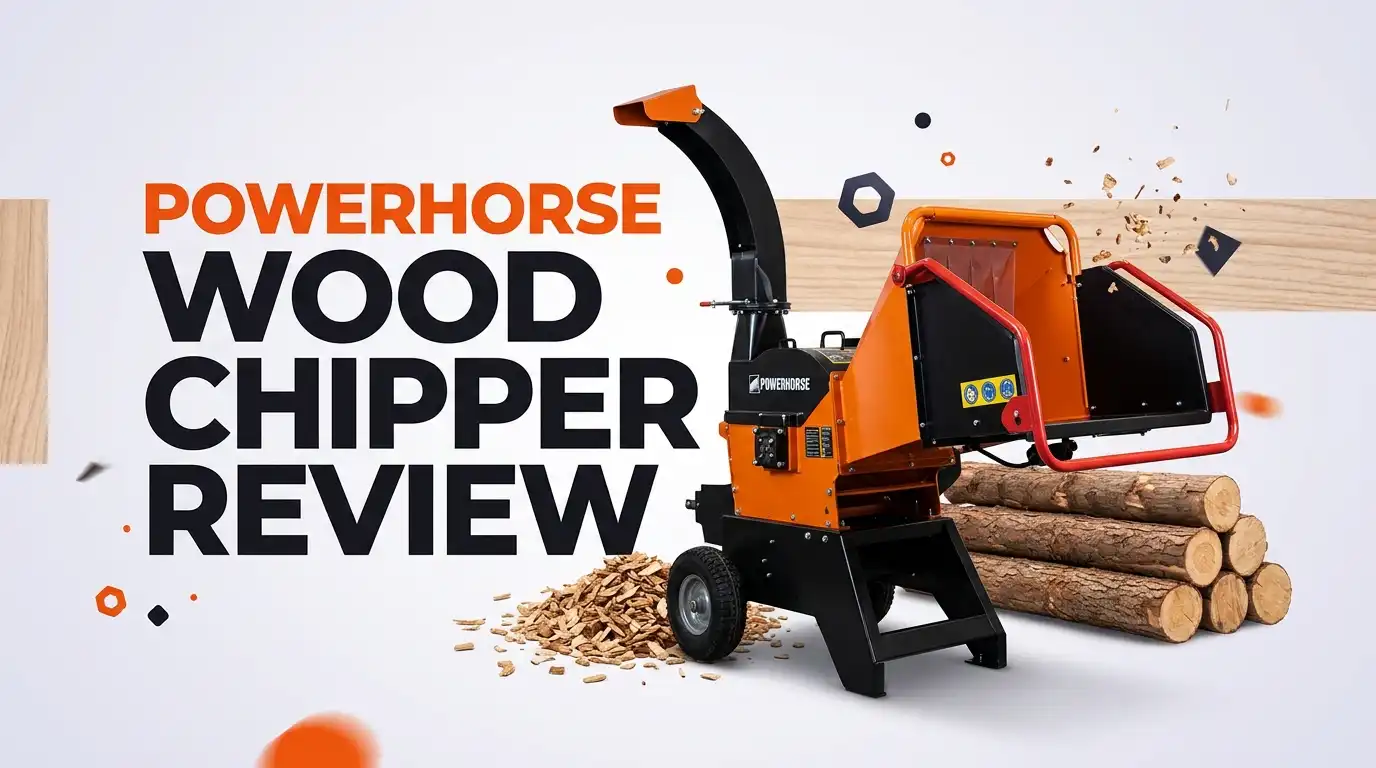
Powerhorse Wood Chipper Review 2026: Worth It?
Cleaning up after a storm tests your patience. You drag branches to a pile, then watch that pile grow until it dominates the yard. Burning is messy. Hauling costs money.
A chipper turns that mess into mulch in minutes. The Powerhorse Rotor Wood Chipper promises to do exactly that for under a thousand dollars.
This review covers the 420cc model with a 4-inch chipping capacity. I looked at the specs, the real owner feedback, and the field tests. The goal here is simple. Does this machine earn a spot in your shed, or should you spend your money elsewhere?
In a Nutshell
- Engine power is genuine. The 420cc Ducar OHV gas engine spins to 3,600 RPM and handles hardwood without bogging down. Owners praise the raw cutting force.
- Self-feeding is the weak point. The rotor design does not pull branches in on its own. You push, and you push hard. This is the most common complaint.
- Build quality feels heavy-duty. Thick steel housing, a real flywheel, and solid welds. It survives drops and rough handling.
- Best for occasional cleanup. Ideal for homeowners and small property owners with a weekend of branches, not daily commercial loads.
- Electric start on towable trims. The pull-start base model cranks easily, while the 5-inch towable version adds electric start and a hitch.
- Price beats the big names. At roughly $900, it undercuts DR and Wood Maxx by a wide margin while delivering similar engine muscle.

- 420cc Powerhorse OHV engine features electric start and generates 3,600 max. RPM
- 4in. chipping capacity handles a variety of branches and limbs.
Last update on 2026-10-21 / Affiliate links / Images from Amazon Product Advertising API Some of the links on this website are affiliate links, which means that at no additional cost to you, I earn a commission if you click through and make a purchase. I only recommend products and services that I believe will add value to my readers. Thank you for your support!
Powerhorse Rotor Wood Chipper
The headline number is the 420cc OHV four-stroke engine. That is a big motor for this price class. It generates a maximum of 3,600 RPM and drives a heavy steel rotor with replaceable blades.
The chipping chute accepts branches up to 4 inches thick. The separate shredder hopper grinds smaller leaves and twigs into fine mulch. Two functions, one machine.
Northern Tool lists the base unit around $900, with the 5-inch towable version near $1,500. The towable adds an electric start, road tires, and a trailer hitch.
This is a recoil-start machine on the base model. It fired up on the first or second pull for most owners. The engine itself rarely draws complaints. People buy this for the motor and the steel, and on those two points it delivers.
How It Performs In Real Yard Work
Fresh green branches feed best. Dry hardwood takes more effort but still chips. The blades bite cleanly when sharp, and the discharge throws chips a good distance.
The catch is feeding. The rotor does not self-feed. One long-term owner on a tractor forum called it “labor intensive” and said his friend stopped using it entirely. You stand there forcing material into the throat.
For light to moderate jobs, this is tolerable. A morning of storm cleanup works fine. A full day of continuous chipping wears you out fast.
Shredding performance is better. The leaf hopper eats soft material without much pushing. If your main job is mulching garden waste, the shredder side shines more than the chipper side.
Output mulch is coarse but usable. Garden beds and tree rings benefit from it right away.
Top 3 Alternatives for Powerhorse Wood Chipper
If the feeding issue worries you, these three give you other options at different price points and power levels.

- The chipper chute equipped with hardened steel blades handles branches up to 3 inches in diameter...
- Powered by a 224cc Champion single-cylinder OHV engine with a 0.92-gallon fuel tank; includes a...
Last update on 2026-10-21 / Affiliate links / Images from Amazon Product Advertising API Some of the links on this website are affiliate links, which means that at no additional cost to you, I earn a commission if you click through and make a purchase. I only recommend products and services that I believe will add value to my readers. Thank you for your support!
Champion 3-Inch Portable Chipper-Shredder with Collection Bag

- EFFICIENT PERFORMANCE - Efficient Mini Wood Chipper Shredder Mulcher with 15:1 Reduction Ratio...
- UNIQUE DESIGN - Compact and light steel chipper with Vertical Extended Discharge Chute and...
Last update on 2026-10-21 / Affiliate links / Images from Amazon Product Advertising API Some of the links on this website are affiliate links, which means that at no additional cost to you, I earn a commission if you click through and make a purchase. I only recommend products and services that I believe will add value to my readers. Thank you for your support!
SuperHandy Wood Chipper Shredder Mulcher 7HP Gas Powered

- [Ideal for HOME GARDENING] The electric wood chipper, powered by a robust 15-amp motor, efficiently...
- [15:1 Volume Reduction] Efficiently reduce yard waste to 1/15th of its original size. This wood...
Last update on 2026-10-21 / Affiliate links / Images from Amazon Product Advertising API Some of the links on this website are affiliate links, which means that at no additional cost to you, I earn a commission if you click through and make a purchase. I only recommend products and services that I believe will add value to my readers. Thank you for your support!
PowerSmart 15-Amp Electric Wood Chipper Shredder
Unboxing And First Impressions
The machine ships on a pallet via freight. It is heavy, so plan for two people to move it off the truck. Expect a crate, not a cardboard box.
Assembly is modest. You bolt on the hopper, the discharge chute, and the wheels. Most owners finished setup in under an hour with basic tools.
The fit and finish look industrial rather than polished. Thick steel, exposed bolts, a no-frills paint job. It feels like a tool built to work, not to sit pretty in a showroom.
First start needs oil and fresh fuel. The engine ships dry. Add the oil, fill the tank, and it cranks. The first pull surprised several owners with how quickly it caught.
Build Quality And Durability
This is where the Powerhorse earns respect. The housing uses heavy-gauge steel. The flywheel has real mass. Nothing about it feels flimsy.
Owners who kept theirs for a year report no structural failures. The blades dull over time, as expected, but they are replaceable. Sharpening or swapping them restores cutting force.
The engine is a Ducar OHV, a reliable Chinese-built motor used across many brands. Parts and oil filters are easy to source. Routine maintenance mirrors any small gas engine.
One owner planned to repurpose the engine for a go-kart project, which tells you the motor outlasts interest in the chipper itself. The core hardware is built to last even when the feeding design frustrates.
This machine takes abuse and keeps running.
Who This Chipper Is For
Buy this if you are a homeowner or hobby farmer with seasonal cleanup. Storm branches, pruned limbs, and garden trimmings suit it well.
It fits people who value engine power and steel build over convenience features. If you do not mind manual effort, the raw capability is there.
Budget matters here too. You get a large engine for under a thousand dollars. That value is hard to match from premium brands.
It also works for anyone who chips in short bursts. An hour here, an afternoon there. The machine handles that rhythm comfortably without exhausting you.
If your needs are occasional and your budget is tight, this hits a real sweet spot.
Who Should Skip It
Skip this if you need true self-feeding. The rotor design forces you to push every branch. Daily users and commercial crews will hate it.
Avoid it if you have limited upper-body strength. Forcing hardwood into the throat is physical work. One owner called the experience “dangerous and exhausting.”
If you process large volumes regularly, spend more on a hydraulic self-feeding model like Wood Maxx or DR. The extra cost pays for itself in saved labor.
Apartment dwellers and small-lot owners with tiny twig piles also overbuy here. An electric chipper does that job quieter and cheaper.
Match the tool to the task. This one rewards a specific user and punishes the wrong one.
Downsides And Honest Flaws
The non-self-feeding rotor is the defining flaw. It appears in nearly every critical review. Manufacturer language calls it a “2-way self-feed unit,” but real users disagree sharply.
The base model lacks an hour meter. Owners who track maintenance hours miss this. The towable trim adds more features, but the entry unit stays bare.
Noise is real. At full throttle this engine is loud. Hearing protection is not optional. Plan for ear muffs every session.
Clearing jams takes effort. Unlike some rivals with quick-release chutes, you work harder to access a clog. Keep the blades sharp to reduce stoppages in the first place.
None of these kill the value, but you should know them going in.
Maintenance And Running Costs
Treat it like any gas engine. Check the oil, use fresh fuel, and replace the filter on schedule. The Ducar motor is forgiving and parts are cheap.
The fuel tank runs a few hours of continuous work per fill. For most homeowners, one tank covers a full cleanup session with gas to spare.
Blades are the main wear item. Sharpen them when cutting slows, and replace them once sharpening no longer helps. Sharp blades cut effort dramatically.
Off-season storage matters. Drain or stabilize the fuel, and keep it under cover. The steel resists rust, but standing water and weather still age any machine over years.
Total running cost stays low. Gas, oil, and occasional blades. No surprises.
Powerhorse Versus Electric Chippers
Electric models like the PowerSmart 15-amp unit handle thin branches quietly. They suit small suburban yards with light pruning waste.
The Powerhorse plays a different game. It chips 4-inch hardwood that would stall any electric machine instantly. Power is the whole point.
The trade-off is noise and effort. Electric chippers are plug-and-go and nearly silent. The Powerhorse demands gas, hearing protection, and muscle.
Choose based on your material. Big branches need the gas Powerhorse. Twigs and leaves belong to a quiet electric unit. They serve different yards.
There is no single winner, only the right match for your pile.
Final Verdict
The Powerhorse Rotor Wood Chipper is a powerful, durable, well-priced machine held back by one real flaw. The engine and steel build are excellent for the money.
The feeding design is the dealbreaker for some. If you expect a machine that pulls branches in on its own, you will feel cheated. If you accept manual feeding, you get strong value.
For occasional homeowner cleanup on a budget, it earns a recommendation. For daily or commercial use, look at self-feeding models instead.
Buy it for the engine. Live with the labor. That is the honest trade.
Frequently Asked Questions
Does the Powerhorse wood chipper self-feed?
Not effectively. Despite marketing language calling it a 2-way self-feed unit, real owners report you must push branches in manually. This is the most common complaint about the machine.
What size branches can it handle?
The chipper chute accepts branches up to 4 inches in diameter on the standard model. The larger towable version handles up to 5 inches. The shredder hopper takes smaller leaves and twigs.
Is the engine reliable?
Yes. The 420cc Ducar OHV engine draws consistent praise. Owners report easy starts and strong cutting force, with the motor outlasting the chipper’s usefulness in some cases.
How much does it cost?
The base 4-inch model runs around $900 at Northern Tool. The 5-inch towable version with electric start sits near $1,500, depending on current promotions.
Is it loud?
Very. This is a full gas engine at 3,600 RPM. Wear hearing protection every time you run it. Plan for muffs or plugs as required gear.
Is it worth the price?
For a homeowner who wants a powerful, well-built chipper on a budget and does not mind manual feeding, yes. For anyone needing true self-feeding or commercial volume, spend more on a hydraulic model.
How do I reduce jamming?
Keep the blades sharp, feed fresh green wood when possible, and avoid overloading the throat. Sharp blades and steady pacing prevent most clogs before they start.

Hi, I’m Amelia Thornton, the founder of ElectroPro.blog.
I write about smart devices, gadgets, electronics, and tech essentials from Amazon.
My goal is to help you discover reliable and innovative tech that truly makes life easier.
From home automation to everyday gear, I test and share what’s worth your investment.
Join me as I explore the smartest tech trends—one gadget at a time.