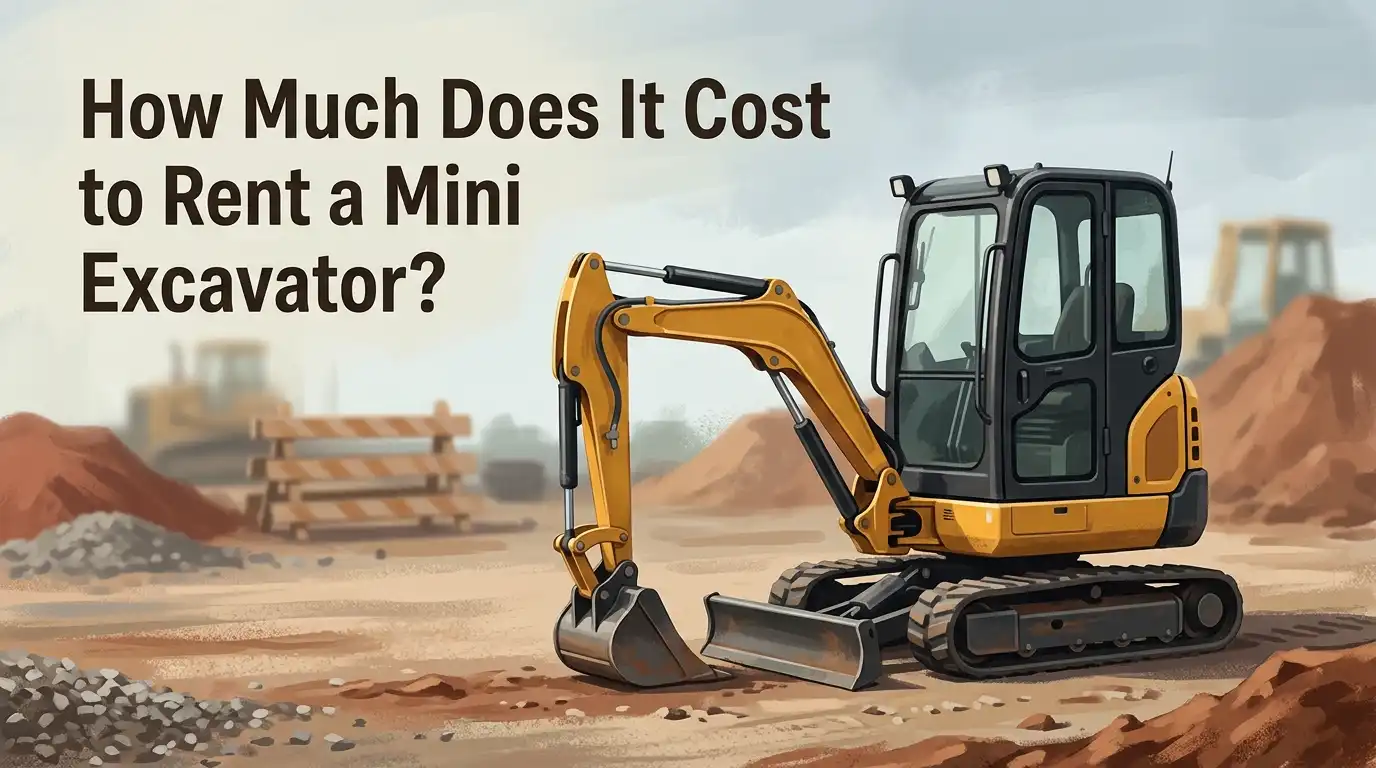
How Much Does It Cost to Rent a Mini Excavator?
Renting a mini excavator can save you thousands of dollars on your next digging project. But if you have never rented one before, the pricing can feel confusing.
Daily rates, weekly rates, delivery fees, insurance charges, and attachment costs all stack up fast. The truth is, a mini excavator rental can cost anywhere from $150 per day to $500 per day depending on the machine size, your location, and the rental company you choose.
Whether you are digging a trench for a French drain, removing tree stumps, or grading your backyard, this guide gives you a clear breakdown of every cost involved. You will also learn how to pick the right size machine, avoid surprise fees, and save real money on your rental.
Key Takeaways
- Mini excavator daily rental rates range from $150 to $500, with smaller machines (under 4,000 lbs) on the low end and larger units (10,000+ lbs) on the high end. Weekly rates typically fall between $800 and $1,500, while monthly rentals cost $2,000 to $4,000.
- Delivery and pickup fees add $75 to $250 each way depending on your distance from the rental yard. Some companies offer free delivery within a certain radius, so always ask.
- Insurance, fuel, and damage waivers are extra costs most renters forget to budget for. Rental insurance can add $30 to $75 per day, and you are usually responsible for returning the machine with a full fuel tank.
- Renting over a weekend or booking during the off season (late fall and winter) can save you 10% to 25% on your total rental bill. Many rental yards also offer Friday afternoon pickup with a Monday morning return for a single day’s charge.
- Choosing the right size machine is the easiest way to control costs. A 4,000 lb mini excavator handles most residential jobs. You rarely need a 12,000 lb unit unless you are doing commercial site work or deep excavation.
- Always compare quotes from at least three rental companies. Prices vary significantly between national chains and local rental yards. Local companies often beat chain store prices by 15% to 20%.
Average Mini Excavator Rental Costs in 2026
The cost to rent a mini excavator depends heavily on the size of the machine and how long you need it. In 2026, daily rates for small mini excavators (under 4,000 lbs) start around $150 to $250. Mid range units between 6,000 and 8,000 lbs cost $242 to $350 per day. Larger mini excavators above 10,000 lbs run $312 to $500 per day.
Weekly rentals offer better value per day. A small mini excavator costs roughly $520 to $800 per week, while a mid size unit runs $728 to $1,200 per week. Monthly rates drop even further, with prices landing between $1,456 and $4,000 per month based on machine size.
These prices cover the base rental rate only. Delivery fees, insurance, fuel, and attachment rentals are usually billed separately. Always request an itemized quote so you can see the total cost before you commit.
How Machine Size Affects Your Rental Price
Mini excavators come in several weight classes, and each class has a different price point. Micro excavators (1 to 2 tons) are the smallest and cheapest to rent. They fit through garden gates and work well for small landscaping jobs. Expect to pay $150 to $200 per day for these tiny machines.
Small mini excavators (2 to 4 tons) are the most popular rental choice for homeowners. They offer solid digging power for trenching, stump removal, and grading. Daily rates fall between $200 and $300. Mid size mini excavators (4 to 6 tons) suit bigger residential projects and light commercial work, costing $300 to $400 per day.
Large mini excavators (6 to 10 tons) are built for serious digging. They provide deeper reach and stronger lifting capacity, but they also need a larger trailer for transport. Daily rates for this class run $350 to $500. The key takeaway here is simple: rent only the size you actually need. A bigger machine costs more per day and may be overkill for your project.
Daily vs. Weekly vs. Monthly Rental Rates
Rental companies price mini excavators on a tiered system. The daily rate is always the highest per day cost. If your project takes more than two or three days, switching to a weekly rate almost always saves money. Most companies charge a weekly rate equal to three to four daily rates.
For example, a 4,000 lb mini excavator might cost $200 per day or $600 per week. That means a weekly rental gives you seven days of access for the price of three. If your project runs longer than three weeks, a monthly rate of $1,500 to $2,000 gives you four weeks of access for roughly the price of two and a half weekly rentals.
Pros of daily rentals: You pay only for what you use. Ideal for quick, one day projects like digging a single trench. Cons of daily rentals: The cost per day is the highest. Any delays push your total bill up fast. Pros of weekly and monthly rentals: Much lower per day cost. You get breathing room if the project takes longer than expected. Cons of weekly and monthly rentals: You pay for the full period even if you finish early.
Delivery, Pickup, and Transport Costs
Getting a mini excavator to your job site adds cost. Most homeowners do not own a trailer rated for a 4,000+ lb machine. Rental company delivery fees range from $75 to $250 each way, so you could pay $150 to $500 total for round trip transport.
Some rental companies offer free delivery within a 10 to 20 mile radius of their yard. Others charge a flat fee regardless of distance. A few companies price delivery by the mile, which can get expensive if you live far from their location.
If you own or can borrow a suitable trailer, picking the machine up yourself eliminates this cost entirely. A mini excavator under 4,000 lbs can ride on a standard equipment trailer towed by a half ton truck. Heavier machines need a larger trailer and a three quarter ton or one ton truck. Always check the rental agreement for self transport rules and confirm your trailer meets their weight requirements.
Insurance and Damage Waiver Fees
Most rental companies require some form of damage protection before you drive off with their equipment. A physical damage waiver (PDW) typically costs $30 to $75 per day, and it covers accidental damage to the machine during your rental period.
Some companies accept your personal or business liability insurance instead. Call your insurance provider before your rental date to check if your existing policy covers rented equipment. If it does, you can decline the rental company’s damage waiver and save a significant chunk of money.
Pros of buying the rental company’s damage waiver: Instant coverage with no paperwork. Peace of mind for first time renters. Cons of buying the damage waiver: Adds $200 or more to a weekly rental. May not cover all damage types like tire punctures or broken glass. Pros of using your own insurance: No extra daily charge from the rental company. Cons of using your own insurance: Filing a claim could raise your premiums. You might need to pay a deductible if something goes wrong.
Hidden Costs Most Renters Miss
Beyond the base rate, several extra charges can inflate your final bill. Fuel charges are common. Most companies deliver the machine with a full tank and expect you to return it full. If you return it low, they charge a premium per gallon rate to refill it.
Environmental fees of $5 to $25 per rental cover disposal of fluids and filters. After hours return fees apply if you drop off equipment outside of business hours. Some companies also charge a cleaning fee of $50 to $150 if you return the machine caked in mud or debris.
Late return penalties can be steep. Returning a machine even one hour past the due time can trigger a full extra day’s charge. Attachment rental fees are another surprise for many renters. A trenching bucket, hydraulic thumb, or auger attachment can add $50 to $150 per day on top of the machine rental. Always ask for a complete list of fees before you sign the rental agreement.
What Projects Are Best for a Mini Excavator
A mini excavator is one of the most flexible machines you can rent. Trenching for water lines, sewer lines, French drains, and irrigation systems is the most common use. A mini excavator digs a straight, clean trench in a fraction of the time it takes to dig by hand.
Stump removal is another popular project. The machine can dig around the root ball and pull stumps out of the ground with ease. Grading and leveling your yard, driveway, or a building pad is fast work with even a small mini excavator.
Other common projects include digging footings for decks and sheds, excavating for small ponds or water features, clearing brush and small trees, and preparing a base for patios or retaining walls. If your project involves moving or digging earth in a tight space, a mini excavator is almost always the right tool. It reaches places a full size excavator cannot go, and it costs far less to rent.
How to Choose the Right Size for Your Project
Picking the correct size mini excavator saves you money and frustration. Start by identifying your maximum dig depth requirement. Most residential projects need 4 to 8 feet of dig depth. A small mini excavator in the 2 to 4 ton range handles this with ease.
Next, consider site access. Measure your gate openings, pathways, and any tight turns the machine must make. Micro excavators are as narrow as 28 inches, which lets them pass through standard garden gates. Mid size and large mini excavators are 5 to 7 feet wide and may not fit through narrow access points.
Weight matters too. Heavier machines can damage driveways, sidewalks, and underground utilities. If you are working on finished surfaces, a lighter machine with rubber tracks causes less damage. For basic trenching and small landscaping jobs, a 3,000 to 5,000 lb machine is usually all you need. Save the bigger machines for deep foundations, large scale grading, or commercial demolition work.
Where to Rent a Mini Excavator
You have several options for renting a mini excavator. National chains like United Rentals, Sunbelt Rentals, and Home Depot offer wide availability and standardized pricing. They carry well maintained machines in multiple size classes and provide online booking.
Local equipment rental yards often offer lower prices and more flexible terms. They may negotiate on price, especially for multi day or repeat rentals. Local yards also tend to provide more personal service and hands on instruction for first time operators.
Peer to peer rental platforms connect you with private equipment owners in your area. These platforms sometimes offer lower rates than commercial rental companies, but the machines may not be as well maintained. Pros of national chains: Reliable equipment, insurance options, and multiple locations. Cons of national chains: Higher prices and less flexibility on rates. Pros of local yards: Lower prices, personal service, and negotiable terms. Cons of local yards: Smaller inventory and limited operating hours.
Tips to Save Money on Your Mini Excavator Rental
A few smart moves can cut your rental cost significantly. Rent over a weekend if your rental company charges a one day rate for Friday afternoon to Monday morning pickup. This trick gives you two to three working days for the price of one.
Book during the off season. Late fall and winter months see less demand for earthmoving equipment. Many rental companies offer 10% to 25% discounts during slow periods. Call ahead and ask about seasonal promotions.
Do your prep work before the machine arrives. Mark your utility lines by calling 811. Clear the work area of debris, fences, and obstacles. Have your materials staged and ready. Every hour the machine sits idle costs you money. Get quotes from at least three companies. Prices vary widely, and you can sometimes use a competitor’s lower quote to negotiate a better deal. Finally, return the machine on time and full of fuel. Late fees and fuel surcharges are easy to avoid with a little planning.
Do You Need an Operator or Can You DIY
Operating a mini excavator is easier than most people expect. Most renters with no experience can perform basic digging and trenching within 30 to 60 minutes of practice. The controls are straightforward: two joysticks handle the boom, arm, and bucket while foot pedals control the swing and travel.
Some rental companies offer a brief orientation or training session at no extra charge. Ask about this when you book. Online video tutorials are also a great resource for learning the basics before your rental day.
If your project involves precise grading, work near buried utilities, or deep excavation, hiring a professional operator is the safer choice. Operators typically charge $50 to $100 per hour. Pros of DIY operation: You save the cost of an operator. You work on your own schedule. Cons of DIY operation: Risk of property damage or injury if you lack experience. The job may take longer. Pros of hiring an operator: Faster, safer, and more precise work. Cons of hiring an operator: Adds $400 to $800 per day to your total project cost.
Renting vs. Buying a Mini Excavator
If you have frequent digging projects, buying might make more financial sense than renting. A new mini excavator costs $20,000 to $90,000 depending on the size and brand. Used machines sell for $10,000 to $50,000. Those are big numbers, but the math changes if you rent often.
Renting a mid size mini excavator ten times per year at $600 per week adds up to $6,000 annually in rental costs alone. After three to five years, you have spent enough to buy a quality used machine. Ownership also gives you instant access without booking, delivery delays, or return deadlines.
However, owning a mini excavator comes with maintenance, storage, insurance, and depreciation costs. You also need a trailer to move it between job sites. For most homeowners who need a mini excavator once or twice a year, renting is clearly the better financial choice. For contractors and property owners with ongoing projects, buying deserves serious consideration.
Frequently Asked Questions
How much does it cost to rent a mini excavator for a day?
Daily rental rates for mini excavators range from $150 to $500 depending on the machine size. A small unit under 4,000 lbs typically costs $150 to $250 per day. Larger machines above 10,000 lbs can cost $350 to $500 per day. These prices cover the base rental rate only and do not include delivery, insurance, or fuel costs.
Is it cheaper to rent a mini excavator by the week?
Yes, weekly rentals offer a much lower per day cost. Most rental companies charge a weekly rate equal to about three to four daily rates. This means you get seven days of access for a fraction of the daily total. If your project takes more than two days, a weekly rental is almost always the better deal.
Do I need a special license to operate a mini excavator?
In most states, homeowners do not need a license to operate a mini excavator on private property. Commercial operators may need certification depending on local regulations. Some rental companies require you to sign a statement confirming you know how to operate the machine safely.
What is the best size mini excavator for residential projects?
A 3,000 to 5,000 lb mini excavator handles the vast majority of residential projects including trenching, stump removal, grading, and small foundation work. This size class offers enough dig depth and lifting power for most jobs while still fitting through standard yard access points.
How far in advance should I book a mini excavator rental?
Book your rental at least one to two weeks in advance, especially during the busy spring and summer seasons. Popular machine sizes can sell out quickly at local rental yards. Booking early also gives you time to compare prices and arrange delivery.
Are there any extra fees I should watch out for?
Yes. Common extra fees include delivery and pickup charges ($75 to $250 each way), damage waiver insurance ($30 to $75 per day), environmental fees ($5 to $25), cleaning fees ($50 to $150), and late return penalties. Always request a full itemized quote before you finalize your booking.

Hi, I’m Amelia Thornton, the founder of ElectroPro.blog.
I write about smart devices, gadgets, electronics, and tech essentials from Amazon.
My goal is to help you discover reliable and innovative tech that truly makes life easier.
From home automation to everyday gear, I test and share what’s worth your investment.
Join me as I explore the smartest tech trends—one gadget at a time.