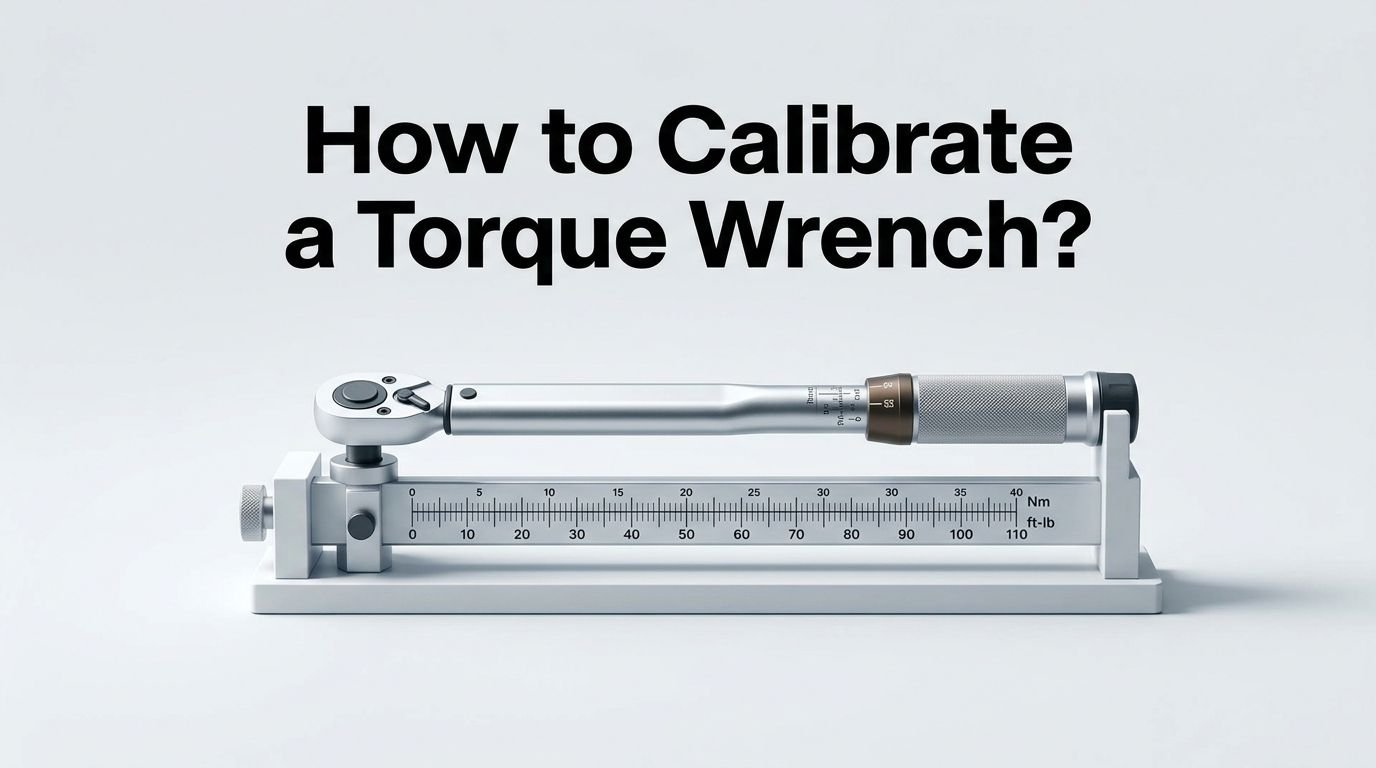
How to Calibrate a Torque Wrench? A Complete Guide
A torque wrench that reads wrong can ruin your project in seconds. Over tightened bolts crack engine blocks. Under tightened lug nuts cause wheels to come loose. The fix is simple: calibration. Yet most people skip this step because they assume their wrench is always accurate. It is not.
Every torque wrench drifts over time. Springs weaken, internal parts wear down, and temperature changes alter readings.
According to ISO 6789 standards, a torque wrench should be recalibrated every 12 months or every 5,000 uses, whichever comes first. If you rely on your wrench for automotive work, construction, or any safety critical fastening job, you need to know how to check and correct its accuracy.
In a Nutshell
- Torque wrenches lose accuracy over time. Internal springs fatigue, mechanical parts wear, and repeated use causes drift. Even a high quality wrench needs periodic verification to stay within its rated tolerance of plus or minus 3% to 5%.
- ISO 6789 sets the global benchmark. This standard states that torque wrenches should be calibrated at least once every 12 months or after 5,000 cycles. Many professional shops follow an even stricter schedule of every 6 months.
- You can perform a basic calibration at home. The DIY method requires a vise, a known weight (such as 20 pounds), a length of rope, a tape measure, and a simple formula. This method works well for click type torque wrenches.
- Professional calibration labs offer higher precision. Certified facilities use electronic torque analyzers and traceable standards. This is the better choice for wrenches used in aerospace, medical, or other high stakes applications.
- Dropping your wrench or using it as a breaker bar voids accuracy. Physical damage and misuse are the fastest ways to knock a torque wrench out of calibration. Always store it at its lowest setting and handle it with care.
- The calibration formula is straightforward. The equation Ta = Ts x (D1/D2) lets you calculate applied torque using measurable distances and a known weight. You do not need expensive equipment to run this check.
Why Torque Wrench Calibration Matters
A torque wrench exists for one reason: to apply a precise amount of rotational force. If the reading is wrong, the bolt receives the wrong clamping force. This causes real problems.
In automotive work, incorrect torque on head bolts leads to blown gaskets. On wheel lug nuts, it causes uneven clamping that can result in wheel separation at highway speeds. Industrial settings carry even higher stakes. Flanges on pipelines, structural connections on bridges, and fasteners on aircraft all depend on accurate torque values.
Calibration is not optional. It is a safety requirement in many industries. Even for home mechanics, a five minute check can prevent hours of rework or a dangerous failure.
How Often Should You Calibrate a Torque Wrench
The ISO 6789:2017 standard recommends calibration every 12 months or every 5,000 uses. This is the minimum. Your actual schedule depends on several factors.
If you use your wrench daily in a shop, consider calibrating every 6 months. Wrenches stored in extreme heat or cold drift faster. A wrench that has been dropped or struck should be checked immediately, regardless of the last calibration date.
A good rule of thumb: if you cannot remember the last time you checked your wrench, it is overdue. Keep a log of calibration dates and usage counts. This simple habit saves money and prevents failures.
Tools You Need for DIY Calibration
The home calibration method does not require expensive lab equipment. You likely have most of these items already. Here is what you need to gather before starting.
You will need a bench vise strong enough to hold the square drive of the wrench firmly. Get a known weight of exactly 20 pounds. A standard weight plate from a gym works well. You also need a length of thin, strong rope or cord and a tape measure that reads in inches or centimeters.
A marker or piece of tape helps you mark positions on the wrench handle. A calculator is helpful for the torque formula. Make sure you work on a level surface so the wrench stays horizontal during testing.
Step by Step DIY Calibration for Click Type Torque Wrenches
This method uses a known weight and the lever principle to verify accuracy. Follow each step carefully for the best results.
Step 1: Measure the distance from the center of the square drive to the center of the handle where your hand normally grips. Record this distance in inches or feet. This is your D1 value.
Step 2: Clamp the square drive only into a bench vise. Do not clamp the body or handle. The wrench must be able to flex and click freely.
Step 3: Set the torque wrench to a specific value. Multiply D1 by 20 pounds to get your target torque setting. For example, if D1 is 18 inches (1.5 feet), set the wrench to 30 ft lbs (1.5 x 20).
Step 4: Tie the 20 pound weight to the handle at your measured hand position using the rope. Let the weight hang freely. Keep the wrench perfectly horizontal.
Step 5: Listen for the click. If the wrench clicks, the calibration is close. If it does not click, slide the weight further from the square drive until it does. Mark that spot.
Step 6: Measure the new distance from the square drive to the rope. This is D2. Multiply D2 by 20 to find the actual torque being applied.
Step 7: Use the formula Ta = Ts x (D1/D2) to calculate your applied torque. Compare this to your set value. If the difference is within plus or minus 4%, your wrench is within acceptable tolerance.
Pros of the DIY method: No cost, can be done at home, works for most click type wrenches.
Cons of the DIY method: Limited precision, difficult to replicate lab conditions, does not produce a calibration certificate.
How to Use the Torque Calibration Formula
The formula Ta = Ts x (D1/D2) is the backbone of the DIY method. Understanding it helps you get reliable results every time.
Ta stands for applied torque. This is the actual force being delivered at the fastener point. Ts is the torque setting you dialed on the wrench. D1 is the distance from the square drive to your hand grip. D2 is the distance from the square drive to where the weight actually triggers the click.
If D1 and D2 are the same, your wrench is reading perfectly. If D2 is longer than D1, the wrench is clicking too early, which means it is reading high. If D2 is shorter, the wrench needs more force than expected, meaning it reads low. This formula works with any unit of measurement as long as you stay consistent.
Calibrating a Beam Type Torque Wrench
Beam type wrenches are the simplest torque tools available. They use a deflecting beam and pointer to indicate torque. Calibration is different from click type wrenches.
The beam itself rarely loses accuracy because it relies on material deflection rather than a spring mechanism. However, the pointer can bend, and the scale can become hard to read over time. To check accuracy, secure the square drive in a vise, hang a known weight at a measured point on the handle, and read the pointer.
Compare the pointer reading to the calculated torque (weight times distance). If they match, the wrench is accurate. If the pointer is off, you can carefully bend it back to align with the correct reading.
Pros of beam type calibration: Very simple, beam wrenches rarely lose accuracy, no internal spring to wear out.
Cons of beam type calibration: Pointer bending is imprecise, harder to read in tight spaces, less convenient than click or digital types.
Calibrating a Digital Torque Wrench
Digital torque wrenches use electronic strain gauges to measure force. They display readings on an LCD screen and often store data. Calibration requires a slightly different approach.
Most digital wrenches have a built in calibration mode accessible through the settings menu. You connect the wrench to a known torque standard or electronic torque analyzer, apply force, and the wrench compares its reading to the reference value. If the readings differ, you enter an adjustment factor through the digital interface.
Some digital models require factory calibration. The internal electronics are sealed, and user adjustment is not supported. Always check your owner’s manual before attempting any calibration. Sending a digital wrench to a certified lab is often the best choice.
Pros of digital calibration: High precision, built in adjustment features, data logging capability.
Cons of digital calibration: May require factory service, replacement batteries can affect readings, higher cost for professional calibration.
Professional Calibration Services Explained
Professional calibration labs use electronic torque analyzers traceable to national measurement standards such as NIST in the United States. The process is far more precise than any home method.
A technician applies multiple torque values across the wrench’s full range. Each reading is compared against a reference standard with known accuracy. The results are documented on a calibration certificate that includes the date, readings, adjustments made, and the traceability chain. This certificate is required in many industries for compliance and quality audits.
Professional calibration typically costs between $25 and $120 depending on the wrench type, range, and turnaround time. This investment is small compared to the cost of a failed joint or a safety incident.
Pros of professional calibration: Highest accuracy, produces a traceable certificate, meets ISO and industry requirements.
Cons of professional calibration: Costs money, requires shipping or drop off, may take several days for turnaround.
Common Mistakes That Ruin Torque Wrench Accuracy
Several everyday habits cause torque wrenches to lose calibration faster than normal. Avoiding these mistakes extends the life and accuracy of your tool.
Storing the wrench at a high setting compresses the internal spring constantly. This weakens the spring and shifts the calibration. Always dial the wrench back to its lowest setting after each use.
Using the wrench as a breaker bar applies force well beyond its rated range. This permanently damages the internal mechanism. Dropping the wrench on hard surfaces can shift internal components and bend critical parts.
Working in extreme temperatures also affects accuracy. Metal expands in heat and contracts in cold. Calibrate and use the wrench in similar temperature conditions for the most consistent results. Lastly, pulling the wrench at an angle instead of straight applies uneven force that produces inaccurate readings.
How to Store Your Torque Wrench Properly
Proper storage is just as important as calibration. A well stored wrench holds its calibration much longer than one thrown in a toolbox.
Set the torque adjustment to the lowest possible value before putting it away. This relaxes the main spring inside the wrench and prevents fatigue over time. Store the wrench in its original case or a padded drawer. Protect it from moisture, dust, and temperature extremes.
Never hang a torque wrench by its head or handle. Lay it flat or store it in the case with padding around both ends. Keep it away from other heavy tools that could fall on it or knock it around during transport. These small steps help maintain accuracy between calibration cycles.
Signs Your Torque Wrench Needs Recalibration
Sometimes a wrench goes out of spec before its scheduled calibration date. Knowing the warning signs helps you catch problems early.
If the click feels different from usual, either too soft or too sharp, the internal mechanism may have shifted. Inconsistent readings where the same torque setting produces different results is another clear sign. Visible damage such as a bent handle, cracked housing, or corroded square drive means the wrench needs immediate attention.
If bolts you have torqued are coming loose or if gaskets are leaking after assembly, your wrench may be reading high or low. Trust your instincts. A wrench that does not feel right probably is not right. Remove it from service and test it before using it again.
Final Thoughts on Keeping Your Torque Wrench Accurate
Calibration is a simple process that protects your work, your equipment, and your safety. Whether you choose the DIY weight method or send your wrench to a certified lab, the important thing is to do it regularly.
Mark your calendar for an annual check at minimum. Log your usage if possible and recalibrate at 5,000 cycles. Store the wrench properly, avoid abuse, and replace it when the mechanism no longer holds a setting. A calibrated torque wrench is one of the most valuable tools in any shop. Give it the attention it deserves, and it will deliver accurate results every time you pick it up.
Frequently Asked Questions
How accurate should a torque wrench be after calibration?
A properly calibrated torque wrench should read within plus or minus 3% to 5% of the set value. ISO 6789 specifies a tolerance of plus or minus 4% for click type wrenches across most of their usable range. If your wrench falls outside this window after calibration, it may need internal repair or replacement parts before it can be adjusted back into spec.
Can I calibrate my torque wrench at home without special tools?
Yes. The DIY method requires a bench vise, a known weight (20 pounds works well), a tape measure, and some rope. You clamp the square drive in the vise, hang the weight at a measured point on the handle, and use the formula Ta = Ts x (D1/D2) to check accuracy. This method is suitable for personal use but does not replace professional calibration for critical applications.
Do digital torque wrenches need calibration?
Absolutely. Digital wrenches use electronic strain gauges that drift over time just like mechanical components. Many digital models include a built in calibration mode. Some require factory service because the electronics are sealed. Check your manual and follow the same annual or 5,000 cycle calibration schedule recommended by ISO 6789.
What happens if I never calibrate my torque wrench?
An uncalibrated wrench delivers unknown force to every fastener. Over time, the accuracy drifts further from the set value. This leads to over tightened bolts that crack, under tightened bolts that loosen, stripped threads, warped components, and potential safety hazards. Brake calipers, wheel lugs, engine heads, and structural joints all depend on correct torque values.
How much does professional torque wrench calibration cost?
Professional calibration typically ranges from $25 to $120 per wrench. The exact cost depends on the wrench type, its torque range, and the turnaround time you choose. Many calibration labs offer volume discounts if you send multiple tools at once. This cost is a small price for the accuracy and calibration certificate you receive in return.
Should I calibrate a brand new torque wrench?
New wrenches arrive with factory calibration, and most include a certificate. However, shipping and handling can affect accuracy. If you are using the wrench for high stakes work, it is a good idea to verify the calibration before relying on it. A quick check using the DIY weight method takes only a few minutes and gives you confidence right from the start.

Hi, I’m Amelia Thornton, the founder of ElectroPro.blog.
I write about smart devices, gadgets, electronics, and tech essentials from Amazon.
My goal is to help you discover reliable and innovative tech that truly makes life easier.
From home automation to everyday gear, I test and share what’s worth your investment.
Join me as I explore the smartest tech trends—one gadget at a time.