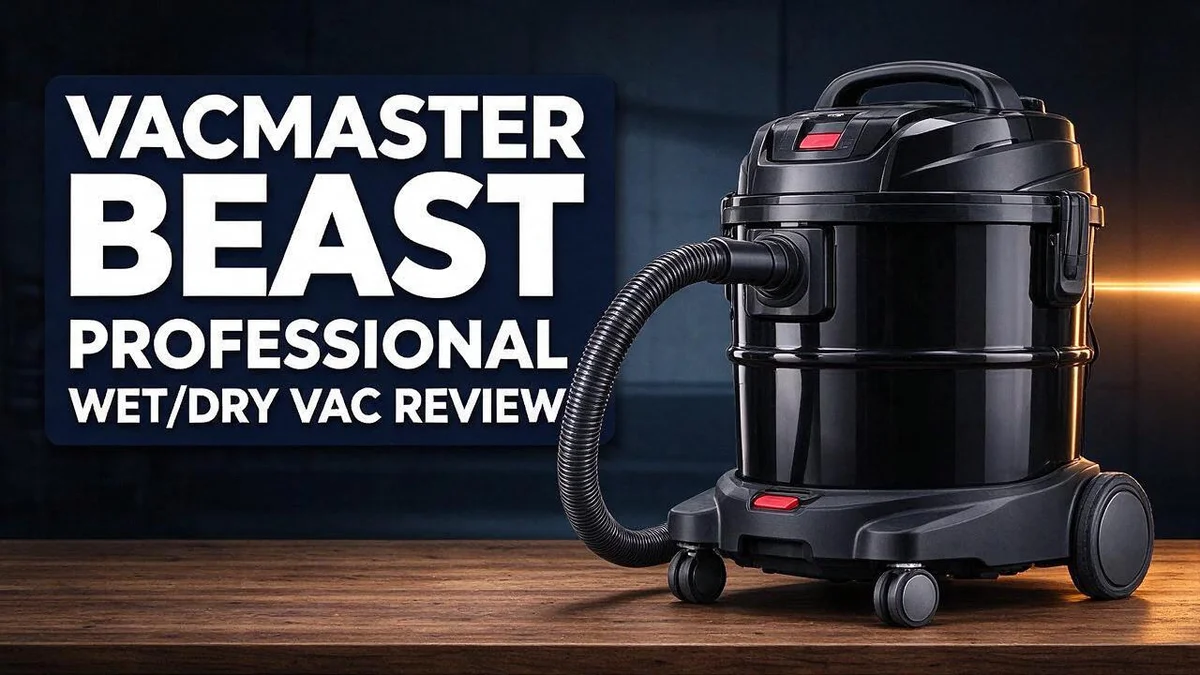
Vacmaster Beast Professional Wet/Dry Vac Review 2026
Messy floors and wet spills can ruin a good day. A strong shop vac makes cleanup faster. That is where the Vacmaster Beast comes in.
Many people search for a wet dry vac that handles both jobs. They want one machine for the garage, the workshop, and the car. The Vacmaster Beast promises exactly that kind of versatility.
In this review, we look at how it performs. We cover suction power, build quality, and daily use. We also check how easy it is to empty and store.
Whether you tackle sawdust after a weekend project or soaked carpets after a leak, you need reliable results. This guide helps you decide if this vacuum fits your needs.
In a Nutshell
-
Who this vac suits best: Homeowners, renters, and hobby woodworkers often need one machine for garages, workshops, and living spaces. A single tool can handle many jobs.
-
Why switching modes matters: A quick change between wet and dry use saves time. You avoid storing two separate machines.
-
What to check first: Look closely at tank size, hose length, and attachment options. These parts shape daily comfort more than most buyers expect.
-
Where it shines: Garages, basements, and job sites benefit from a sturdy build. Heavy debris and damp mess both need steady suction.
-
Easy upkeep wins: Empty the tank after each use. Clean filters keep suction strong over time, so the vac performs like new for longer.
-
Bottom line: Match the vac to your cleanup tasks first. Then decide with confidence.
Build Quality
Build quality tells you how long a vac will last. Heavy use wears down weak parts fast. This part of the review looks at the materials, seals, and parts that matter most.
The tank takes the most abuse. Wet pickup puts constant stress on the tank walls. Check the thickness and surface finish. A tank that resists dents and rust holds up longer.
Lid latches deserve a close look. Latches should snap shut with a firm feel. Loose clips let air leak and reduce suction. A snug seal keeps water and dust where they belong.
Hose fittings face constant strain. Every twist and pull stresses the connection. Metal or reinforced fittings resist cracks better than thin plastic.
Gently wiggle the hose at the cuff. Any play there may grow over time.
Motor housing protects the core parts. Good housing shields the motor from splashes and dust. Look for tight panel joints with no gaps. Gaps let debris creep inside over months of use.
The filter cage needs a solid fit. It should click into place without wobble. A loose filter lets fine dust slip toward the motor.
Metal and plastic each have strengths. Metal panels feel tough and resist impact. Quality plastic weighs less and never rusts. Your choice depends on where you store and use the vac.
Wheels and handles matter more than you think. Large wheels roll over rough concrete and cords with ease. Small plastic casters often stall on debris. The handle should feel firm when you lift.
Look for signs of careful assembly. Screws should sit flush and tighten fully. Rubber gaskets should sit evenly around the lid. These small details show the maker cared about quality.
Finish with a hands on check. Hold the unit and give it a light shake. Listen for rattles or loose parts. A solid build feels stable from the start and stays that way.
Suction Power and Performance
Suction power decides how well a vac picks up mess. Strong pull lifts dirt from deep fibers and tight corners. Weak pull leaves grit behind and wastes your time.
Suction and airflow are not the same thing. Suction measures how hard the vac pulls against resistance. Airflow measures how much air moves through the hose. Good performance needs both working together.
On flat floors, the Vacmaster Beast shows solid pull. Fine dust lifts easily from concrete and tile. Heavier debris, like small nails or gravel, deserves a closer look before you start.
Long jobs test suction over time. A vac may start strong and fade after several minutes. Dust builds up at the intake and slows the flow. Pausing to check the opening keeps the machine working well.
Attachments change how the suction feels. A narrow crevice tool focuses the pull into one spot. A wide floor nozzle spreads that power across a larger area, so it suits open rooms better.
Hose length also matters. Air loses some force as it travels through a long tube. Keep the hose as short as practical to get the strongest pull at the nozzle.
Try a simple paper test. Place a sheet of paper over the intake and see whether it sticks firmly. A tight grip shows healthy suction. A loose sheet suggests a leak or a clog.
If the vac offers power settings, use them to match the job. Lower settings work well on delicate surfaces. Higher settings handle heavy messes and deep dirt.
Suction matters most when you need fast, thorough cleanup. Test the vac on your own floors first. Notice how it handles dust, dirt, and standing liquid. Your results will show whether it fits your needs.
Capacity and Hose Reach
Capacity decides how often you stop and dump. A larger tank means fewer trips to the drain. That saves real time on a long cleanup.
Think about the biggest mess first. A flooded basement needs a large tank. A small kitchen spill does not. Match the tank to the jobs you face most.
Look for the fill line before you start. Many tanks show a marker that tells you when to stop. Stopping at that mark keeps the work moving smoothly.
Hose reach changes how you move around a room. A longer hose lets you work without dragging the whole machine. That keeps your steps light and your pace steady.
Reach matters most in tight spaces. Think about car trunks, under desks, and behind workbenches. A short hose forces you to walk the vac again and again.
Garages often hold tools and bins that block the path. Clear a route first. Then roll the vac through the open space without bumping shelves.
Test the reach before you commit. Stretch the hose from the outlet to the farthest corner. Check whether the hose pulls tight or drops freely.
Cord length works alongside hose length. Check both measurements together. A short cord can limit how far you roam, even with a long hose.
Doorways and stairs can block the hose. Measure your usual route before a big job. Plan a clear path so the hose does not snag.
Some setups use extra hose sections. These can help with tall ceilings or long hallways. Make sure each connection feels snug so air does not leak.
Long jobs benefit from a larger tank. Fewer dumps mean less stopping and starting. A calm rhythm makes the whole task feel easier.
Smart reach saves effort. You stop less often and walk less during cleanup. Your back and legs will thank you by the end of the day.
Top 3 Alternatives
Shop-Vac Right Stuff

- Attaches to 2-1/2-Inch wand or hose end
- Use for dry pickup
Last update on 2026-11-18 / Affiliate links / Images from Amazon Product Advertising API Some of the links on this website are affiliate links, which means that at no additional cost to you, I earn a commission if you click through and make a purchase. I only recommend products and services that I believe will add value to my readers. Thank you for your support!
The Shop-Vac Right Stuff is a strong pick for everyday cleaning. It picks up dust, dirt, and small spills with ease. It works well on carpets, hard floors, and garage surfaces. Many buyers appreciate its simple controls and light frame. Its tank is easy to empty, which saves time after a big job.
This model suits people who want a dependable helper without a complicated setup. It also stores neatly in a closet or trunk when you finish cleaning.
Ridgid WD1450

- 6 peak HP motor with noise-reduction technology offers powerful yet quiet performance
- Fine-dust filter for picking up dry materials and small amounts of liquid
Last update on 2026-11-19 / Affiliate links / Images from Amazon Product Advertising API Some of the links on this website are affiliate links, which means that at no additional cost to you, I earn a commission if you click through and make a purchase. I only recommend products and services that I believe will add value to my readers. Thank you for your support!
The Ridgid WD1450 focuses on steady performance for home and job site use. It has a sturdy build that holds up to rough handling. Its wet and dry capability makes it useful for cleanup after projects. The hose and attachments reach tight spots under sinks and behind workbenches.
Many users value how the unit keeps a steady suction during long tasks. It fits well in a garage, basement, or workshop where messes happen often.
DeWalt DXV10P

- Sturdy 10 gallon dual-stage wet/dry Vac has quieter operation for clean-up applications. Tool...
- Powerful 5.5 peak horsepower motor provides just the amount of suction needed to most any cleanup...

Last update on 2026-11-18 / Affiliate links / Images from Amazon Product Advertising API Some of the links on this website are affiliate links, which means that at no additional cost to you, I earn a commission if you click through and make a purchase. I only recommend products and services that I believe will add value to my readers. Thank you for your support!
The DeWalt DXV10P is a compact option for quick jobs. It fits easily in a car or on a shelf. Its dry pickup and simple power switch keep things straightforward. Many people use it for car interiors, workshops, and small messes around the house.
This model works well for people who want portability above all. Its small size means it holds less debris than larger units, so it suits lighter tasks best.
Filtration and Dust Control
Dust control starts with the filter. A clean filter keeps fine dust inside the tank instead of blowing it back into the room.
Fine dust needs extra care. Drywall dust, sawdust, and pollen float easily. They pass through worn or damaged filters fast.
Check the filter before each job. Look for tears, cracks, or thin spots. Replace it when you see damage.
Tap the filter outside. Knock loose dust off over a trash can. Do not beat it hard against a hard surface, because that can crack the frame.
Moisture matters too. A damp foam filter can grow odors and clog faster. Let it dry fully before you put it back. Never run the vac with a soaked filter in place.
Think about where the air goes. The exhaust blows out the back or side. Keep that airflow away from your face and from dust piles you just cleaned.
Wet pickup and dry dust need different filter habits. Remove the dry filter when you pick up liquid. Water can soak through and damage the motor side of the unit.
Dust control also depends on seals. A loose lid lets dust leak out through the seam. Press the lid down evenly and check the gasket for flat spots or gaps.
Fine dust hides in corners of the tank. Empty the tank after dusty work so residue does not build up. Wipe the rim with a dry cloth.
Set a simple cleaning rhythm. Clean the filter after each dusty job. Clean it again when the vac sounds strained or the room smells dusty.
Dust control works best when you plan ahead. Close doors to other rooms before you start. This keeps dust in one zone and makes cleanup faster.
Wear a dust mask during heavy jobs. The vac catches much of the dust, but fine particles can still escape while you move.
Keep spare filters on hand. A fresh filter takes seconds to swap. It saves you from a messy, dusty stop halfway through a project.
Accessories and Versatility
Attachments turn a basic vac into a flexible cleaning tool. Good accessories make every job faster. Each tool handles a different surface or task.
Start with the floor nozzle. It glides over hard floors and low rugs without scratching the surface. Use it for quick cleanup in open areas.
A crevice tool fits into narrow gaps. It works well along baseboards, car seams, and beside machine bases. Small tools reach spots that large tools miss.
Brush heads add gentle agitation. They loosen dirt from upholstery, stair treads, and car mats. Switch to a soft brush for delicate surfaces.
Some models offer a blower mode. If yours does, use it to clear loose debris from workbench edges or patio corners. Read the manual before you test it.
Adapters add more options. Many units accept standard fittings, so you can connect extra tools or swap parts with ease. Check the size of each end first.
Storage keeps everything close. Hang tools on a wall hook or store them in a bin near the unit. Loose parts get lost fast in a busy garage.
The same unit handles many jobs. Clean a car interior, tidy a workshop floor, or lift pet hair from a sofa. Quick tool changes keep you moving.
Choose tools based on your habits. List the tasks you repeat most often. Then match each task to one clear tool. Skip extras you never use.
Power tool hookups need extra care. Some owners connect the vac to sanders or saws with hose adapters. Results vary by tool, so confirm compatibility before you start.
Before a big job, inspect each part. Look for cracks in the hose ends and worn brush bristles. A quick check prevents air leaks and stops small parts from falling off mid-clean.
Keep a small kit for each zone. Pack the crevice tool, brush, and nozzle together in a labeled bag. Grab the kit and go.
Pros and Cons
Pros
- Solid build handles rough job sites and daily bumps.
- Rolling design moves heavy loads with less strain on your back.
- Simple controls make setup quick for first-time users.
- Works well for both shop cleanup and light home projects.
- Replacement parts are easy to find when you need them.
Cons
- Motor noise can feel loud during long cleaning sessions.
- The bulky frame takes up space in small storage closets.
- It weighs more than compact vacs when you carry it up stairs.
- The cord wrap feels basic and may need extra care over time.
Who Should Buy It
This machine suits people who clean messy spaces often. Contractors, garage tinkerers, and pet owners track dirt through the house every day.
Auto detailers can also use it for their work. They can pull soaked carpet water from car floors, then vacuum dry dust from seats and vents.
Flood cleanup jobs benefit as well. After a leak or storm, standing water must leave the floor fast. A strong wet pickup helps you act before damage spreads.
Families with young kids gain a helpful tool too. Spilled cereal, sticky juice, and crushed crackers appear almost daily. One machine handles both dry crumbs and wet messes without a second cleaner.
Pet owners deserve a special mention. Hair clings to couches, rugs, and stair treads. Strong suction lifts loose fur before it spreads through every room.
Hobbyists with a home workshop can clean up quickly. They can collect chips from a planer, shavings from a drill press, and grit from the floor in one pass.
Who might pass on this unit? Shoppers who want a light handheld for quick daily dusting may prefer something smaller. A compact cordless model could suit that routine better.
Renters in tiny apartments may also find it too large. Compact living often calls for a machine that fits neatly in a corner.
Readers who clean only a few times each year may not need this level of power. A simpler model could match their habits well.
In short, pick this vac if you want one machine for rough jobs and daily messes. A steady performer that handles wet and dry tasks makes life simpler for busy households and crews. Those users will appreciate that flexibility every single week.
Final Verdict
Does the Beast earn a place in your space? For frequent heavy cleanup, our answer is yes. It handles messes that lighter machines struggle with.
Think about your routine before you commit. Look at how often you clean and how large the messes get. Your answer shapes whether this machine fits your life.
A strong test starts on day one. Try it on your toughest mess within the first week. You learn fast whether the controls and hose feel natural in your hands.
Check the power outlet location too. Map out where the cord reaches before you start. A short reach means extra unplugging and moving, which slows every job.
Choose this model if you clean big messes each week. Garages, workshops, job sites, and busy family homes all benefit. Daily chaos needs a machine that keeps pace.
Skip it if your cleaning stays light. Quick dusting and small spills rarely need this much muscle. A compact option will feel easier and quicker for those tasks.
Think about future projects as well. A new hobby, a new pet, or a renovation can change your needs. Pick a machine that grows with your plans.
Think about who else uses it, too. Kids, partners, or helpers should learn the controls before they touch the machine. Shared use keeps the vac safe and the results consistent.
Keep the maintenance schedule in your manual nearby. Regular checks keep performance steady over the years. Set a reminder on your phone so it never slips.
Trust your instincts after reading the specs. A machine that feels right in your hands usually performs right on the job.
Bottom line: this vac excels for people who clean hard and often. It rewards owners who plan their storage and power needs. Match it to your habits, and it becomes a reliable partner for every messy task.
Frequently Asked Questions
Can the Beast pick up both wet and dry messes?
Yes, it handles both wet and dry messes with ease. Water spills and loose dirt can go into the same tank. Empty the tank fully after a wet pickup so odors and damp residue do not build up.
How often should I clean the filter?
Check the filter after every big job. Tap out loose debris, and rinse it only if your manual allows. Let it dry completely before you put it back, because a damp filter can slow airflow and reduce suction.
Is an extension cord safe to use?
Plug the unit straight into a wall outlet when you can. A long, thin extension cord can lose power and strain the motor. If you must use one, choose a heavy gauge cord rated for the load.
Can it collect fine dust from sanding?
Yes, it works well for fine dust from sanding projects. Use the filter type listed in your manual for dust jobs. Empty the tank often, because a full container cuts suction and makes the next job harder.
What should I do if the suction drops?
First, check whether the tank is full. Next, look for a clogged filter or a blockage in the hose. Clear the blockage, clean the filter, and try again. Most suction problems start with one of these simple fixes.

Hi, I’m Amelia Thornton, the founder of ElectroPro.blog.
I write about smart devices, gadgets, electronics, and tech essentials from Amazon.
My goal is to help you discover reliable and innovative tech that truly makes life easier.
From home automation to everyday gear, I test and share what’s worth your investment.
Join me as I explore the smartest tech trends—one gadget at a time.