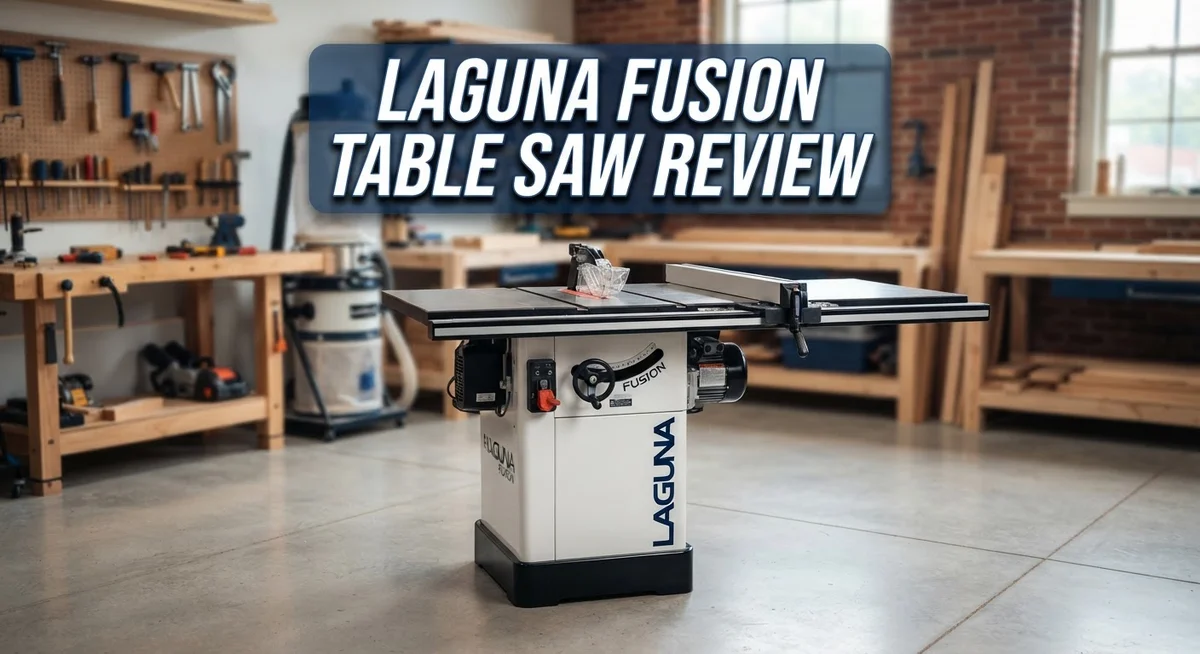
Laguna Fusion Table Saw Review 2026: Worth the Splurge?
Looking for a table saw that handles tough hardwoods with ease? The Laguna Fusion Table Saw might be your answer. This saw brings cast iron strength and smart engineering together.
Woodworkers want tools that deliver clean, accurate cuts every time. The Fusion series aims to do just that. It offers models like the F1, F2, and F3, each built for different shop needs.
This saw stands out with its solid trunnion system and smooth blade movement. You get consistent depth cuts, whether you work at 90 degrees or 45 degrees. The 10 inch blade cuts through dense wood without struggle.
In a Nutshell
- Blade specs: A 10 inch blade with a 5/8 inch arbor handles most cutting tasks. You get clean cuts through thick stock without strain.
- Cutting depth: The saw cuts up to 3-1/8 inches at 90 degrees. At 45 degrees, it manages 2-1/8 inches. This range covers most woodworking projects.
- Build quality: The cast iron table keeps your workpiece stable. Smooth trunnion movement means less vibration during long cuts.
- Dust control: A built in dust collection system keeps your workspace cleaner. Less mess means more focus on your project.
- Dado capability: You can cut dados up to 3/4 inch wide. This adds flexibility for joinery work.
- Quality concerns: Some users report motor and trunnion shimmy in certain units. Quality control issues pop up occasionally, so inspect your saw carefully after purchase.
Build Quality and Cast Iron Construction
The Laguna Fusion Table Saw features a cast iron construction that forms the backbone of its design. This material choice matters because cast iron absorbs vibration and keeps your workpiece steady during cuts. You get a flat, stable surface that resists warping over time.
The table itself measures generously to support larger pieces of wood. Cast iron stays true even after years of use in busy workshops. This stability translates directly into cleaner, more accurate cuts through dense hardwoods.
The trunnion system sits at the heart of the saw’s mechanical performance. This assembly holds the blade and moves it up and down for depth adjustments. On well built units, the trunnion glides smoothly without binding or resistance. You can feel the difference when you raise and lower the blade.
However, quality control presents a real concern with some Fusion models. Certain units experience motor and trunnion shimmy, which creates unwanted vibration during operation. This defect appears inconsistently across production batches. Some owners report their saws perform flawlessly, while others encounter this issue right out of the box.
The dust collection system integrates directly into the cast iron base. Built in ports connect to your shop vacuum without requiring additional adapters. This design keeps sawdust contained and your workspace cleaner.
The blade arbor measures 5/8 inches, which fits standard accessories. A 10 inch blade comes installed and handles most cutting tasks. The saw cuts up to 3 and 1/8 inches deep at 90 degrees, and 2 and 1/8 inches when angled to 45 degrees.
Overall construction quality feels solid on properly manufactured units. The cast iron components show good craftsmanship and attention to detail. The weight of the machine keeps it planted firmly on your shop floor. Before purchasing, inspect the trunnion movement carefully to ensure smooth operation. Ask the seller if the unit has been tested or if any shimmy issues exist. This simple check can save you frustration later.

- 1.75-HP Motor: Powerful 110V TEFC motor delivers reliable cutting performance for hardwoods...
- 36-Inch Rip Capacity: European-style Hi-Lo hybrid fence and extended steel rails provide up to...
Last update on 2026-10-21 / Affiliate links / Images from Amazon Product Advertising API Some of the links on this website are affiliate links, which means that at no additional cost to you, I earn a commission if you click through and make a purchase. I only recommend products and services that I believe will add value to my readers. Thank you for your support!
Cutting Performance and Blade Specifications
The Laguna Fusion Table Saw delivers impressive cutting performance across a range of woodworking tasks. The 10 inch blade paired with its 5/8 inch arbor provides the foundation for clean, accurate cuts through dense materials.
Maximum cutting depth reaches 3 1/8 inches at 90 degrees, which handles most standard lumber and hardwood projects. When you tilt the blade to 45 degrees, you get 2 1/8 inches of depth. This range covers beveled cuts, angled joints, and compound angles that serious woodworkers need.
The blade specifications work well for ripping, crosscutting, and general shop work. The Fusion models come in three sizes, with the F3 offering a generous 52 inch rip capacity. This extra width means you can process wider boards without making multiple passes. Larger sheets and panels become easier to manage with this setup.
Dado cutting capability extends to 3/4 inch width, which opens up options for joinery and decorative work. You can stack dado blades to achieve this width, and the arbor design accommodates standard blade sets without issues.
Trunnion movement plays a critical role in cutting performance. The Fusion Table Saw features smooth trunnion action that lets you adjust blade angles and heights with minimal effort. This matters because smooth adjustments help you maintain accuracy throughout your cuts.
The cast iron table surface stays flat and stable during operation. Flatness prevents wood from binding or chattering as it passes the blade. Over time, this stability helps you produce consistent results on every project.
However, some users report motor and trunnion shimmy in certain units. This defect affects blade vibration and cut quality when it occurs. Quality control issues mean you should inspect your saw carefully upon arrival.
The dust collection system integrates into the design to keep your workspace cleaner. Less dust around the blade area means better visibility and easier cleanup. Overall, the Fusion delivers solid cutting performance when properly assembled, making it a capable choice for serious DIY woodworkers and small shop owners who demand reliable results.
Dust Collection and Workshop Cleanliness
The Laguna Fusion Table Saw comes equipped with a built-in dust collection system that works hard to keep your workshop clean. This feature connects directly to the cast iron base, pulling sawdust away from your work area as you cut.
The dust port accepts standard shop vacuum hoses. You can connect it to a portable dust collector or a larger workshop system. Most users find the suction strong enough for regular woodworking tasks.
Real workshop cleanliness depends on how well dust moves away from the blade and table. The Laguna system does this job effectively for a saw in this class. You’ll notice less dust settling on your workbench and tools compared to saws without collection ports.
Setup matters for performance. A properly sealed hose connection makes a big difference. Loose connections let air escape, which reduces suction power. Inspect your hose regularly to catch any cracks or leaks early.
The system works best when your vacuum has enough power. A 1 to 2 horsepower shop vacuum pairs well with this saw. Smaller handheld vacuums may struggle to keep up during heavy ripping work.
One thing to watch: the dust port design can accumulate fine sawdust over time. You should clean the collection area occasionally to prevent clogs. This takes just a few minutes and keeps airflow strong.
Comparison to competitors shows the Laguna holds its ground on dust management. SawStop and DeWalt models offer similar collection approaches. The real difference comes down to your vacuum setup and how often you maintain it.
Workshop cleanliness also depends on the blade you use. A sharp blade produces finer dust that moves more easily through the collection system. Dull blades create larger chips that sometimes jam the port.
The cast iron table itself stays cleaner with active dust collection running. Sawdust doesn’t accumulate as heavily on the work surface. This keeps your cuts more accurate and your workspace more pleasant to work in.
Overall, the dust collection system on the Laguna Fusion performs well for home and small commercial shops. Pair it with a good vacuum, maintain it regularly, and you’ll enjoy a noticeably cleaner workspace.
Top 3 Alternatives
DeWalt DWE7491RS

- Rack & Pinion Telescoping Fence System Make fence adjustments fast, smooth and accurate
- Patented material support, can be used for narrow rip cuts.

Last update on 2026-10-21 / Affiliate links / Images from Amazon Product Advertising API Some of the links on this website are affiliate links, which means that at no additional cost to you, I earn a commission if you click through and make a purchase. I only recommend products and services that I believe will add value to my readers. Thank you for your support!
Makita 2705 Table Saw

- Left extension table with smooth sliding action
- Right and rear extension table enables greater cutting capacity
Last update on 2026-10-21 / Affiliate links / Images from Amazon Product Advertising API Some of the links on this website are affiliate links, which means that at no additional cost to you, I earn a commission if you click through and make a purchase. I only recommend products and services that I believe will add value to my readers. Thank you for your support!
Bosch 4100-09 Worksite

- Includes (1) 2610950148 Rip Fence New, Bulk Packed Replacement Part # 2610950148
- Consult owners manual for proper part number identification proper installation Please refer to list...
Last update on 2026-10-21 / Affiliate links / Images from Amazon Product Advertising API Some of the links on this website are affiliate links, which means that at no additional cost to you, I earn a commission if you click through and make a purchase. I only recommend products and services that I believe will add value to my readers. Thank you for your support!
Trunnion Stability and Precision Alignment
The trunnion assembly controls how your blade tilts and rises during cuts. A stable trunnion means your cuts stay accurate and your saw performs reliably. The Laguna Fusion uses a cast iron trunnion system that sits directly beneath the table surface.
Smooth movement matters here. When you adjust the blade height or angle, the trunnion should glide without resistance. Most Fusion owners report that their saws deliver smooth, predictable adjustments. The cast iron construction helps reduce vibration that could throw off your cuts.
However, quality control presents a real concern. Some users have reported motor and trunnion assembly shimmy during operation. This defect appears in certain units and can affect cutting precision. If your saw develops this issue, contact Laguna support immediately. A properly functioning unit should run without noticeable movement.
Alignment stays consistent on well made examples. The trunnion design keeps the blade parallel to the fence and perpendicular to the table. This alignment holds up through repeated use on dense hardwoods and softwoods alike. Your crosscuts and rip cuts maintain their accuracy over time.
The tilt mechanism works smoothly for bevel cuts up to 45 degrees. You can lock the trunnion at any angle and trust it stays put. The 3 1/8 inch maximum depth at 90 degrees gives you room to work with standard lumber without binding.
Before purchasing, inspect your specific unit carefully. Ask the seller or dealer to demonstrate the blade height and tilt adjustments. Watch for any grinding sounds or resistance. Run the saw empty and listen for unusual noises from the trunnion area. A quality Fusion saw should feel solid and move smoothly.
The trunnion system represents the mechanical heart of this saw. When it works correctly, you get reliable cuts and years of dependable service. When quality control fails, you face frustration and potential repairs. Your experience depends heavily on getting a properly assembled unit from the factory.
Model Comparison: F1, F2, and F3 Options
The Laguna Fusion lineup offers three distinct options: the F1, F2, and F3 models. Each saw shares the same core 10 inch blade and 5/8 inch arbor, but they differ in motor power and rip capacity. The F1 delivers 1.5 horsepower, while the F3 extends your rip capacity to a full 52 inches. This extra reach matters if you work with wider stock regularly.
All three models cut to the same maximum depths. You get 3 1/8 inches at 90 degrees for standard crosscuts and rips. Bevel cuts max out at 2 1/8 inches when tilting to 45 degrees. Dado work stays capped at 3/4 inch width across the entire lineup.
The real differences emerge in motor performance and table size. The F1 suits hobbyists and small shops with modest production demands. The F2 sits in the middle, offering a balanced approach for serious DIY users and small professional shops. The F3 targets users who need extended rip capacity without stepping up to industrial equipment.
Cast iron construction appears on all models, providing the stability your cuts depend on. The trunnion assembly controls blade height and tilt on each saw. Quality control becomes your biggest consideration here. Some units exhibit motor and trunnion shimmy, while others perform flawlessly. This inconsistency makes hands on inspection essential before purchase.
Dust collection systems come standard on every model. Each accepts typical shop vacuum hoses at the dust port. The built in collection works well when your vacuum has adequate suction power and hoses stay properly sealed.
Choosing between these models depends on your specific needs. If you rarely rip boards wider than 30 inches, the F1 or F2 handles your work fine. Woodworkers who frequently process wider material should consider the F3’s extended capacity. All three deliver solid performance on dense hardwoods when properly set up. Inspect your specific unit carefully before committing, since individual examples vary in alignment and smoothness.
Pros and Cons
Pros
- Cast iron table and frame deliver rock solid stability for straight, repeatable cuts through dense hardwoods
- Trunnion assembly glides smoothly when you adjust blade height and angle, making bevel cuts feel effortless
- Built in dust collection system pulls sawdust away from the work area and accepts standard shop vacuum hoses
- All three models (F1, F2, F3) come with the same quality dust management and cast iron construction
- Smooth operation feels professional without requiring expensive upgrades
Cons
- Some units show motor and trunnion assembly shimmy during operation, which signals potential quality control gaps
- Fine sawdust can accumulate inside the dust port design over time, reducing collection efficiency
- Defect cases exist in the field, so inspect your specific unit before purchase and test blade height adjustment personally
- Quality consistency varies between individual saws, making dealer inspection and demonstration essential before buying
Who Should Buy It
The Laguna Fusion table saw works best for woodworkers who need reliable performance without complexity. You should consider this saw if you cut hardwoods regularly and want consistent results.
Home shop owners find real value here. You get professional cutting quality in a machine that fits a typical garage or basement workshop. The cast iron table stays flat and stable through years of use. Your cuts stay straight and repeatable, which matters when precision counts.
Small production shops benefit from the Fusion line too. If you run a small carpentry business or custom furniture operation, these models handle daily work loads. The dust collection system keeps your workspace cleaner than open blade designs. You won’t spend extra money on aftermarket dust solutions.
Hobbyists who work with dense hardwoods should look closely at this saw. The trunnion system moves smoothly when you adjust blade height or angle. Bevel cuts feel effortless, not forced. You’ll appreciate how the machine responds to your adjustments.
However, skip this saw if quality control concerns worry you. Some units show motor and trunnion assembly shimmy during operation. This signals potential defects in specific machines. You need to inspect your exact unit before purchase and ask dealers to demonstrate blade height and tilt adjustments. A well made example performs excellently, but a defective one creates frustration.
The F1 model suits hobbyists with modest projects. You rarely rip boards wider than 30 inches. The F2 and F3 handle larger rip capacities if your work demands it.
Avoid this saw if you need industrial durability. The Laguna Fusion targets consumer and small shop users, not production facilities running eight hour shifts. SawStop and other contractor saws serve different markets with different features.
Ultimately, buy the Fusion if you want smooth operation, solid construction, and good dust management. Inspect your specific unit carefully before committing. Read reviews from buyers with your exact model number. This extra step protects you from potential quality control issues and ensures you get the reliable performer this saw can be.
Final Verdict
The Laguna Fusion table saw earns its spot among solid contractor grade saws. It delivers steady performance for woodworkers who want dependable results without a steep learning curve.
Compared to a SawStop Contractor Saw, the Fusion skips flesh detection technology. If safety features top your list, SawStop pulls ahead here.
Against DeWalt table saws, the Fusion holds its own with heavier cast iron parts. DeWalt models often feel lighter and more portable, which suits job site work better than shop use.
Assembly takes patience. Some owners report a longer setup process compared to simpler jobsite saws. Once assembled correctly, the saw runs well for years.
Customer support matters too. Laguna offers parts and service for this line, which helps when something needs replacing. This backup support gives buyers peace of mind beyond the saw itself.
Think about your long term woodworking goals. If you plan to grow your shop or take on bigger projects, the Fusion scales with you across its three models.
This saw fits woodworkers who value precision over portability. It stays in one place and rewards you with clean, accurate cuts every time you use it.
Skip this saw if you move between job sites often. Weight and size make transport difficult, and it works best as a stationary shop tool.
Our final take: the Laguna Fusion suits hobbyists and small shop owners who want a dependable stationary saw. It handles hardwoods well and keeps dust under control.
Buyers who prioritize safety tech should look at SawStop instead. Those who need portability might prefer a DeWalt model.
For everyone else building a permanent home shop setup, the Fusion delivers real value through solid engineering and consistent performance. It stands as a smart choice for serious hobby work and light production tasks alike.
Frequently Asked Questions
Does the Laguna Fusion handle thick hardwoods well?
Yes. The Fusion cuts through dense hardwoods with consistent results. You get a 10″ blade with 3-1/8″ depth at 90 degrees, which handles most hardwood projects. The cast iron table keeps the blade stable, so your cuts stay straight and clean even when pushing thick stock through.
What’s the dust collection like?
The built-in system pulls sawdust away from your work area effectively. It accepts standard shop vacuum hoses, so you can connect your existing equipment without adapters. This keeps your shop cleaner and reduces cleanup time after each session.
Are there any quality issues I should know about?
Some owners report motor and trunnion assembly shimmy during operation. This signals potential quality control gaps in certain units. Before buying, ask the seller about their inspection process. Check reviews from recent buyers to see if this remains an issue with current production batches.
How does the Fusion compare to other table saws?
The Fusion offers heavier cast iron parts than many DeWalt models, which improves stability. However, it lacks the flesh detection technology found on SawStop saws. If safety features matter most to you, the SawStop is worth considering. If you want solid construction and smooth operation at a different price point, the Fusion delivers both.
Will this saw work for my small production shop?
Absolutely. The F2 and F3 models suit small shops that need reliable, stationary equipment. The smooth trunnion movement makes angle adjustments quick, and the 52″ rip capacity on the F3 handles wider boards. This saw stays in one place and rewards precision work, making it ideal for shops that don’t move between job sites.

Hi, I’m Amelia Thornton, the founder of ElectroPro.blog.
I write about smart devices, gadgets, electronics, and tech essentials from Amazon.
My goal is to help you discover reliable and innovative tech that truly makes life easier.
From home automation to everyday gear, I test and share what’s worth your investment.
Join me as I explore the smartest tech trends—one gadget at a time.