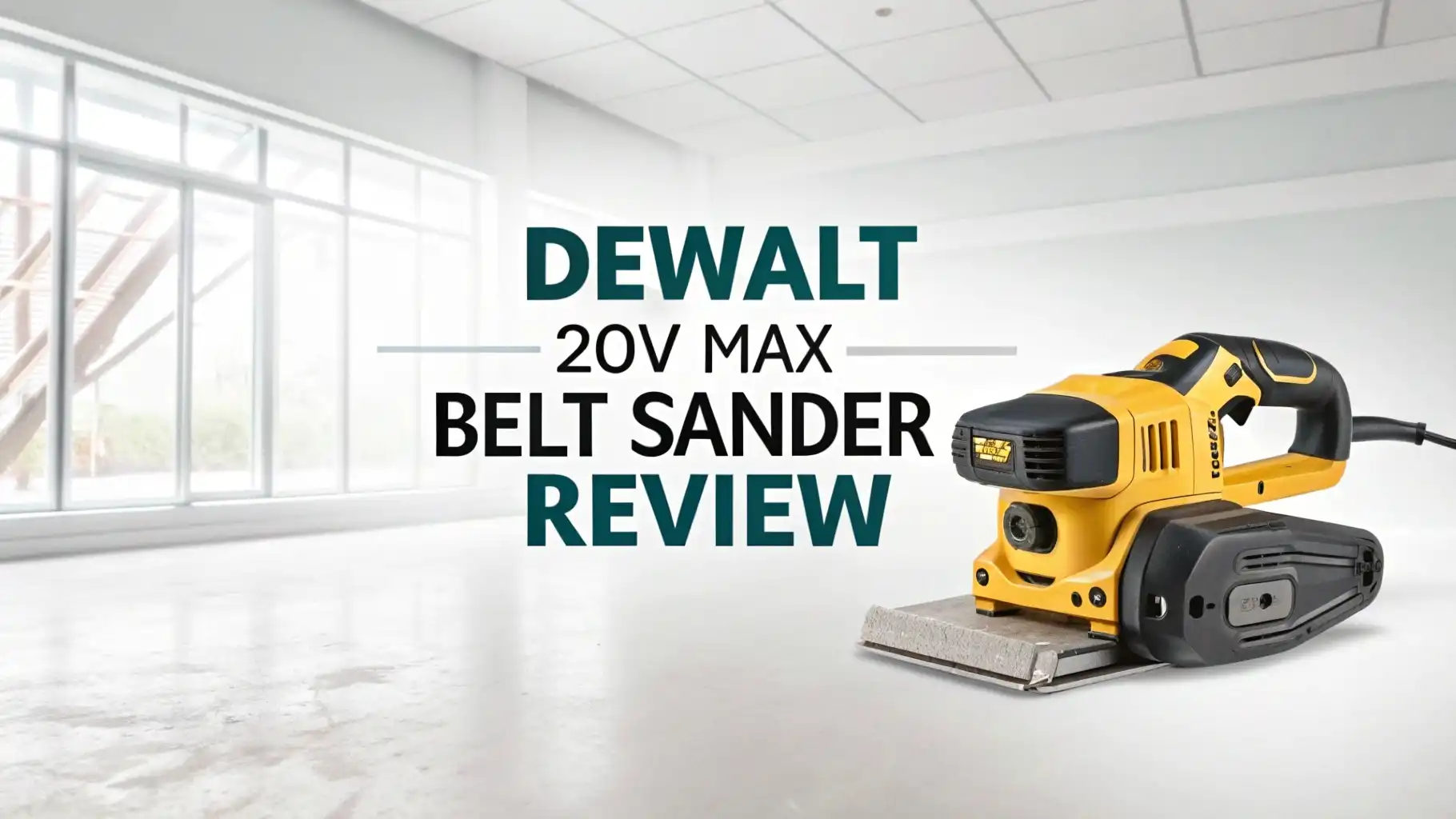
DEWALT 20V MAX Belt Sander Review: Is It Worth the Money?
DEWALT 20V MAX Belt Sander: You stand in your workshop, staring at that old wooden deck table that needs serious refinishing.
You know what comes next: dragging out the corded belt sander, wrestling with extension cords, and tripping over cables while trying to get smooth, even results. What if I told you those days are over?
In this review, I am going to walk you through everything you need to know about this tool. We will cover the specs, the real world performance, the good, the bad, and whether it deserves a spot in your tool arsenal. Let’s get into it.
Key Takeaways:
- Power That Surprises Everyone: This cordless beast delivers up to 22% more power than comparable corded belt sanders. The brushless motor technology makes this possible, giving you professional grade material removal without being tethered to an outlet.
- Variable Speed Control Wins the Day: With a variable speed trigger and 25 speed settings ranging from 650 to 1050 feet per minute, you can fine tune your sanding speed for different materials. This means you won’t burn through delicate wood or waste time crawling along on harder surfaces.
- Dust Collection That Actually Works: The integrated AirLock dust collection system captures up to 95% of dust particles when connected properly. This is huge for anyone who cares about their lungs and keeping the workspace clean.
- Quick Belt Changes Save Time: The tool free, quick release belt change system lets you swap out sanding belts in seconds. No tools, no fumbling, no frustration. This feature alone saves countless minutes on bigger projects.
- Battery Life Needs Planning: Here is the reality check. Battery consumption is high because belt sanders demand serious power. With a standard 5.0Ah battery, expect around 15 to 25 minutes of runtime depending on the material and pressure you apply. Larger FLEXVOLT batteries extend this significantly.
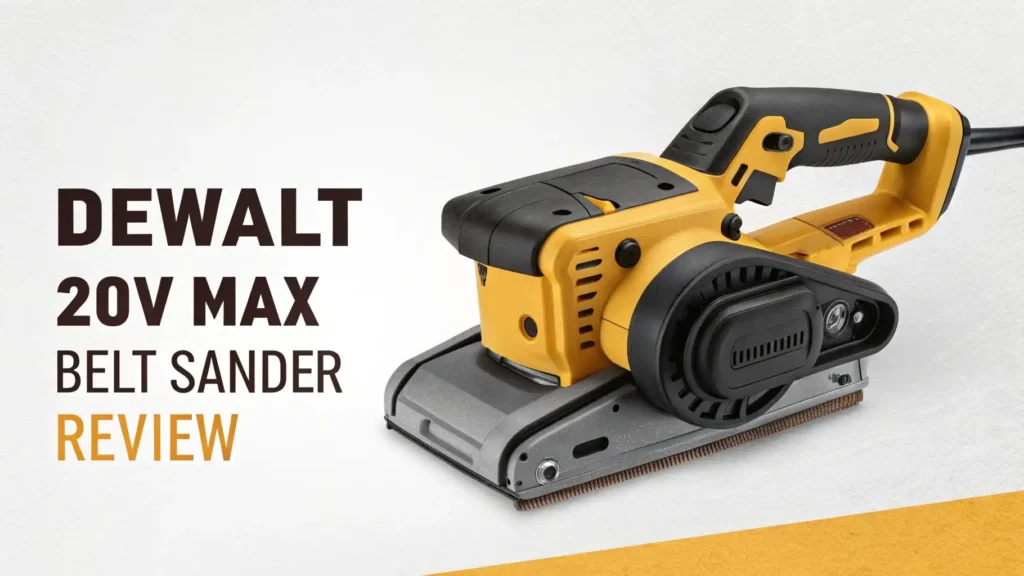
- Professional Build Quality: The 3 inch by 21 inch platen provides substantial surface coverage. The overmolded auxiliary handle gives you solid two handed control. This tool feels substantial and built to withstand jobsite abuse.

- Up to 22% more power** - complete traditionally corded sanding applications with a brushless motor...
- Efficient dust collection - minimize dust exposure in your workspace and get up to 95% dust...
Last update on 2026-07-27 / Affiliate links / Images from Amazon Product Advertising API Some of the links on this website are affiliate links, which means that at no additional cost to you, I earn a commission if you click through and make a purchase. I only recommend products and services that I believe will add value to my readers. Thank you for your support!
What Makes the DEWALT 20V MAX Belt Sander Special
Let me start by explaining what sets this tool apart from everything else in the market. DEWALT took years to release a cordless belt sander because they refused to compromise on power.
Most companies rushed battery powered sanders to market that felt weak and underpowered. DEWALT waited until their brushless motor technology and battery systems could deliver true corded performance.
The DCW220B uses XR brushless motor technology. This motor type runs cooler, lasts longer, and delivers more power per battery charge than older brushed motors. The efficiency gains are real and noticeable. You can feel the difference the moment you pull the trigger.
The 3 inch by 21 inch belt size is the sweet spot for most applications. It is large enough to cover serious ground on big surfaces like countertops and doors, but not so massive that it becomes unwieldy for detailed work. The belt tracking adjustment keeps your sandpaper running true, which prevents uneven wear and torn belts.
Unboxing and First Impressions
When you open the box, you will find the DCW220B belt sander, a DEWALT branded dust bag, one sheet of 80 grit sandpaper already installed, and a dust port swivel adapter.
Notice what is not included: battery and charger. This is sold as a bare tool, which makes sense if you already own DEWALT 20V batteries. If you are new to the 20V system, you will need to purchase batteries separately.
The tool weighs approximately 7.5 pounds without a battery. Add a 5.0Ah battery and you are looking at around 9 pounds total. This is substantial but manageable. The weight distribution feels balanced when you grip both handles properly. The bright yellow DEWALT color scheme makes it easy to spot in a cluttered workshop.
The build quality immediately impresses. The housing is solid, with no flex or cheap feeling plastic. The variable speed dial clicks firmly into each position. The belt release lever moves smoothly. Everything about this tool screams professional grade construction.
Top 3 Alternatives for DEWALT 20V MAX Belt Sander

- Delivers corded performance with cordless convenience
- Compact sanding arm pivots up to 160° for compact storage

Last update on 2026-07-27 / Affiliate links / Images from Amazon Product Advertising API Some of the links on this website are affiliate links, which means that at no additional cost to you, I earn a commission if you click through and make a purchase. I only recommend products and services that I believe will add value to my readers. Thank you for your support!

- POWERSTATE Brushless Motor Generates the power and torque of larger 8A corded belt sanders for...
- REDLINK PLUS Intelligence ensures maximum performance and protects from overloads, heating, and...
Last update on 2026-07-27 / Affiliate links / Images from Amazon Product Advertising API Some of the links on this website are affiliate links, which means that at no additional cost to you, I earn a commission if you click through and make a purchase. I only recommend products and services that I believe will add value to my readers. Thank you for your support!

- Low noise (84dB) for operator comfort
- 4" wide belt with a speed of 1,640 ft./min. for fast material removal
Last update on 2026-07-27 / Affiliate links / Images from Amazon Product Advertising API Some of the links on this website are affiliate links, which means that at no additional cost to you, I earn a commission if you click through and make a purchase. I only recommend products and services that I believe will add value to my readers. Thank you for your support!
Power and Performance: Does It Really Match Corded Models
Now let’s talk about what matters most: how well this thing actually sands. I tested the DCW220B on multiple materials including pine, oak, painted surfaces, and old deck boards covered in multiple layers of stain. The results impressed me consistently.
The brushless motor delivers smooth, consistent power throughout the entire battery charge. Unlike some cordless tools that fade as the battery drains, this sander maintains full speed until the battery finally gives out. The variable speed trigger lets you feather the power for delicate work, then ramp up to full speed for aggressive material removal.
On medium density hardwoods like oak, the sander removes material quickly without bogging down. I could feel the belt pulling the tool forward, which is exactly what you want. The key is using the right grit belt for your application. Start with 60 or 80 grit for serious material removal, then step up through finer grits for finishing.
One area where cordless belt sanders traditionally struggle is sustained heavy use. If you are leveling an entire hardwood floor or removing thick paint from a large deck, battery swaps will interrupt your workflow.
Battery Life: The Reality You Should Know
Let’s address the elephant in the room: battery consumption. Belt sanders are power hungry by nature. The DCW220B is no exception. You need to go into this purchase with realistic expectations about runtime.
With a standard 5.0Ah 20V MAX battery, expect approximately 15 to 25 minutes of continuous use depending on several factors. If you are doing light finish sanding with minimal pressure, you will get closer to 25 minutes. If you are aggressively removing paint or leveling uneven surfaces with heavy pressure, that runtime drops toward 15 minutes or less.
The good news: FLEXVOLT compatibility extends your runtime significantly. A 6.0Ah FLEXVOLT battery (which operates as both 20V and 60V depending on the tool) gives you roughly 30 to 40 minutes of work time. The 9.0Ah and 12.0Ah FLEXVOLT batteries push runtime even higher, though the added weight becomes noticeable.
Dust Collection System: Does It Actually Work
Dust collection on power tools often feels like an afterthought. DEWALT took it seriously with the DCW220B. The AirLock compatible dust collection system genuinely captures most of the dust if you set it up properly.
The included dust bag works reasonably well for small jobs and quick touch ups. It fills up quickly during heavy sanding, so you will need to empty it frequently. The fabric construction allows some fine dust to escape, but it catches the bulk of material.
Where this system shines is with a proper dust extractor. Connect the DCW220B to a DEWALT dust extractor using the AirLock adapter, and dust capture jumps to that claimed 95% efficiency. The difference is dramatic. Your workspace stays cleaner, and you breathe easier.
The dust port swivel is a smart design touch. It rotates to keep the hose out of your way regardless of sanding angle. This small feature prevents many frustrations during actual use.
Belt Changes: Fast and Tool Free
Changing sanding belts on traditional belt sanders can be annoying. Tracking adjustments, tension levers, and finicky alignment waste time. DEWALT simplified this process beautifully.
The quick release lever on the front of the DCW220B releases belt tension instantly. Pull the lever, slide off the old belt, slide on the new belt, release the lever. The entire process takes less than 10 seconds once you get the hang of it.
Belt tracking adjustment is equally simple. A small dial on the side lets you shift the belt alignment left or right. Run the sander for a few seconds, check the belt position, adjust if needed. Most belts track true without any adjustment if you center them properly during installation.
Ergonomics and Comfort During Extended Use
Power tool ergonomics matter more than many people realize. A poorly designed handle or awkward balance point turns long projects into painful ordeals. The DCW220B gets most of the ergonomics right.
The front auxiliary handle features overmolded rubber that provides excellent grip. The handle angle lets you push down for aggressive sanding or pull back for lighter finishing passes. Two handed operation feels natural and controlled.
The main rear handle also includes overmolded rubber. The variable speed trigger falls right under your index finger. The speed control dial sits within easy thumb reach. You can adjust speed without changing your grip or stopping work.
At approximately 9 pounds with battery, this sander is not featherlight. However, the weight helps in some situations. The mass keeps the tool planted on the surface, reducing the effort needed to maintain pressure. For overhead work or prolonged sanding sessions, the weight becomes more noticeable. This is where good technique matters. Let the tool do the work rather than muscling it around.
The balance point sits roughly in the middle when a battery is installed. This prevents the nose heavy or tail heavy feeling that plagues some cordless tools. The sander feels stable throughout the sanding stroke.
Build Quality and Durability
DEWALT tools have a reputation for lasting through years of professional abuse. The DCW220B appears built to uphold that standard. The housing is thick impact resistant plastic that can survive typical jobsite drops and bumps. The motor housing stays cool even during extended use thanks to efficient heat dissipation design.
The metal platen underneath the sanding belt is smooth and perfectly flat. This ensures even sanding across the entire belt width. Cheaper sanders sometimes have slightly warped platens that create inconsistent results.
Belt rollers spin smoothly on sealed bearings. There is no play or wobble in the roller assemblies. This precision contributes to smooth operation and long belt life.
The battery connection is tight and secure. Some cordless tools develop loose battery connections over time. The DCW220B battery interface feels robust and shows no signs of premature wear even after months of frequent battery swaps.
Versatility: What Can You Actually Do With This Tool
Belt sanders excel at specific tasks. The DEWALT DCW220B handles the following applications particularly well:
Material removal tops the list. Removing old paint, stain, varnish, or other coatings happens quickly with the right grit belt. The aggressive cutting action strips surfaces faster than orbital sanders or hand sanding.
Leveling uneven surfaces is another strength. Got a door that doesn’t fit properly? Need to flatten a high spot on a floor joist? The belt sander knocks down high spots efficiently.
Scribing and fitting work perfectly with this tool. Carpenters frequently need to trim doors, cabinet faces, or countertops to fit precisely. The DCW220B lets you sneak up on perfect fits by removing small amounts of material gradually.
Surface preparation before finishing is an ideal use case. Sanding raw wood smooth before applying stain or paint goes quickly with a belt sander. You can prep an entire project in a fraction of the time required with other methods.
Rust removal on metal surfaces also works well. Fit a medium grit belt and go after rusty tools, hinges, or metal furniture. The belt sander strips rust efficiently without excessive effort.
Price and Value: Is It Worth the Investment
The DEWALT DCW220B typically sells for between $200 and $250 as a bare tool. Add batteries and a charger if you don’t already own them, and your initial investment jumps to $350 to $450 depending on battery capacity.
This positions the DCW220B in the premium price category for cordless belt sanders. Is it worth it? That depends on your needs and usage patterns.
For professional carpenters, remodelers, and woodworkers, the investment makes sense. The cordless convenience saves time and frustration on jobsites without electrical access. The power and performance justify the cost when you use the tool regularly. Battery standardization across the DEWALT 20V system adds value if you already own other tools.
For serious DIY enthusiasts who tackle significant projects, the DCW220B still represents good value. The time savings and improved results compared to cheaper alternatives add up. Good tools make projects more enjoyable and successful.
Comparing to Corded Belt Sanders
How does the DCW220B stack up against traditional corded belt sanders? The answer is more nuanced than you might expect.
Power: The DCW220B genuinely rivals corded models in raw power. You will not feel shortchanged in material removal capability.
Convenience: Cordless operation wins decisively. No extension cords, no outlet hunting, no cable management hassles. This advantage is huge on jobsites and outdoor projects.
Runtime: Corded sanders run forever. The DCW220B needs battery swaps. For massive projects, corded still has the edge.
Cost: Corded belt sanders cost significantly less. A quality corded model runs $100 to $150 versus $350 to $450 for the complete cordless setup.
Portability: The DCW220B fits in a tool bag and goes anywhere. Corded models need power sources.
Maintenance: Both types require similar maintenance. Replace belts, clean dust systems, and protect from moisture.
Common Issues and Limitations
No tool is perfect. The DEWALT DCW220B has a few limitations you should know about before buying.
Battery consumption tops the complaint list. As discussed earlier, runtime is limited compared to corded operation. This is unavoidable with current battery technology, but it remains a real limitation for extended projects.
Weight with large batteries becomes noticeable during overhead work. Strap a 12.0Ah FLEXVOLT battery onto this sander and you will feel the extra pounds. Smaller batteries ease this issue but reduce runtime.
Belt availability is generally good, but 3 inch by 21 inch belts cost more than smaller sizes used on detail sanders. Stock up on belts when you find good prices.
Dust bag capacity fills quickly during heavy use. The bag works acceptably but represents the weak link in the dust collection system. Invest in a dust extractor for serious work.
Maintenance and Long Term Care
Keeping your DCW220B running smoothly requires minimal but important maintenance.
Clean dust buildup regularly. Remove the dust bag and shake out the contents after each use. Use compressed air to blow dust out of the motor vents periodically. Dust accumulation causes overheating and premature wear.
Inspect belts before use. Torn or worn belts can damage the platen or cause poor results. Replace belts when they show significant wear.
Check belt tracking at the start of each project. A misaligned belt wears unevenly and may tear. Quick adjustments prevent problems.
Store batteries properly. Keep batteries in moderate temperatures away from extreme heat or cold. Charge them before long term storage.
Lubricate nothing. The DCW220B is essentially maintenance free mechanically. The sealed bearings need no lubrication. Over lubricating creates dust attraction problems.
Who Should Buy the DEWALT 20V MAX Belt Sander
This tool makes sense for specific user profiles.
Professional carpenters and remodelers get the most value. The cordless convenience saves time daily. The power handles professional workloads. Battery compatibility with other DEWALT tools maximizes your investment.
Serious woodworkers who refinish furniture, build cabinets, or do extensive wood preparation benefit significantly. The combination of power and portability enhances workshop efficiency.
DIY enthusiasts who tackle major home improvement projects will appreciate the capabilities. Deck refinishing, floor leveling, and furniture building all become easier.
Contractors who work at multiple sites or in locations without reliable power sources need this tool. The cordless operation eliminates one more extension cord from your truck.
Frequently Asked Questions
What size batteries work best with the DEWALT 20V MAX belt sander?
The DCW220B accepts all DEWALT 20V MAX batteries. For balanced performance, 5.0Ah batteries provide good runtime without excessive weight. FLEXVOLT 6.0Ah or larger batteries extend runtime significantly for professional use. Avoid using batteries smaller than 4.0Ah as they drain too quickly for effective work.
Can you use the DEWALT DCW220B for finishing work?
This belt sander excels at aggressive material removal and surface preparation but is not ideal for final finishing. Belt sanders leave visible scratch patterns that require additional smoothing with orbital sanders or hand sanding. Use the DCW220B for leveling, paint removal, and rough sanding, then switch to finer tools for finish work.
How long does a battery last when sanding with the DEWALT belt sander?
Battery runtime varies based on material, pressure, and battery capacity. A 5.0Ah battery typically provides 15 to 25 minutes of continuous use. Harder materials and heavier pressure reduce runtime. Lighter finishing work extends runtime. FLEXVOLT batteries deliver 30 to 40+ minutes depending on capacity. Keep spare batteries charged for uninterrupted work.
Is the DEWALT DCW220B compatible with dust extractors from other brands?
The DCW220B works with any dust extractor that connects to standard 1.25 inch or 1.5 inch hoses using the included adapter. The wireless tool control feature only works with compatible DEWALT dust extractors. Manual on and off operation works with all brands. Proper dust extraction dramatically improves collection efficiency compared to the included dust bag.
What grit sandpaper should you start with on the DEWALT belt sander?
Start with 60 to 80 grit belts for heavy material removal, paint stripping, or significant leveling work. Move to 100 to 120 grit for general purpose smoothing. Use 150 grit or finer for final passes before switching to orbital sanders. Coarser grits remove material faster but leave deeper scratches. Progress through grits for best results rather than jumping from very coarse to very fine.
Does the DEWALT 20V belt sander work on metal surfaces?
Yes, the DCW220B works excellently on metal surfaces for rust removal, paint stripping, and surface preparation. Use aluminum oxide or zirconia belts rated for metal use. The variable speed control helps prevent overheating metal surfaces. Wear safety glasses as metal particles are more hazardous than wood dust. The tool handles metal, wood, and composite materials effectively.

Hi, I’m Amelia Thornton, the founder of ElectroPro.blog.
I write about smart devices, gadgets, electronics, and tech essentials from Amazon.
My goal is to help you discover reliable and innovative tech that truly makes life easier.
From home automation to everyday gear, I test and share what’s worth your investment.
Join me as I explore the smartest tech trends—one gadget at a time.