Ridgid R4514 Table Saw Review: Worth Considering?
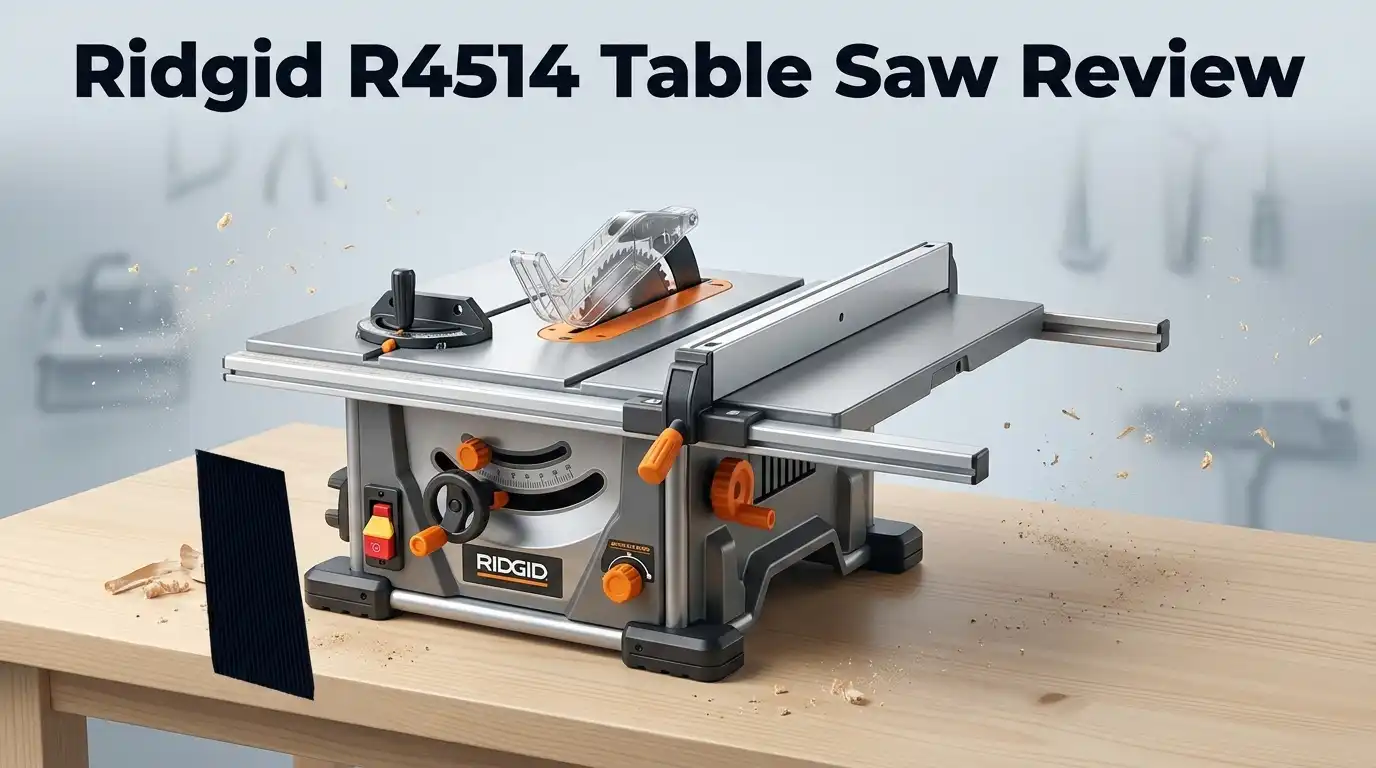
Looking for a portable table saw that fits your jobsite needs? The Ridgid R4514 might catch your eye. It packs a 10 inch blade and a 15 Amp motor into a lightweight frame.
This saw promises fast rips on plywood and 2x lumber. It also boasts a 30 inch rip capacity for bigger cuts. Many users praise its easy setup and takedown.
But does it hold up for serious woodworking? Some owners report vibration issues due to its light build. Others mention the fence feels a bit flimsy.
So, is the Ridgid R4514 worth your attention? This review breaks down every strength and weakness. We will look at its specs, real user feedback, and how it stacks up against rivals like the DeWalt DWE7491RS.
In a Nutshell
- Portability: This saw comes with a stand. You can carry it to any jobsite with ease. Setup and takedown take just minutes.
- Cutting Power: The 15 Amp motor and 10 inch blade handle plywood and 2x lumber well. Rip cuts happen fast and smooth.
- Fence Quality: It has the best fence in its class for jobsite saws. This helps you make straighter cuts on a budget model.
- Build Concerns: The lightweight frame causes noticeable vibration. You may need to square the saw often for accuracy.
- Tabletop Issues: The tabletop feels thin and is not perfectly flat. This can affect precision on detailed cuts.
- Reliability: Customers rate it 4.3 out of 5 stars. Ridgid backs it with a lifetime warranty, which adds peace of mind.
Motor Power and Cutting Capacity
The Ridgid R4514 runs on a 15 Amp motor paired with a standard 10 inch blade. This motor sits in the middle range for jobsite saws. It delivers enough power for most common cutting tasks on construction sites.
The motor spins at speeds that work well for ripping plywood and 2x lumber quickly. You will notice fast cuts through these materials. The blade size stays practical for portable work. A 10 inch blade balances cutting depth with portability.
Rip capacity reaches 30 inches, which handles standard sheet goods without issues. You can rip full width plywood sheets in one pass. This capacity beats many competitors in the same category. The fence system supports this reach and keeps cuts straight for jobsite work.
However, the motor shows real limits with thicker or denser materials. Cutting 4x lumber taxes the 15 Amp motor heavily. The motor can stall or slow down significantly. Dense hardwoods also push this motor to its limits. If you work mainly with standard framing lumber, you stay within safe operating range.
The lightweight construction creates a trade off with power delivery. A heavier frame would absorb more vibration from the motor. The current design prioritizes portability over motor stability. You will feel vibration transfer through the table during cuts. This vibration affects accuracy and can tire your hands during long sessions.
Compared to contractor saws with 20 Amp motors, the R4514 motor feels less robust. Contractor models handle sustained cutting better. Cabinet saws with larger motors outperform it significantly. But for jobsite conditions where you move the saw between locations, the 15 Amp motor makes sense.
The motor pairs well with the 30 inch rip capacity for standard construction work. You get enough power to cut through typical materials without strain. The real question becomes whether the vibration and accuracy trade offs work for your specific tasks. Light to medium duty work suits this motor and blade combination perfectly.

Last update on 2026-10-21 / Affiliate links / Images from Amazon Product Advertising API Some of the links on this website are affiliate links, which means that at no additional cost to you, I earn a commission if you click through and make a purchase. I only recommend products and services that I believe will add value to my readers. Thank you for your support!
Build Quality and Portability
The Ridgid R4514 sits firmly in the portable jobsite category. Its lightweight frame makes moving it between job locations easy. You can set it up quickly and tear it down just as fast when the day ends.
The stand that comes with the saw rolls smoothly on casters. This means you do not need a dedicated workshop space to use it. Many contractors appreciate this mobility for work sites where space is tight.
However, that lightweight construction creates a real trade off. The saw vibrates noticeably during operation. This vibration stems from the thin materials used throughout the frame and tabletop. The vibration issue becomes more obvious when you run it for extended periods or push it hard on tougher cuts.
The tabletop itself feels thin to the touch. It is not perfectly flat out of the box, which affects cutting accuracy. You will likely need to spend time squaring and tuning the saw before getting consistent results. This is common with budget jobsite models, but it means extra work upfront.
The fence system is actually a bright spot here. For a saw in this class, the fence ranks among the best available. It locks down firmly and maintains alignment reasonably well. This helps offset some accuracy concerns from the unstable tabletop.
The overall build quality reflects the saw’s purpose. It is designed for construction sites and occasional use, not precision woodworking. The materials feel durable enough to survive bumps and rough handling. Customer ratings of 4.3 out of 5 stars suggest owners find it reliable for its intended use.
If you move your saw frequently or work in different locations, portability becomes a major advantage. The stand breaks down, and the whole unit fits in most truck beds. For stationary workshop use, however, you might want something heavier and more stable.
The R4514 trades some precision and stability for convenience and easy transport. Understanding this trade off helps you decide if it matches your actual needs.
Fence System and Accuracy
The fence system on the Ridgid R4514 stands out as one of its best features for a jobsite saw. The aluminum fence slides smoothly along the rails and locks down firmly when you tighten the lever. You get consistent rip widths without the fence creeping during cuts.
Setting up the fence takes just a few minutes. The scale markings help you dial in your desired width quickly. Most users report that the fence stays put once locked, which matters when you are making multiple cuts at the same size.
However, accuracy comes with a catch. The thin tabletop warps slightly under pressure, which means your fence alignment can shift between cuts. You will need to square the fence to the blade regularly, especially if the saw sits unused for a few weeks.
The fence itself is not as rigid as contractor or cabinet saws. It flexes a bit during aggressive cuts, and heavier materials can cause minor drift. This is typical for portable models, but it means you should not expect cabinetry level precision from this machine.
For plywood ripping and 2x lumber crosscutting, the fence performs admirably. Cuts come out square and straight when you take time to set up properly. The fence glides without binding, which keeps your workflow moving on the jobsite.
The real limitation appears when you push the saw beyond its design purpose. Dense hardwoods or thick stock may reveal the fence’s limitations. The lightweight frame allows vibration that compounds any fence misalignment.
Squaring the fence to the blade takes just five minutes, and most owners do this before each work session. A simple square and a few test cuts confirm everything is true. Once squared, you can trust the fence for accurate work throughout the day.
The fence system balances simplicity with function. It delivers solid performance for general construction cutting without the complexity of premium systems. For jobsite work, it ranks among the best options in its class.
Top 3 Alternatives
DeWalt DWE7491RS Table Saw

- Rack & Pinion Telescoping Fence System Make fence adjustments fast, smooth and accurate
- Patented material support, can be used for narrow rip cuts.

Last update on 2026-10-21 / Affiliate links / Images from Amazon Product Advertising API Some of the links on this website are affiliate links, which means that at no additional cost to you, I earn a commission if you click through and make a purchase. I only recommend products and services that I believe will add value to my readers. Thank you for your support!
The DeWalt DWE7491RS brings powerful performance to your workshop. This saw features a 10-inch blade and delivers consistent cuts through various materials. The rip capacity reaches 32.5 inches, which handles most woodworking projects with ease.
Makita 2705 Table Saw

- Left extension table with smooth sliding action
- Right and rear extension table enables greater cutting capacity
Last update on 2026-10-21 / Affiliate links / Images from Amazon Product Advertising API Some of the links on this website are affiliate links, which means that at no additional cost to you, I earn a commission if you click through and make a purchase. I only recommend products and services that I believe will add value to my readers. Thank you for your support!
The Makita 2705 stands out with its compact design and lightweight construction. This 10-inch saw fits nicely in smaller workshops without sacrificing cutting power. The rip capacity extends to 24.75 inches, suitable for standard woodworking tasks.
Bosch 4100-09 Table Saw

- RACK AND PINION RIP FENCE: This BOSCH table saw 10 inch size features color-coded index pins that...
- BOSCH TOOLS SAW: 15-Amp portable table saw with 3,800 rpm for rip-cutting and cross-cutting of fine...
Last update on 2026-10-21 / Affiliate links / Images from Amazon Product Advertising API Some of the links on this website are affiliate links, which means that at no additional cost to you, I earn a commission if you click through and make a purchase. I only recommend products and services that I believe will add value to my readers. Thank you for your support!
The Bosch 4100-09 offers a portable solution with solid engineering. This 10-inch saw features a gravity-rise stand that makes transport between locations simple. The rip capacity reaches 24.75 inches for typical cutting applications.
Vibration and Stability Issues
Vibration becomes the elephant in the room with the Ridgid R4514. The lightweight construction that makes this saw portable creates real challenges when you run it at full speed. Owners consistently report excessive vibration during operation, especially when ripping thicker stock or pushing the blade hard.
The root cause is straightforward. A portable jobsite saw weighs far less than a contractor or cabinet model. Less mass means less stability. When the 15 Amp motor spins the 10 inch blade, that energy transfers directly into the frame instead of being absorbed by a heavier base. The result feels noticeable the moment you engage the blade.
This vibration affects two critical areas. First, it impacts cut quality. The blade chatters slightly, leaving marks on your workpiece. Second, it creates fatigue. Your hands and arms absorb vibrations during extended cutting sessions. For occasional weekend projects, this remains tolerable. For full days on a jobsite, it becomes tiresome.
The stand itself contributes to the problem. While the casters roll smoothly, they don’t lock firmly. The entire assembly can shift during aggressive cuts. Clamping the saw to a workbench helps, but that defeats the portability advantage.
You can reduce vibration through simple steps. Ensure the blade sits perfectly parallel to the fence. Check that all bolts are tight, especially where the motor mounts to the frame. Use quality blades rather than cheap ones. A dull blade causes more vibration than a sharp one.
Some owners add weight to the stand by placing sandbags underneath. Others reinforce the fence alignment before each use. These workarounds help, but they don’t eliminate the core issue.
The vibration question really depends on your expectations. If you accept that this saw trades stability for portability, the vibration becomes manageable. If you demand precision comparable to stationary saws, the R4514 will disappoint you. Most jobsite work falls somewhere in between, where vibration matters less than convenience and quick setup.
Setup, Takedown, and Ease of Use
Getting the Ridgid R4514 ready to work takes minimal effort. Most users have it operational within 15 to 20 minutes straight out of the box. The stand assembly is straightforward, and the casters roll smoothly once you position everything on your jobsite.
The real advantage here is portability. You can wheel this saw from one location to another without struggling. The lightweight frame means you won’t need extra hands to move it around your workshop or between job sites. This convenience matters when you work in multiple spaces throughout the day.
Breakdown and storage happen just as quickly. The blade comes off easily, and the stand folds or compacts for transport. You can fit this saw into a truck bed without taking up excessive room. For contractors who move equipment constantly, this speed saves real time each week.
The fence system deserves specific attention during setup. Once you position it, alignment takes just minutes. Most owners square the fence to the blade before starting their work session, which becomes routine. The process feels intuitive even for newer users.
One consideration: the tabletop’s thin construction means you should handle it gently during transport. Avoid dropping the saw or placing heavy objects on the surface while moving. The stand itself is sturdy enough for jobsite conditions, but the top requires care.
Vibration management starts during setup. Ensure the blade runs parallel to the fence from the beginning. Some owners place sandbags under the stand to reduce movement during cutting. These simple steps make a noticeable difference in how the saw performs.
The takedown process mirrors setup in reverse. Disconnect the power, remove the blade, and secure loose parts. Everything stores compactly, and you’re ready to load the truck. This efficiency explains why many jobsite workers prefer this model over heavier alternatives.
Overall, the Ridgid R4514 excels when ease of movement matters most. You gain speed and convenience without complex procedures or special tools.
Pros and Cons
Pros
- Cuts plywood and 2x lumber quickly with minimal setup time
- Fence system ranks among the best for jobsite saws in its class
- Durable construction backed by lifetime warranty with strong customer ratings
- Portable design lets you move between job sites easily
- Stand folds compactly for transport and storage
Cons
- Excessive vibration from lightweight construction affects cut quality and requires ongoing management
- Thin tabletop and flimsy fence mean accuracy demands regular squaring adjustments before use
- Cannot handle 4x lumber or thicker materials effectively
- Lower motor power compared to contractor or cabinet saws limits heavy duty work
Who Should Buy It
The Ridgid R4514 fits best with specific user types who understand its strengths and limitations upfront.
DIY homeowners doing occasional projects benefit most from this saw. You cut plywood sheets, build decks, or frame walls on weekends. The quick setup and takedown mean you spend less time preparing and more time working. The portable stand lets you move the saw between your garage, yard, and storage without strain.
Jobsite carpenters and contractors find real value here too. You need a saw that travels between multiple locations daily. The Ridgid R4514 breaks down fast and fits into trucks easily. The fence system ranks among the best for jobsite models in its class, so you get decent accuracy without paying for premium equipment.
Budget conscious builders appreciate the straightforward design. You get a durable machine backed by lifetime warranty and strong customer ratings. The motor handles plywood and 2x lumber quickly. Setup requires no special skills, and the learning curve stays flat.
Skip this saw if you need precision woodworking. The thin tabletop and flimsy fence demand constant squaring adjustments. You’ll spend more time fixing alignment than cutting. Cabinet makers and furniture builders should look elsewhere.
Heavy duty work isn’t its strength either. The motor lacks power for thick hardwoods or 4x lumber. Contractor saws and cabinet models outperform it significantly for demanding cuts. If your projects involve dense materials regularly, this saw will frustrate you.
The vibration issue matters too. Lightweight construction causes excessive vibration during operation. Some owners add sandbags to the stand to reduce this problem. If you’re sensitive to noise and movement, or if your work demands smooth cuts, consider alternatives.
Bottom line: Buy the Ridgid R4514 if you transport your saw frequently, work on jobsites, or handle standard framing materials. Skip it if precision, power, or stability define your needs. The saw excels at portability and basic cuts. It struggles with accuracy and heavy materials.
Final Verdict
The Ridgid R4514 earns its spot as a solid jobsite companion. It handles everyday cutting tasks without fuss. Simple tasks get done fast and clean.
This saw shines brightest for people who value mobility over precision. If you move between locations often, the compact stand and light frame make sense. Portability remains its strongest selling point.
Think about your typical project scope before buying. Someone building furniture or cabinets might feel limited by this machine. The saw simply wasn’t built for tight tolerances.
Weekend warriors and small crews will likely feel differently. Framing work, deck building, and general carpentry fit well within its capabilities. The saw does what most jobsite tasks require.
Customer feedback backs this up consistently. People report satisfaction with basic performance. Complaints usually center on known limitations rather than unexpected failures.
Reliability over time matters too. The lifetime warranty signals confidence from the manufacturer. Many owners report years of steady use without major issues.
Compare this saw against your actual needs, not just specs on paper. A more powerful machine might sit unused if you never need that extra capability. Sometimes simpler tools match real world demands better.
Ask yourself what you cut most often. Plywood sheets and standard lumber describe most home projects accurately. This saw handles those tasks efficiently.
Contractors juggling multiple sites appreciate quick setup times. Every minute saved on logistics adds up across a workweek. This saw respects that reality.
Skilled woodworkers seeking fine furniture results should look elsewhere. Precision work demands features this saw doesn’t offer. That’s simply outside its intended purpose.
For everyone else, the R4514 delivers dependable performance. It won’t replace a cabinet saw, but it doesn’t try to. Understanding this balance helps set realistic expectations.
Choose this saw if portability and simplicity top your list. Skip it if accuracy and heavy material handling matter most to your work. Match the tool to your actual projects, and satisfaction follows naturally.
Frequently Asked Questions
Can the Ridgid R4514 handle thick hardwoods or 4x lumber?
No. This saw works best with plywood and standard 2x lumber. The 15 Amp motor lacks the power needed for thick hardwoods or 4x materials. If your projects involve heavy stock, consider a contractor or cabinet saw instead. The R4514 stays in its lane with lighter framing and general carpentry work.
How accurate are the cuts from this saw?
Expect moderate accuracy. The thin tabletop and flimsy fence require regular squaring before each use. You’ll spend time making adjustments to keep cuts square. This saw isn’t ideal for precision woodworking or fine furniture. It performs well for framing, decking, and rough carpentry where tight tolerances matter less.
Does the vibration problem affect everyday use?
Yes, it does. The lightweight construction causes noticeable vibration during operation. This impacts cut quality and can wear you out during longer sessions. Vibration management becomes part of your workflow, not a one time fix. Many users report this as the biggest trade off for the portable design.
Who should actually buy this saw?
DIY homeowners tackling occasional projects benefit most. Jobsite carpenters moving between locations appreciate the quick setup. Small crews value the easy transport. Skip this saw if you need precision work or heavy duty cutting. Ask yourself what you cut most often. Your typical project scope determines whether this tool fits your needs.
What does the lifetime warranty cover?
The manufacturer backs this saw with a lifetime warranty. This signals confidence in durability and reliability. Check Ridgid’s warranty terms for specific coverage details and any registration requirements you may need to complete.

Hi, I’m Amelia Thornton, the founder of ElectroPro.blog.
I write about smart devices, gadgets, electronics, and tech essentials from Amazon.
My goal is to help you discover reliable and innovative tech that truly makes life easier.
From home automation to everyday gear, I test and share what’s worth your investment.
Join me as I explore the smartest tech trends—one gadget at a time.