Dremel 1671 Scroll Saw Review: Does It Really Work?
Looking for a small scroll saw that fits into a tight workshop? The Dremel 1671 might catch your eye. This compact tool promises big functionality in a tiny frame.
Many hobbyists want a saw that does not take up much space. The Dremel 1671 answers that need with its mini design. It also offers variable speed control for different cutting styles.
But does this little machine actually perform well? That is the real question we will answer today. We tested its build quality, cutting ability, and ease of use.
This saw builds a sturdy frame. It works well for beginners who want to learn scroll sawing. Serious hobbyists also find it useful for smaller projects.
In a Nutshell
- Compact design: This saw takes up very little space. It suits small workshops or tight corners with ease.
- Variable speed control: You get flexibility for different materials. Slow cuts or fast cuts are both possible.
- Beginner friendly: New hobbyists find this saw easy to pick up. It also works for more serious crafters on occasion.
- Power limitations: The motor struggles with thicker materials. Underpowered performance shows up during tougher cuts.
- Blade engagement issues: Some users notice poor cutting even with proper tension. This can slow down your workflow.
- Blade changes take effort: Swapping blades is not quick. This might frustrate users who cut often.
- Best fit: This saw suits hobbyists with limited space. Professionals or heavy users should look elsewhere.
Build Quality and Construction
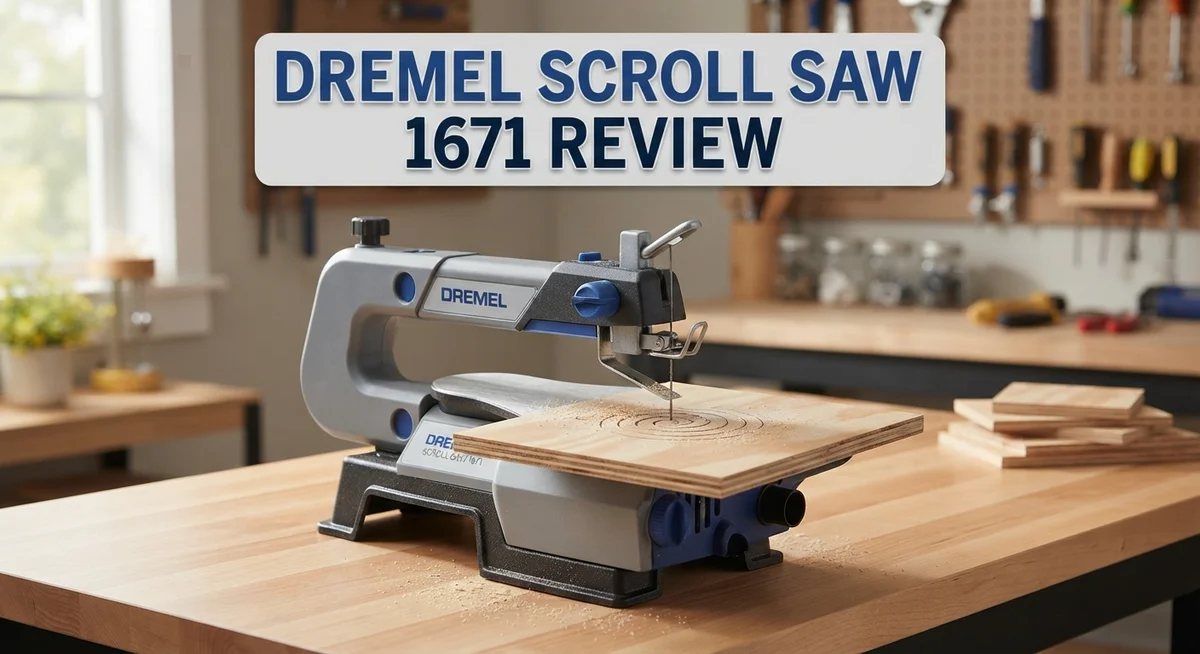
The Dremel 1671 features a compact frame that feels solid when you hold it. The base sits stable on your work surface, and the overall assembly shows good attention to detail for a mini scroll saw.

- Dust port adapter keeps line-of-sight clear and work space clean
- Auto tensioning quick-change mechanism for easy accessory change and optimal blade tensioning

Last update on 2026-09-10 / Affiliate links / Images from Amazon Product Advertising API Some of the links on this website are affiliate links, which means that at no additional cost to you, I earn a commission if you click through and make a purchase. I only recommend products and services that I believe will add value to my readers. Thank you for your support!
The frame uses metal components in key areas. This gives the machine a sturdy foundation. You won’t feel like the saw will tip or wobble during operation. The construction quality reflects what you’d expect from a Dremel product at this size level.
One standout feature is the variable speed motor. You can adjust cutting speeds to match different materials. This flexibility shows thoughtful engineering for a small machine. The motor itself is compact but reliable for light work.
However, the blade changing system presents a real challenge. Users report that swapping blades requires more effort than you’d like. The mechanism feels tight and sometimes frustrating. If you plan frequent blade changes, this becomes a notable drawback. The tension adjustment works, but the overall design could be smoother.
The saw’s small size is both a strength and a weakness. The compact design means it takes minimal workshop space. This appeals to hobbyists with limited room. Yet the tight dimensions also limit what you can cut. Larger projects simply won’t fit under the blade.
The construction materials hold up well over time. Many users report their saws still function after years of occasional use. The durability suggests Dremel built this machine to last for hobbyist work. The frame doesn’t show signs of excessive wear or flex.
The overall build quality sits at a solid mid-range level. It’s not professional grade, but it’s far from flimsy. The Dremel 1671 feels like a machine that knows its purpose. It’s built to handle light cutting tasks reliably. For someone seeking a no-fuss, space saving scroll saw, the construction delivers what matters most. The real question isn’t whether it’s well made. It’s whether this small size and modest power fit your actual cutting needs.
Cutting Performance and Blade System
The blade system on the Dremel 1671 is where this saw shows both strengths and real limitations. The variable speed motor gives you flexibility when cutting different materials. You can slow down for delicate work and speed up for tougher jobs. This adaptability makes the saw useful across various hobby projects.
However, the blade engagement presents a genuine issue. Users report that even with proper tension applied, the blade sometimes fails to cut effectively. This frustration catches many owners off guard. The problem suggests that the saw’s compact motor lacks the consistent power needed to drive the blade through material smoothly.
Blade changes are noticeably difficult on this model. The tensioning system requires significant effort to loosen and tighten. You will spend more time fiddling with the mechanism than you would on full-size saws. This design choice makes quick blade swaps impractical, especially if you work with different materials in one session.
The cutting performance reflects the saw’s overall limitations. It handles thin materials and soft woods reasonably well. Push thicker stock through, and the motor struggles to keep up. The blade may slow down or bind, forcing you to pause and reposition your work. This inconsistency frustrates users who expect smooth, continuous cuts.
The saw’s small frame directly impacts cutting capacity. You cannot fit large workpieces onto the table. This restriction alone eliminates many projects from your options. The compact design trades power and versatility for space savings.
For light hobby work, the blade system performs adequately. Beginners appreciate the variable speed control and straightforward operation. The sturdy frame keeps vibration minimal during cutting. Yet serious hobbyists or frequent users quickly discover the motor’s shortcomings.
The Dremel 1671 cuts best when you respect its limitations. Use it for small projects, thin materials, and occasional work. Expect to work slowly and deliberately rather than powering through cuts quickly. The blade system works, but it demands patience from the operator.
Size, Portability, and Workspace Requirements
The Dremel 1671 occupies a unique spot in the scroll saw market because of its genuinely compact footprint. This machine demands minimal desk or workbench space, making it ideal if you work in tight quarters or share your workspace with other tools.
The saw measures small enough to fit comfortably on a standard hobby table. You can store it in a closet or cabinet without hassle. This portability matters for makers who don’t have a dedicated workshop or who move between different work areas frequently.
However, size brings real trade offs. The small frame limits your cutting capacity significantly. You cannot tackle large projects or thick materials the way you would with full size scroll saws. The motor sits at the lower end of the power spectrum, so demanding cuts require patience and proper technique.
Workspace setup is straightforward because the machine needs minimal footprint. You don’t require special mounting or elaborate workbench modifications. The compact design means vibration stays contained, and you can position it almost anywhere stable. This accessibility appeals to apartment dwellers and hobbyists with space constraints.
The portability factor cuts both ways. While you can move the saw easily from room to room, the lightweight construction means it lacks the solid, anchored feeling of larger machines. Some users prefer this flexibility. Others find the reduced stability problematic during extended cutting sessions.
For workspace requirements, expect to reserve roughly 2 to 3 square feet of active working space around the machine. You need room for material handling and comfortable positioning. The saw itself doesn’t generate excessive heat or require special ventilation, so integration into existing spaces works without complications.
The real consideration involves matching the machine to your actual workspace reality. If you have limited room and only do occasional hobby projects, this saw fits perfectly. If you need frequent use or work with larger materials, the compact design becomes a genuine limitation rather than an advantage. Assess your actual space and project frequency before deciding whether this machine serves your needs.
Top 3 Alternatives

- Sturdy, lightweight stand
- Robust all-metal construction
Last update on 2026-09-10 / Affiliate links / Images from Amazon Product Advertising API Some of the links on this website are affiliate links, which means that at no additional cost to you, I earn a commission if you click through and make a purchase. I only recommend products and services that I believe will add value to my readers. Thank you for your support!

- 12 AMP motor with variable speed control dial (2,000 - 5,200 RPM) for optimum performance in a...
- Large cutting capacity (2-3/16" at 90° and 1-9/16" at 45°). Power Type- Corded
Last update on 2026-09-10 / Affiliate links / Images from Amazon Product Advertising API Some of the links on this website are affiliate links, which means that at no additional cost to you, I earn a commission if you click through and make a purchase. I only recommend products and services that I believe will add value to my readers. Thank you for your support!

- Ergonomic: Thanks to the compact design and low weight.
- Unobstructed view: Clearly visible routing area.
Last update on 2026-09-10 / Affiliate links / Images from Amazon Product Advertising API Some of the links on this website are affiliate links, which means that at no additional cost to you, I earn a commission if you click through and make a purchase. I only recommend products and services that I believe will add value to my readers. Thank you for your support!
Variable Speed and Power Capabilities
The Dremel 1671 delivers variable speed control that lets you adjust cutting performance to match your material. This feature gives you flexibility when switching between different wood types and thicknesses. You can slow down for delicate work and speed up for faster cuts through softer materials.
The motor itself sits on the underpowered side. This limitation shows up most when you push the saw beyond light hobby tasks. The speed range helps compensate, but raw power remains a constraint you’ll notice quickly with thicker stock or harder woods.
Speed adjustments work smoothly through the dial control. The motor responds well to changes, so you can fine tune your cutting pace without stopping the machine. This responsiveness makes the 1671 practical for hobbyists who work with varied materials in a single session.
Real world performance reveals the power limitation clearly. Users report that even with proper tension and correct speed settings, the saw struggles to maintain consistent blade engagement on tougher cuts. The combination of limited power and compact design means you’ll get best results with thin to medium materials only.
The variable speed feature shines when you respect the machine’s boundaries. Light cutting tasks like intricate patterns in thin wood show what this saw can do well. Pushing beyond those limits exposes the fundamental power shortage.
For occasional hobby use, the speed capability meets expectations. You get enough control to handle different projects without major frustration. The motor runs quietly at lower speeds, which appeals to users in shared spaces.
Understanding the power reality matters before purchase. This saw won’t perform like full size professional machines. The variable speed doesn’t overcome the compact motor’s natural limitations. What it does provide is enough flexibility for someone doing light to moderate hobby work in a small space.
The speed control represents genuine value for the hobbyist segment. Combined with the compact size, it creates a practical tool for specific use cases. Just keep realistic expectations about cutting capacity and power output.
Ease of Use and Maintenance
Maintaining the Dremel 1671 requires minimal effort, which appeals to users who want simplicity over complexity. The compact design means fewer parts to clean and access. You can reach most components easily without disassembling the entire machine.
Routine maintenance involves basic steps. Dust accumulation happens quickly with any saw, so regular cleaning keeps the motor running smoothly. A soft brush and compressed air work well for removing sawdust from the motor vents and work surface. The variable speed dial stays clean without special attention.
Blade replacement presents the main challenge. The process demands patience and careful hand positioning. Users report that changing blades takes longer than on full-size saws because the chuck design requires precise alignment. You’ll need a steady hand and good lighting to complete the task without frustration.
The learning curve for maintenance stays gentle. First-time users can manage basic upkeep after reading the manual once. No special tools are required beyond what most hobbyists already own. The instruction manual provides clear diagrams for blade installation, though the actual execution feels trickier than the photos suggest.
Long-term durability depends heavily on how you treat the machine. Users who respect the saw’s small frame and underpowered motor report reliable performance over years of occasional use. Those who push the machine beyond its limits experience faster wear on internal components.
Storage and portability make maintenance easier in practical ways. The compact footprint means you can store the saw in a closet or cabinet without special preparation. Moving the machine between locations requires minimal setup time. This flexibility helps users maintain consistent work habits.
Preventive care extends machine life significantly. Keeping the work surface clear of debris prevents jamming. Regular inspection of the blade chuck ensures proper tension stays consistent. Checking electrical connections occasionally catches potential problems early.
The Dremel 1671 rewards straightforward maintenance habits. You won’t need advanced technical skills or specialized equipment. Owners who follow basic care steps report satisfaction with how the machine performs over time. The simplicity of maintenance actually ranks among the saw’s genuine strengths for hobbyist users.
Pros and Cons
What makes this saw stand out
The Dremel 1671 earns respect for its solid construction. The frame feels sturdy when you use it. Users report that the machine holds up well over time with basic care. The build quality matches what you’d expect from the Dremel brand.
Real limitations you should know
The compact size cuts both ways. You gain a machine that fits anywhere, but you lose cutting capacity. The motor runs underpowered compared to full-size saws. This means slower cuts and more strain on the machine during demanding work.
Blade changes frustrate many owners. The process feels awkward and time consuming. You need patience to swap blades correctly. Some users report that blade engagement stays problematic even after proper tensioning. The saw sometimes struggles to grip the blade securely, which affects cut quality.
Who this works for and who it doesn’t
This machine shines for hobbyists on a tight budget. Beginners find it approachable and forgiving. The learning curve stays gentle. For occasional projects and light cutting tasks, the Dremel 1671 delivers acceptable results.
Professional users and serious crafters should look elsewhere. The underpowered motor cannot handle frequent use or thick materials. Heavy production work will frustrate you quickly. Serious woodworkers need machines with more cutting capacity and reliability.
The practical reality
The variable speed control works smoothly and adds genuine value. You can adjust performance to match your specific material. This flexibility helps you get better results within the machine’s limits.
Storage proves simple thanks to the compact design. You can tuck this saw away easily. The portability means you can move it between workspaces without effort.
The Dremel 1671 succeeds when expectations match reality. It works well as a secondary saw for light hobby work. It fails when you demand professional performance or frequent use. Understanding these boundaries before buying prevents disappointment later.
Who Should Buy It
The Dremel 1671 scroll saw appeals to a specific group of users. Understanding who benefits most from this machine helps you decide if it fits your needs.
Hobbyists with limited space make up the primary audience. The compact design lets you set up in apartments, small workshops, or shared maker spaces. You can store it on a shelf or in a closet when not in use. This portability matters if you move between locations or lack a dedicated workshop.
Beginners exploring scroll saw work find this machine welcoming. The learning curve stays gentle. You won’t feel overwhelmed by complex controls or intimidating power. The variable speed dial lets you experiment with different materials without fear of damaging expensive equipment. This makes it an excellent entry point into the craft.
Budget conscious crafters appreciate what this saw offers. You get functional cutting capability without the investment required for full-size professional models. If you’re testing whether scroll saw work suits you long-term, this machine lets you explore without major financial commitment.
Occasional users and light hobbyists get reliable performance from the Dremel 1671. You’re not running production jobs or cutting thick hardwoods daily. You work on small projects, ornaments, or decorative pieces. You cut soft materials like thin wood, plastic, or craft plywood. This machine handles those tasks well.
Secondary saw owners also benefit from having this unit available. You might keep it as a backup for quick projects while your main saw sits idle. It serves well as a dedicated machine for specific material types or delicate work.
Who should NOT buy this saw: Professional woodworkers need different equipment. Serious crafters running frequent projects will hit the power limitations quickly. Users who demand heavy cutting performance or thick material capability should invest elsewhere. High volume production work exceeds what this machine delivers. If you need consistent blade engagement and cutting precision for demanding applications, look at larger alternatives instead.
Final Verdict
The Dremel 1671 scroll saw delivers exactly what it promises. It gives hobbyists a reliable entry point into scroll saw work without overwhelming complexity.
This saw won’t replace professional equipment. Serious woodworkers need machines built for heavy daily use. The 1671 simply isn’t that tool.
But that’s okay. Not every saw needs to serve every purpose. The Dremel 1671 fills a specific niche well.
Think of this saw as a stepping stone. Many hobbyists start here before moving to larger machines like DeWalt models. That progression makes sense for most crafters.
The construction quality surprises many first time buyers. Dremel built this saw to last, even though power output stays limited. That combination creates an honest product.
Blade change frustrations remain real. Anyone considering this saw should accept that tradeoff upfront. No amount of positive reviews changes this fact.
Your project scope matters more than any spec sheet. Small, detailed cuts on soft materials suit this saw perfectly. Large, thick, or dense materials push it past its limits.
Set realistic expectations before you buy. This saw rewards patient hobbyists who understand its boundaries. It punishes anyone expecting professional grade output.
Compare your actual needs against what this saw offers. Occasional crafting projects match well. Daily professional work does not.
The verdict comes down to matching the tool to the task. Hobbyists get genuine value here. Professionals should look elsewhere without hesitation.
Buy this saw knowing what you’re getting. It’s a solid, no frills companion for casual scroll saw work. It’s not a workhorse for demanding projects.
Final thought: this saw earns its place in a hobbyist’s toolkit, not a professional workshop. Set your expectations accordingly, and the Dremel 1671 will serve you well for years of light, enjoyable projects.
Frequently Asked Questions
Can I use this saw for detailed intricate cuts?
The Dremel 1671 handles light detail work reasonably well. You can make curves and patterns in thin materials like craft wood and soft plastics. However, this machine struggles with thick stock or dense hardwoods. The small throat depth limits your project size significantly.
For precision scrollwork on delicate pieces, this saw performs adequately. But if you need professional grade accuracy on complex designs, you’ll want a full-size machine instead.
What materials work best with the Dremel 1671?
This saw cuts thin wood, veneer, plastic, and soft metals effectively. Craft projects and hobby work sit squarely in its wheelhouse. Thicker hardwoods and dense materials expose the machine’s power limitations.
Lighter materials shine here. Your best results come from working with pieces under half an inch thick.
Is blade changing really that difficult?
Yes, many users report genuine frustration with the blade change process. The mechanism feels fiddly and requires patience. You’ll need steady hands and good lighting to swap blades without struggle.
Plan extra time for maintenance if you switch blades frequently. This isn’t a quick swap system like larger saws offer.
Should I buy this as my first scroll saw?
Absolutely, if you have space and budget limits. This machine lets beginners learn scroll saw basics without major commitment. You’ll discover whether you enjoy this hobby before upgrading to larger equipment.
Just understand this is a learning tool, not a lifetime machine for serious crafters.
What happens if I try professional work with this saw?
The Dremel 1671 simply cannot deliver professional results. Blade engagement issues arise under heavy load. The motor lacks sufficient power for sustained cutting in demanding materials.
Professional woodworkers need professional equipment. This saw was never designed for that purpose.

Hi, I’m Amelia Thornton, the founder of ElectroPro.blog.
I write about smart devices, gadgets, electronics, and tech essentials from Amazon.
My goal is to help you discover reliable and innovative tech that truly makes life easier.
From home automation to everyday gear, I test and share what’s worth your investment.
Join me as I explore the smartest tech trends—one gadget at a time.