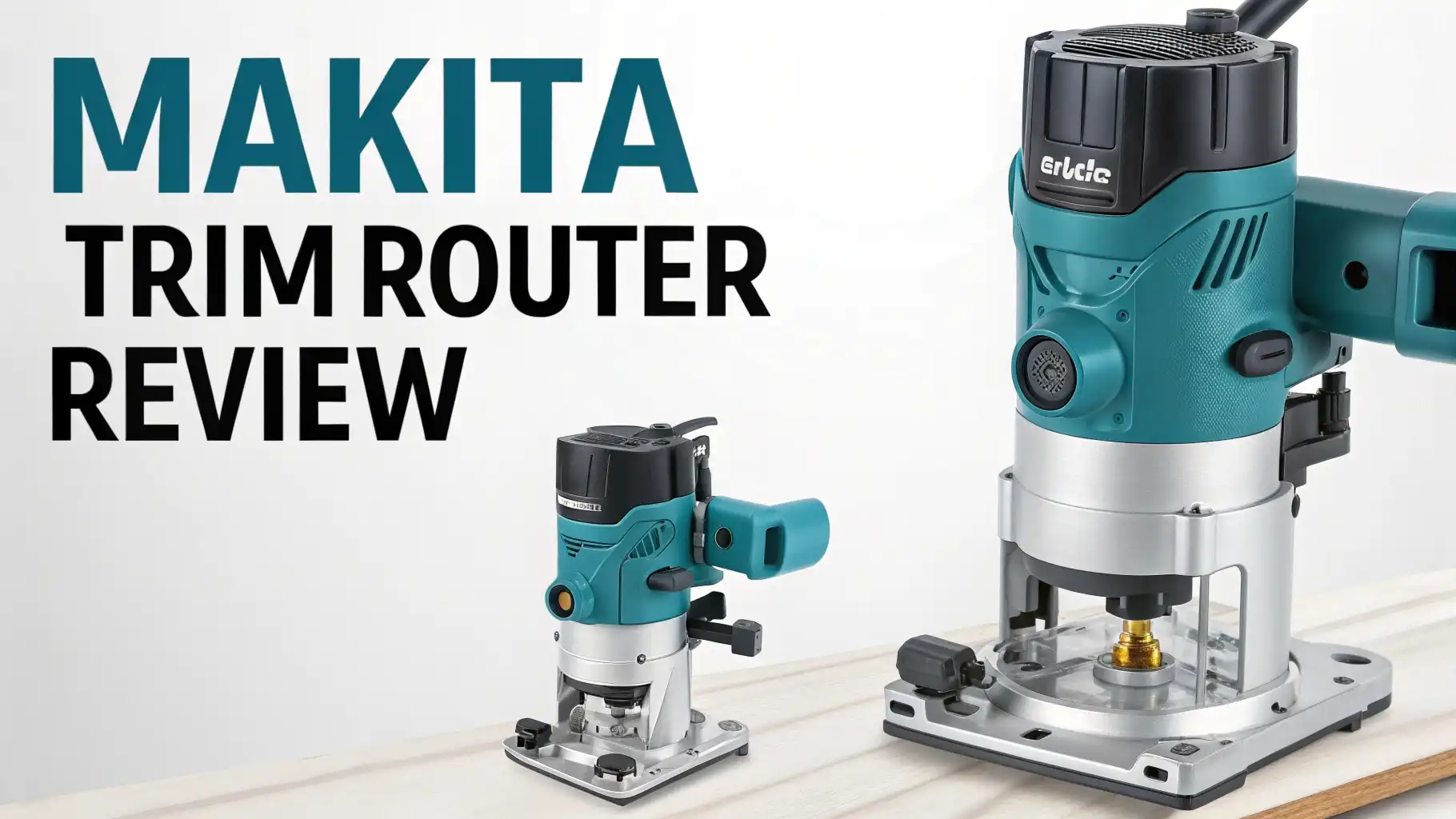
Makita Trim Router Review 2026: Is the Best Compact Router?
You’re looking for a compact router that does real work without breaking your back or your budget. You’ve heard the name Makita come up again and again. And now you’re wondering: is the Makita trim router actually as good as everyone says?
Short answer: yes. But let’s dig into the details so you know exactly what you’re getting before you spend your money.
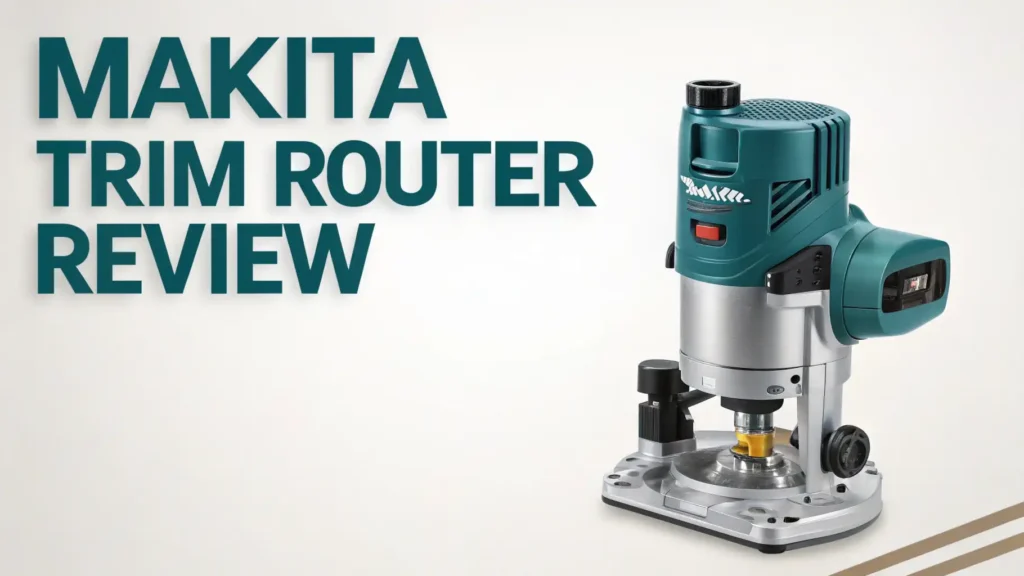
The Makita RT0701C is one of the most talked-about trim routers in the woodworking world right now. It shows up in online forums, tool comparison videos, and professional workshops. In 2026, it still holds its ground against newer tools.
Key Takeaways
Before you read the full review, here’s a quick summary of what this post covers:
- The Makita RT0701C runs on a 1 and 1/4 HP motor with 6.5 amps. This gives it enough power for edge trimming, laminate work, decorative profiles, and light joinery tasks.
- The variable speed range goes from 10,000 to 30,000 RPM. This is one of the widest ranges in its class. You can slow it down for large bits and push it fast for fine detail work.
- The rack-and-pinion depth adjustment system is smooth and accurate. You get very precise control with each turn, which makes repeatable cuts much easier.
- It weighs only 3.9 pounds. This is one of the lightest routers in this power class. Lighter weight means less fatigue during long sessions.
- The quick-release cam lock system allows fast base changes. This is great if you use both a fixed base and a plunge base on the same job.
- It does not have built-in LED lights. If you work in darker conditions, you may need extra lighting. This is one area where the DeWalt DWP611 has an edge.

- Variable speed control dial (10,000 to 30,000 RPM) enables user to match the speed to the...
- Smooth rack and pinion fine depth adjustment system for more precise settings

Last update on 2026-07-27 / Affiliate links / Images from Amazon Product Advertising API Some of the links on this website are affiliate links, which means that at no additional cost to you, I earn a commission if you click through and make a purchase. I only recommend products and services that I believe will add value to my readers. Thank you for your support!
What Is the Makita Trim Router?
The Makita RT0701C is a compact corded router built for light to medium woodworking tasks. It belongs to a category often called trim routers or palm routers. These tools are smaller than full-size routers but still deliver strong, consistent performance.
Makita is a Japanese brand with a strong reputation in the power tool market. They designed the RT0701C with both professionals and serious hobbyists in mind. The router uses a fixed base by default, though you can attach a plunge base separately.
This tool is especially popular among woodworkers who do edge work, laminate trimming, and template routing. It also works well as a CNC spindle in some DIY CNC builds, which is why it shows up in both woodworking shops and maker spaces.
The RT0701C has earned over 7,200 ratings on Amazon with an average score of 4.7 out of 5 stars, making it one of the most trusted compact routers available today.
Key Features of the Makita RT0701C
The Makita RT0701C comes packed with features that make it stand out in its price range. Here is a closer look at what this tool offers:
Variable Speed Control: The speed dial goes from 10,000 to 30,000 RPM. This wide range lets you match the speed to the bit size and material. Large pattern bits need slower speeds, while small flush trim bits work better at higher speeds.
Rack-and-Pinion Depth Adjustment: This system is smooth and repeatable. You turn the adjustment ring and the motor housing moves up or down with precision. There is no slipping or jumping, which is common with cheaper systems.
Soft Start Feature: The motor starts gently instead of snapping to full speed. This reduces wear on the motor and gives you better control at startup.
Quick-Release Cam Lock: You can detach the motor from the base quickly with a simple lever. This makes base swapping fast during complex jobs.
Electronic Speed Control: The router maintains a constant speed even when the bit enters tough wood or laminate. This keeps cuts clean and consistent throughout.
Heavy Duty Aluminum Motor Housing: The aluminum body resists heat and adds durability without adding too much weight.
Performance and Power Output
The Makita RT0701C performs exceptionally well for its size. The 1 and 1/4 HP motor pulls 6.5 amps from a standard 115V outlet. This gives it enough power to handle most tasks a compact router needs to do.
In real-world use, the router cuts cleanly through pine, oak, MDF, and laminate. The electronic speed control prevents the bit from bogging down when it meets resistance. This is something cheaper routers struggle with, especially during deep passes.
At lower speeds, around 10,000 to 15,000 RPM, the router becomes very capable for larger bits and softer materials. At higher speeds, it excels at fine detail passes and edge profiling. Most woodworkers report that the RT0701C handles laminate trimming and template routing better than almost any other compact router in its price range.
One thing to note: the router does produce vibration at higher RPMs. This is normal for any trim router, but some users find the Makita to be smoother than competing models like the DeWalt DWP611. For CNC use, many users drop the speed to mid range to get quieter, more controlled operation.
Top 3 Alternatives for Makita Trim Router

- Durable 1.25HP motor delivers the power to meet the toughest applications
- Variable speed control feature enables bit speed to be optimized for changing applications
Last update on 2026-07-27 / Affiliate links / Images from Amazon Product Advertising API Some of the links on this website are affiliate links, which means that at no additional cost to you, I earn a commission if you click through and make a purchase. I only recommend products and services that I believe will add value to my readers. Thank you for your support!

- PRECISION: This router tool features a fast and precise depth adjustment system that allows both...
- CONVENIENT: The wood router provides a straight edge guide to lead router along edges of work piece...
Last update on 2026-07-27 / Affiliate links / Images from Amazon Product Advertising API Some of the links on this website are affiliate links, which means that at no additional cost to you, I earn a commission if you click through and make a purchase. I only recommend products and services that I believe will add value to my readers. Thank you for your support!

- Durable 1.25HP motor of DEWALT router delivers the power to meet the toughest applications
- Variable speed control feature of DEWALT plunge router enables bit speed to be optimized for...
Last update on 2026-07-27 / Affiliate links / Images from Amazon Product Advertising API Some of the links on this website are affiliate links, which means that at no additional cost to you, I earn a commission if you click through and make a purchase. I only recommend products and services that I believe will add value to my readers. Thank you for your support!
Design and Ergonomics
The Makita RT0701C is built to be held for a long time without discomfort. At 3.9 pounds, it is one of the lighter options in the compact router category. The slim body sits well in the palm of your hand and gives you a secure grip during operation.
The overall height of 7 and 7/8 inches keeps the center of gravity low. This helps with stability when you are guiding the router along an edge or template. The ergonomic grip area is contoured to reduce hand strain during extended sessions.
The aluminum motor housing keeps the tool light while still feeling solid. It does not flex or rattle, which gives users confidence during precise cuts. The base is transparent on some versions, allowing you to see the bit and the cut line more easily.
The design also allows for one-hand operation in many situations. This is helpful when you need to hold a workpiece or guide with your other hand. Overall, the form factor of the RT0701C is a strong point that users consistently praise in reviews.
Speed Control and Depth Adjustment
Two of the most important features on any router are speed control and depth adjustment. The Makita RT0701C handles both very well.
Speed control is handled by a simple dial on the top of the motor housing. The dial is easy to reach and turn, even while wearing gloves. The scale goes from 1 to 6, covering the full range from 10,000 to 30,000 RPM. The electronic feedback system keeps the chosen speed steady even when load changes during a cut.
Depth adjustment uses the rack-and-pinion system described earlier. You loosen the cam lock, adjust the depth by rotating the motor housing, and then lock it back in place. The adjustment is precise to about 1/64 of an inch, which is accurate enough for most woodworking tasks.
Some users initially find the depth system a bit different compared to the ring-based system used by DeWalt. However, after a short learning curve, most prefer the Makita system for its smoothness and consistency. The lock holds firmly once set, with no drift during operation.
What Can You Do With a Makita Trim Router?
The Makita RT0701C is a versatile tool with many practical uses. Here are the most common applications:
Edge Profiling: Use roundover, chamfer, or cove bits to shape the edges of boards and panels. The trim router handles these tasks with ease and accuracy.
Laminate Trimming: This is one of the most popular uses for the RT0701C. The flush trim bit removes excess laminate cleanly from countertops and cabinet doors.
Template Routing: Attach a template guide to the base, follow a template, and duplicate shapes accurately across multiple pieces.
Inlay Work: Create precise recesses for decorative inlays or hinges. The depth control makes it easy to set exact depths.
Mortises and Slots: The router cuts clean, accurate mortises for joinery. It also works for cutting slots in shelving and furniture panels.
Decorative Profiles: Create consistent, attractive profiles along board edges for furniture making and trim carpentry. The variable speed lets you match the bit size to the best speed for a clean finish.
Pros and Cons of the Makita RT0701C
Every tool has strengths and weaknesses. Here is a clear breakdown for the RT0701C:
Pros:
- The wide speed range of 10,000 to 30,000 RPM is a major advantage. Most compact routers top out at 27,000 RPM. The extra range gives you more control over large bits and delicate materials.
- Lightweight design at 3.9 pounds reduces fatigue during long projects.
- The rack-and-pinion depth adjustment is smooth and holds its setting reliably.
- Soft start and electronic speed control make the tool safe and consistent in daily use.
- It accepts industry-standard template guides, giving you access to a wide range of accessories.
Cons:
- There are no built-in LED lights. Users who work in dim areas will need external lighting.
- The base can feel slightly less solid than heavier models when pushing the router hard.
- Vibration becomes noticeable at the highest RPM settings. This is common in all compact routers but worth mentioning.
- The plunge base is sold separately, which adds to the total cost if you need that functionality.
How Does It Compare to the Competition?
The two biggest rivals for the Makita RT0701C are the DeWalt DWP611 and the Bosch PR20EVS.
Against the DeWalt DWP611, the Makita wins on speed range and weight. The DeWalt wins on visibility with its dual LED lights and clearer sub-base. Both share the same 1.25 HP motor power. The DeWalt costs slightly more in most cases. For most woodworking tasks, the performance between the two is very close.
Against the Bosch PR20EVS, the Makita wins on power and speed range. The Bosch runs at 1 HP versus the Makita’s 1.25 HP, making the Makita stronger for tougher cuts. The Bosch is lighter and more affordable, which makes it a solid choice for light-duty users who do not need the extra power.
In terms of overall value, the Makita RT0701C hits the sweet spot between price and performance. It offers more speed range than the DeWalt and more power than the Bosch, all at a competitive price point.
Who Should Buy the Makita Trim Router?
The Makita RT0701C is a great fit for a specific type of user. Here is who will benefit most from this tool:
Woodworkers who do regular edge work and laminate trimming will love the speed control and smooth performance. The wide RPM range handles many different bit types without issue.
Hobbyists who want a reliable compact router for home projects will find the RT0701C easy to learn and comfortable to use. The soft start and lightweight design make it beginner-friendly.
DIY CNC builders often choose this router as a spindle because of its low minimum speed and consistent electronic feedback system.
Carpenters who already use Makita tools will appreciate the brand consistency and the availability of Makita accessories designed for this platform.
If you need built-in lighting or prefer a heavier, more rigid feel, the DeWalt DWP611 may be a better fit. But for most users, the RT0701C delivers excellent results at a fair price.
Tips for Getting the Most Out of Your Makita Trim Router
Here are some practical tips to help you get better results with the RT0701C:
Match Speed to Bit Size: Use lower speeds for larger diameter bits and higher speeds for smaller bits. This protects the bit and the wood surface from burning or tearing.
Take Multiple Light Passes: Do not try to remove too much material in one pass. Make two or three lighter passes instead. This gives you cleaner edges and puts less stress on the motor.
Keep Bits Sharp: Dull bits cause burning and tear-out. Replace bits when they show signs of wear. Sharp bits also reduce vibration, which improves both result quality and comfort.
Use the Straight Guide: The included straight guide helps you make consistent cuts parallel to an edge. It is a simple accessory but very useful for dado work and shelf pin routing.
Secure Your Workpiece: Always clamp your workpiece before routing. The router moves fast, and any movement in the material will ruin the cut and create safety risks.
Final Verdict
The Makita RT0701C is still one of the best compact trim routers you can buy in 2026. It offers a wide speed range, smooth depth adjustment, a lightweight design, and consistent motor performance. Over 7,200 Amazon reviewers give it a 4.7 out of 5 star average, which speaks clearly to its reliability and user satisfaction.
It is not a perfect tool. The lack of LED lights is a genuine downside for some users, and the plunge base costs extra. But for the core job of trimming, profiling, and template routing, the RT0701C performs at the highest level in its category.
If you want a compact router that is easy to use, accurate, and durable, the Makita RT0701C belongs in your shop. It is a smart investment that will pay off through years of clean, precise cuts.
Frequently Asked Questions
What is the Makita RT0701C used for?
The Makita RT0701C is used for edge profiling, laminate trimming, template routing, inlay work, and cutting decorative profiles in wood. It works best on light to medium duty tasks that require precision and control.
How many amps does the Makita RT0701C use?
The Makita RT0701C uses 6.5 amps at 115 volts. This gives it a maximum output of 1 and 1/4 HP, which is strong for a compact router.
Does the Makita RT0701C come with a plunge base?
No. The standard RT0701C comes with a fixed base only. The plunge base is sold separately. The RT0701CX7 kit version includes multiple bases and accessories.
What size collet does the Makita RT0701C use?
The Makita RT0701C uses a 1/4 inch collet. This is the standard size for compact and trim routers. You cannot use 1/2 inch shank bits with this tool.
Is the Makita RT0701C good for beginners?
Yes. The soft start feature, lightweight body, and smooth speed control make it easy to learn. Beginners can get clean results with practice and the right technique.
How does the Makita RT0701C compare to the DeWalt DWP611?
Both routers share a 1.25 HP motor. The Makita has a wider speed range from 10,000 to 30,000 RPM and weighs less at 3.9 pounds. The DeWalt adds built-in LED lights and a clear sub-base for better visibility. Both are excellent tools.
Can the Makita RT0701C be used as a CNC spindle?
Yes. The RT0701C is widely used in DIY CNC machines because of its variable speed control, compact size, and consistent performance. It is one of the most popular router choices for CNC builds.
What is the warranty on the Makita RT0701C?
Makita offers a one year limited warranty on the RT0701C when purchased from an authorized dealer. Extended warranty options may be available depending on the retailer.

Hi, I’m Amelia Thornton, the founder of ElectroPro.blog.
I write about smart devices, gadgets, electronics, and tech essentials from Amazon.
My goal is to help you discover reliable and innovative tech that truly makes life easier.
From home automation to everyday gear, I test and share what’s worth your investment.
Join me as I explore the smartest tech trends—one gadget at a time.