Ryobi BT3000 Table Saw Review: Is It Worth Giving A Try?
You know that feeling when you discover a tool that has a cult following among woodworkers? The Ryobi BT3000 table saw is exactly that kind of tool.
This discontinued model from the early 1990s still generates passionate discussions in woodworking forums today.
Whether you stumbled upon one at a garage sale or inherited it from a family member, you’re probably wondering if this aluminum table saw deserves a spot in your workshop.
Key Takeaways:
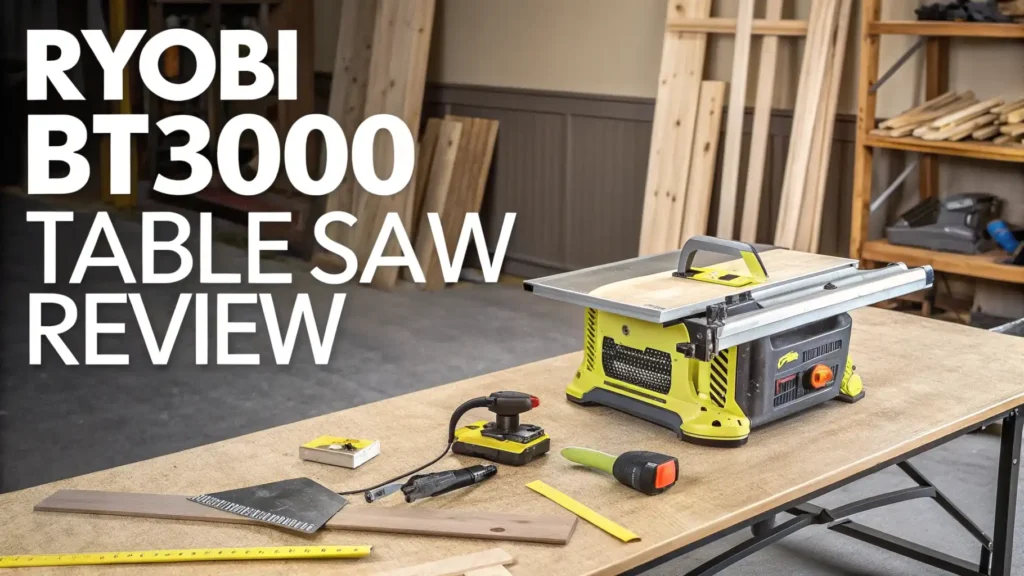
- Performance Overview: The BT3000 features a 13 amp universal motor that runs at 4,700 RPM, providing adequate power for most home woodworking tasks. The cast aluminum table measures 16 inches by 25.75 inches, making it compact yet functional.
- Best Use Cases: This saw excels at cutting sheet goods and dimensional lumber for rough carpentry work. It handles plywood cutting exceptionally well thanks to its sliding miter table feature.
- Notable Limitations: The working surface is smaller than professional grade saws, particularly in front of the blade. It’s not ideal for fine cabinet making but works great for DIY projects and general construction.
- Unique Features: The adjustable rail system and sliding miter table set it apart from conventional table saws. These features allow for versatile positioning of the fence and crosscut capabilities.
- Current Market Value: Used models typically sell for $100 to $250 depending on condition and included accessories. Finding replacement parts can be challenging since the model was discontinued.
- Modern Alternatives: If you’re considering purchasing woodworking equipment today, current portable table saws from DEWALT, SKIL, and modern Ryobi models offer better precision and safety features at competitive prices.

Understanding the Ryobi BT3000 Design Philosophy
The Ryobi BT3000 represents a unique approach to table saw design. When Ryobi introduced this model in the early 1990s, they wanted to create something different from traditional cast iron saws.
The result was a lightweight, portable saw built around a cast aluminum table mounted on a stamped steel base.
The design focused on versatility and portability. At roughly 75 pounds, it was significantly lighter than comparable cast iron saws of its era.
This made it appealing to contractors who needed to move their equipment between job sites. The aluminum construction reduced weight without completely sacrificing stability.
The bolt together base was both a strength and weakness. It allowed for easy assembly and disassembly, but also meant the saw required regular maintenance to keep all connections tight. Over time, some users found themselves constantly adjusting and tightening bolts to maintain accuracy.
Motor Power and Cutting Performance
The heart of the BT3000 is its 13 amp, 115 volt universal motor. This direct drive motor runs at 4,700 RPM, which provides sufficient power for most woodworking tasks. The universal motor design means it’s louder than induction motors found in cabinet saws, but it delivers good performance for its size and price point.
For ripping dimensional lumber, the BT3000 handles two by fours and even two by sixes without significant bogging down.
When cutting sheet goods like plywood or MDF, the motor maintains consistent speed through the cut. However, pushing extremely hard or trying to cut very thick hardwoods can slow the blade.
The 10 inch blade capacity is standard for saws in this class. At 90 degrees, the cutting depth reaches 3.56 inches, which handles most common lumber sizes. At 45 degrees, the cutting depth reduces to 2.5 inches. These specifications match what you’d expect from a contractor style table saw.
Table Size and Working Surface
The cast aluminum table surface measures 16 inches by 25.75 inches. This provides a decent working area for a portable saw, though it’s noticeably smaller than stationary cabinet saws. The table surface is smooth and flat when properly maintained, allowing workpieces to slide easily.
One common complaint about the BT3000 is the limited table area in front of the blade. This smaller front section makes it more challenging to control larger sheet goods during cuts. You’ll often need additional support like roller stands when working with full size plywood sheets.
The table extensions on either side help increase the overall working surface. However, the sliding rail system means these extensions aren’t fixed in place like traditional wings. You need to ensure the rails are properly locked down before making cuts.
Top 3 Alternatives for Ryobi BT3000


The Sliding Miter Table Feature
Perhaps the most distinctive feature of the BT3000 is its sliding miter table. This crosscut table rides on the same rail system as the fence, allowing you to make accurate crosscuts without a separate miter saw. When properly tuned, this system can deliver very precise cuts.
The sliding miter table eliminates the need for traditional miter slots in the table surface. Instead, it uses the rail system to guide the workpiece past the blade. This approach saves table space and offers more flexibility in positioning.
Setting up the sliding miter table requires patience and attention to detail. You need to ensure the rails are parallel to the blade and that the miter table locks securely in position. Once dialed in, the system works well for crosscutting boards up to about 12 inches wide.
Fence System and Rail Design
The fence system on the BT3000 is both innovative and sometimes frustrating. The fence rides on front and rear rails that can be positioned at various distances from the blade. This adjustability is unique but requires careful setup to maintain accuracy.
The fence locks on both the front and rear rails, which theoretically provides excellent stability. In practice, you need to ensure both locks engage properly and that the fence remains perfectly parallel to the blade. Some users add aftermarket modifications to improve fence rigidity.
The rail positioning system allows the fence to be moved quite far from the blade, accommodating wide rip cuts. The rails can also be positioned close to the blade when needed. This flexibility is useful, but it also means more opportunities for the setup to drift out of alignment.
Accuracy and Precision Capabilities
When properly set up and maintained, the BT3000 can produce reasonably accurate cuts. However, it requires more frequent checking and adjustment than higher end saws. The adjustable nature of the rail system means settings can drift over time.
For rough carpentry and construction work, the BT3000 provides adequate precision. Cutting framing lumber, building decks, or making shop furniture are all within its capabilities. The saw can produce cuts that are square and straight when everything is properly aligned.
Fine woodworking and cabinet making push the BT3000’s limits. The lighter weight construction and adjustable rails make it challenging to maintain the tight tolerances required for premium furniture work. Dedicated woodworkers often upgrade to heavier, more stable saws for detailed projects.
Repeatability can be an issue with the BT3000. Making multiple identical cuts requires careful attention to fence positioning and locking. Some users create custom jigs and stops to improve repeatability for production work.
Safety Features and Considerations
The BT3000 includes basic safety features typical of saws from its era. It has a blade guard assembly, though many users remove it for certain operations. Modern safety standards have advanced significantly since this saw was manufactured, and it lacks features like riving knives and flesh detecting technology.
The on off switch is conveniently located and easy to reach in an emergency. The power cord is adequate length for workshop use. However, the saw doesn’t include a magnetic switch or similar protection against accidental startup after power loss.
The lighter weight of the BT3000 can actually present a safety concern. The saw can move or shift during heavy cuts if not properly secured. Always ensure the saw is on a stable surface or mounted to a secure stand before operation.
Using appropriate personal protective equipment is essential with any table saw. Safety glasses protect your eyes from flying debris. Hearing protection is particularly important with the BT3000’s loud universal motor. Avoid loose clothing that could catch on the spinning blade.
Parts Availability and Maintenance
One significant challenge with the BT3000 is parts availability. Since Ryobi discontinued this model years ago, finding original replacement parts can be difficult. Common wear items like drive belts are available through third party suppliers, but specialized parts may require creativity.
The motor, while durable, will eventually wear out with heavy use. Replacement motors are hard to find specifically for the BT3000. Some users have successfully adapted motors from other tools, but this requires mechanical skill and modification.
The blade tilting gears are another wear item that’s challenging to replace. These gears develop play over time, affecting the accuracy of angle cuts. Finding replacement gears often means purchasing parts saws or fabricating custom solutions.
Routine maintenance includes keeping the table surface clean and waxed, lubricating moving parts, and checking all bolts and connections for tightness. The sliding rails need regular cleaning and light lubrication to operate smoothly.
Comparing the BT3000 to Modern Table Saws
Modern portable table saws have advanced considerably since the BT3000’s introduction. Current models typically offer better precision, improved safety features, and more robust construction. However, they also cost more than what you’d typically pay for a used BT3000.
Contemporary portable saws from DEWALT, SKIL, and modern Ryobi models include features like rack and pinion fence systems, tool free blade guards, and improved dust collection. These features make the saws easier to use and more accurate out of the box.
The direct drive motors in modern saws are often more powerful and efficient than the BT3000’s motor. Current models may offer 15 amps of power with better torque characteristics. This translates to smoother cutting through difficult materials.
Best Use Cases for the Ryobi BT3000
The BT3000 shines when cutting sheet goods and dimensional lumber for construction projects. Building a deck, framing a shed, or creating shop storage are all excellent applications. The sliding miter table makes crosscutting framing lumber quick and relatively accurate.
DIY homeowners find the BT3000 adequate for most home improvement projects. Cutting trim, building simple furniture, or making repairs around the house fall within its capabilities. The portability allows you to set it up where needed and store it away when finished.
The saw works well for rough carpentry where precision to 1/32 inch isn’t critical. If your projects can tolerate 1/16 inch of variance, the BT3000 will serve you fine. For projects requiring tighter tolerances, you’ll need more precise equipment.
Common Problems and Solutions
One frequent issue BT3000 owners face is the fence going out of parallel with the blade. This happens because the adjustable rail system can shift. The solution involves checking and adjusting the rails regularly, ensuring they remain perfectly parallel to the miter slots.
The motor brushes wear out over time in universal motors. When the saw starts losing power or acting erratically, worn brushes are often the culprit. Replacing brushes requires disassembly but restores performance. Finding the correct brushes may require contacting motor repair specialists.
Blade tilting can become difficult or imprecise as the gears wear. Regular lubrication helps extend gear life, but eventually replacement becomes necessary. Some users have successfully sourced similar gears from other equipment or had custom gears machined.
The table extensions and rails can develop play in their mounting points. This occurs from repeated adjustment and the forces of cutting. Tightening all mounting bolts and occasionally adding shims helps maintain stability.
Upgrades and Modifications
The BT3000 community has developed numerous aftermarket modifications to address the saw’s limitations. Custom fence systems improve accuracy and ease of use. Some woodworkers design and build completely new fence assemblies that mount to the existing rails.
Adding miter slots to the table surface is a popular modification. This allows use of standard miter gauges, sleds, and jigs designed for conventional table saws. Machining these slots requires care to avoid weakening the aluminum table.
Router table wings expand the saw’s capabilities significantly. Several manufacturers produced router table attachments specifically for the BT3000. These attach to the rail system and create a versatile combination machine.
Mobile bases improve the saw’s portability within the workshop. While the BT3000 is relatively light, a well designed mobile base makes it easy to move and position exactly where needed.
Should You Buy a Used Ryobi BT3000?
If you find a BT3000 in good working condition for $100 to $150, it can be a reasonable first table saw for a beginning woodworker. At this price point, you get a functional saw that can teach you table saw basics without major investment.
However, carefully inspect any used BT3000 before purchasing. Check that the motor runs smoothly without excessive noise or vibration. Verify that the fence locks securely and the blade tilts properly. Missing parts can be difficult or impossible to replace.
Consider your intended projects before buying. If you plan to pursue fine woodworking or need consistent precision, investing in a modern saw makes more sense. The BT3000 works for specific applications but has definite limitations.
Factor in potential repair costs when evaluating a used BT3000. If the saw needs a new motor or has significant wear, the total cost may approach that of a decent modern portable saw. Compare the total investment to current market options.
Maintenance Tips for Long Term Performance
Keep the aluminum table surface clean and protected. After each use, brush away sawdust and apply paste wax periodically. The wax reduces friction and protects the surface from corrosion and wear.
Lubricate all moving parts regularly but sparingly. The rails, fence locking mechanisms, and blade tilting gears all benefit from appropriate lubrication. Use lightweight machine oil rather than heavy greases that attract sawdust.
Check and tighten all bolts monthly if you use the saw regularly. The stamped steel base connections can loosen from vibration during operation. A socket set and a few minutes of attention prevents bigger problems.
Inspect the drive belt for wear and proper tension. A loose or worn belt reduces power transfer from the motor to the blade. Replace belts at the first sign of cracking or fraying.
Frequently Asked Questions
Is the Ryobi BT3000 good for beginners?
The BT3000 can work for beginners if purchased at a low price, but its quirky design requires patience to learn. Modern entry level saws are generally easier for new woodworkers to set up and use accurately. If you already have access to a BT3000, it can teach you table saw fundamentals. However, starting with a current model portable saw from DEWALT or SKIL might provide a better learning experience with less frustration.
Can the Ryobi BT3000 cut hardwood?
Yes, the BT3000 can cut hardwood, though it performs better with softer woods and sheet goods. The 13 amp motor has enough power for most hardwood cutting tasks if you use sharp blades and feed the material at an appropriate rate. Very dense hardwoods or thick stock may challenge the saw, requiring slower feed rates. For occasional hardwood projects, it works adequately. Professional hardwood work would benefit from a more powerful saw.
Where can I find replacement parts for the BT3000?
Finding BT3000 parts is challenging since Ryobi discontinued the model years ago. eBay and other auction sites sometimes have parts from saws being parted out. Generic parts like drive belts, power cords, and saw blades are readily available. Specialized parts like the fence assembly, sliding miter table, or gears may require purchasing a parts saw or fabricating custom solutions. Online woodworking forums dedicated to the BT3000 can help source hard to find components.
What is the Ryobi BT3000 worth today?
Used BT3000 saws typically sell for $100 to $250 depending on condition and included accessories. A saw in excellent condition with all original accessories might command $200 to $250. A saw showing wear or missing parts should sell in the $100 to $150 range. Prices vary by location and local market conditions. The saw’s value is limited by parts availability and its limitations compared to modern saws. Don’t overpay based on its cult following status.
How does the BT3000 compare to the BT3100?
The BT3100 is the successor to the BT3000 and addresses some of its predecessor’s shortcomings. The BT3100 has a more powerful 15 amp motor and slightly improved table design. However, both saws share the same basic rail and sliding miter table concept. The BT3100 is generally considered a more refined version of the BT3000’s design philosophy. Parts availability is slightly better for the BT3100, though still challenging. Both saws have passionate fans and similar limitations.
Can you do dado cuts with the Ryobi BT3000?
The BT3000 can accommodate dado blade sets, though you need to check the arbor length and ensure adequate clearance. The 5/8 inch arbor is standard for dado sets. However, the lack of traditional miter slots limits some dado cutting techniques that rely on sliding jigs. The throat plate requires modification or replacement to accommodate wider dado cuts. Some users successfully make dado cuts with appropriate setup, while others find it awkward compared to conventional table saws.