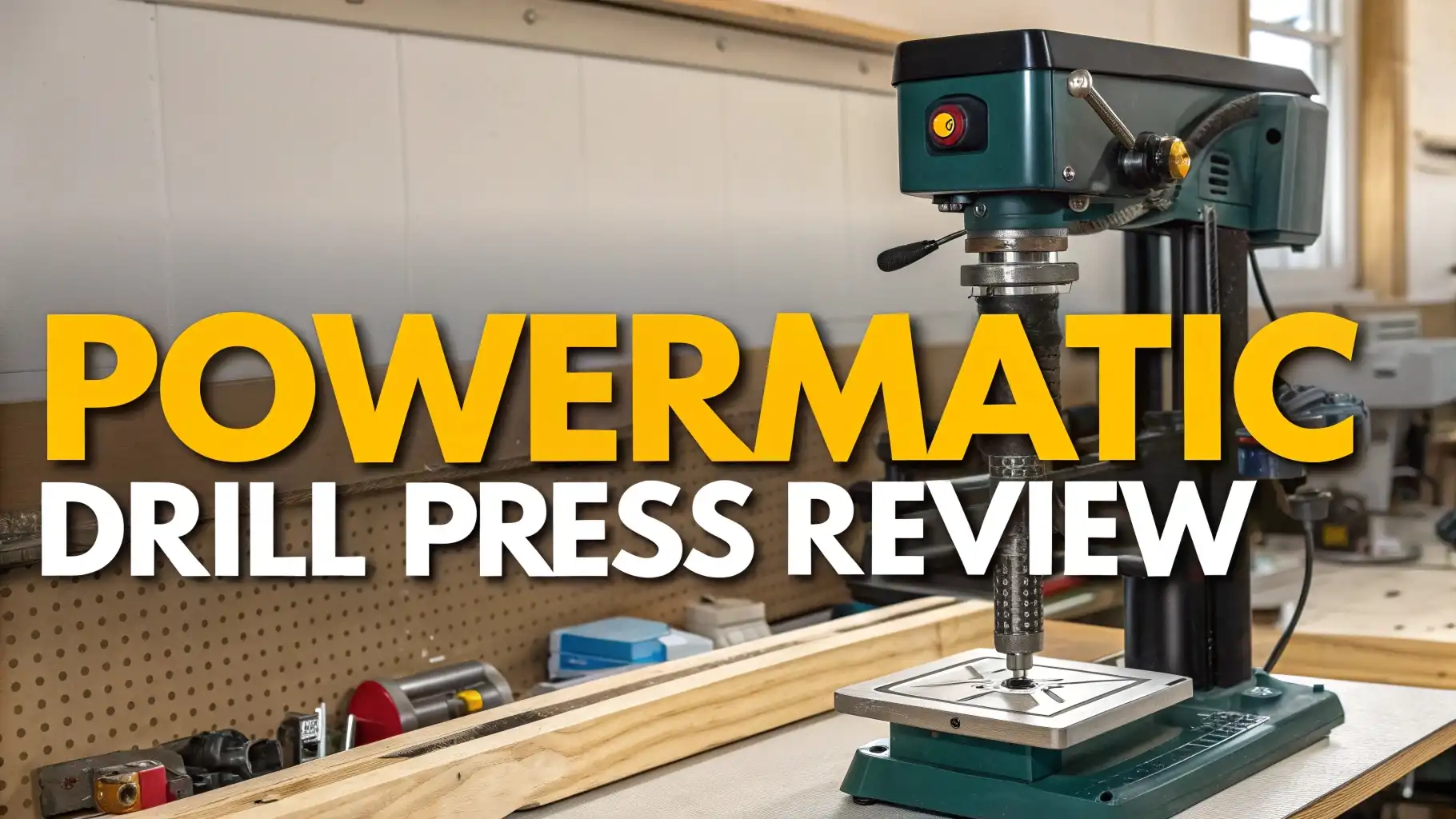
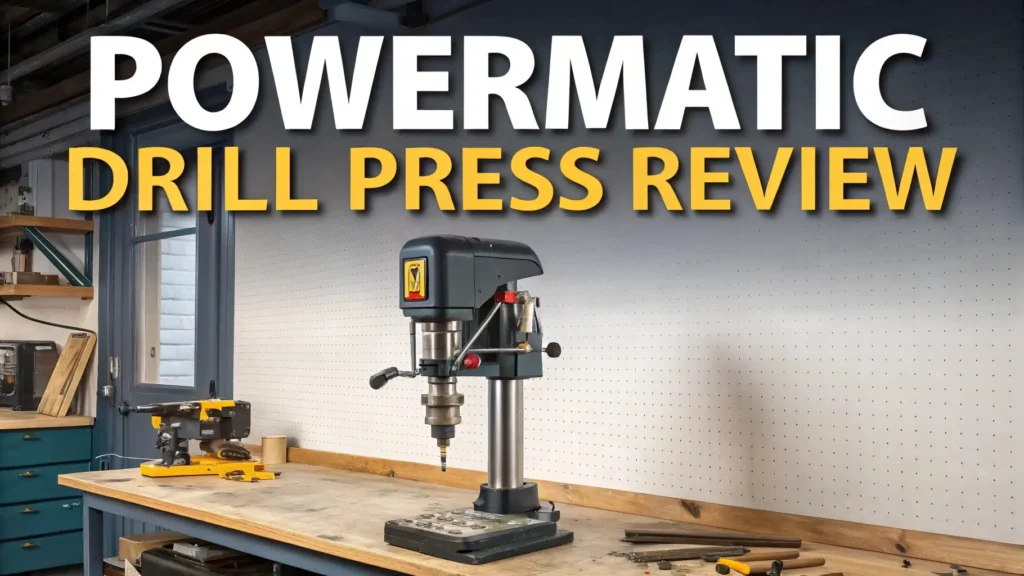
Powermatic Drill Press Review 2026: The Ultimate Guide
You walk into your workshop. You see that pile of unfinished projects staring back at you. You grab your handheld drill and think about drilling those perfectly straight holes. But wait. Your hands shake a little. The hole comes out crooked. Again. Sound familiar?
That’s exactly why you need a drill press. And not just any drill press. We’re talking about Powermatic drill presses.
These machines make drilling feel like magic. They turn messy drilling jobs into precise works of art. You get consistent results every single time.
Key Takeaways
- Power and Performance: Powermatic drill presses come with 1 HP motors that deliver exceptional torque and reliability. These motors handle both light craft work and heavy industrial drilling without breaking a sweat.
- Variable Speed Control: The mechanical variable speed system ranges from 250 to 3000 RPM. You can adjust speeds on the fly without changing belts. This saves you time and makes your workflow smoother.
- Precision Features: Built-in laser guides and LED work lights ensure pinpoint accuracy. The digital readout displays exact RPM settings. You always know what speed you’re working at.
- Build Quality: These machines feature cast iron construction that minimizes vibration. The dovetail column provides rock-solid stability. You get professional-grade durability that lasts decades.
- Investment Value: Powermatic drill presses typically cost between $2,000 and $3,000 on Amazon. Yes, that’s a premium price point. But you’re paying for American craftsmanship and lifetime reliability.

Powermatic PM2800B 18-Inch Variable Speed Drill Press
The PM2800B represents the gold standard in floor-standing drill presses. This machine combines traditional reliability with modern features. You get an 18-inch swing capacity that handles most woodworking and metalworking projects with ease.
The heart of this drill press is its 1 HP TEFC motor. This motor runs on either 115V or 230V power. You can wire it for whichever voltage works best in your shop. The motor delivers smooth, consistent power across the entire speed range.
What sets the PM2800B apart is its mechanical variable speed system. You simply turn a dial to adjust speeds from 250 to 3000 RPM. No belt changes required. No stopping your work to fiddle with pulleys. Just instant speed adjustment that keeps your workflow moving.
The machine features 5 inches of total quill travel. This gives you plenty of depth for most drilling operations. The quill itself operates on precision bearings that eliminate side play. Your holes come out perfectly perpendicular to your workpiece every single time.
Users love the integrated laser guide system. Two intersecting laser beams pinpoint exactly where your drill bit will enter the material. You never have to guess. You never waste material on practice holes. You just line up your workpiece with the lasers and drill.
Powermatic PM2820EVS 20-Inch Electronic Variable Speed Drill Press
No products found.
The PM2820EVS takes everything great about the PM2800B and kicks it up several notches. This is Powermatic’s flagship model for 2026. It features a 20-inch swing capacity. That extra two inches makes a bigger difference than you might think.
The electronic variable speed system on this model is simply outstanding. You get dual speed ranges: low range runs from 150 to 870 RPM, while high range spans 600 to 3600 RPM. This flexibility means you can drill everything from soft plastics to hardened steel.
The digital RPM readout eliminates guesswork. You see the exact spindle speed displayed on an easy-to-read screen. This feature proves invaluable when you need precise speeds for tapping operations or when working with specific materials that require exact RPMs.
Powermatic equipped this model with an R-8 spindle taper. This is a big deal. R-8 tapers give you more flexibility for tooling options. You can use standard drill chucks. You can mount end mills. You can even add specialized tooling for mortising or other operations.
The 7.5-inch cast iron base provides exceptional stability. The dovetail column uses tapered gibs with double locks. These features eliminate any possibility of column twist or play. Your drilling remains accurate even after years of heavy use.
Powermatic PM2815FS 15-Inch Floor Standing Drill Press

Looking for Powermatic quality in a more compact package? The PM2815FS delivers exactly that. This 15-inch floor model works perfectly for smaller shops with space constraints. But don’t let the compact size fool you.
This drill press packs a 3/4 HP motor that runs on 115V power. You don’t need special wiring. Just plug it into a standard outlet and start working. The motor provides plenty of power for woodworking, plastic fabrication, and light metalworking tasks.
The variable speed range of 250 to 3000 RPM covers all your common drilling needs. The mechanical speed adjustment works smoothly and holds settings reliably. You set your speed once and it stays there throughout your entire drilling session.
The machine’s smaller footprint means you can position it closer to your workbench. You save steps. You work more efficiently. And you still get all the precision and quality that Powermatic is famous for.
Top 3 Alternatives for Powermatic Drill Press


Understanding Variable Speed Technology
Variable speed control changed the drill press game forever. Old-style drill presses required you to manually change belt positions to adjust speeds. This process ate up time. It interrupted your workflow. And it limited your speed options to preset increments.
Powermatic’s variable speed systems eliminate these headaches. The mechanical system uses expanding and contracting pulleys that adjust automatically. You turn a control dial and the pulleys shift to change the speed ratio. It happens instantly while the machine runs.
The electronic variable speed (EVS) system takes things even further. It uses motor speed control to adjust RPMs electronically. This provides infinitely variable speed adjustment throughout the entire range. You can fine-tune your speed to the exact RPM you need.
Why does this matter? Different materials and drill bit sizes require specific speeds. Large diameter bits need slower speeds to prevent burning and bit damage. Small bits work best at high speeds for clean, efficient cutting. Variable speed lets you optimize for every situation.
Laser Guide Systems and Precision Drilling
The laser guide systems on Powermatic drill presses represent a game-changing innovation. These systems project two intersecting laser beams onto your workpiece. The beams cross exactly where the drill bit centerline meets the material.
This eliminates the traditional guesswork of drill press work. You don’t need to lower the spinning bit close to your workpiece to see where it will hit. You don’t need to make test marks. You simply align your drilling point with the laser crosshairs and pull the lever.
The LED work light adds another layer of practicality. Good lighting makes a huge difference in precision work. The integrated LED lamp illuminates your work area without creating harsh shadows. You see every detail clearly. You catch potential problems before they happen.
Together, these features cut setup time dramatically. They reduce material waste. And they improve your overall accuracy. Professional users report up to 90% reduction in drilling errors after adding laser-guided drill presses to their shops.
Motor Power and Performance Characteristics
The 1 HP motor specification deserves a closer look. Powermatic uses TEFC motors (Totally Enclosed Fan Cooled) in their drill presses. These motors keep dust and debris out of the electrical components. They run cooler. They last longer. They require almost no maintenance.
Motor power directly affects what materials you can drill and what size holes you can make. A 1 HP motor generates substantial torque at the spindle. You can drill large diameter holes through hardwood. You can work with metals. You can handle production runs without the motor overheating.
The dual-voltage capability on many models adds flexibility. You can run the drill press on 115V household power when needed. Or you can wire it for 230V to gain better starting torque and more efficient operation under load. This adaptability makes these machines work in almost any shop environment.
Cast Iron Construction and Vibration Control
Build quality separates premium drill presses from budget models. Powermatic builds their machines with heavy cast iron components. Cast iron provides several critical advantages for precision drilling equipment.
First, cast iron naturally dampens vibration. When a drill bit cuts into material, it creates vibration forces. Lightweight machines transmit these vibrations throughout the structure. This causes chatter. It reduces accuracy. It creates noise. Heavy cast iron absorbs these vibrations before they become problems.
Second, cast iron maintains dimensional stability over time. Metal expands and contracts with temperature changes. Cast iron does this minimally compared to other materials. Your drill press stays accurate season after season, year after year.
The dovetail column design adds to the stability equation. Dovetails provide superior resistance to twisting forces. The tapered gibs allow for adjustment to compensate for any wear over decades of use. This engineering ensures your drill press remains precise long after purchase.
Swing Capacity and Workpiece Sizing
Understanding swing capacity helps you choose the right size drill press. The swing measurement tells you how far from the column you can drill. An 18-inch swing means you can drill 9 inches from the column centerline.
Why does this matter? Imagine you’re building a table. You need to drill holes in the middle of a 16-inch wide board. An 18-inch drill press puts the column 9 inches from the bit. You can just barely reach the center of that board. A 20-inch drill press gives you that extra inch of reach in each direction.
Larger swing capacity also means a bigger work table. The PM2820EVS features a generous table that tilts 45 degrees for angle drilling. The table includes built-in slots for clamping. You can secure workpieces safely without wrestling with clamps and blocks.
Depth Stop Systems and Repeatable Drilling
The depth stop mechanism controls how deep your drill bit penetrates. Powermatic drill presses feature adjustable depth stops that let you set exact drilling depths. This feature proves essential for production work and joinery operations.
Say you’re drilling holes for shelf pins in a cabinet. All those holes need to be exactly the same depth. You set the depth stop once. Then you drill hole after hole, each one perfectly matching the others. No measuring. No marking. Just consistent results.
The PM2820EVS includes Powermatic’s patented depth stop system that makes countersinking operations incredibly easy. You set the stop for your pilot hole depth. Drill all your pilot holes. Adjust the stop for the countersink depth. Finish all your countersinks. The system holds settings perfectly between adjustments.
Spindle Taper Options and Tooling Flexibility
The spindle taper determines what tools you can mount in your drill press. Most entry-level machines use Morse tapers (typically MT2 or MT3). Powermatic uses these on some models. But their premium machines feature R-8 tapers.
R-8 tapers come from the milling machine world. They offer superior tool holding power and easier tool changes compared to Morse tapers. You get better rigidity. You get more tooling options. You get the ability to use your drill press for operations beyond simple drilling.
With an R-8 spindle, you can mount mortising attachments, rotary tables, or specialty tooling that opens up new capabilities. Your drill press becomes more versatile. You get more value from your investment.
Maintenance Requirements and Longevity
Powermatic drill presses require minimal maintenance. The TEFC motors need no regular maintenance beyond keeping the exterior clean. The belt-driven systems benefit from occasional belt checks and replacements every few years.
The variable speed mechanisms need periodic lubrication according to the maintenance schedule in your manual. This typically means adding grease to the variable speed assembly once or twice per year. The process takes just minutes.
The precision ground components and quality bearings mean these machines maintain accuracy for decades. Many woodworkers and metalworkers run Powermatic drill presses for 30 to 40 years without major repairs. That kind of longevity justifies the initial investment many times over.
Price Comparison and Value Analysis
Powermatic drill presses cost more than budget brands. The PM2800B typically sells for around $2,449 on Amazon. The flagship PM2820EVS runs approximately $2,974. These prices place Powermatic firmly in the premium category.
But consider what you’re buying. You get American manufacturing standards. You get precision components. You get a machine that maintains accuracy after thousands of drilling operations. You get support from a company that’s been building quality machinery since 1921.
Compare that to replacing a budget drill press every five years. Factor in the frustration of poor accuracy and constant adjustments. Consider the value of your time. The Powermatic investment pays for itself through improved productivity and eliminated downtime.
What Makes Powermatic Stand Out in 2026?
Several factors distinguish Powermatic from competitors in 2026. First, their unwavering commitment to quality control. Every machine undergoes rigorous testing before leaving the factory. This ensures you receive a properly functioning drill press right out of the crate.
Second, their engineering innovations continue to advance the state of the art. The electronic variable speed systems. The integrated laser guides. The patented depth stops. These aren’t just marketing features. They’re practical improvements that make your work easier and more accurate.
Third, the warranty and support structure gives you peace of mind. Powermatic stands behind their products with comprehensive warranties. Their customer service team knows the machines inside and out. When you have questions or need parts, you get knowledgeable assistance.
Frequently Asked Questions
What is the main difference between the PM2800B and PM2820EVS?
The PM2820EVS features a larger 20-inch swing versus 18 inches on the PM2800B. It also includes electronic variable speed control with a digital readout instead of mechanical variable speed. The PM2820EVS uses an R-8 spindle taper for greater tooling flexibility. Both models deliver excellent performance, but the PM2820EVS offers more advanced features and capabilities.
Can I use a Powermatic drill press for metalworking?
Absolutely. Powermatic drill presses excel at metalworking applications. The 1 HP motor provides plenty of power for drilling steel, aluminum, and other metals. The variable speed control lets you select the proper RPM for different materials and drill bit sizes. The cast iron construction minimizes vibration for clean cuts. Just use appropriate cutting fluids and proper speeds for best results.
How much floor space do I need for a Powermatic floor drill press?
Plan for approximately 3 feet by 3 feet of floor space for most Powermatic floor models. The machines themselves have smaller footprints, but you need clearance around them for comfortable operation. You also need space to swing the table when adjusting angles. Consider ceiling height too. Most models stand between 5 and 6 feet tall with the head at maximum height.
Do Powermatic drill presses require special electrical hookups?
Most Powermatic models run on standard 115V power that you find in residential and commercial buildings. Some models offer dual-voltage capability for 115V or 230V operation. You can run them on household current, but 230V operation provides better performance under heavy loads. Check the specific model specifications to confirm electrical requirements before purchasing.
What size drill chuck comes with Powermatic drill presses?
Most Powermatic drill presses include 5/8-inch keyed chucks as standard equipment. This chuck size handles most common drilling tasks from tiny pilot holes to larger diameter drilling operations. The keyed design provides superior bit holding power compared to keyless chucks. You can upgrade to larger chucks or different spindle tooling if your work demands it.