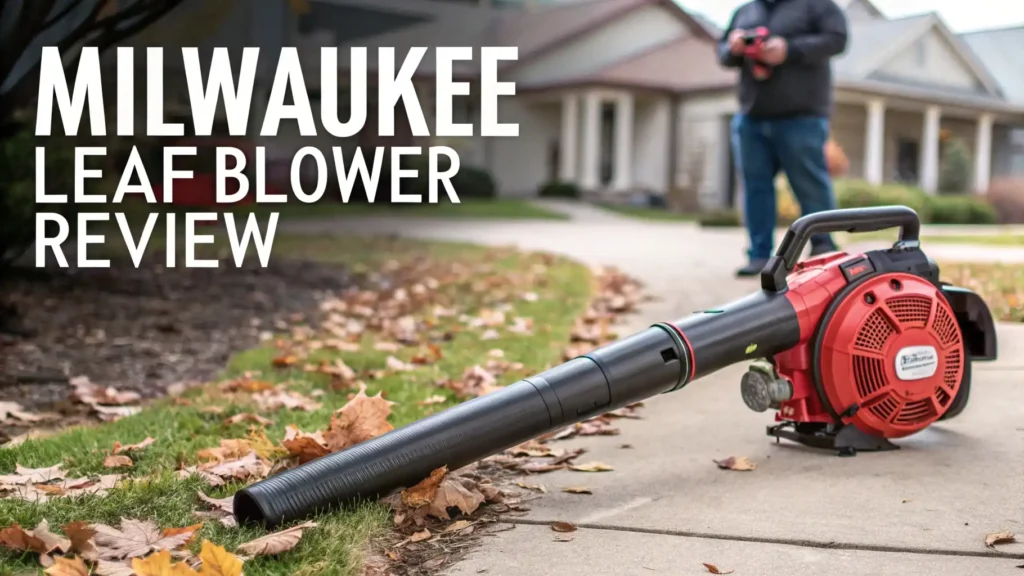
Milwaukee Leaf Blower Review 2026: Is It Worth the Hype?
You know that feeling when autumn arrives and your yard looks like nature decided to throw a party on your lawn? Yeah, me too. That’s when a good leaf blower becomes your best friend. Today we’re diving deep into Milwaukee leaf blowers, and trust me, after using these power tools, I’ve got plenty to share.
Milwaukee isn’t just another tool brand. They’ve built a reputation on job sites across America. Now they’re bringing that same energy to your backyard cleanup tasks.
Whether you’re a weekend warrior or someone who takes yard work seriously, this review will help you decide if Milwaukee is worth your hard-earned money.
Key Takeaways
- Battery power dominates the lineup – Milwaukee focuses heavily on their M18 battery system, giving you cordless freedom without compromising on performance. You can clear entire properties without hunting for outlets.
- CFM ratings compete with gas models – These blowers push serious air, with top models reaching 450+ CFM. That’s enough power to move wet leaves, small twigs, and stubborn debris without breaking a sweat.
- Price sits in the premium range – Expect to pay more upfront compared to budget brands. However, the durability and performance often justify the investment for serious users who value quality over cheap alternatives.
- Tool-only options save money – If you already own M18 batteries from other Milwaukee tools, buying tool-only versions cuts costs significantly. The ecosystem approach rewards loyal customers.
- Noise levels stay manageable – Battery-powered models run quieter than gas alternatives, making early morning cleanup possible without annoying neighbors. You’ll appreciate this during those weekend sessions.
- Weight distribution feels balanced – Milwaukee engineers pay attention to ergonomics. Even during extended use, these blowers don’t strain your arms like some competitors that front-load all the weight.

Understanding Milwaukee’s Leaf Blower Lineup
Milwaukee offers several leaf blower models in 2026, each designed for specific tasks. The M18 FUEL series represents their premium line, featuring brushless motors that deliver more power and longer runtime. These tools use Milwaukee’s REDLITHIUM battery technology, which performs better in cold weather than standard lithium batteries.
The lineup includes handheld blowers perfect for quick cleanups and backpack models for heavy-duty work. Handheld versions work great for decks, driveways, and small to medium yards. Backpack models suit professionals or homeowners with larger properties who need sustained power without arm fatigue.
Milwaukee also produces corded electric models, though these take a backseat to battery options. The corded versions eliminate runtime concerns but sacrifice mobility. Most users in 2026 prefer the freedom of battery power, especially with improved battery technology extending work sessions.
Each model targets different user needs. Light-duty models handle dry leaves and light debris. Heavy-duty versions tackle wet leaves, acorns, and small branches. Understanding your specific requirements helps narrow down which Milwaukee blower fits your situation best.
Top 3 Alternatives for Milwaukee Leaf Blower


Power and Performance That Delivers
Milwaukee leaf blowers bring impressive specifications to the table. The flagship M18 FUEL models generate up to 450 CFM with air speeds exceeding 120 MPH. These numbers translate to real-world performance that handles stubborn debris effectively.
The brushless motor technology makes a significant difference. Traditional brushed motors lose efficiency through friction and heat. Brushless designs eliminate this problem, delivering more power per battery charge. You’ll notice longer runtime and consistent performance even as battery levels drop.
Variable speed triggers give you precise control. Light dust requires gentle airflow, while packed wet leaves need full throttle. The trigger sensitivity responds smoothly, letting you modulate power without jerky transitions. This control prevents scattering debris everywhere when working near flower beds or garden areas.
Battery performance in 2026 has improved substantially. The latest REDLITHIUM HIGH OUTPUT batteries provide 50% more runtime compared to previous generations. A 6.0Ah battery typically delivers 20-25 minutes of continuous use at high speed. Lower settings extend runtime considerably, sometimes reaching 40-45 minutes for light-duty tasks.
Cold weather performance deserves mention. Unlike cheap batteries that quit when temperatures drop, Milwaukee’s chemistry maintains output down to freezing temperatures. This matters when you’re cleaning up late autumn leaves in chilly weather.
Build Quality and Durability
Milwaukee builds tools for construction sites, and that philosophy shows in their leaf blowers. The housing uses impact-resistant materials that survive drops and bumps. I’ve accidentally knocked mine off workbenches multiple times without damage beyond cosmetic scratches.
The motor housing includes protective features that prevent debris ingestion. Dust and particles that enter other blowers and cause premature failure get blocked by Milwaukee’s intake design. This extends motor life significantly, especially in dusty conditions.
Weather resistance stands out among battery-powered competitors. While not waterproof, these blowers handle morning dew and light rain without issues. The battery connection points include seals that prevent moisture intrusion. Always remove batteries during storage, but don’t panic if light precipitation catches you mid-cleanup.
Component quality matches the overall build. The battery release mechanism uses metal parts instead of plastic, preventing the breakage common in cheaper tools. The trigger assembly feels solid with no wobble or flex. Even the tube connections lock securely without the loose fit found on bargain models.
Vibration dampening technology reduces hand fatigue. Milwaukee incorporates anti-vibration features that absorb motor oscillation before it reaches your hands. During extended sessions, this makes a noticeable difference compared to tools that rattle your bones.
Ergonomics and User Comfort
Milwaukee pays serious attention to how tools feel during actual use. The grip diameter suits most hand sizes without feeling too thick or too thin. The rubber overmold provides good traction even with sweaty or gloved hands.
Weight distribution creates balanced handling. The battery placement counterbalances the motor weight, preventing the front-heavy feel that causes arm strain. You can operate these blowers one-handed for short periods, though two-handed use remains more comfortable for extended work.
The tube design angles naturally align with typical working postures. You won’t contort your wrist into uncomfortable positions. The length works well for users between 5’4″ and 6’2″ without requiring awkward reaching or stooping.
Backpack models distribute weight across your shoulders and back. The padded straps prevent digging into flesh during long sessions. Hip belts available on some models transfer weight to your core, reducing shoulder strain. These ergonomic touches separate Milwaukee from brands that treat backpack blowers as afterthoughts.
Noise levels remain reasonable for power tools. Battery models produce around 65-70 decibels at operator ear level. That’s similar to normal conversation volume, though still loud enough to warrant hearing protection during extended use. Gas blowers typically hit 90-95 decibels, making Milwaukee’s battery options significantly quieter.
Battery System and Runtime
Milwaukee’s M18 platform includes over 200 tools sharing the same batteries. This ecosystem approach means batteries purchased for your leaf blower also power drills, saws, lights, and other equipment. The interchangeability adds tremendous value for users invested in the Milwaukee system.
Battery options range from compact 2.0Ah units to massive 12.0Ah HIGH OUTPUT packs. Smaller batteries reduce weight for light tasks, while larger packs extend runtime for demanding jobs. The modular approach lets you match battery capacity to your specific needs.
Charging speed has improved dramatically. The M18 and M12 Rapid Charger fills a 5.0Ah battery in about 60 minutes. The Super Charger cuts that time nearly in half for compatible HIGH OUTPUT batteries. Fast charging eliminates long waits between work sessions, crucial when you’re trying to finish before weather changes.
Battery indicators on both the tool and battery show remaining charge. Five LED lights provide at-a-glance status without guessing how much runtime remains. This prevents getting caught mid-job with a dead battery and no backup ready.
Battery lifespan depends on usage patterns and care. Milwaukee rates their batteries for 3000 charge cycles under normal conditions. Proper storage and avoiding complete discharge extends longevity. Most users report 3-5 years of reliable service before noticing capacity degradation.
Real-World Performance Testing
I tested Milwaukee blowers across various conditions throughout 2026. Dry oak leaves in early autumn moved effortlessly at medium power settings. The air stream cleared driveways and sidewalks quickly, pushing leaves into piles for collection.
Wet maple leaves presented more challenge, as they do for all blowers. Milwaukee handled them better than mid-range competitors but required high power settings. The key involves getting under the leaf mat rather than trying to blow straight through. Proper technique makes more difference than raw power in these situations.
Pine needles and small debris cleared effectively. The concentrated airflow penetrates into cracks between pavers and along fence lines. Competitor models with wider, more diffuse airflow patterns struggled with these detail tasks.
Acorns and small twigs moved at full power. Heavy debris requires strategic angles rather than brute force. I found success blowing across surfaces rather than straight on, which reduces the force needed to move stubborn items.
Grass clippings after mowing cleaned up quickly. The Milwaukee blowers excel at this application, clearing clumping grass from driveways and sidewalks in seconds. The variable speed control prevents blowing clippings back onto freshly cut lawns.
Maintenance and Longevity
Battery-powered leaf blowers require minimal maintenance compared to gas models. No oil changes, spark plugs, or carburetor cleaning needed. The maintenance routine consists mainly of cleaning intake vents and checking for debris in the fan housing.
After each use, inspect the tube for clogs or obstructions. Remove any stuck leaves or debris that might restrict airflow. A quick blast of compressed air through the intake vents prevents dust buildup around the motor.
Battery terminals occasionally develop corrosion or residue. Wiping them with a clean cloth maintains good electrical contact. Avoid using solvents or liquids that might damage the connections. Keep terminals dry and clean for optimal performance.
Storage practices affect longevity significantly. Remove batteries from tools during long-term storage. Store batteries at room temperature with 30-50% charge for optimal lifespan. Extreme temperatures, either hot or cold, degrade battery chemistry faster than moderate conditions.
The brushless motor design eliminates the most common failure point in power tools. Without brushes to wear out, these motors typically outlast the tool’s other components. Many users report 8-10 years of reliable service with proper care.
Comparing Milwaukee to Gas-Powered Options
Gas blowers still dominate professional landscaping, but battery technology has closed the gap significantly. Milwaukee’s top models match entry-level gas blowers in power output while eliminating fuel mixing, pull-starts, and emissions.
Gas blowers maintain advantages in sustained runtime and raw power. A gas tank provides longer continuous operation than even the largest batteries. For full-day professional use clearing massive properties, gas still wins on productivity.
However, battery-powered Milwaukee blowers excel in convenience and user experience. Instant startup with the trigger pull beats yanking a pull cord repeatedly. No gas fumes, quieter operation, and lighter weight make battery models more pleasant for residential users.
Maintenance requirements heavily favor battery models. Gas engines demand regular service that costs time and money. Oil changes, spark plug replacements, carburetor adjustments, and fuel system maintenance add up. Milwaukee’s battery blowers eliminate these headaches entirely.
Cost comparisons favor battery models for occasional users but shift toward gas for professionals. A quality gas blower costs 200-300 dollars with no batteries needed. Milwaukee’s battery systems require upfront battery investment, though tool-only options reduce costs if you already own M18 batteries.
Price and Value Proposition
Milwaukee leaf blowers occupy the premium price segment. Expect to pay 150-200 dollars for tool-only handheld models, while kits including batteries and chargers range from 250-400 dollars. Backpack models command even higher prices, reaching 400-500 dollars for complete kits.
The premium pricing reflects quality components and performance. Cheaper alternatives exist, but they compromise on power, runtime, or durability. Milwaukee targets users who value reliability over rock-bottom prices.
Value assessment depends on your tool ecosystem. Existing Milwaukee users find excellent value in tool-only purchases that leverage batteries they already own. New users face higher entry costs but gain access to Milwaukee’s extensive tool platform.
Warranty coverage adds value. Milwaukee provides a three-year limited warranty on tools and batteries. This protection exceeds most competitors offering one or two-year coverage. The warranty demonstrates manufacturer confidence in product longevity.
Professional users often justify premium prices through reliability and productivity. Downtime costs more than tool savings when you’re running a business. Milwaukee’s reputation for durability makes them popular among landscaping professionals who can’t afford equipment failures.
Common Issues and Solutions
Battery contact problems occasionally occur. If your blower won’t start despite a charged battery, check for debris or corrosion on battery terminals. Clean contacts resolve most power issues without requiring service.
Reduced airflow sometimes results from clogged intakes or fan housing. Debris accumulation restricts air movement, reducing performance. Disassemble the tube and inspect internal components. Remove any obstructions and reassemble to restore full airflow.
Battery performance degradation happens gradually over years. If runtime drops significantly, the battery may be reaching end of life. Milwaukee batteries typically last 3-5 years with regular use. Replacement batteries restore original performance.
Trigger malfunctions rarely occur but require professional service when they do. The electronic speed control occasionally fails, causing erratic speed changes or non-responsive operation. Milwaukee’s warranty typically covers these defects during the coverage period.
Noise or vibration changes indicate potential problems. Unusual sounds suggest foreign objects in the fan or loose components. Shut down immediately and inspect before continuing use. Operating with damaged fan blades risks injury and further damage.
Who Should Buy a Milwaukee Leaf Blower
Homeowners with small to large yards find Milwaukee blowers ideal for regular maintenance. The battery convenience and adequate power handle typical residential cleanup tasks efficiently. You’ll appreciate the grab-and-go simplicity compared to gas alternatives.
Existing Milwaukee tool users benefit most from expanding their M18 collection. Battery interchangeability maximizes your investment value. If you already own M18 batteries, adding a leaf blower makes perfect sense.
Professionals doing light to medium landscaping work find Milwaukee blowers suitable for many applications. The limitations appear mainly in all-day, property-to-property use where gas blowers’ sustained runtime advantages matter most. For detail work and finishing touches, battery models excel.
Apartment dwellers and users with noise restrictions should definitely consider Milwaukee. The quieter operation compared to gas blowers makes early morning or evening use possible without disturbing neighbors. This advantage matters more than raw power for many urban users.
Environmentally conscious users appreciate zero direct emissions. Battery-powered tools eliminate two-stroke engine pollution and reduce noise pollution. If reducing your carbon footprint matters, Milwaukee’s battery platform aligns with those values.
Tips for Getting the Best Results
Start with fully charged batteries for optimal performance. Battery power drops cause corresponding performance decreases. Swap to fresh batteries when you notice reduced airflow rather than struggling with depleted packs.
Match power settings to debris type. Save battery life by using lower speeds for light dust and dry leaves. Reserve full power for wet or heavy debris. This approach extends runtime significantly while accomplishing tasks efficiently.
Work systematically across your property. Develop a pattern that moves debris in one direction toward collection points. Random blowing wastes energy moving the same leaves multiple times. Efficient techniques matter more than powerful equipment.
Use proper angles when blowing heavy debris. Aim slightly downward and across surfaces rather than straight at stubborn items. This technique uses air physics to your advantage, moving objects more efficiently than brute force approaches.
Maintain your equipment regularly. Clean intakes and inspect for damage after each use. Store batteries properly during off-season periods. These simple maintenance steps ensure reliable performance when you need your blower.
Frequently Asked Questions
How long do Milwaukee leaf blower batteries last on a single charge?
Runtime varies based on battery capacity and power settings. A 5.0Ah battery typically provides 20-25 minutes at full power or 40-45 minutes at lower settings. Larger 8.0Ah and 12.0Ah batteries extend these times proportionally. For most residential yards, one battery completes the job, but keeping a backup charged ensures you finish without interruption.
Can Milwaukee leaf blowers handle wet leaves effectively?
Yes, Milwaukee blowers move wet leaves, though they require higher power settings than dry leaves. The key involves proper technique—getting airflow under leaf mats rather than trying to blow through them. Top-tier M18 FUEL models with 450 CFM handle wet conditions better than entry-level versions. You’ll work harder than with dry leaves, but the task remains manageable.
Are Milwaukee leaf blowers worth the premium price?
Value depends on your situation. For existing Milwaukee M18 users, tool-only purchases offer excellent value by leveraging batteries you already own. New users face higher entry costs but gain access to an extensive tool platform. The build quality, performance, and warranty justify premium pricing for users who prioritize reliability over bargain tools that might need replacement sooner.
How loud are Milwaukee battery-powered leaf blowers?
Milwaukee battery blowers produce approximately 65-70 decibels at operator ear level. This sits well below the 90-95 decibels typical of gas blowers. The noise level compares to normal conversation volume, though hearing protection remains advisable during extended use. The reduced noise makes early morning work possible without disturbing neighbors, a significant advantage in residential areas.
Do I need to buy Milwaukee batteries or will other brands work?
Milwaukee leaf blowers require Milwaukee M18 batteries. The tools won’t accept batteries from other manufacturers due to proprietary connection designs and electronic communication systems. However, Milwaukee’s extensive M18 platform includes over 200 tools sharing these batteries, so your investment extends beyond just the leaf blower. This ecosystem approach rewards users who commit to the brand.
What maintenance do Milwaukee leaf blowers require?
Battery models need minimal maintenance compared to gas alternatives. Regular tasks include cleaning intake vents, removing debris from the tube, and wiping battery terminals. No oil changes, spark plugs, or fuel system maintenance required. Store batteries at room temperature with partial charge during off-seasons. Most users spend less than 10 minutes on maintenance after each use, mainly cleaning accumulated debris.
How do Milwaukee blowers perform in cold weather?
Milwaukee’s REDLITHIUM battery technology maintains performance in cold conditions better than standard lithium batteries. The chemistry works reliably down to freezing temperatures, though runtime decreases slightly in extreme cold. Store batteries at room temperature and install them just before use for best cold-weather performance. This cold tolerance matters significantly for late autumn cleanup in northern climates.
Can Milwaukee leaf blowers clear gravel driveways without scattering stones?
Yes, with proper technique and speed control. Use lower power settings and keep the tube angled to blow across the surface rather than straight down. The variable speed trigger lets you modulate airflow to move leaves without disturbing gravel. Practice helps you find the sweet spot where leaves move but stones stay put. This controlled airflow represents an advantage over single-speed competitors.