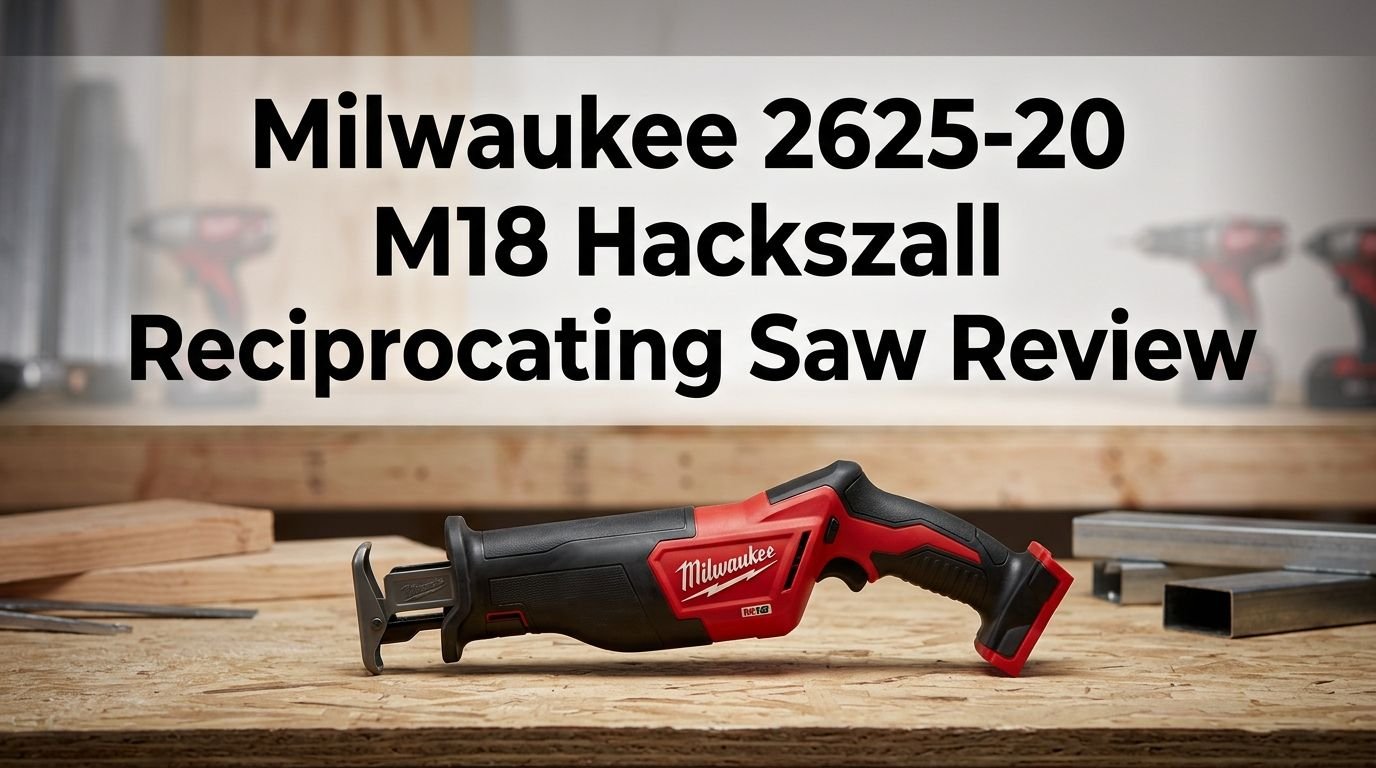
Milwaukee 2625-20 M18 Hackzall Reciprocating Saw Review 2026
If you work with pipes, wood, or metal, you probably need a reliable reciprocating saw. But what if you could hold one in a single hand and still get serious cutting power?
That is exactly what the Milwaukee 2625-20 M18 Hackzall promises. This compact, cordless reciprocating saw has earned a loyal following among plumbers, electricians, HVAC techs, and weekend DIYers.
It runs on Milwaukee’s popular M18 battery platform. It cuts at 3,000 strokes per minute. And it fits into tight spaces where full-size saws cannot go. But does it hold up under real job site pressure in 2026?
Key Takeaways:
- One-handed operation makes this saw perfect for overhead cuts, tight crawl spaces, and awkward angles where a full-size Sawzall just won’t fit.
- The Dual Gear Anti-Vibration System reduces fatigue during extended use, giving you better accuracy and comfort throughout the day.
- With a 3/4-inch stroke length and 3,000 SPM, this Hackzall handles wood, PVC, metal pipes, and conduit with confidence. It is not built for demolition, but it covers most light to medium cutting tasks.
- The QUIK-LOK blade clamp lets you swap blades fast without any extra tools, so you spend less time fidgeting and more time cutting.
- Battery compatibility with the entire M18 REDLITHIUM system means you can share batteries across dozens of Milwaukee tools. A 5.0 Ah XC battery gives noticeably longer runtime.
- This is a bare tool (tool only) package. You will need to buy an M18 battery and charger separately if you don’t already own them.

Milwaukee 2625-20 M18 Hackzall Reciprocating Saw Overview
The Milwaukee 2625-20 is a compact, cordless reciprocating saw built for one-handed use. Milwaukee designed this tool to fill the gap between a full-size Sawzall and a manual hacksaw. It delivers real cutting power in a small, light package.
This model runs on the M18 18V lithium-ion battery platform. The motor spins up to 3,000 strokes per minute. The 3/4-inch stroke length moves the blade fast enough to cut through wood, copper pipe, PVC, conduit, and thin metal.
The saw weighs about 5.6 pounds with a battery attached. That light weight means you can hold it overhead or at odd angles without your arm giving out. Milwaukee built a Dual Gear Anti-Vibration System into the handle to reduce hand fatigue. It makes a real difference on longer jobs. The built-in LED light also illuminates your cut line in dark spaces.
Design and Build Quality
Milwaukee built the 2625-20 with a rugged, industrial feel. The housing is made from high-impact plastic that can take drops and bumps. The grip area has a textured rubber overmold that stays secure even with sweaty or gloved hands.
The overall length keeps the tool compact. You can reach into wall cavities, between joists, and behind pipes without much struggle. The slim profile is one of the main reasons tradespeople choose this over a standard reciprocating saw.
The trigger is smooth and responsive. A variable speed dial on the side of the body lets you set the maximum speed. You can dial it down for delicate cuts in copper or dial it up for fast cuts in wood. The placement of the speed dial feels natural and does not interfere with your grip.
Build quality is consistent with what you expect from Milwaukee. The blade clamp locks tight. The battery latch clicks into place firmly. Nothing rattles or feels loose. This is a tool that handles daily job site use without falling apart.
Motor Performance and Cutting Speed
The heart of the 2625-20 is its 18V brushed motor. It pushes the blade at a maximum of 3,000 strokes per minute. That speed is fast enough for most everyday cutting tasks you will encounter on a residential or light commercial job.
Cutting through 1/2-inch copper pipe takes just a few seconds. PVC pipe up to 2 inches goes down quickly. The saw handles 2×4 lumber without stalling, though it takes a bit longer than a full-size reciprocating saw.
Where this motor shows its limits is on thicker or harder materials. Cutting through 3-inch cast iron or thick steel studs will slow the tool down. The brushed motor generates more heat under heavy load, and you will notice a drop in speed. This is not a demolition tool. It is a precision compact cutter.
For its intended purpose, the motor delivers solid performance. Plumbers, electricians, and HVAC professionals will find it handles their daily cutting demands reliably. Just don’t expect it to replace a full-size Sawzall on heavy tear-out jobs.
Top 3 Alternatives for Milwaukee 2625-20 M18 Hackzall
1. Milwaukee 2719-20 M18 FUEL Hackzall

2. DEWALT DCS369B ATOMIC 20V MAX One-Handed Reciprocating Saw

3. Makita XRJ07ZB 18V LXT Sub-Compact Brushless Reciprocating Saw

Dual Gear Anti-Vibration System Explained
One of the standout features on the Milwaukee 2625-20 is its Dual Gear Anti-Vibration System. This is not just a marketing label. Milwaukee engineered a counter-balance mechanism inside the tool that offsets the vibration caused by the reciprocating blade.
In practice, this system makes a noticeable difference during extended cutting sessions. If you spend hours cutting pipe on a rough-in day, your hands and wrists will thank you. The vibration reduction helps maintain control, too. Your cuts stay straighter and more accurate because the tool isn’t bouncing around in your grip.
Compared to cheap reciprocating saws that shake aggressively, the 2625-20 feels smooth. Is it completely vibration-free? No. You will still feel the blade working through material. But the intensity is reduced to a comfortable level that most users find easy to manage.
This system also protects the internal components of the saw. Less vibration means less stress on bearings, gears, and the motor. That contributes to a longer tool lifespan over years of regular use. It is a smart engineering choice from Milwaukee.
Battery Life and Compatibility
The 2625-20 runs on Milwaukee’s M18 REDLITHIUM battery system. This is one of the most popular 18V platforms in the power tool industry. If you already own Milwaukee M18 tools, you can share batteries across your entire collection.
Runtime depends on the battery size and the material you are cutting. A compact 2.0 Ah battery gives you a lighter setup but shorter runtime. A 5.0 Ah XC battery adds some weight but extends your cutting time significantly. Most users report cutting 50 to 100+ pieces of copper pipe on a single 5.0 Ah charge.
The battery fuel gauge on M18 batteries helps you plan your work. You can check the remaining charge with a button press and swap batteries before you run dry in the middle of a cut.
One thing to note: this is a bare tool. The 2625-20 does not include a battery or charger. If you are new to the Milwaukee M18 system, you will need to budget for those separately. A starter kit with a battery and charger typically adds $80 to $150 to your total cost.
QUIK-LOK Blade Clamp System
Changing blades on the Milwaukee 2625-20 is fast and simple thanks to the QUIK-LOK blade clamp. You twist the clamp, pull out the old blade, insert a new one, and release. No tools needed. The entire process takes about five seconds.
The clamp accepts standard reciprocating saw blades as well as Hackzall-specific blades. That gives you a wide selection of blades for wood, metal, multi-material, and demolition cuts. You are not locked into a proprietary blade format.
The clamp holds blades securely during operation. There is no wobble or play once a blade is locked in. This reliability matters because a loose blade can ruin a cut and create a safety hazard.
For professionals who switch between blade types multiple times per day, the QUIK-LOK system saves real time. You can go from a metal-cutting blade to a wood blade in seconds without searching for an Allen wrench or hex key.
One-Handed Operation and Ergonomics
The whole point of the Hackzall is one-handed cutting. Milwaukee designed the 2625-20 with a grip angle, weight balance, and trigger placement that make single-hand operation comfortable and controlled.
The grip has a generous rubber overmold that absorbs some vibration and prevents slipping. The trigger is easy to reach with your index finger. The variable speed dial sits near your thumb. Everything falls into place without strain.
Overhead work is where this tool truly shines. Cutting pipe or conduit above your head with a full-size Sawzall is tiring and awkward. The 2625-20 keeps your arm from burning out because it weighs under 6 pounds with a battery. Many plumbers and electricians say this single benefit justifies the purchase.
Working in tight mechanical rooms, crawl spaces, and between wall studs is also much easier. The compact body fits where bigger saws cannot. You get the cutting power of a reciprocating saw with the maneuverability of a much smaller tool.
What Can the Milwaukee 2625-20 Cut?
The Milwaukee 2625-20 handles a wide range of materials with the right blade. Here is a practical breakdown of what you can expect.
Wood: The saw cuts through dimensional lumber like 2x4s and 2x6s. It handles plywood, OSB, and wood trim. It will not replace a circular saw for ripping sheets, but it handles cross cuts and flush cuts well.
Copper Pipe: This is one of the most popular uses. The Hackzall slices through 1/2-inch and 3/4-inch copper pipe in seconds. It gives clean, fast cuts with a fine-tooth metal blade.
PVC and ABS Pipe: Plastic pipe cuts effortlessly. A wood blade or a dedicated PVC blade works great here. Cuts are fast and clean with minimal burring.
Metal Conduit and Thin Steel: EMT conduit and thin-wall metal tubing cut well with a metal blade. Thicker steel and cast iron will slow the saw down. You can do it, but patience is required.
Nail-Embedded Wood: A demolition blade lets you cut through wood with nails. This is useful for remodeling and renovation work where you encounter old framing.
Milwaukee 2625-20 vs. Milwaukee 2719-20 M18 FUEL Hackzall
A common question is whether you should buy the standard 2625-20 or upgrade to the 2719-20 M18 FUEL Hackzall. The differences are significant and worth understanding.
The 2719-20 uses a POWERSTATE Brushless Motor. Brushless motors run cooler, last longer, and deliver more power than brushed motors. The FUEL version delivers a 7/8-inch stroke length compared to 3/4-inch on the 2625-20. That longer stroke means faster cuts through every material.
Milwaukee claims the FUEL Hackzall cuts up to 50% faster than competitors. In real-world use, the speed difference over the 2625-20 is very noticeable, especially in thicker materials.
The 2719-20 also features REDLINK PLUS Intelligence, which provides optimized performance and overload protection. Battery life is better because the brushless motor wastes less energy as heat.
The tradeoff is price. The FUEL version costs roughly $50 to $90 more than the standard 2625-20. If you use a Hackzall daily on the job, the FUEL upgrade pays for itself in time savings and durability. If you only use it occasionally for light tasks, the 2625-20 offers excellent value.
Pros of the Milwaukee 2625-20
There are several reasons this saw remains popular years after its release. The compact one-handed design is the biggest draw. No other tool format gives you this combination of portability and reciprocating cutting power.
The Dual Gear Anti-Vibration System provides genuine comfort. Your hands stay steady, and your cuts stay accurate. Many users call this one of the smoothest compact reciprocating saws they have used.
M18 battery compatibility is a huge advantage. If you are already in the Milwaukee ecosystem, adding this tool costs you only the price of the bare tool. No extra batteries or chargers needed.
The QUIK-LOK blade clamp makes blade changes effortless. The built-in LED light helps you see your cut in dark spaces. The tool’s overall reliability and durability earn high marks from long-term users.
Price is another strong point. The 2625-20 sits at a very accessible price compared to the FUEL version and many competitors. For light to medium cutting, it gives you professional-level performance without a premium price tag.
Cons of the Milwaukee 2625-20
No tool is perfect, and the 2625-20 has some clear weaknesses. The brushed motor is the main limitation. It generates more heat, wears out faster, and delivers less power than the brushless motor found in the FUEL version.
The 3/4-inch stroke length is shorter than the 7/8-inch stroke on the 2719-20 FUEL. Shorter strokes mean slower cuts, especially in thicker material. If you cut a lot of 2-inch or larger pipe throughout the day, this difference adds up.
Battery drain is faster with a brushed motor. You will go through charges quicker compared to a brushless tool doing the same amount of work. This matters on long job days where swapping batteries slows you down.
The speed control system uses a dial rather than a variable-speed trigger. Some users prefer a trigger that adjusts speed based on how far you pull it. The dial adds a step because you have to set your max speed before you start cutting.
Finally, this is a bare tool. New Milwaukee users who don’t own M18 batteries will face additional upfront cost. A battery and charger kit can nearly double the total investment.
Who Should Buy the Milwaukee 2625-20?
The Milwaukee 2625-20 is a great fit for plumbers who cut copper and PVC pipe daily. The one-handed design and compact size make it ideal for working in finished walls, ceilings, and tight mechanical spaces.
Electricians benefit from the tool’s ability to cut conduit, wire lath, and nail-embedded wood during renovation work. It fits easily into a tool belt or bag, so it stays within reach all day.
HVAC technicians use it for cutting ductwork, copper refrigerant lines, and metal strapping. The anti-vibration system makes overhead work on duct runs much less tiring.
DIY homeowners who want a versatile cutting tool will also appreciate this saw. It handles branch trimming, home repair cuts, PVC plumbing fixes, and small demolition tasks. The M18 platform means you can add other Milwaukee tools over time and share batteries.
If you need a saw strictly for heavy demolition or cutting thick steel, this is not the right tool. Look at a full-size M18 FUEL Sawzall instead.
Maintenance Tips for Long Tool Life
Keeping your Milwaukee 2625-20 in top shape is simple. Clean the tool after each use. Wipe sawdust, metal shavings, and debris from the blade clamp area and motor vents. Built-up debris can cause overheating and reduce motor life.
Inspect the blade clamp periodically. Make sure it locks and releases smoothly. If the clamp starts to feel sticky or loose, clean it with a dry brush and a light spray of tool lubricant.
Check your blades before each use. A dull blade forces the motor to work harder, which drains the battery faster and generates excess heat. Replace blades as soon as cutting slows down or the teeth show visible wear.
Store the saw in a dry location away from extreme temperatures. Moisture can corrode internal components. Extreme cold reduces battery performance. A tool bag or case protects it from drops and dust during transport.
Battery care matters too. Avoid leaving M18 batteries fully discharged for extended periods. Store them at a partial charge in a cool, dry place. This extends the overall lifespan of your lithium-ion cells.
Final Verdict: Is the Milwaukee 2625-20 Worth It in 2026?
The Milwaukee 2625-20 M18 Hackzall remains a solid, reliable compact reciprocating saw in 2026. It doesn’t have the brushless motor or the longer stroke length of the FUEL version. But it delivers dependable cutting performance at a lower price point.
For tradespeople who already own M18 batteries and need a grab-and-go one-handed saw for everyday pipe cutting and light material work, this tool makes perfect sense. The anti-vibration system, compact design, and QUIK-LOK blade clamp keep it competitive even against newer models.
If you cut aggressively all day or demand maximum speed, step up to the 2719-20 M18 FUEL Hackzall. But if your needs are moderate, the 2625-20 gives you excellent value for every dollar spent.
It has earned thousands of positive reviews from real users over the years. That kind of track record speaks volumes. The Milwaukee 2625-20 is a smart buy for anyone who wants compact reciprocating cutting power without breaking the bank.
Frequently Asked Questions
Does the Milwaukee 2625-20 come with a battery and charger?
No. The Milwaukee 2625-20 is sold as a bare tool only. You need to purchase an M18 battery and charger separately. If you already own other Milwaukee M18 tools, you can use your existing batteries with this saw.
What blade size does the Milwaukee 2625-20 accept?
The 2625-20 accepts standard reciprocating saw blades with a universal shank. It works with both full-size Sawzall blades and shorter Hackzall-specific blades. Most users prefer blades between 4 and 6 inches long for optimal one-handed control.
Can the Milwaukee 2625-20 cut through metal?
Yes. With a metal-cutting blade, the 2625-20 cuts copper pipe, EMT conduit, thin steel, and threaded rod. It struggles with thick cast iron or heavy structural steel. For those materials, a full-size reciprocating saw is a better choice.
Is the Milwaukee 2625-20 brushless?
No. The 2625-20 uses a brushed motor. If you want a brushless Hackzall, look at the Milwaukee 2719-20 M18 FUEL Hackzall. The brushless motor in that model runs cooler, lasts longer, and delivers more cutting power.
How heavy is the Milwaukee 2625-20?
The saw weighs approximately 5.6 pounds with a battery installed. Without a battery, the bare tool is lighter. The low weight makes it comfortable for extended one-handed use, overhead cuts, and work in tight spaces.
What is the difference between a Hackzall and a Sawzall?
A Hackzall is a compact, one-handed reciprocating saw built for portability and tight-space work. A Sawzall is a full-size, two-handed reciprocating saw built for heavy-duty cutting and demolition. The Hackzall trades raw power for convenience and maneuverability.