Makita 16 Inch Circular Saw Review: Step-by-Step Guide 2026
You know that feeling when you need to slice through massive beams and your regular circular saw just doesn’t cut it?
That’s exactly where the Makita 16 inch circular saw comes into play. This beast of a tool is designed for serious cutting jobs that would make smaller saws cry for mercy.
Whether you’re a professional framer tackling large construction projects or a timber enthusiast working with heavy duty materials, finding the right saw can make or break your project.
Key Takeaways
- Exceptional Cutting Capacity: The Makita 5402NA delivers an impressive 6 1/4 inch cutting depth at 90 degrees and 4 3/16 inches at 45 degrees. This means you can slice through large beams, timber posts, and pressure treated lumber in a single pass without flipping your material.
- Professional Grade Motor: The 15 amp motor generates 2,300 RPM and delivers 1,800 max watts of output power. This translates to consistent cutting performance even through the toughest hardwoods and dense materials without bogging down.
- Surprisingly Manageable Weight: Despite its massive cutting capacity, this saw weighs only 28.7 pounds. While it’s not lightweight by any means, the weight distribution makes it easier to control than you might expect for a 16 inch saw.
- Safety Features That Matter: The electric brake stops the blade almost instantly when you release the trigger. Combined with the blade stabilizer system, you get safer operation and cleaner cuts with minimal kickback risk.
- Quiet Operation for Its Size: At just 87 decibels, this saw runs quieter than most large capacity saws. You can work longer without ear fatigue, though proper hearing protection is still recommended for extended use.

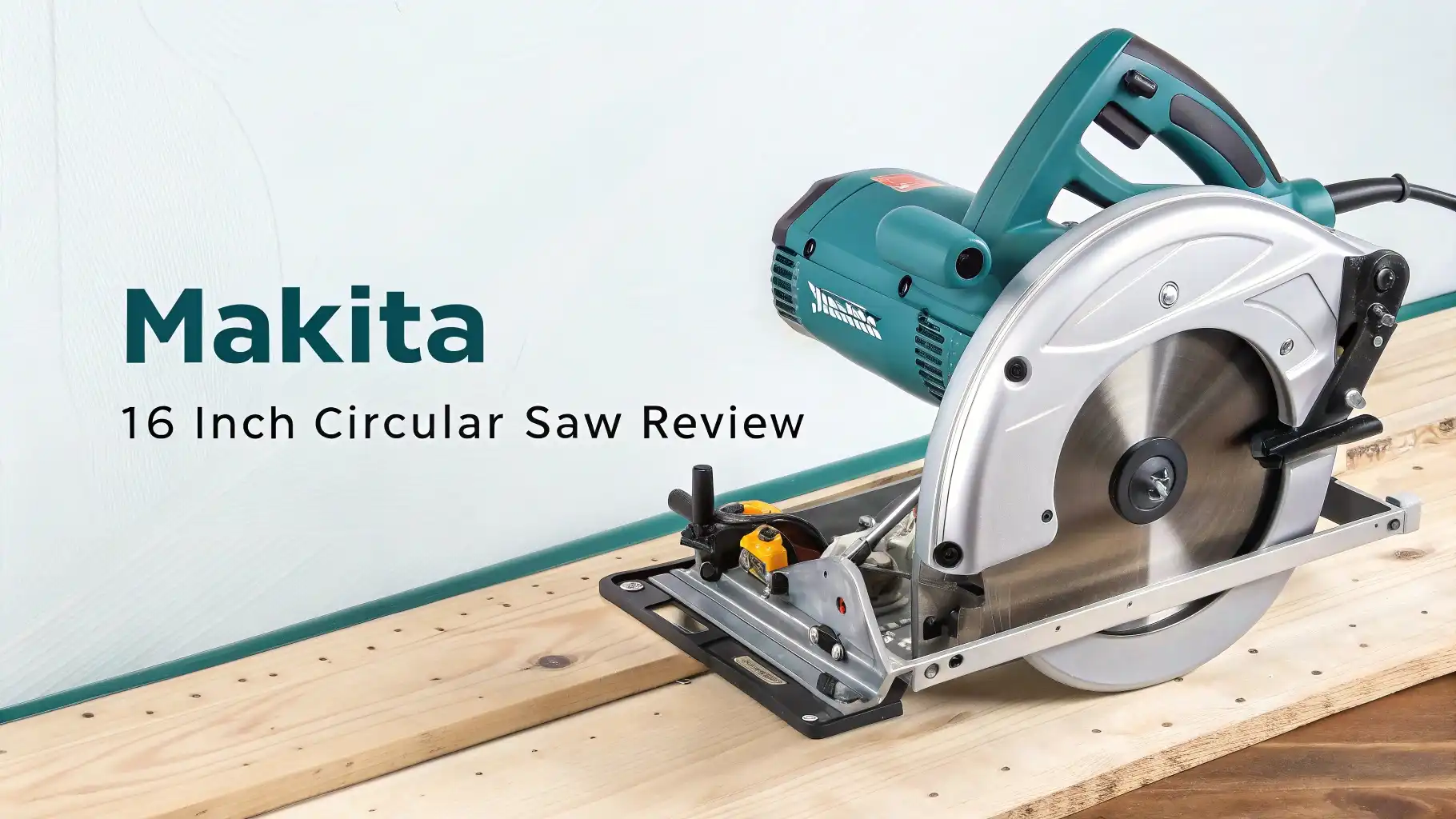
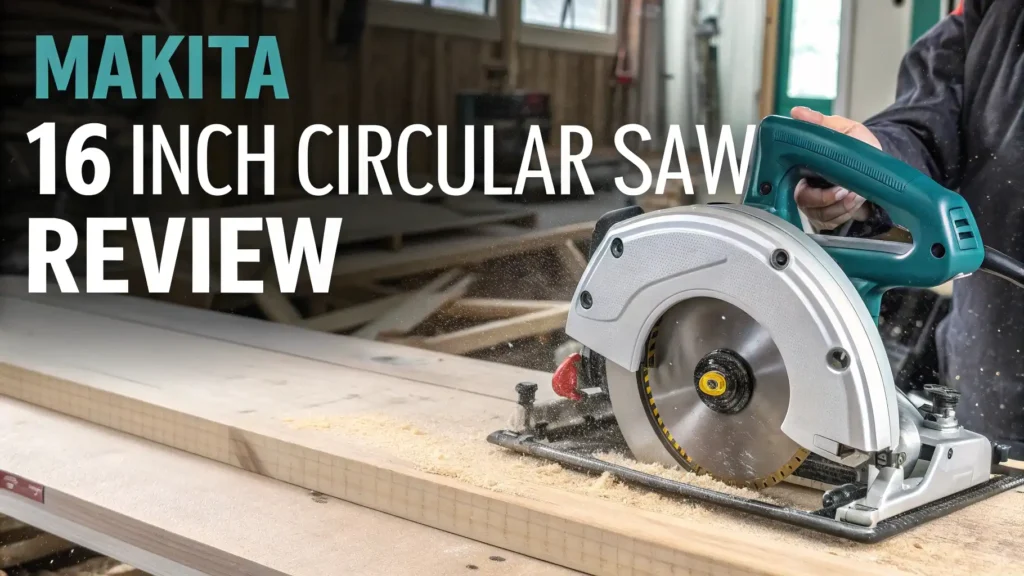
Makita 5402NA 16 5/16 Inch Circular Saw
The Makita 5402NA is the flagship model in the large circular saw category. This professional grade tool is built for contractors, framers, and woodworkers who regularly work with oversized materials. The 16 5/16 inch blade diameter gives you the deepest cutting capacity available in a handheld circular saw.
What sets this model apart from smaller saws is its ability to cut through 6×6 posts and large beams in one single pass. No more flipping materials or making multiple cuts to get through thick stock. The saw features a heavy duty aluminum base that provides excellent stability during cuts while keeping the overall weight manageable.
The motor delivers consistent power throughout the cut. You won’t experience the power drops that plague cheaper saws when cutting through dense hardwoods. The direct drive system transfers maximum power to the blade with minimal energy loss. This means faster cuts and less strain on the motor over time.
Makita includes a 32 tooth carbide tipped blade right in the box. This blade is optimized for fast ripping cuts through framing lumber and construction materials. The saw also comes with a rip fence and blade wrench for quick blade changes. The electric brake is a standout safety feature that stops the blade in under two seconds after releasing the trigger.
Understanding the Power Behind Large Beam Saws
Large circular saws like the Makita 5402NA operate differently than your standard 7 1/4 inch saw. The increased blade diameter creates more cutting surface area, which actually reduces the motor strain per square inch of material. This is why these saws can maintain consistent speed through thick materials.
The 15 amp motor in the Makita draws maximum power from standard 120 volt outlets. This is the highest amperage you can get before needing dedicated circuits or 240 volt power. The motor’s design focuses on torque rather than pure RPM. While 2,300 RPM might seem slow compared to smaller saws spinning at 5,000 RPM, the larger blade circumference means the tooth speed is actually comparable.
The motor features all ball bearing construction throughout. This reduces friction and heat buildup during extended cutting sessions. Ball bearings last significantly longer than bushings and maintain tighter tolerances. You get more precise cuts and longer tool life as a result.
Heat management is critical in large saws. The Makita uses strategically placed vents to draw cool air across the motor windings. The motor housing is designed to dissipate heat quickly, preventing thermal overload during continuous use. This makes the saw suitable for all day professional use without frequent cool down breaks.
Cutting Capacity That Changes Everything
The real magic of this saw lies in its cutting depth. At 6 1/4 inches at 90 degrees, you can cut through materials that other saws simply cannot handle. This opens up possibilities for projects that would otherwise require specialized equipment or multiple tool setups.
Think about cutting 6×6 posts for pergolas or deck supports. With a standard 7 1/4 inch saw, you need to cut from all four sides and hope everything lines up. With the Makita beam saw, you make one clean cut straight through. The time savings add up quickly when you have multiple cuts to make.
The 4 3/16 inch depth at 45 degrees is equally impressive. Bevel cuts through 4×4 posts become simple single pass operations. The saw maintains its cutting accuracy even at full bevel angles. The base plate locks solidly at common angles with positive stops at 45 and 90 degrees.
The increased cutting capacity also means you can work more efficiently with laminated beams and engineered lumber products. Many modern construction projects use glue laminated timber that’s too thick for standard saws. The Makita handles these materials with ease, cutting through multiple layers without burning or binding.
Top 3 Alternatives for Makita 16 Inch Circular Saw


Design Features That Improve Your Cutting Experience
The wraparound aluminum base provides exceptional stability during cuts. The rigid construction prevents flexing that can cause blade deflection and inaccurate cuts. The base is wide enough to sit securely on narrow beams without tipping, yet the openings allow clear sight lines to your cut line.
The depth adjustment system uses a rack and pinion mechanism for precise control. Unlike cheaper saws with loose adjustment levers, this system holds your setting firmly throughout the cut. The scale is clearly marked in both inches and millimeters for easy reference.
The bevel adjustment operates smoothly with a single large lever. You can adjust the angle quickly without tools while the saw sits on your work surface. The positive stops click firmly into place at common angles. A clear scale shows exact angles between stops for custom bevel cuts.
The blade guard is spring loaded and moves freely without binding. Some users note the spring tension is quite stiff, which actually improves safety by ensuring the guard snaps back quickly. The guard design provides clear visibility of the cut line while keeping your hands protected from the blade.
Electric Brake System for Maximum Safety
Safety should never be an afterthought with power tools, especially large circular saws. The electric brake on the Makita 5402NA is one of its most important features. When you release the trigger, the brake engages immediately and stops the spinning blade in approximately two seconds or less.
This rapid stopping prevents coasting injuries that occur when the blade continues spinning after you finish your cut. The brake works by reversing the motor current briefly to create drag on the blade. This system is far more effective than mechanical friction brakes that wear out over time.
The blade stabilizer system works alongside the brake to reduce blade wobble during cuts. Less wobble means cleaner cuts and reduced kickback risk. The stabilizer consists of support flanges that hold the blade firmly without restricting its rotation. This becomes especially important when cutting through materials with varying density.
The saw’s weight distribution also contributes to safety. The motor sits directly behind the blade rather than offset to one side. This balanced design reduces twisting forces that can pull the saw off your cut line. You maintain better control throughout the entire cutting motion.
Real World Performance in Professional Settings
Professional contractors who use this saw daily report excellent reliability over years of service. The motor holds up to continuous daily use without performance degradation. Framers working with pressure treated lumber appreciate that the saw powers through wet wood without bogging down.
The low noise level at 87 decibels is noticeably quieter than competing large saws. While this still requires hearing protection, the reduced noise causes less fatigue during long work days. Your ears will thank you after eight hours on the job site.
Cutting accuracy remains consistent even after thousands of cuts. The ball bearing system maintains tight tolerances so the blade runs true. Users report being able to make precise cuts without blade wander or deflection. This accuracy is crucial when cutting structural components that need to fit together perfectly.
The saw handles different materials with equal confidence. Whether you’re cutting through softwood framing lumber, hardwood beams, or engineered wood products, the Makita delivers clean cuts without burning or splintering. The key is matching your blade to your material and maintaining proper feed speed.
Blade Options and Cutting Versatility
The included 32 tooth carbide blade works well for general construction cutting. The tooth count provides a good balance between cutting speed and surface finish. Each carbide tooth is brazed securely to the blade body for long life even when cutting through abrasive materials.
For finer finish work, you can upgrade to blades with higher tooth counts up to 60 teeth. More teeth create smoother cuts with less tearout on visible surfaces. The tradeoff is slower cutting speed and more heat generation. Save high tooth count blades for finish cuts where appearance matters.
When cutting pressure treated lumber or hardwoods, look for blades with anti kickback shoulders and expansion slots. These features help the blade run cooler and reduce binding in the cut. The expansion slots allow the blade to expand slightly from heat without warping.
The 1 inch arbor hole is the standard size for large capacity saw blades. You’ll find plenty of blade options available from multiple manufacturers. This gives you flexibility to choose specialized blades for specific materials. Always ensure replacement blades are rated for at least 3,000 RPM to provide a safety margin above the saw’s operating speed.
Weight and Handling Considerations
At 28.7 pounds, this saw requires some muscle to maneuver. However, the weight distribution is well balanced for a tool of this size. The front handle and rear trigger grip are positioned to let you control the saw comfortably.
The weight actually works in your favor once you start cutting. The mass helps the saw feed smoothly through cuts without chattering. Lighter saws can bounce and skip when hitting dense grain, but the Makita’s weight keeps it tracking straight. You get cleaner cuts with less effort fighting the tool.
For overhead cuts or extended use, the weight becomes more challenging. Professional users recommend supporting the saw base on your work surface whenever possible rather than holding the full weight with your arms. Let the saw sit on the beam you’re cutting rather than suspending it in space.
The rubberized handle grips help maintain control even when your hands are sweaty. The trigger switch is large enough to operate comfortably while wearing work gloves. The front handle is positioned to give you good leverage for pushing the saw through cuts without straining your wrist.
Comparing Corded vs Cordless Large Saws
The Makita 5402NA is a corded saw that requires a power outlet. This provides unlimited runtime without battery changes or charging delays. For professional contractors running extension cords anyway, the corded design makes perfect sense.
Makita recently introduced a 40V XGT cordless version of their large circular saw. The cordless model offers freedom from cords but comes with significant tradeoffs. Battery runtime is limited to roughly 50 to 80 cuts through 6×6 material per charge depending on wood density. The cordless saw also costs substantially more than the corded version.
For job sites with limited electrical access, the cordless option makes sense despite the higher cost. Remote locations or rough framing before electrical installation can benefit from battery power. However, you’ll need multiple battery packs to maintain productivity through a full work day.
The corded model delivers consistent power regardless of runtime. Battery powered saws experience voltage drop as batteries discharge, leading to reduced cutting speed toward the end of the charge. Corded power maintains full performance from your first cut to your last cut of the day.
Maintenance Tips for Long Tool Life
Keeping your Makita beam saw in top condition requires regular but simple maintenance. After each use, blow out sawdust from the motor vents using compressed air. Dust buildup restricts airflow and causes premature motor failure. Pay special attention to the rear vents where most dust accumulates.
Check the blade regularly for damaged or dull teeth. A dull blade forces you to push harder, which strains the motor unnecessarily. Replace or sharpen carbide blades when cutting performance decreases. Most saw shops can sharpen carbide blades for a fraction of the cost of buying new ones.
The base plate can accumulate pitch and resin buildup from cutting softwoods. This residue affects how smoothly the saw glides across your work surface. Clean the base plate with mineral spirits or a specialized pitch remover. A clean base reduces friction and improves cutting accuracy.
Inspect the power cord regularly for damage. Large saws draw high current, so even small nicks in the cord insulation can create dangerous situations. Replace damaged cords immediately rather than wrapping them with electrical tape. The motor’s carbon brushes will eventually wear out after years of heavy use. Brush replacement is straightforward and extends motor life significantly.
Price Value Analysis for Professional Use
The Makita 5402NA typically retails around one thousand dollars, making it a significant investment. For professional contractors who need large cutting capacity regularly, this cost pays for itself quickly through time savings and increased capability.
Consider that the saw eliminates the need for multiple passes on large materials. Each cut you make in one pass instead of four saves several minutes. Multiply that time savings across dozens of cuts per day, and you’re recovering hours of billable time each week.
The tool’s reliability means less downtime for repairs or replacements. Cheaper saws may cost half as much initially but often fail within a year of heavy professional use. The Makita’s reputation for durability means many contractors use the same saw for five to ten years without major issues.
For hobbyists or occasional users, the cost may be harder to justify. If you only need to cut large timber a few times per year, renting a beam saw makes more financial sense than buying. Many tool rental centers stock large circular saws for daily or weekly rental at a fraction of the purchase price.
Pros and Cons from Actual Users
Real world feedback from contractors who use this saw daily provides valuable insights. On the positive side, users consistently praise the cutting power and capacity. The ability to make single pass cuts through massive timbers is the most mentioned benefit. Contractors report finishing framing jobs significantly faster than with standard circular saws.
The build quality and durability receive high marks. Users report years of trouble free service with minimal maintenance. The all metal gearing and ball bearing construction hold up to daily professional abuse. Several contractors mentioned using the same saw for over a decade without major repairs.
The quiet operation surprises many first time users. Compared to other large saws, the 87 decibel noise level is noticeably less harsh. This makes the saw more pleasant to use for extended periods. The electric brake is universally appreciated for its safety benefits and quick blade stopping.
On the negative side, the weight challenges some users. While 28.7 pounds is reasonable for the cutting capacity, it still requires physical strength to handle all day. Some contractors recommend the saw for ground level cutting but prefer lighter tools for overhead work.
The stiff blade guard draws mixed reactions. Some users appreciate the positive return action for safety, while others find it difficult to retract when starting cuts. A few contractors modify the guard spring tension, though this may affect warranty coverage. The saw’s size also makes it less maneuverable in tight spaces compared to smaller circular saws.
Who Should Buy This Saw
The Makita 16 inch circular saw makes perfect sense for professional framing contractors who regularly work with large dimensional lumber. If you build timber frame structures, custom decks with large posts, or any project involving beams and heavy timbers, this saw becomes an essential tool.
Timber framers and log home builders find the cutting capacity invaluable for their specialized work. The ability to cut through massive timbers accurately saves enormous time compared to hand sawing or using multiple tools. The clean cuts also require less cleanup work with hand planes or sanders.
General contractors working on commercial projects benefit from the saw’s capability with engineered lumber products. Many commercial buildings use laminated veneer lumber and parallel strand lumber that exceeds standard saw capacities. Having a large saw on hand prevents delays when these materials appear in plans.
DIY enthusiasts building major outdoor projects like pergolas, gazebos, or timber retaining walls can justify the investment if their project requires substantial cutting of large materials. However, carefully consider whether your cutting needs will extend beyond a single project. Renting might make more sense for one time use.
This saw is probably not ideal for finish carpenters or cabinetmakers who primarily work with sheet goods and smaller dimension lumber. The size and weight make it impractical for detailed work or cutting plywood sheets. Stick with standard 7 1/4 inch saws or track saws for those applications.
Frequently Asked Questions
Can the Makita 5402NA cut through a 6×6 post in one pass?
Yes, the 6 1/4 inch cutting depth at 90 degrees allows you to cut completely through 6×6 posts without flipping the material. This is one of the primary advantages of this large capacity saw. The cut will be clean and square when you maintain steady feed pressure through the entire cut.
What size extension cord do I need for the 15 amp motor?
Use a 12 gauge extension cord for runs up to 100 feet to prevent voltage drop. The 15 amp motor draws maximum current, so undersized cords will cause the motor to overheat and lose power. For longer distances, upgrade to 10 gauge wire. Always use outdoor rated cords with three prong grounded plugs.
How often do I need to change the blade?
Blade life depends on what you’re cutting and how much. When cutting clean softwood framing lumber, a quality carbide blade might last through several thousand linear feet of cuts. Cutting pressure treated wood, hardwoods, or dirty reclaimed lumber will dull blades much faster. Change the blade when you notice the saw requiring more push force or when cuts become rough.
Is the Makita 5402NA suitable for cutting metal or concrete?
No, this saw is designed specifically for wood cutting applications. The motor speed and blade design are optimized for wood. Using metal or masonry blades would damage the saw and create serious safety hazards. Use dedicated metal cutting saws or masonry saws for those materials.
Does the saw come with a carrying case?
The standard package does not include a carrying case. The saw comes with the blade, rip fence, and blade wrench but no storage case. Some retailers offer cases as separate accessories, or you can find universal large saw cases that will accommodate the 5402NA dimensions.
Can I use this saw with a guide rail system?
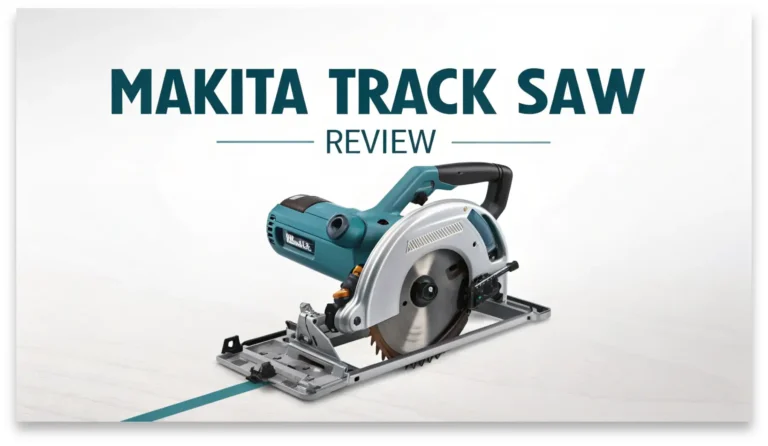
The Makita 5402NA is not designed for use with guide rail systems. The base plate configuration and saw design are optimized for freehand cutting rather than rail guided cutting. For rail guided large capacity cutting, consider Makita’s track saw systems in smaller sizes.
How does this compare to the SKILSAW 16 inch worm drive model?
The SKILSAW SPT70V-11 offers similar cutting capacity with a worm drive design rather than direct drive. Worm drive saws position the motor behind the blade rather than beside it, which some users prefer for sight lines. The SKILSAW weighs slightly less but costs more. Both are excellent professional grade tools with similar performance.
What is the warranty coverage on this saw?
Makita provides a one year warranty covering defects in materials and workmanship. This is standard for professional power tools. The warranty covers repairs or replacement but does not cover normal wear items like carbon brushes or damage from misuse. Keep your purchase receipt to verify warranty coverage dates.
Can I replace the power cord if it gets damaged?
Yes, the power cord can be replaced if it becomes damaged. Makita service centers can install genuine replacement cords to maintain safety and warranty compliance. Attempting cord replacement yourself may void the warranty, so professional service is recommended for this repair.
Does the electric brake require special maintenance?
No, the electric brake system is maintenance free and operates through the motor’s electrical system rather than mechanical parts. There are no brake pads to replace or adjust. The brake will continue functioning for the life of the tool as long as the motor remains in good condition.