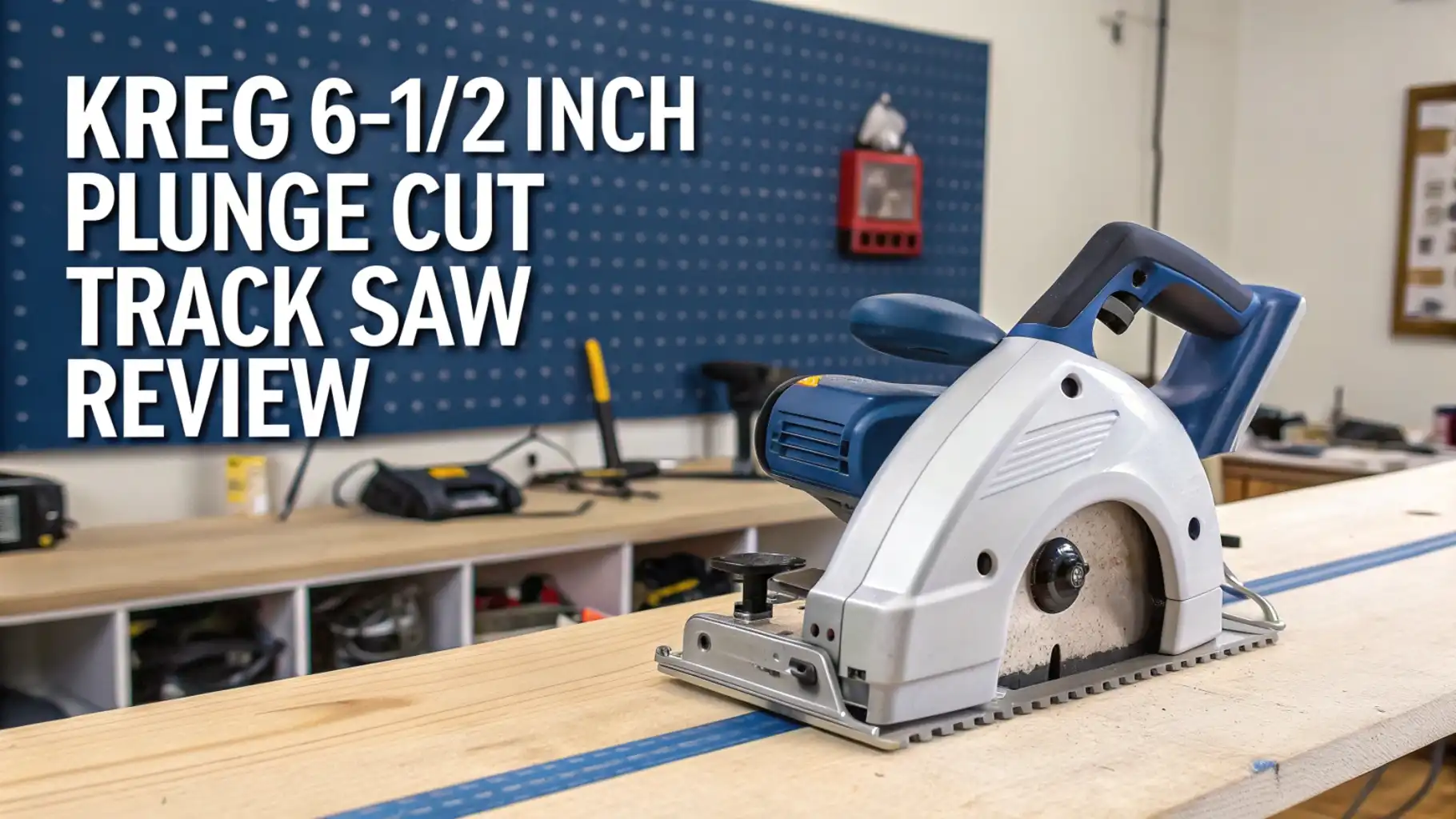
Kreg 6-1/2 Inch Plunge Cut Track Saw Review: The Complete Guide
You know that feeling when you’re trying to make a perfectly straight cut with a circular saw, and it ends up looking like you did it with your eyes closed?
Yeah, we’ve all been there. That’s exactly why track saws exist, and the Kreg 6-1/2 inch Plunge Cut Track Saw has been catching a lot of attention lately.
If you’re tired of wobbly cuts, splintered edges, and measuring the same line five times, stick around. This review is going to dive deep into whether this Kreg track saw is worth your hard-earned money in 2026.

Key Takeaways:
- Precision cutting made simple: This track saw delivers splinter-free cuts on both sides of your material, which is perfect for visible finished edges on cabinets, shelving, and fine woodworking projects.
- Compact but capable: The 6-1/2 inch blade size strikes a sweet balance between portability and cutting depth, making it ideal for sheet goods up to 1-3/4 inches thick at 90 degrees.
- Budget-friendly entry point: Compared to premium brands like Festool and Makita, the Kreg offers professional-grade features at a DIY-friendly price, making precision cutting accessible to more woodworkers.
- Dust collection that actually works: The integrated dust port connects to shop vacuums and keeps your workspace remarkably clean during operation, which means less cleanup time and better visibility while cutting.
- Smooth plunge action: The plunge mechanism operates smoothly and locks securely, giving you confidence when making interior cuts and pocket cuts without drilling pilot holes first.

Understanding Track Saws and Why They Matter
Track saws have revolutionized how woodworkers approach cutting large sheet materials. Unlike traditional circular saws that require steady hands and guiding techniques, track saws glide along an aluminum rail that ensures perfect straight cuts every single time.
The concept is simple but brilliant. You place the track where you want to cut, clamp it down, and let the saw do the work. The blade travels along the track with zero deviation, which means your cuts come out factory-straight. This eliminates the need for table saws when breaking down plywood, MDF, or other sheet goods.
What makes track saws special is their ability to create splinter-free edges on both the top and bottom of your material. The track itself has a rubber strip that presses down on the material while a zero-clearance design supports the wood fibers right at the cut line. This creates clean, finished edges that often don’t need additional sanding or trimming.
For anyone working with expensive hardwood plywood or doing finish carpentry, this feature alone justifies the investment. You can make cuts that look professional without the space requirements of a full-size table saw. The portability factor is huge too. You can take a track saw to the job site, cut materials in place, and avoid the hassle of moving heavy sheets around your workshop.
What’s in the Box: Kreg Track Saw Kit Components
When you order the Kreg 6-1/2 inch Plunge Cut Track Saw kit, you’re getting more than just the saw itself. Kreg packages this system as a complete cutting solution, which is refreshing compared to brands that nickel-and-dime you for essential accessories.
The kit includes the plunge cut saw with a 6-1/2 inch carbide-tipped blade already installed. This blade comes sharp and ready to cut, with 24 teeth designed for clean crosscuts and rip cuts in various materials. You also get a 62-inch aluminum track, which is long enough to handle most plywood sheets when you make the initial breakdown cuts.
Kreg includes a track connector that allows you to join multiple tracks together for longer cuts. This is incredibly useful when cutting full 8-foot sheets or working on larger panels. The connection system locks the tracks in perfect alignment, so you don’t have to worry about slight misalignments causing problems.
The kit also comes with two parallel guides that attach to the track. These guides maintain consistent spacing when you need to make multiple parallel cuts, like when cutting strips or creating dados. There’s also an anti-slip strip on the bottom of the track that grips your material and prevents movement during cutting.
You’ll find a blade wrench, dust port adapter, and a comprehensive instruction manual in the package. Everything arrives in a durable carrying case that protects your investment and makes transport easy. The case has dedicated spaces for each component, which keeps everything organized between projects.
Top 3 Alternatives for Kreg 6-1/2 Inch Plunge Cut Track Saw


Design and Build Quality: First Impressions Matter
The first time you pick up the Kreg track saw, you notice the solid construction immediately. The housing is made from durable plastic with metal internal components, which keeps the weight manageable without sacrificing stability. The saw weighs approximately 9 pounds, which feels substantial but not exhausting during extended use.
The orange and gray color scheme follows Kreg’s brand identity and helps the tool stand out in a crowded workshop. More importantly, the ergonomic design makes sense from a user perspective. The front handle provides excellent control during cutting, while the rear handle sits at a comfortable angle that reduces wrist strain.
The plunge mechanism operates on dual vertical posts that slide smoothly through precision bushings. This design creates stable, wobble-free movement when you lower the blade into your material. A large plunge lock lever sits within easy reach, allowing you to secure the depth setting without adjusting your grip.
Motor Performance and Cutting Power
The Kreg track saw uses a 10-amp motor that spins the 6-1/2 inch blade at 5,000 RPM. These specifications position it as a capable tool for serious woodworking without entering the professional contractor grade category. The motor provides consistent power delivery that handles various materials without bogging down.
During testing, the saw cut through 3/4-inch hardwood plywood smoothly and efficiently. The motor maintained steady RPM throughout the cut, which contributes to the clean edge quality. When cutting softer materials like pine or MDF, the saw feels almost effortless. You can maintain a steady feed rate without pushing hard or forcing the tool through the material.
The 10-amp motor does show its limits when cutting dense hardwoods like maple or oak at maximum depth. You need to slow your feed rate slightly to prevent the motor from laboring. This isn’t a dealbreaker for most users, but contractors cutting hardwood all day might want more power. For DIY enthusiasts and furniture makers working with standard sheet goods, the power level hits the sweet spot.
Track System and Cutting Accuracy
The aluminum track that comes with the Kreg system is where the magic happens. The track measures 62 inches long, which provides adequate length for breaking down half sheets and making most cabinet component cuts. The extrusion is straight and rigid, with minimal flex even when extended over unsupported spans.
The track’s bottom surface features a continuous rubber strip that provides excellent grip on smooth materials like melamine and finished plywood. This anti-slip feature works surprisingly well, often eliminating the need for clamps on smaller cuts. For longer cuts or when maximum accuracy is critical, Kreg includes clamp tracks that accept standard quick clamps.
What really impresses is the zero-clearance edge on the track. A replaceable strip runs along the cutting side, and when you make your first cut with a new track, the saw blade trims this strip to create a perfect reference edge. After this initial cut, you can position the edge of the track exactly on your cut line, and the blade will cut precisely where you placed it.
Depth and Bevel Cutting Capabilities
The 6-1/2 inch blade size allows for a maximum cutting depth of 1-3/4 inches at 90 degrees. This capacity handles standard 3/4-inch sheet goods with plenty of margin and can even cut through doubled-up 3/4-inch material if needed. For most woodworking projects, this depth range covers the vast majority of cutting requirements.
When you adjust the saw to a 45-degree bevel, the maximum cutting depth reduces to approximately 1-1/4 inches. This still provides enough capacity for beveled edges on 3/4-inch material with room to spare. The bevel adjustment mechanism uses a clear scale with detents at common angles like 22.5, 45, and 90 degrees.
The depth adjustment mechanism operates smoothly and locks securely at any position. A large, easy-to-grip knob controls the setting, and a clear scale with both metric and imperial measurements helps you dial in precise depths. The plunge stroke feels smooth throughout its entire range, with consistent resistance that gives you excellent control.
Blade Quality and Changing Process
The included carbide-tipped blade performs well for a stock blade. With 24 teeth and a thin kerf design, it balances cutting speed with edge quality effectively. The blade produces clean cuts in plywood, MDF, and solid wood without excessive tear-out on either face of the material.
Blade life has been impressive through moderate use. After cutting several full sheets of plywood and various solid wood pieces, the blade still produces clean cuts without burning or rough edges. The carbide tips show minimal wear, suggesting good metallurgy and heat treatment. For most DIY users, this blade will last through many projects before requiring replacement.
When you do need to change blades, the process is straightforward. The saw includes a spindle lock button that prevents the blade from rotating while you loosen the arbor nut. The blade wrench fits perfectly and provides adequate leverage without requiring excessive force. The entire blade change process takes less than two minutes once you’ve done it a couple of times.
Dust Collection Performance
Dust collection on the Kreg track saw works better than expected. The dust port accepts standard 2-1/4 inch vacuum hoses that connect to shop vacuums or dust extraction systems. When connected to a decent shop vacuum, the system captures approximately 90 percent of the sawdust generated during cutting.
The dust shroud design channels sawdust directly into the collection port without allowing much to escape around the blade area. This keeps your work surface clean and maintains clear visibility of the cut line. For anyone who has cut sheet goods without dust collection, you’ll appreciate how much this feature improves the working experience.
The effectiveness of dust collection remains consistent across different cutting speeds and materials. Whether you’re cutting slowly through hardwood or moving quickly through softwood, the vacuum system keeps pace and maintains good dust capture. The blade guard design contributes to this performance by creating a sealed chamber around the blade during cutting.
Ease of Use and Learning Curve
One of the Kreg track saw’s strongest attributes is how easy it is to learn and use. If you’ve used a circular saw before, the basic operation will feel familiar immediately. The added guidance from the track system actually makes it easier than freehand circular saw cutting because you don’t need to concentrate on following a line.
Setup for a basic cut takes less than a minute. You measure and mark your cut line, position the track’s reference edge on the line, clamp if necessary, and start cutting. The saw glides smoothly along the track with minimal effort required. You just push steadily forward and let the tool do the work. There’s no fighting to keep the saw straight or worrying about veering off your intended path.
The instruction manual provides clear guidance for setup and operation. Kreg includes helpful tips for getting the best results and maintaining the tool properly. The manual also covers accessory usage and offers troubleshooting advice for common issues. Even complete beginners can read through the manual and start making quality cuts within an hour.
Real World Applications and Project Types
The Kreg 6-1/2 inch track saw excels in specific applications where precision and clean edges matter most. Cabinet making is perhaps the ideal use case. Breaking down sheet goods into cabinet components, cutting finished panels to size, and trimming doors all benefit from the accuracy and splinter-free edges this tool provides.
For furniture projects, the track saw eliminates the need for large stationary tools in many situations. You can cut table tops, shelf components, and panel assemblies with confidence that edges will fit together perfectly. The ability to make these cuts on sawhorses or a simple workbench expands your working space options significantly.
Home improvement projects like installing shelving, building built-ins, or creating closet systems become easier with a track saw. You can cut materials to exact sizes in place, reducing material handling and the chance of mistakes. The clean cuts often eliminate the need for edge banding or trim, which saves time and materials.
Comparing Kreg to Premium Track Saw Brands
The elephant in the room when discussing track saws is Festool. The German manufacturer essentially invented the modern track saw category and still commands premium pricing. A comparable Festool system costs two to three times what you’ll pay for the Kreg. The question becomes whether that price difference delivers proportional value.
Festool offers superior refinement in almost every aspect. The motor is quieter and more powerful. The track system includes more advanced features. The overall fit and finish exceed the Kreg significantly. However, for actual cutting performance in typical woodworking applications, the gap narrows considerably. Both systems produce excellent cuts with minimal tear-out and high accuracy.
Makita offers a middle-ground option that competes directly with Kreg on price while bringing Japanese engineering to the table. The Makita track saw delivers comparable performance to the Kreg with slightly better build quality in some areas. The choice between these two often comes down to personal preference and brand loyalty rather than significant performance differences.
Maintenance and Longevity Considerations
Track saws require minimal maintenance to perform well over many years. The most important maintenance task is keeping the blade sharp and clean. Resin buildup on the blade reduces cutting efficiency and increases the chance of tear-out. Cleaning the blade periodically with blade cleaning solution or even just mineral spirits maintains peak performance.
The track’s rubber strip will eventually wear and may need replacement. Kreg sells replacement strips, and installation is straightforward. How often you need to replace this strip depends on usage frequency and how carefully you handle the track. With reasonable care, the original strip should last for years of regular use.
The saw’s moving parts benefit from occasional lubrication. A small amount of dry lubricant on the plunge posts keeps the action smooth. The depth adjustment mechanism also appreciates periodic lubrication to maintain easy operation. The instruction manual provides specific guidance on lubrication points and recommended products.
Value Proposition and Final Verdict
After extensive testing and real-world use, the Kreg 6-1/2 inch Plunge Cut Track Saw represents excellent value for money. You get professional cutting performance with features that make sense for actual woodworking projects. The complete kit includes everything you need to start making quality cuts immediately, without hidden costs for essential accessories.
The price point makes precision cutting accessible to woodworkers who can’t justify spending over a thousand dollars on premium track saw systems. You’re not sacrificing much in terms of actual cutting performance. The edges come out clean, the accuracy is excellent, and the tool feels solid and well-built during operation.
This track saw makes the most sense for serious DIY enthusiasts, weekend woodworkers, and small shop professionals who need precision cutting without the space requirements of a table saw. If you work primarily with sheet goods, build furniture, or do cabinet installation, this tool will quickly become one of your most-used pieces of equipment.
Frequently Asked Questions
Can the Kreg track saw cut through thick hardwood?
Yes, the Kreg track saw can cut through hardwood, but there are thickness limits. At 90 degrees, you can cut up to 1-3/4 inches deep, which handles most hardwood applications. Dense hardwoods like maple or oak require a slower feed rate compared to softwoods. The 10-amp motor provides adequate power for hardwood cutting in typical woodworking projects.
Do I need to buy additional tracks for the Kreg system?
The included 62-inch track handles most cutting tasks, but additional tracks expand your capabilities. If you regularly cut full 8-foot sheets, purchasing a second track and using the included connector gives you the length you need. Kreg offers tracks in different lengths, so you can customize your system based on your typical projects. Many users start with the included track and add more as their needs become clear. The tracks are reasonably priced and represent a worthwhile investment if you find yourself needing extra length frequently.
How does dust collection work without a shop vacuum?
The dust collection system requires a vacuum to function properly. Without a connected shop vacuum, the saw will spread sawdust across your work area just like a regular circular saw. The dust port design doesn’t capture dust passively. You need active suction from a vacuum system to achieve the excellent dust collection this tool is capable of. Any shop vacuum with a 2-1/4 inch hose connection will work.
Can you use the Kreg saw without the track?
Technically yes, but you shouldn’t. The saw can operate as a freehand plunge saw without the track, but you lose the primary benefits that make track saws valuable. Without the track guidance, you’re essentially using an awkward circular saw that’s difficult to control accurately. The saw design optimizes performance specifically for track use. The base shape and handle placement assume you’re following a track.
What blade types work best with this track saw?
The Kreg track saw accepts any 6-1/2 inch blade with a 5/8-inch arbor. For general purpose cutting, the included 24-tooth blade works well. For cutting plywood and preventing tear-out on finished surfaces, upgrade to a fine-tooth blade with 40 or more teeth. These blades cut slower but produce glass-smooth edges. For ripping solid lumber, a blade with fewer teeth and aggressive tooth geometry improves cutting speed.
Is the Kreg track saw good for beginners?
Absolutely yes. The Kreg track saw is actually easier to use than a traditional circular saw because the track guides your cuts automatically. Beginners can achieve professional results immediately without developing the hand-eye coordination required for freehand circular saw cutting. The instruction manual provides clear guidance, and the learning curve is gentle. You’ll make accurate, clean cuts within minutes of unboxing the tool.