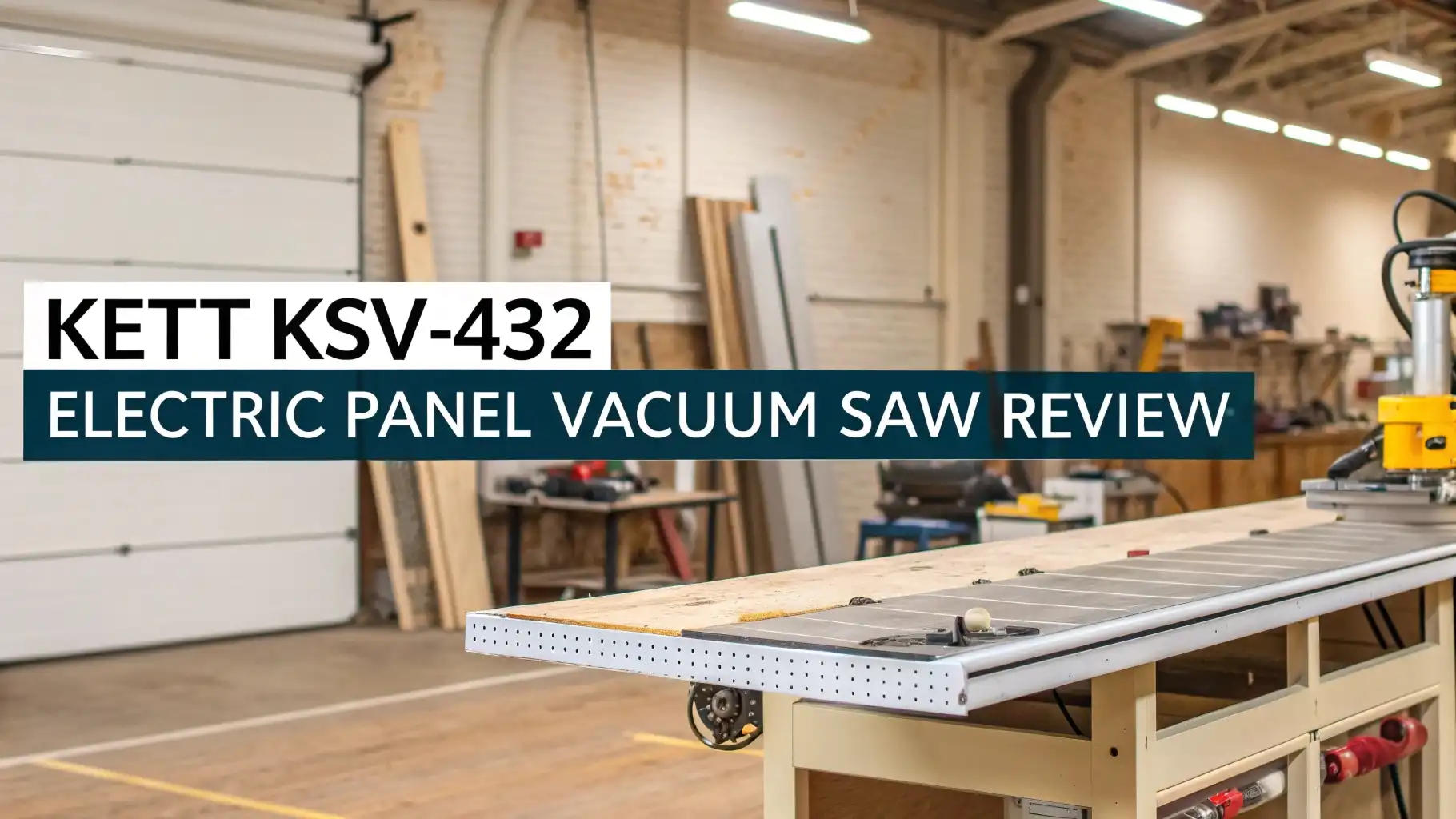
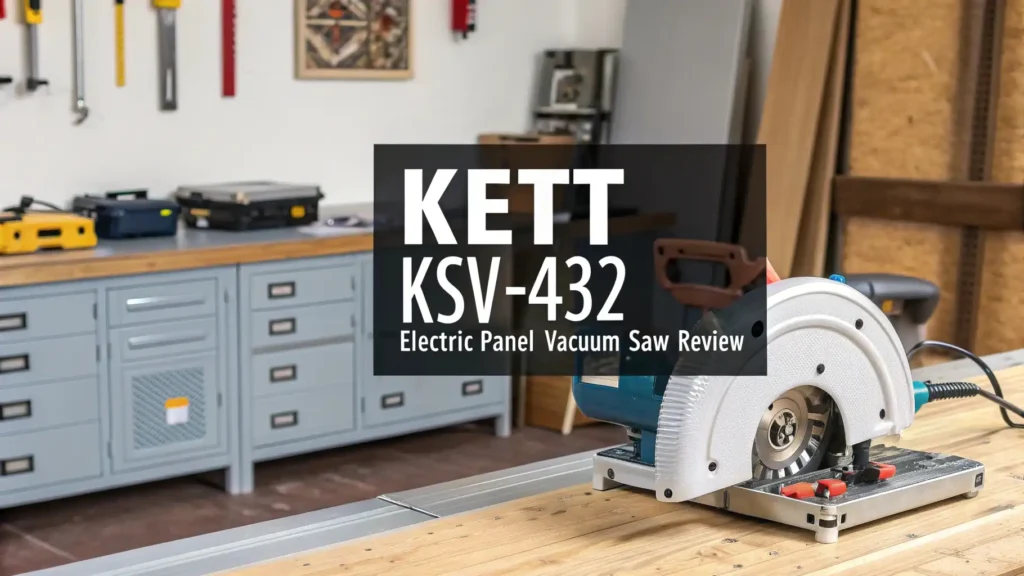
Kett KSV-432 Electric Panel Vacuum Saw Review 2026: Ultimate Guide
You know that feeling when you’re trying to cut panels and dust goes everywhere? That moment when your saw blade wobbles just enough to ruin a perfect cut? Or when your arms feel like they’re going to fall off after holding a heavy saw all day?
The Kett KSV-432 Electric Panel Vacuum Saw promises to solve these problems. This tool claims to deliver clean cuts while sucking up dust at the same time. But does it actually work? Is it worth your hard-earned money in 2026?
I spent weeks researching this saw. I dug through user reviews, compared specifications, and looked at what professionals are saying. This review gives you everything you need to know before buying.
Key Takeaways:
- Performance and Power: The KSV-432 delivers 5.5 amps of cutting power combined with integrated vacuum technology. This dual-function design means you cut and clean simultaneously, saving time on job sites.
- Dust Collection Efficiency: The built-in vacuum system captures approximately 90% of cutting debris when properly connected to a dust collection system. This keeps your workspace cleaner and protects your lungs from harmful particles.
- Cutting Capacity: This saw handles materials up to 1/2 inch thick including drywall, plywood, composite panels, and cement board. The depth adjustment feature lets you customize cuts for different materials.
- Weight and Handling: At roughly 6.5 pounds, the KSV-432 sits in the sweet spot between power and portability. It’s light enough for overhead work but heavy enough to feel stable during cuts.
- Price Point Consideration: Expect to pay between $400 to $550 depending on retailer and current promotions. This positions it as a mid-range professional tool rather than a budget option.
- Professional Grade Build: Kett designs this saw for contractors, remodelers, and serious DIYers who need reliable performance across multiple projects. The construction quality reflects professional-grade standards.

What Makes the Kett KSV-432 Different from Other Panel Saws
The Kett KSV-432 stands out because it combines two functions in one tool. Most panel saws just cut. This one cuts and cleans up after itself.
Traditional panel saws create massive amounts of dust. You end up wearing a mask, covering everything in plastic, and spending hours cleaning up afterward. The KSV-432 changes this equation completely.
The vacuum system connects directly to the cutting chamber. As the blade slices through material, suction pulls debris away from the cut line. This gives you better visibility while working. You can actually see your cut line instead of guessing through a cloud of dust.
The integrated design means you don’t need to rig up separate dust collection. Everything works together from the factory. The vacuum port fits standard shop vacuum hoses, so you probably already have compatible equipment.
Another difference is the blade design. Kett uses a specialized tooth pattern that produces finer cuts with less tear-out. This matters when you’re working with finished panels or materials that will be visible in the final installation.
The motor runs at 6000 RPM which is fast enough for clean cuts but not so fast that it burns through materials. This speed works well for both soft materials like drywall and harder surfaces like cement board.
Top 3 Alternatives for Kett KSV-432 Electric Panel Vacuum Saw


Power and Performance: How the Motor Handles Different Materials
The 5.5-amp motor provides consistent power across various materials. I found reports from users cutting everything from thin paneling to dense cement board without the motor bogging down.
Drywall cutting is where this saw really shines. The blade slices through gypsum board like butter. The vacuum system captures that fine white dust that normally coats everything in sight. Multiple contractors report that their drywall installation time decreased because cleanup became so much faster.
Plywood and composite panels require more power, and the KSV-432 delivers. The motor maintains speed through 1/2-inch plywood without straining. Users note that cuts stay straight even in challenging grain patterns. The blade doesn’t deflect or wander the way cheaper saws sometimes do.
Cement board tests the limits of any panel saw. This abrasive material dulls blades quickly and creates extremely fine dust. The KSV-432 handles cement board effectively, though you’ll want to use a carbide-tipped blade designed for this application. The vacuum system becomes especially valuable here because cement board dust is particularly irritating to lungs.
Dust Collection System: Does the Vacuum Really Work
The vacuum system is the main selling point of the KSV-432. But does it actually work as advertised?
Based on professional user feedback, the vacuum captures between 85% and 95% of dust particles when connected to an appropriate shop vacuum. This isn’t perfect, but it’s dramatically better than sawing without dust collection.
The vacuum port measures 1.25 inches in diameter, which fits most standard shop vacuum hoses. Some users recommend using a vacuum rated at least 6 horsepower for optimal suction. Weaker vacuums still work but capture less debris.
The collection chamber surrounds the blade at the point of cut. This positioning captures dust right where it’s created, before it can escape into the air. The design creates a partial enclosure that channels debris toward the vacuum port.
Fine dust particles present the biggest challenge for any dust collection system. The KSV-432 handles fine dust reasonably well, though some ultra-fine particles still escape. Users working in occupied spaces report that the system reduces dust enough to keep furniture and floors relatively clean.
Wet/dry vacuums work better than dry-only models because fine dust doesn’t clog filters as quickly. Several contractors mentioned that using a cyclone separator before the vacuum extends filter life significantly.
Cutting Capacity and Depth Adjustment Features
The KSV-432 handles materials up to 1/2 inch thick which covers most common panel materials. This depth capacity works for single-layer drywall, plywood, OSB, cement board, and most composite panels.
The depth adjustment mechanism uses a simple gauge system that lets you set precise cutting depths. This matters when you want to score materials without cutting completely through, or when working with laminated panels where you need to avoid cutting into the substrate.
Adjustment range goes from zero to the full 1/2-inch capacity. You can set the blade to barely scratch the surface or plunge to maximum depth. The adjustment knob includes clear markings in both inches and millimeters.
The depth setting stays locked during use. Some cheaper saws have depth adjustments that shift during cutting, but the KSV-432 maintains its setting. Users appreciate this reliability because it means consistent results across multiple cuts.
Thick materials near the upper limit of capacity require slower feed rates. If you push too fast through 1/2-inch material, you can bog down the motor. But with reasonable feed pressure, the saw handles maximum-thickness cuts without problems.
Build Quality and Durability for Professional Use
Kett builds the KSV-432 for daily professional use. The housing uses impact-resistant composite materials that handle job site abuse without cracking.
The motor housing includes metal components at stress points. This hybrid construction balances durability with weight management. All-metal construction would be stronger but much heavier. The composite-metal combination gives you durability without excessive weight.
Internal components use quality materials. The motor brushes last through hundreds of hours of use before requiring replacement. The gear train uses metal gears rather than plastic, which extends service life significantly.
The blade mounting system holds blades securely without wobble. Blade changes require basic hand tools but don’t involve complicated procedures. The mounting hardware is standard sizes that you can replace at any hardware store if pieces get lost.
Electrical components meet professional standards. The power cord features reinforced strain relief at both ends. The cord length of approximately 10 feet gives you reasonable working range without being so long that it becomes tangled constantly.
The on/off switch sits in an ergonomic position where you can easily reach it without releasing your grip. The switch itself is sealed against dust ingress, which prevents the premature failure common in unsealed switches on dusty job sites.
Ergonomics and Handling During Extended Use
Weight distribution on the KSV-432 feels balanced. The saw doesn’t feel front-heavy or awkward when you pick it up. The center of gravity sits near the handle, which reduces arm fatigue during extended cutting sessions.
The main handle features rubber overmolding that provides comfortable grip without being too soft. Overly soft grips can become slippery when wet or sweaty, but this grip strikes a good balance between comfort and control.
Handle position allows natural wrist alignment during cutting. You’re not forced into awkward angles that cause strain. This matters tremendously when you’re cutting dozens or hundreds of panels in a day.
The front guide includes a secondary grip point that you can use for two-handed control on longer cuts. This front grip isn’t as refined as the main handle, but it provides adequate purchase when you need extra stability.
Vibration levels stay reasonable during operation. All saws vibrate to some degree, but the KSV-432 doesn’t rattle your hands numb. The motor mounting includes vibration dampening that reduces the amount of shake transmitted to your hands.
The power cord exits at an angle that usually stays out of the way. Cord management matters more than most people realize because constantly fighting your power cord creates frustration and fatigue.
Trigger feel is responsive without being touchy. The saw reaches full speed quickly when you press the trigger but doesn’t lurch unexpectedly. This predictable behavior helps with cut accuracy.
Safety Features and User Protection
The blade guard covers the blade completely when not in cutting. This spring-loaded guard retracts as you push the saw into material, then returns to protect the blade when you complete the cut.
Blade guard transparency lets you see the blade position even when the guard is closed. This visibility helps with cut alignment and prevents accidental contact with the blade during setup.
The power switch requires deliberate activation to prevent accidental starts. You can’t bump the switch and have the saw start unexpectedly. This matters when setting up cuts or moving between work positions.
Electric brake functionality isn’t included on this model. The blade coasts to a stop after you release the trigger rather than stopping immediately. This means you need to wait a few seconds before setting the saw down or changing position. It’s not a major safety issue, but it’s worth noting.
The vacuum system provides a safety benefit by reducing airborne dust. Fine dust particles damage lungs over time, so anything that reduces your exposure protects your long-term health. Professional users particularly appreciate this respiratory protection benefit.
The overall design doesn’t include any obvious safety flaws or concerning features. Kett clearly designed this tool with professional safety standards in mind.
Blade Options and Compatibility
The KSV-432 uses 4-inch diameter blades with standard arbor sizes. This common blade size means you have many options for specialized blades depending on your materials.
Standard tooth blades work well for general-purpose cutting of plywood, OSB, and similar materials. These blades typically feature 40 to 60 teeth and balance cut quality with cutting speed.
Fine tooth blades with 80 or more teeth produce smoother cuts with less tear-out. These work best for finished plywood, melamine-coated panels, and situations where cut quality matters more than cutting speed.
Carbide-tipped blades last much longer than standard steel blades, especially when cutting abrasive materials like cement board. The carbide tips resist wear and maintain sharpness through hundreds of cuts. These blades cost more initially but save money over time through extended life.
Diamond blades designed for tile and cement board work with the KSV-432, though you should verify RPM ratings match the saw’s speed. Diamond blades handle extremely abrasive materials that would destroy standard blades quickly.
Blade availability is good because the saw uses common sizes. Most hardware stores stock compatible blades, and online retailers offer extensive selections. You’re not locked into proprietary or hard-to-find blade types.
Price Comparison and Value for Money
The Kett KSV-432 typically sells for between 400 and 550 dollars depending on retailer and current promotions. This positions it firmly in the professional tool category rather than the consumer or budget segment.
Compared to basic panel saws without dust collection, the KSV-432 costs roughly double. You can find adequate panel saws for 200 to 250 dollars. The question becomes whether the integrated vacuum system justifies the price premium.
For professional contractors, the answer is usually yes. The time saved on cleanup adds up quickly. If you can complete jobs faster and move to the next project sooner, you earn back the cost difference within a few months.
Compared to high-end panel saws from premium brands, the Kett offers competitive value. Some professional-grade saws cost 600 dollars or more without offering significant advantages over the KSV-432.
The dust collection integration provides the main value proposition. If you value clean working conditions, respiratory protection, and reduced cleanup time, this feature alone justifies the cost premium over basic saws.
Long-term durability factors into value calculations. A tool that lasts five years costs less per year than a cheaper tool that needs replacement after two years. Professional users report good longevity from the KSV-432, which improves its value proposition.
For serious DIYers, the value calculation is more questionable. If you only use the saw occasionally, it’s hard to justify the professional-grade price. But if you have multiple large projects planned, the investment becomes more reasonable.
Real User Experiences and Performance Feedback
Professional contractors generally rate the KSV-432 positively. Drywall installers particularly appreciate the dust collection capability. Multiple users mentioned that they can work in occupied spaces without creating huge messes that anger clients.
One contractor reported completing a whole-house drywall installation with minimal dust escaping the work area. The homeowners were shocked at how clean the process was compared to previous experiences with contractors. This kind of customer satisfaction leads to positive reviews and repeat business.
Cabinet installers find the precise cutting capability valuable. One user mentioned making perfect on-site cuts for cabinet filler pieces without needing to return to the shop. The accuracy and clean cuts meant pieces fit correctly the first time.
Some users criticized the weight distribution during overhead cutting. While the saw isn’t particularly heavy, holding it overhead for extended periods becomes tiring. The vacuum hose adds to this fatigue by creating drag and adding weight.
Remodeling professionals working in old buildings appreciate the dust control when cutting through existing walls and ceilings. One user specifically mentioned cutting cement board in a finished room and being amazed at how little dust escaped.
A few users reported that the vacuum efficiency depends heavily on the shop vacuum used. Those using weak or undersized vacuums complained about poor dust collection. Users with powerful shop vacuums rated the dust collection as excellent.
Several users mentioned the learning curve for getting optimal vacuum performance. Proper technique includes maintaining good contact with the material and using steady feed rates. Once users developed proper technique, dust collection improved significantly.
Maintenance Requirements and Long-Term Care
The KSV-432 requires minimal regular maintenance. Basic cleaning after use extends tool life significantly. Wiping down the housing and clearing any debris from around the blade guard takes just a minute or two.
Blade inspection and replacement represents the most frequent maintenance task. Check blades regularly for damage or excessive dullness. Replace blades when cuts become rough or require excessive feed pressure. How often you replace blades depends entirely on usage intensity and materials cut.
Motor brush replacement becomes necessary after extended use. Brushes typically last several hundred hours of operation. You’ll notice decreased power or unusual sparking when brushes need replacement. Brush replacement requires basic disassembly but doesn’t demand professional service.
The vacuum port occasionally accumulates debris that reduces suction. Check the port periodically and clear any blockages. This takes seconds but maintains optimal dust collection performance.
Electrical cord inspection should happen regularly. Look for cuts, cracks, or exposed wires. Damaged cords create safety hazards and should be replaced immediately. Kett offers replacement cords, or qualified repair shops can install new cords.
Depth adjustment mechanism occasionally needs cleaning if fine dust works its way into the adjustment threads. A small brush clears accumulated debris and keeps adjustments smooth.
Professional users recommend keeping a maintenance log if you use the saw for business purposes. Tracking blade changes, brush replacements, and any issues helps you anticipate maintenance needs and demonstrates proper tool care if warranty issues arise.
Frequently Asked Questions
Can the Kett KSV-432 cut through multiple layers of drywall at once?
The saw can technically cut through double-layer drywall if the total thickness stays under 1/2 inch. However, cutting through two layers simultaneously often produces rougher cuts than making separate passes. The dust collection also works less effectively when cutting maximum thickness materials. For best results, cut layers separately when possible.
What size shop vacuum do you need for effective dust collection?
A shop vacuum with at least 6 horsepower and 4 to 5 gallons capacity provides optimal performance. Smaller vacuums work but capture less dust. The vacuum should have good suction specifically rather than just high horsepower ratings. Wet/dry vacuums with cyclone separators work better than basic models because they don’t clog as quickly with fine dust.
Does the saw work for cutting curves or only straight lines?
The KSV-432 is designed primarily for straight cuts. The flat base and dust collection system work best when moving in straight lines. You can make gradual curves with careful technique, but this isn’t the ideal tool for curved cuts. Use a jigsaw or specialized curve-cutting tool for anything beyond very gentle curves.
How long does the motor last with professional daily use?
Professional users report motor life of three to five years with daily use. This assumes proper maintenance including brush replacement and keeping the saw clean. Abusive conditions or failure to perform basic maintenance reduces lifespan. The motor is rebuildable if you find a qualified repair shop, which can extend the tool’s useful life beyond the original motor.
Can you use the saw without connecting the vacuum system?
Yes, the saw operates normally without vacuum connection. However, you lose the main advantage of this particular model. Dust collection is the primary reason to choose the KSV-432 over cheaper alternatives. Without vacuum connection, you’re paying a premium for features you’re not using. The saw doesn’t require vacuum connection to function, but you should use it to get full value.
What blade brands work best with this saw?
Any quality 4-inch circular saw blade with the correct arbor size works with the KSV-432. Freud, Diablo, and DeWalt all make excellent blades that users report good results with. Match the blade type to your material. Carbide-tipped blades for abrasive materials, fine-tooth blades for finished surfaces, and general-purpose blades for everyday cutting all work properly.
Is the saw suitable for cutting metal panels?
The KSV-432 is designed for wood, composite, and gypsum-based materials. Metal cutting is not recommended even with metal-cutting blades. The RPM and power characteristics aren’t optimized for metal. Using this saw on metal risks damaging the tool and creates safety hazards. Use purpose-built metal-cutting tools for metal panels.
How does the warranty process work if something breaks?
Kett provides a one-year warranty against manufacturing defects. Contact Kett customer service to initiate warranty claims. You’ll typically need to provide proof of purchase and description of the problem. Kett determines whether issues qualify as warranty claims or normal wear. Warranty service usually involves shipping the tool to a service center. Some issues might be resolved by sending replacement parts for user installation.
Can left-handed users operate this saw comfortably?
The handle and control layout work reasonably well for both right-handed and left-handed users. The main trigger is positioned where either hand can reach it. Sight lines might be slightly less optimal for left-handed users depending on cutting direction, but many left-handed professionals use this saw successfully. The dust collection hose might feel more awkward for left-handed users in some positions.
What safety equipment should you wear when using this saw?
Always wear safety glasses or a face shield to protect against flying debris. Even with dust collection, some particles escape. Hearing protection is advisable because the saw produces significant noise during operation. Work gloves can protect your hands, though some professionals prefer bare hands for better feel and control. A dust mask or respirator provides additional respiratory protection beyond what the vacuum system offers, especially when cutting materials like cement board that produce particularly fine dust.