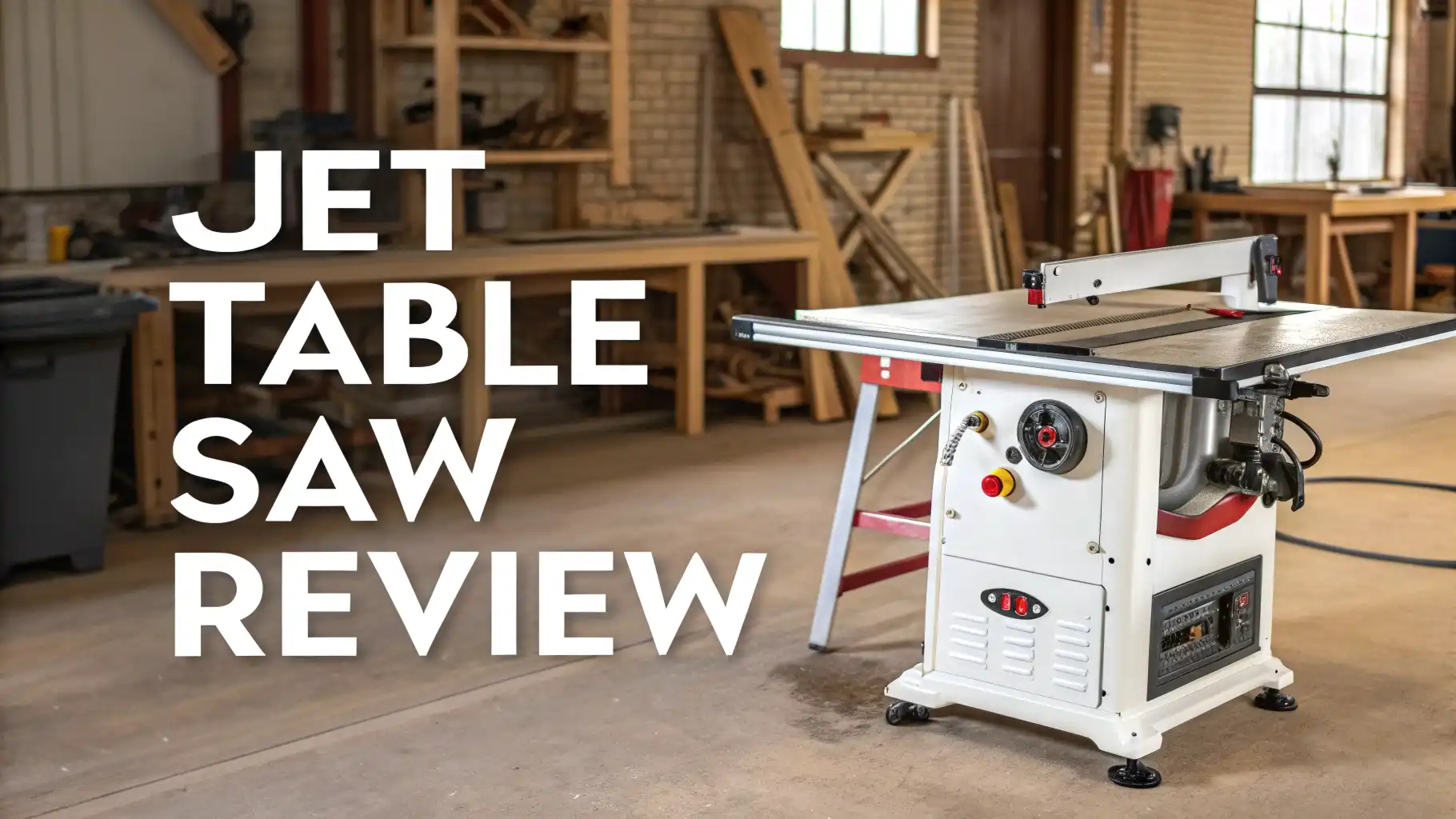
JET Table Saw Review 2026: Top Tier or Trash?
Are you tired of fence systems that drift, motors that bog down, and table saws that feel like they were built on a Monday morning? You are not alone. Every woodworker has been there.
You want a saw that cuts clean, stays accurate, and lasts long enough to become a shop heirloom. The JET table saw is one of the most talked-about machines in the woodworking world in 2026, and for good reason.
This review covers everything you need to know. We dig into the motor, the fence, the build quality, the safety features, and the real-world performance so you can make a smart buying decision.
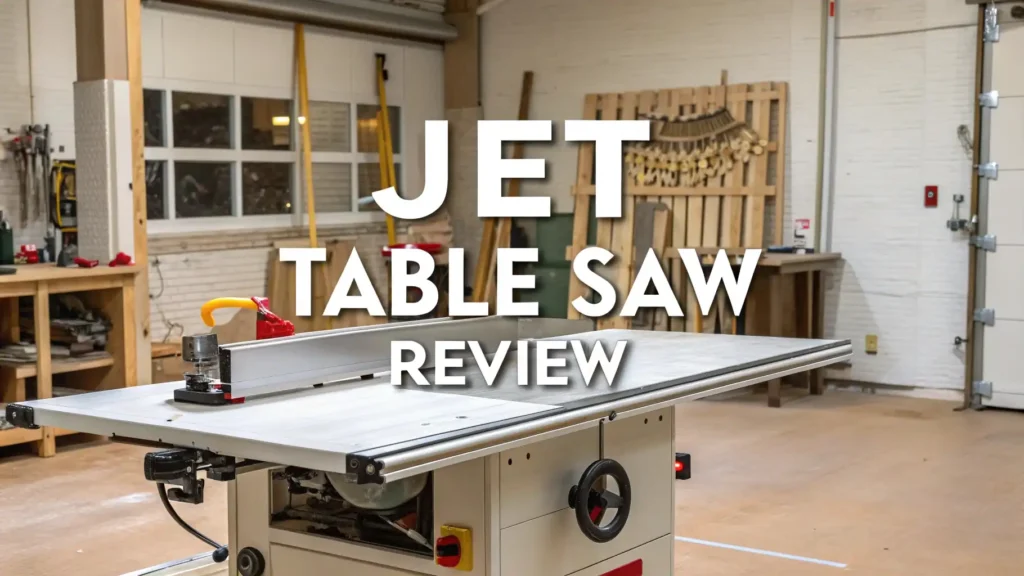
In a Nutshell:
- Powerful and Quiet Motor: The JET ProShop II runs on a 1-3/4 HP motor at 120V, which delivers smooth, quiet cuts on most hardwoods and sheet goods without strain.
- Accurate Fence System: The Accu-Fence system locks securely in place and holds its position through long ripping sessions, which is critical for repeatable, clean cuts.
- Cast Iron Table: The cast iron wings and table surface stay flat under load, resist vibration, and give you a firm, stable workspace for large panels and furniture stock.
- Safety First Design: A quick-release riving knife, magnetic paddle switch, and blade guard system make this saw safer for daily shop use than many contractor saws at this price level.
- 30-Inch Rip Capacity: The 30-inch rip capacity handles most furniture and cabinet work with ease, though wider sheet goods may need additional outfeed support.
- Built for Serious Woodworkers: This is not a beginner toy or a basic jobsite saw. It is built for woodworkers who want professional performance without a full cabinet saw price tag.

What Is the JET Table Saw? A Quick Overview
JET is a brand with a long history in the professional woodworking tool market. The company produces tools that sit between budget contractor saws and full-blown industrial cabinet machines. The JET ProShop II 10-Inch Table Saw is the flagship contractor-style model for 2026. It combines a cast iron table with cabinet saw features in a body that fits a mid-sized shop.
JET markets this saw to serious hobbyists, small production shops, and professional woodworkers who need accuracy and durability without spending on a full 230V cabinet machine. The ProShop II line has gone through multiple updates over the years, and the current version includes notable improvements in dust collection, fence design, and blade change convenience.
The saw runs on a standard 120V household circuit, which makes it easy to install in a home workshop without electrical upgrades. It uses a 10-inch blade and delivers up to 4,000 RPM at the arbor. The table surface measures generously with cast iron wings that add rigidity and support for larger workpieces.
Key Features of the JET Table Saw
The JET ProShop II table saw packs a solid list of features into its compact cabinet body. Here is what stands out when you look at this machine closely.
The cast iron table top is flat and stays flat. Cast iron resists deflection under load better than fabricated steel, which means your cuts stay true even when you push a wide panel through the blade. This matters a great deal when you are cutting cabinet doors or furniture panels that need square edges.
The saw includes onboard accessory storage, a feature that working woodworkers appreciate because it keeps the miter gauge, wrenches, and dado insert close at hand during a long cutting session. The magnetic paddle switch is a standout safety feature that you can hit with your knee or hip in an emergency without searching for a button.
The single-belt drive system contributes to quieter operation than older multi-belt designs, and the enclosed cabinet keeps dust moving toward the collection port rather than spreading through the shop. JET also includes both a standard and a low-profile riving knife in the package, which makes non-through cuts safer and faster to set up.
Motor Performance and Cutting Power
The JET ProShop II runs a 1-3/4 HP induction motor on a standard 120V circuit. This motor type is known for smooth, low-vibration operation and long service life. In daily use, the motor handles hardwood ripping, plywood cutting, and repeated crosscuts without hesitation on typical shop stock.
The motor delivers consistent power at a maximum blade speed of 4,000 RPM. This is slightly lower than some jobsite saws that spin at 4,800 RPM, but the difference is felt more as smooth cutting than speed reduction. The induction motor type reduces vibration significantly compared to universal motors found in cheaper contractor saws.
Where this motor has limits is in very heavy, repeated ripping of thick, dense hardwoods like hard maple or thick white oak. If you feed wide stock too fast or use a dull blade, the motor will slow down noticeably. The solution is simple: use sharp blades and let the saw set its own pace on thick stock. For cabinet work, furniture making, and typical shop joinery, the motor is more than adequate.
The Poly-V drive belt on upgraded JET models reduces belt noise and slippage compared to standard V-belts. It keeps power transfer efficient and contributes to the quiet, smooth cutting that JET users report consistently in reviews.
Top 3 Alternatives for the JET Table Saw


JET Table Saw Fence System: Accuracy You Can Trust
The fence is the heart of any table saw. A fence that drifts, flexes, or fails to lock parallel to the blade will ruin your work no matter how good the motor is. The JET Accu-Fence system on the ProShop II is one of its strongest selling points.
The fence locks on both the front and rear rails, which prevents racking under side pressure during long rips. Once you set it to a measurement, it stays there through an entire sheet of plywood or a long run of hardwood strips. The T-square design makes it fast to set and easy to read from the front of the saw.
The fence reads clearly on the scale rail and users report that it holds within 0.001 inches of parallel to the blade after initial setup and calibration. This level of accuracy is what separates a production-quality tool from a basic contractor saw.
One practical tip: calibrate the fence during your initial setup session. Use a reliable straightedge and check blade-to-fence parallelism before your first cut. A one-time alignment at installation gives you accurate results for months of daily use without adjustment.
Safety Features That Protect You Every Cut
Table saws are powerful tools that demand respect. JET built several strong safety features into the ProShop II to protect you during every cut.
The quick-release riving knife is the most important safety feature on a modern table saw. It sits directly behind the blade and prevents wood from pinching and kicking back toward the operator.
The JET riving knife releases quickly without tools, which means you can swap it for non-through cuts in seconds. This feature alone makes the ProShop II significantly safer than older contractor saws with fixed splitters.
The magnetic paddle switch allows you to kill the saw instantly with a knee, hip, or hand swipe rather than searching for a button. This is a standard safety feature on quality table saws and JET includes it on the ProShop II as a standard item.
A blade guard assembly with an anti-kickback pawl comes standard with the saw. The guard provides saw dust management and operator protection during standard through cuts. The pawl digs into the wood if the piece tries to kick back, stopping the movement before it reaches the operator.
Dust Collection System: Keeping Your Shop Clean
Sawdust is more than a nuisance. Fine wood dust poses a real health risk with long-term exposure. The JET ProShop II takes dust management seriously with an improved dust shroud that surrounds the blade and directs particles toward the collection port.
The dust port accepts a standard 4-inch dust collection hose, which connects directly to a shop dust collector or a large shop vacuum. In testing and user reviews, the shroud captures a large percentage of below-table dust when connected to a properly sized collector running at adequate CFM.
One area where improvement is possible is above-table dust capture during crosscuts. The blade guard includes a small dust port, but connecting a separate hose to it is awkward with some collector setups. Many users solve this by connecting a small overhead arm to their dust collector.
The enclosed cabinet design helps contain below-table dust far better than open-base contractor saws, which simply allow fine dust to drift freely. If you value a clean shop and respiratory health, the enclosed cabinet of the ProShop II is a meaningful advantage over open-frame saws.
Build Quality and Durability
JET builds the ProShop II to last. The cast iron table top and wing surfaces are ground flat at the factory and resist the wear and denting that stamped steel surfaces develop over time. Cast iron also absorbs vibration, which keeps the cutting surface stable and reduces noise at the blade.
The cabinet body is heavy-gauge steel, and the trunnion system that supports the blade is robust enough to hold alignment through years of daily use. The arbor bearings are industrial-grade and designed to resist the side loading that happens during heavy ripping sessions.
Real users report that the saw feels solid and well-built from the moment you uncrate it. Some users have noted minor quality control variations in small hardware items like leg threading and table leveling bolts, which is worth keeping in mind when you receive your machine. Inspect all hardware before final assembly and document any issues promptly for warranty service.
JET backs the ProShop II with a 5-year warranty on the tool itself, which reflects the brand’s confidence in its build quality. The warranty covers manufacturing defects and is supported by JET’s US-based service network.
Ease of Setup and Assembly
The JET ProShop II is a substantial machine and assembly requires time and planning. Budget at least 2 to 4 hours for initial setup, and ideally have a second person help with lifting and leveling the table extensions.
The instruction manual is clear and well-organized. Each step covers blade alignment, fence calibration, and belt tension in logical order. First-time table saw buyers may need extra time to understand the alignment process, but experienced woodworkers will find the setup straightforward.
Key setup steps include:
leveling the wings coplanar with the main casting, aligning the blade parallel to the miter slots, and calibrating the fence to run true to the blade. These steps take patience on the first setup but only need repeating if the saw is moved or disassembled.
A mobile base is a smart addition to this saw. The ProShop II is heavy and moving it without a mobile base risks damage to floors and the machine. JET and third-party manufacturers offer compatible mobile bases that allow one-person repositioning in the shop.
Who Should Buy the JET Table Saw?
The JET ProShop II is the right saw for a specific type of woodworker. Understanding who it is for helps you decide if it matches your needs.
This saw is an excellent choice for serious hobbyists who build furniture, cabinets, and home projects regularly. It is also well-suited to small professional shops that do finish carpentry, custom cabinet work, or furniture production on a daily basis. The accuracy and build quality of the JET make it appropriate for work where precision matters.
This saw may not be the best fit for woodworkers who need maximum portability between job sites, as its weight and size make it a shop-only machine. It is also not ideal for anyone who regularly cuts very wide sheet goods, since the 30-inch rip capacity requires outfeed support and extra handling for full 4×8 panels.
If your budget allows, the JET XACTA Deluxe is the step-up model with a larger table, higher-powered motor, and commercial-class fence system for woodworkers who need more capacity and industrial-level durability.
JET Table Saw Pros and Cons
Every tool has strengths and weaknesses. Here is an honest look at what the JET ProShop II does well and where it has room for improvement.
Pros:
Cast iron table stays flat and absorbs vibration for clean, steady cuts. The Accu-Fence system holds accurate parallel alignment through long cutting sessions. Enclosed cabinet design improves dust collection compared to open contractor saws. Quiet induction motor runs smoothly and lasts long with basic maintenance. Quick-release riving knife and magnetic paddle switch make daily use safer and more convenient.
Cons:
The 30-inch rip capacity is limiting for woodworkers who frequently cut full-width sheet goods. Assembly is complex and time-consuming for first-time owners. Some users report minor quality control variations in small hardware components. The saw requires a dedicated shop space and is not portable for job site work.
How Does the JET Table Saw Compare to Competitors?
Placing the JET ProShop II against its main competitors helps you see where it stands in 2026.
Against the DEWALT DWE7491RS: The DEWALT is lighter, more portable, and costs less. Its 15-amp motor is strong for a jobsite saw and the rolling stand makes transport easy. However, the JET offers a cast iron table, better vibration absorption, and a more enclosed dust collection setup. If portability matters, choose the DEWALT. If shop accuracy and durability matter more, the JET wins.
Against the Bosch GTS15-10: The Bosch delivers strong portable performance with its gravity-rise stand and soft-start motor. It is a peer competitor for woodworkers who split time between job sites and a shop. The JET holds an edge on table rigidity and long-term durability for stationary shop use.
Against the Powermatic PM2000B: The Powermatic is a step above the JET in every measurable way, but it costs significantly more and requires a 230V circuit. For woodworkers who need the absolute best in a production shop, the Powermatic is worth the price. For most serious hobbyists and small shops, the JET ProShop II delivers outstanding value at a lower price point.
Final Verdict: Is the JET Table Saw Worth It in 2026?
The JET ProShop II 10-Inch Table Saw earns a strong recommendation in 2026 for serious woodworkers who want a precision shop saw without the full cost of a cabinet machine.
Its cast iron table, accurate fence system, improved dust collection, and solid motor make it one of the best values in the mid-range table saw category. The safety features are practical and well-implemented. The build quality is strong and the 5-year warranty backs it up.
The saw does require a real investment in setup time and shop space, and the 30-inch rip capacity may feel limiting for some users. But for the woodworker who builds furniture, cabinets, or finish carpentry in a dedicated shop setting, the JET ProShop II delivers the performance, accuracy, and longevity that justify its price in 2026.
Frequently Asked Questions
Is the JET table saw good for beginners?
The JET ProShop II is a capable machine, but it is best suited for intermediate to advanced woodworkers. Beginners can use it, but the assembly complexity, weight, and setup requirements make it a steep starting point. A simpler jobsite saw may be a better first tool, with the JET as a future upgrade when your skills and shop grow.
What blade size does the JET ProShop II use?
The JET ProShop II uses a standard 10-inch table saw blade with a 5/8-inch arbor bore. This is the most common blade size in the woodworking industry, which means you have access to a huge range of blades for ripping, crosscutting, dado cutting, and specialty applications.
Does the JET table saw need a special power outlet?
No. The JET ProShop II runs on a standard 120V household circuit. You will need a dedicated 20-amp circuit for best results and to avoid tripping breakers during heavy cuts. The JET XACTA Deluxe models require a 230V circuit, so check the model you are purchasing before installation.
How long does assembly take for the JET ProShop II?
Most users report 2 to 4 hours for a complete assembly and alignment from unboxing. Having a second person available for lifting and table leveling makes the process faster and safer. Plan the alignment process as a separate session from physical assembly for best results.
Can the JET table saw cut dados?
Yes. The JET ProShop II accepts a standard dado blade stack up to 13/16-inch wide. A dedicated dado throat plate insert is included with the saw. Dado cutting is a common and important capability for cabinet and furniture makers, and the JET handles it well with proper setup.
What is the warranty on the JET table saw?
JET covers the ProShop II with a 5-year limited warranty against manufacturing defects. This is one of the stronger warranties in the mid-range table saw category and reflects JET’s confidence in the build quality of its machines. Register your product with JET after purchase to activate full warranty coverage.
How does the JET table saw handle thick hardwoods?
The 1-3/4 HP motor handles typical hardwood up to 2 inches thick with a sharp blade at moderate feed rates. Very dense species like hard maple and thick white oak will slow the motor on wide cuts. Use a sharp ripping blade, feed at a controlled pace, and let the motor work at its own speed for best results on heavy stock.