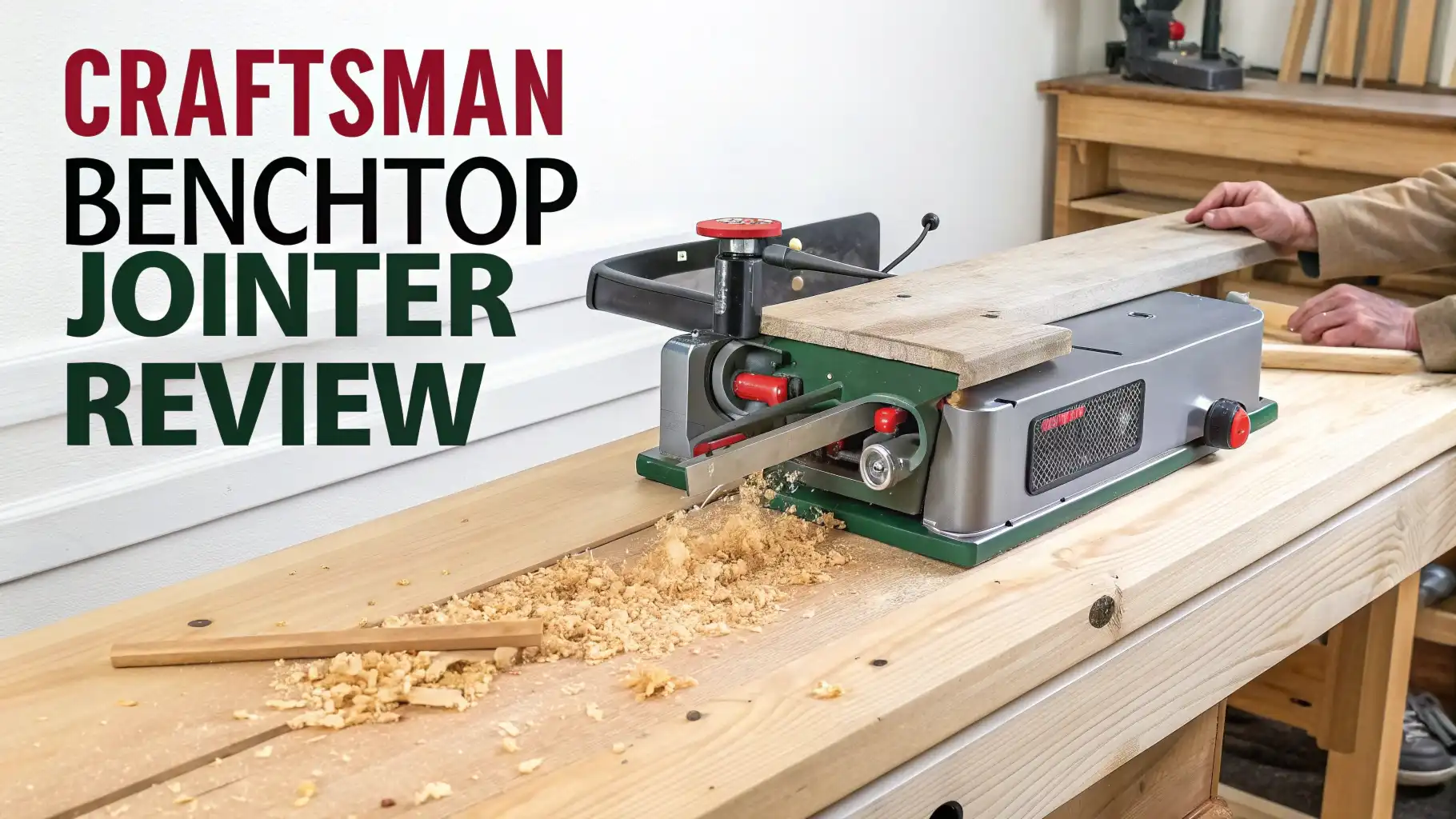
CRAFTSMAN Benchtop Jointer Review 2026: Your Complete Guide
Are you tired of dealing with rough lumber edges? Do you want to create smooth, perfectly flat surfaces for your woodworking projects without breaking the bank?
The CRAFTSMAN Benchtop Jointer might just be the game changer your workshop needs. This powerful tool has been making waves in the woodworking community, and today we’re taking a deep dive into everything you need to know before making your purchase decision.
Whether you’re a weekend warrior or a serious hobbyist, this review will help you determine if this jointer deserves a spot on your workbench.
Key Takeaways:
- Powerful Motor Performance: The 10-amp motor delivers variable speed control ranging from 6,000 to 11,000 RPM, giving you up to 22,000 cuts per minute. This means you can tackle both hardwoods and softwoods with confidence and precision.
- Variable Speed Control: Unlike many competitors, this jointer offers adjustable speed settings. You can select the perfect speed based on your material’s hardness and size, reducing tearout and improving finish quality.
- Affordable Entry Point: Priced around $340, this jointer offers professional features at a budget-friendly price point. It’s perfect for beginners who want quality without the premium price tag.
- Compact Design: With a 6.3-inch width capacity, this benchtop model fits comfortably in smaller workshops while still handling most common woodworking projects.
- Dual Knife System: The dual-knife cutter head provides maximum stock removal and creates smooth, consistent finishes across various wood types.
- Mixed Reliability Reports: While many users report excellent performance over years of use, some have experienced durability issues. Understanding proper maintenance and setup is crucial for longevity.

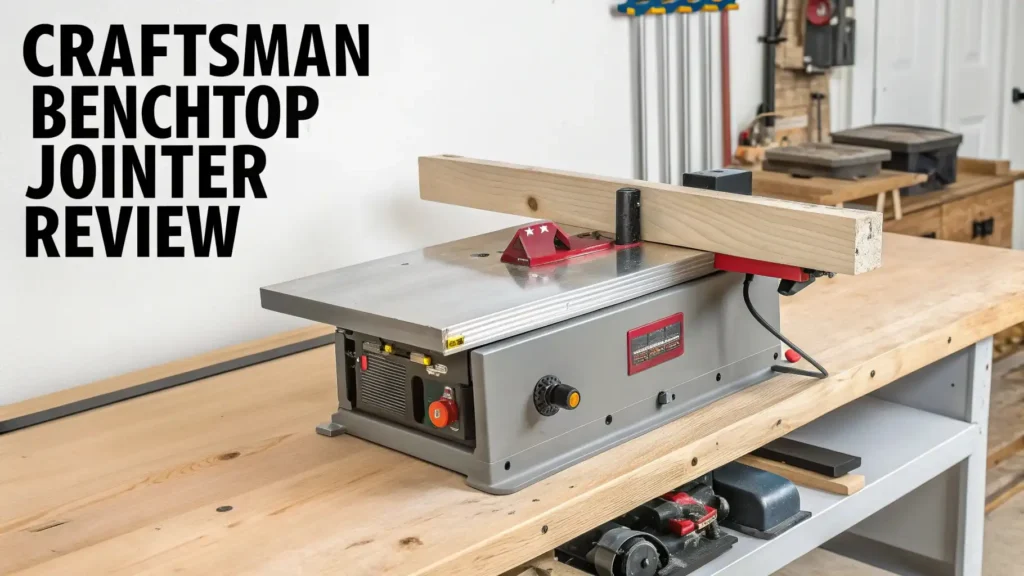
CRAFTSMAN Benchtop Jointer CMEW020
The CRAFTSMAN CMEW020 stands as one of the most popular benchtop jointers available today. This machine delivers solid performance for home workshops and small professional setups.
The tool weighs enough to provide stability during operation without being too heavy to move around your workspace. The Amazon’s Choice designation and 4.4-star rating from over 650 reviews demonstrate its popularity among woodworkers.
This jointer features a 10-amp motor that provides plenty of power for most jointing tasks. The variable speed function sets it apart from many competitors in this price range.
You can adjust the RPM based on the wood species you’re working with. Slower speeds work better for harder woods like oak and maple, while faster speeds handle softwoods like pine and cedar efficiently.
The dual-knife cutter head removes material quickly and leaves a smooth surface finish. The knives are replaceable, which means you can maintain optimal performance over time.
The center-mounted fence measures 4.25 inches and provides excellent support for your workpieces. This fence tilts for bevel cuts, adding versatility to your jointing operations.
Understanding What Makes This Jointer Special
The CRAFTSMAN Benchtop Jointer brings several features that make it stand out in the crowded market. The variable speed control is perhaps the most significant advantage.
Most benchtop jointers run at a fixed speed, but this model lets you dial in the perfect cutting speed. This feature reduces tearout on figured woods and provides better control when working with different grain patterns.
The machine includes a built-in dust collection port that connects to your shop vacuum or dust collection system.
Jointers create a lot of shavings, and effective dust collection keeps your workspace clean and improves visibility during operation. The aluminum tables measure 20 inches long combined, providing adequate support for boards up to several feet in length.
The fence adjustment system uses a simple locking mechanism that maintains accuracy. You can set the fence square to the table or angle it for beveled edges.
The fence locks securely in position, preventing unwanted movement during cutting operations. Many users appreciate how easy it is to adjust and reset the fence to 90 degrees.
Motor Power and Cutting Performance
The heart of any jointer is its motor, and the CRAFTSMAN CMEW020 delivers impressive performance in this area.
The 10-amp motor provides consistent power even when jointing wider boards. You won’t experience bogging down or stalling when feeding material at a reasonable pace. The motor runs smoothly with minimal vibration when properly set up on a stable surface.
The cutter head speed ranges from 12,000 to 22,000 cuts per minute, depending on your speed setting. This high cutting speed produces a smooth finish that often requires minimal sanding.
The dual knives work in tandem to remove material efficiently. Each pass can remove up to 1/8 inch of material, though taking lighter cuts produces better results and extends knife life.
Users report that the motor handles both hardwoods and softwoods without issue. Oak, maple, walnut, cherry, and other dense woods joint cleanly when you use appropriate speed settings and feed rates.
The variable speed control becomes especially valuable when working with tricky woods that tend to tear out. You can slow down the cutter head speed and achieve better results.
Top 3 Alternatives for CRAFTSMAN Benchtop Jointer


Setup and Assembly Process
Getting the CRAFTSMAN Benchtop Jointer ready for use requires some initial setup work. The jointer arrives mostly assembled, but you need to mount it to a stable work surface or stand. The tool doesn’t include a dedicated stand, so you’ll need to purchase one separately or build your own sturdy mounting solution.
The initial setup involves checking and adjusting the tables to ensure they’re coplanar. The infeed and outfeed tables must align perfectly for the jointer to produce flat, straight edges.
This setup process takes time and patience, but it’s essential for achieving good results. Many users recommend watching tutorial videos to understand the proper adjustment procedure.
You’ll also need to check the knife height and ensure both knives project equally from the cutter head. The knives should sit at the same height as the outfeed table.
This alignment prevents snipe and produces consistent cuts along the entire length of your boards. The adjustment process uses set screws and requires basic tools that most woodworkers already own.
Daily Operation and User Experience
Operating the CRAFTSMAN Benchtop Jointer becomes intuitive after you complete a few practice passes.
The power switch sits in an accessible location where you can reach it quickly if needed. The variable speed dial lets you adjust cutting speed without stopping the machine. This feature proves useful when switching between different wood species during a project.
The dust collection works reasonably well when connected to a shop vacuum with good suction. Some fine dust escapes, but most shavings and chips get captured.
Keeping the dust port clear improves collection efficiency. Many users recommend using a dedicated shop vacuum rather than relying on a small portable unit.
The noise level sits at about average for benchtop jointers. You should definitely wear hearing protection during operation.
The variable speed control does affect noise levels slightly, with lower speeds producing somewhat less noise. The machine runs smoothly without excessive vibration when mounted properly to a solid surface or stand.
Maintenance and Knife Changes
Regular maintenance keeps your CRAFTSMAN Benchtop Jointer performing at its best. Cleaning the tables after each use prevents pitch buildup and rust formation.
A light coating of paste wax on the tables helps boards slide smoothly and protects against corrosion. Avoid using silicon-based products as they can contaminate wood surfaces.
Knife changes become necessary when you notice reduced cutting quality or visible nicks in the cutting edges.
The dual-knife system uses standard HSS knives that are relatively affordable to replace. Some users upgrade to carbide knives for longer life between changes. The knife changing process requires careful attention to maintain proper height and alignment.
The cutter head bearings need occasional attention. Listen for unusual sounds that might indicate bearing wear.
The motor brushes will eventually wear out and require replacement, though this typically occurs after years of regular use. Keeping the interior clean and free of sawdust accumulation helps extend component life.
Wood Types and Project Capabilities
The CRAFTSMAN Benchtop Jointer handles a wide variety of wood species commonly used in woodworking projects. Softwoods like pine, cedar, and fir joint easily at higher speed settings. Hardwoods including oak, maple, walnut, and cherry require slower speeds and lighter cuts but produce excellent results.
The 6.3-inch width capacity accommodates most common board sizes used in furniture making and general woodworking. You can joint stock for table legs, face frames, cabinet doors, cutting boards, and many other projects. Wider boards require multiple passes or need to be ripped to width first.
Edge jointing works particularly well on this machine. Creating straight, square edges for glue-ups becomes quick and easy.
The fence support and table length provide adequate stability for boards up to 4 or 5 feet long. Longer boards benefit from roller stands for additional support. Face jointing smaller pieces works fine, though the width limitation means you can’t flatten very wide boards.
Common Issues and Solutions
Some users report reliability concerns with the CRAFTSMAN Benchtop Jointer. The most common issue involves the electronic speed control failing after extended use.
This problem seems to affect a small percentage of units, but it’s worth considering. The warranty should cover such failures if they occur within the coverage period.
Knife adjustment can be tricky for beginners. Getting both knives at exactly the same height takes practice and patience. Investing in a magnetic knife setting jig makes this process much easier and more accurate. Proper knife alignment eliminates most cutting issues and snipe problems.
Table alignment drift can occur over time, especially if the jointer gets moved frequently. Checking and readjusting the table coplanarity periodically maintains cutting quality.
Some users apply thread-locking compound to adjustment screws to prevent them from loosening during operation. This simple modification improves long-term stability.
Value for Money Assessment
At approximately $340, the CRAFTSMAN Benchtop Jointer sits in the middle of the price range for 6-inch benchtop models.
This price point offers good value considering the variable speed feature and overall build quality. More expensive models typically offer longer tables or spiral cutter heads, while cheaper options lack the speed control feature.
The variable speed control adds significant value for woodworkers who work with various wood species.
Being able to adjust cutting speed reduces tearout and improves finish quality. This feature alone justifies the price premium over basic fixed-speed models. The money saved on sanding supplies and time adds up over the life of the tool.
Replacement parts availability is good for this model. Knives, drive belts, and other consumable components can be ordered through CRAFTSMAN or from third-party suppliers.
This availability ensures you can keep the jointer running for many years. The combination of reasonable initial cost and low operating expenses makes this jointer economical for home workshops.
Who Should Buy This Jointer
The CRAFTSMAN Benchtop Jointer makes an excellent choice for beginner woodworkers starting to build their tool collection.
The price point is accessible, and the features support skill development. Learning to use a jointer properly on this machine transfers directly to using larger, more expensive models.
Hobbyist woodworkers with limited shop space appreciate the compact footprint. The benchtop design allows you to store the jointer when not in use and bring it out when needed. This flexibility works well for garage shops or basement workshops where permanent installation isn’t possible.
Small professional shops handling custom furniture or cabinet work can use this jointer for edge preparation and smaller face jointing tasks.
While not built for heavy production work, the tool handles typical small shop volumes effectively. The variable speed control helps produce quality results on client projects without investing in industrial equipment.
Comparison with Competitor Models
The WEN JT630H represents the closest competitor at a slightly lower price point. The WEN model features a spiral cutter head instead of straight knives, which reduces tearout but costs more to maintain.
The CRAFTSMAN offers variable speed control that the WEN lacks. Your choice between these models depends on whether you value speed adjustment or spiral cutting technology more.
The RIKON benchtop jointers cost slightly more but offer longer tables and refined adjustments. RIKON focuses on precision and build quality, targeting serious hobbyists.
The CRAFTSMAN provides similar basic functionality at a lower price. Budget-conscious woodworkers often choose the CRAFTSMAN and use the savings for other tools.
Delta and Jet make benchtop jointers priced higher than the CRAFTSMAN. These premium brands offer enhanced features and potentially better long-term durability.
However, the price difference often exceeds several hundred dollars. For many users, the CRAFTSMAN delivers adequate performance at a much more accessible price point.
Final Verdict and Recommendations
The CRAFTSMAN Benchtop Jointer CMEW020 delivers solid performance for the price. The variable speed control, adequate power, and reasonable build quality make it a good choice for home workshops.
While some reliability concerns exist, many users report years of trouble-free operation with proper maintenance.
This jointer works best for woodworkers who understand its limitations. The 6.3-inch width capacity handles most projects but restricts you from jointing very wide boards.
The benchtop design requires a stable mounting surface for best results. Users willing to perform initial setup and periodic maintenance will get good service from this tool.
We recommend this jointer for beginners and intermediate woodworkers looking for an affordable entry into power jointing. The tool provides enough features and capability to support skill development without overwhelming new users.
More experienced woodworkers with small shops will find it adequate for most tasks. However, professional production shops should consider larger, more robust models.
Frequently Asked Questions
What is the maximum cutting depth per pass?
The CRAFTSMAN Benchtop Jointer can remove up to 1/8 inch of material in a single pass. However, taking lighter cuts between 1/32 and 1/16 inch produces better surface finishes and extends knife life. Removing less material per pass also reduces strain on the motor and improves safety. For figured woods or woods prone to tearout, taking very light passes at slower speeds delivers the best results.
Do I need to buy a separate stand for this jointer?
Yes, the CRAFTSMAN CMEW020 does not include a dedicated stand. You need to mount it to a sturdy workbench or purchase a universal tool stand separately.
Some woodworkers build custom stands to position the jointer at comfortable working height. The stand or mounting surface must be stable and level to prevent vibration and ensure accurate cuts. Mobile bases work well if you need to move the jointer around your shop.
How often do the knives need replacement?
Knife life depends on usage frequency and the types of wood you joint. With normal hobby use, HSS knives typically last several months to a year before requiring replacement or resharpening.
Working with abrasive woods or accidentally hitting knots and foreign objects shortens knife life. Many woodworkers keep spare knives on hand to minimize downtime. Some users choose to have knives professionally sharpened rather than replacing them each time.
Can this jointer handle hardwoods like oak and maple?
Yes, the CRAFTSMAN Benchtop Jointer handles hardwoods effectively. The 10-amp motor provides sufficient power for dense woods. Use the variable speed control to dial in slower speeds for hardwoods, and take lighter cuts to reduce strain.
Feed the wood slowly and steadily for best results. Many users successfully joint oak, maple, walnut, cherry, and other hardwoods with this machine when using proper technique and sharp knives.
What maintenance does this jointer require?
Regular maintenance includes cleaning sawdust from the motor housing and internal components, waxing the tables to prevent rust and improve board sliding, checking and adjusting table alignment periodically, inspecting drive belts for wear, and replacing knives when cutting quality declines.
Keep the dust collection port clear for optimal chip evacuation. Most maintenance tasks take just a few minutes and significantly extend the jointer’s working life. Following the owner’s manual recommendations helps prevent common problems.
Is the dust collection system effective?
The dust collection works reasonably well when connected to a shop vacuum with adequate suction power. Most larger chips and shavings get captured, though some fine dust escapes into the air.
Using a dedicated shop vacuum rated for continuous use provides better results than small portable units. Some users modify the dust port or add supplemental collection to improve performance. Overall, the dust collection is adequate for a benchtop jointer in this price range.