BOSCH GET75-6N Electric Orbital Sander Review in 2026
Are you tired of spending hours sanding projects only to get mediocre results? You know that feeling when you switch between multiple tools just to get different sanding effects?
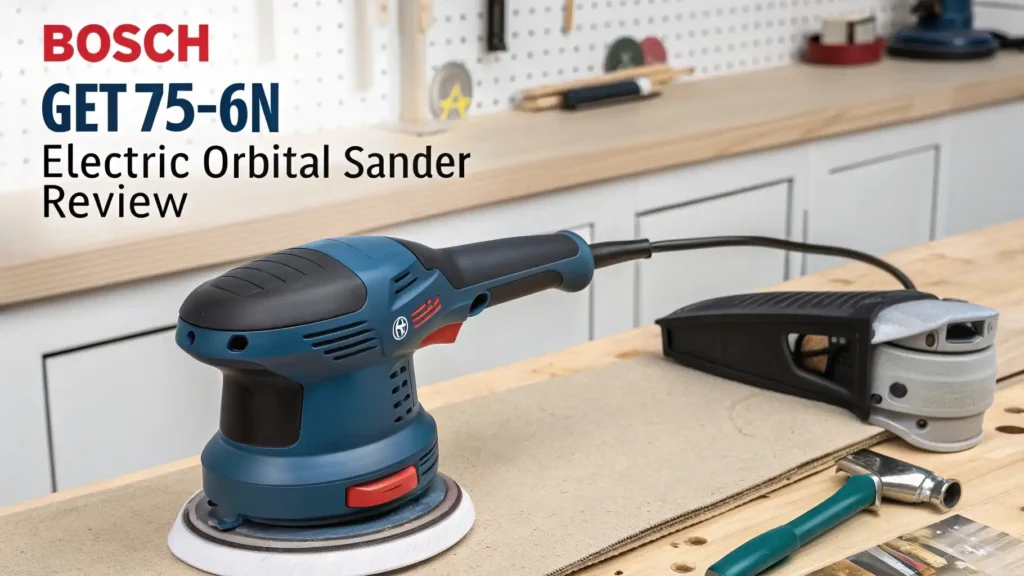
Well, grab your coffee and settle in because I’m about to introduce you to a sander that might just become your new workshop favorite. The BOSCH GET75-6N isn’t just another random orbital sander sitting on the shelf.
This dual-mode powerhouse brings something special to your workbench, and I’m excited to show you why woodworkers and DIY enthusiasts can’t stop talking about it.
Key Takeaways:
- Two Sanding Modes in One Tool: The GET75-6N features both standard random orbit mode for fine finishing work and a turbo mode that removes material almost as fast as a belt sander. You simply flip a switch to change between modes.
- Professional Power with 7.5 Amps: This sander delivers serious muscle with its 7.5-amp motor, offering variable speeds from 4,000 to 10,000 OPM (orbits per minute). You control the aggression based on your project needs.
- Six-Inch Sanding Disc Covers More Ground: The larger 6-inch pad means you finish projects faster than standard 5-inch sanders. More surface area equals fewer passes and less arm fatigue.
- Advanced Dust Collection System: Bosch engineered this sander with side-mounted dust collection and compatibility with most vacuum systems. You can actually see your work surface while sanding instead of working through clouds of dust.
- Ergonomic Barrel Grip Design: The extended barrel-style handle gives you better control and comfort during long sanding sessions. Your hand position stays natural, reducing strain and improving precision.

Understanding the BOSCH GET75-6N Electric Orbital Sander
Let me start with the basics. The BOSCH GET75-6N represents a significant step forward in sanding technology.
This tool belongs to Bosch’s professional power tool lineup, which means it’s built to handle demanding work environments. But here’s the cool part: you don’t need to be a professional contractor to appreciate what this sander offers.
The GET75-6N stands apart from typical random orbital sanders because of its dual-mode functionality. Most sanders give you one sanding pattern. This one gives you two distinct operating modes that handle completely different tasks.
When you’re working in standard random orbit mode, the sander moves in a combination of circular and orbital motions. This creates that beautiful swirl-free finish everyone wants on their final sanding passes.
But flip the switch to turbo mode, and everything changes. The sander shifts to a direct-drive eccentric orbit pattern that removes material aggressively.
We’re talking about removing paint, smoothing rough lumber, and leveling uneven surfaces. Tasks that normally require a belt sander or hours of manual work suddenly become manageable with this single tool.
The Power Behind the Performance
Power matters when you’re pushing through hardwood or removing old finishes. The GET75-6N doesn’t disappoint with its 7.5-amp motor. This motor produces enough torque to maintain consistent speed even under load. When you press the sander against your work surface, it keeps spinning smoothly instead of bogging down like underpowered sanders do.
The electronic variable speed control gives you a range from 4,000 to 10,000 OPM. Lower speeds work beautifully for delicate finishes and softer woods where you want maximum control. Higher speeds tackle hardwoods and rapid stock removal. You adjust the speed dial, and the electronic system maintains that speed regardless of how hard you’re pressing.
Here’s something most reviews don’t mention: the separate on/off and speed controls. You set your desired speed, then turn the sander on and off without losing that setting. This small feature prevents frustrating speed adjustments throughout your work session.
Dual-Mode Functionality Explained
The dual-mode system truly defines this sander’s character. Let me break down how each mode works and when you’d choose one over the other.
Random Orbit Mode combines two simultaneous motions: the pad rotates while simultaneously moving in small circles. This randomized pattern prevents those dreaded swirl marks that ruin otherwise perfect finishes. Use this mode for:
Final finishing passes before staining or painting. Sanding between coats of finish for smooth surfaces. Working with veneers or delicate materials. Achieving that glass-smooth feel on fine furniture pieces.
Turbo Mode switches to direct-drive operation where the pad follows an eccentric circular path. This aggressive cutting action removes material quickly. Perfect for:
Removing old paint or varnish from furniture. Leveling rough-sawn lumber or reclaimed wood. Smoothing down wood filler or epoxy repairs. Initial sanding on projects that need major surface prep. Flattening glued-up panels and tabletops.
The beauty of having both modes available means you complete entire projects with one sander. Start with turbo mode to handle the heavy work, then switch to random orbit mode for the final finishing passes. No tool changes, no interruptions.
Top 3 Alternatives for BOSCH GET75-6N


Ergonomics and Handling Comfort
Comfort might not seem critical when you’re shopping for sanders, but spend a few hours working on a large project and you’ll understand why ergonomics matter. The GET75-6N features a barrel-grip design that’s longer than traditional random orbital sanders.
This extended grip gives you several advantages. First, you can position your hand farther back from the sanding pad, which improves balance and reduces the tendency to tip the sander. Better balance means more consistent results and less fatigue.
The rubberized grip surface stays comfortable even during extended use. Your hand doesn’t slip, which improves control and safety. The grip diameter fits comfortably in most hands without forcing awkward positions.
Bosch includes a removable front handle that attaches to the sander’s body. This auxiliary handle provides two-handed operation for maximum control during aggressive sanding in turbo mode. When you’re doing delicate finishing work, remove the handle for single-handed operation with improved visibility.
Weight distribution deserves mention too. The sander balances nicely without feeling front-heavy or awkward. You guide it across surfaces smoothly without fighting against poor balance.
Dust Collection System That Actually Works
Dust collection separates good sanders from great ones. The GET75-6N excels here with its side-mounted dust collection port. This design choice keeps the collection tube out of your line of sight, giving you a clear view of your work surface.
The sander connects to virtually any dust extraction system through included adapters. Bosch provides adapters for 22mm and 35mm hoses, which covers most shop vacuum and dust extractor configurations. The connection creates a tight seal that maintains strong suction.
The multi-hole sanding pad works with the dust collection system to capture dust right at the point of creation. When you match multi-hole sanding discs with the pad (which you should always do), dust gets pulled through those holes before it can spread around your workspace.
Real-world performance impresses here. Connect a quality shop vacuum, and you’ll see over 90% dust capture according to many user experiences. Your work surface stays visible, you breathe cleaner air, and cleanup takes minutes instead of hours.
Sanding Pad Options and Versatility
The GET75-6N accepts three different backing pad hardness levels, each serving specific purposes. Understanding these pad options helps you achieve professional results.
Soft Hook-and-Loop Backing Pad (RSM6044): This flexible pad conforms to contoured surfaces and profiles. Use it when sanding curved furniture parts, moldings, or any surface that isn’t perfectly flat. The soft pad prevents over-sanding edges and maintains consistent contact across curves.
Medium Hook-and-Loop Backing Pad (RSM6045): This pad comes included with your sander. It provides the best all-around performance for most sanding tasks. The medium hardness works well on flat surfaces while offering enough flexibility for slightly contoured work.
Hard Hook-and-Loop Backing Pad (RSM6046): Choose this pad when you need maximum flatness. It’s perfect for leveling surfaces, flattening tabletops, or any situation where you want aggressive, flat sanding without the pad flexing.
Changing pads takes only a minute using the included hex wrench. This versatility means one sander handles an incredibly wide range of sanding challenges.
Performance Across Different Materials
How does the GET75-6N perform across various materials? Let’s look at real-world applications.
Hardwoods like oak, maple, and walnut: The sander excels here. Turbo mode makes short work of initial surface prep, while random orbit mode produces beautiful swirl-free results. The powerful motor maintains speed even when sanding dense hardwoods.
Softwoods including pine and cedar: Lower speed settings prevent oversanding that creates uneven surfaces in soft materials. The smooth operation avoids the aggressive digging that can happen with less refined sanders.
Painted surfaces: Turbo mode strips paint efficiently when paired with coarser grits. The aggressive cutting action speeds up refinishing projects significantly.
Metal surfaces: While not primarily designed for metalwork, the sander handles light metal smoothing tasks well. Use appropriate metal-rated sanding discs and lower speeds.
Composite materials: The sander works effectively on materials like MDF, plywood, and particle board. The efficient dust collection proves especially valuable here since these materials generate fine dust that spreads easily.
Maintenance and Durability Factors
Build quality impresses when you examine the GET75-6N closely. Bosch constructed this sander with professional use in mind. The housing feels solid without unnecessary weight. Internal components show quality manufacturing that suggests long service life.
The motor features sealed bearings that keep dust contamination out of critical moving parts. This design choice significantly extends motor life compared to sanders with exposed bearings. Regular cleaning and proper storage will keep this sander running for years.
Carbon brushes in the motor are user-replaceable. When they eventually wear out (which takes a long time under normal use), you can replace them yourself instead of needing professional service. Bosch provides clear instructions for this maintenance task.
The hook-and-loop pad system holds up well to repeated disc changes. Some cheaper sanders use inferior velcro that loses grip strength quickly. The GET75-6N’s system maintains strong holding power even after hundreds of disc changes.
Keep the dust collection port and internal passages clean for optimal performance. Periodically blow out accumulated dust with compressed air. This simple maintenance step ensures maximum suction efficiency.
Noise and Vibration Levels
Noise and vibration affect user comfort and long-term tool usability. The GET75-6N produces moderate noise levels typical for tools in this power class. You’ll want hearing protection during extended sanding sessions, but it’s not painfully loud.
The low-vibration design stands out as a real strength. Bosch engineered the sander to minimize vibration transfer to your hands. This matters tremendously during long work sessions. Excessive vibration causes hand fatigue, reduces control, and can contribute to repetitive stress issues over time.
Users consistently report comfortable operation even during multi-hour sanding marathons. The combination of good balance, effective vibration dampening, and ergonomic grip design creates a tool you can use for extended periods without discomfort.
Comparing Value Against Competitors
At approximately $349, the GET75-6N positions itself in the professional tool category. This price point sits below premium brands like Festool while exceeding typical consumer-grade sanders. Does the performance justify the investment?
Consider what you’re getting: two sanders in one tool, professional-grade construction, exceptional dust collection, and versatility that handles everything from rough stock removal to fine finishing. If you were to buy separate tools for aggressive material removal and fine finishing, you’d spend more money and deal with multiple tools taking up workshop space.
The Makita BO6050J offers similar 6-inch sanding capability at a higher price point around $440. It’s an excellent tool but doesn’t include the dual-mode functionality that defines the Bosch.
DEWALT makes quality 5-inch sanders in the $100 range that work well for lighter-duty applications. However, they lack the 6-inch pad size and professional features of the GET75-6N.
Festool’s Rotex 150 offers dual-mode functionality and legendary build quality but costs over $700. For many users, the Bosch provides similar practical performance at a more accessible price.
Ideal Users and Applications
Who benefits most from the GET75-6N? This sander serves multiple user categories well.
Professional woodworkers and cabinet makers appreciate the time savings from the larger pad and dual modes. The tool handles high-volume production work while delivering finish quality that meets professional standards.
Serious DIY enthusiasts working on substantial projects find the GET75-6N hits a sweet spot between capability and cost. If you’re building furniture, doing home renovations, or tackling ambitious woodworking projects, this sander provides professional results without professional-level investment.
Furniture refinishers love the turbo mode’s paint and finish stripping capabilities combined with the random orbit mode’s beautiful final results. One tool handles the entire refinishing process.
Contractors doing trim carpentry, deck building, or renovation work benefit from the sander’s durability and versatile performance across different materials and applications.
This sander might be overkill if you only sand occasionally or work on very small projects. In those cases, a basic 5-inch random orbital sander meets your needs at lower cost.
Real User Experiences and Feedback
Looking at user reviews across multiple platforms reveals consistent patterns. The GET75-6N earns strong ratings averaging 4.4 out of 5 stars from over 1,200 Amazon reviewers.
Positive feedback frequently mentions: The dual-mode functionality living up to its promise. Excellent dust collection when properly connected. Comfortable ergonomics during extended use. Powerful performance that maintains speed under load. Professional-quality results across various applications.
Common criticisms include: Higher price compared to basic sanders. Larger size and weight than compact 5-inch models. No included storage case. Learning curve to understand when to use each mode effectively.
Some users initially struggle with the barrel grip design if they’re accustomed to traditional palm sanders. Most report adapting quickly and ultimately preferring the improved control.
The consensus suggests this sander delivers on its promises. Users who understand the tool’s capabilities and invest time learning its features report high satisfaction levels.
Tips for Getting Maximum Performance
Let me share some practical advice for getting the best results from your GET75-6N.
Match your sanding discs to the task: Use coarse grits (60-80) with turbo mode for aggressive material removal. Switch to medium grits (100-150) for general smoothing. Save fine grits (180-320) for random orbit mode finishing passes.
Let the sander do the work: Avoid pressing hard, which slows the pad and creates uneven results. Light to moderate pressure achieves better results while extending pad life.
Keep the sander moving: Holding the sander in one spot creates depressions and uneven surfaces. Maintain steady movement across your workpiece in overlapping passes.
Sand with the grain for final passes: While random orbit action minimizes visible scratches, your very finest passes should follow the wood grain direction for the smoothest possible results.
Connect dust collection every time: Some users skip this step for quick jobs. Don’t. The time you save in cleanup far exceeds the seconds needed to connect the vacuum hose.
Start with coarser than you think necessary: Many people start with too fine a grit, which wastes time. Remove scratches, defects, and old finishes with appropriately coarse grits, then progress through the grades.
Frequently Asked Questions
Can I use the BOSCH GET75-6N for automotive work?
Yes, you can use this sander for automotive applications. The dual-mode functionality works well for auto body work. Use turbo mode with coarser grits for removing old paint or smoothing body filler. Switch to random orbit mode with finer grits for final surface prep before painting. Make sure to use automotive-specific sanding discs rated for paint and body work. The excellent dust collection helps contain harmful paint dust when connected to appropriate filtration.
What size sanding discs does this sander require?
The GET75-6N uses 6-inch diameter sanding discs. Choose discs with multi-hole patterns that match the sander’s backing pad for proper dust collection. The standard pattern works with most widely available 6-inch multi-hole discs. Avoid generic single-hole or random-hole patterns that won’t align with the dust extraction ports. Stock multiple grit ranges from 60-grit up through 320-grit to handle different stages of your sanding projects.
How does turbo mode differ from regular random orbit mode?
Turbo mode shifts from random orbital action to direct-drive eccentric orbit motion. Think of it like switching from a gentle massage to aggressive scrubbing. Random orbit mode combines rotation and orbital movement in a randomized pattern that prevents swirl marks. Turbo mode follows a predictable eccentric circular path that cuts much more aggressively. Use turbo mode when you need to remove material quickly.
Does the BOSCH GET75-6N work with all shop vacuums?
The sander works with most shop vacuum systems through included adapters. Bosch provides adapters for both 22mm and 35mm hose diameters, which covers the vast majority of dust extraction equipment. Some specialized systems with unique connection types might require additional adapters. For best dust collection results, use a vacuum with adequate suction power. Small shop vacs work, but dedicated dust extractors with HEPA filtration provide superior performance.
Is this sander too heavy for overhead or vertical sanding?
The GET75-6N weighs more than basic palm sanders, which makes prolonged overhead work challenging. The tool works for moderate overhead sanding tasks, but consider a lighter 5-inch sander for extensive ceiling or overhead cabinet work. The removable front handle helps when you need two-handed control for vertical surfaces like doors and walls. For horizontal surfaces like tabletops, floors, and furniture, the weight isn’t an issue and actually helps the sander work effectively.
Can beginners use the BOSCH GET75-6N effectively?
Yes, beginners can absolutely use this sander successfully. The learning curve isn’t steep despite the professional-grade features. Start with random orbit mode at moderate speeds to get comfortable with the tool’s handling. Progress to turbo mode and variable speed control as you gain confidence. The sander’s user-friendly design prevents common beginner mistakes like creating swirl marks or gouging surfaces.
What maintenance does the GET75-6N require?
Maintenance requirements are minimal. Clean dust from the collection port and internal passages periodically using compressed air. Inspect the power cord regularly for damage. Check the backing pad for wear and replace it when the hook-and-loop surface no longer holds discs securely. The motor’s sealed bearings don’t require lubrication. Carbon brushes eventually wear out with heavy use but typically last years under normal conditions.
How long does the backing pad last before replacement?
Backing pad life varies based on usage intensity and disc-changing frequency. With regular home workshop use, expect the pad to last several years. Professional users changing discs multiple times daily might see pad wear within one to two years. Signs that your pad needs replacement include reduced holding strength where discs slip or fall off, visible wear on the hook-and-loop surface, or uneven pad surface that affects sanding results.