Bosch 4100 Table Saw Review 2026: Is This Still Worth It?
The Bosch 4100 table saw has been a go-to choice for contractors and DIY woodworkers for years. It delivers solid power, impressive portability, and accurate cuts in a single package. But does it still hold up in 2026?
If you are shopping for a portable jobsite table saw, you have probably seen the Bosch 4100 pop up again and again. This 10-inch table saw packs a 15-Amp motor, a Gravity-Rise Wheeled Stand, and a 25-inch rip capacity. That is a lot of value packed into one tool.
In this detailed review, we break down everything about the Bosch 4100. We cover its motor power, fence system, portability, dust collection, and more.
Key Takeaways
- The Bosch 4100 runs on a 15-Amp motor that delivers up to 4.0 max HP and 3,650 RPM. This gives it enough power to rip through hardwoods, plywood, and composite materials with ease.
- The Gravity-Rise Wheeled Stand is a standout feature. It folds and unfolds with a single action, making transport between job sites fast and simple. You do not need to bend down or lift the saw off the ground.
- Rip capacity sits at 25 inches, which is enough to rip 4-foot sheet goods in half. This is a competitive number for a portable jobsite table saw.
- The SquareLock rip fence uses a rack and pinion system for smooth, accurate adjustments. Users report this fence stays square and locks down firmly.
- Dust collection works well with a shop vacuum. The shrouded dust port captures a good amount of sawdust, though some debris still escapes above the table.
- Weight is about 94 lbs with the stand. This is heavier than some competitors, but the wheeled stand makes it manageable for one person to move around.

Bosch 4100 Table Saw Overview
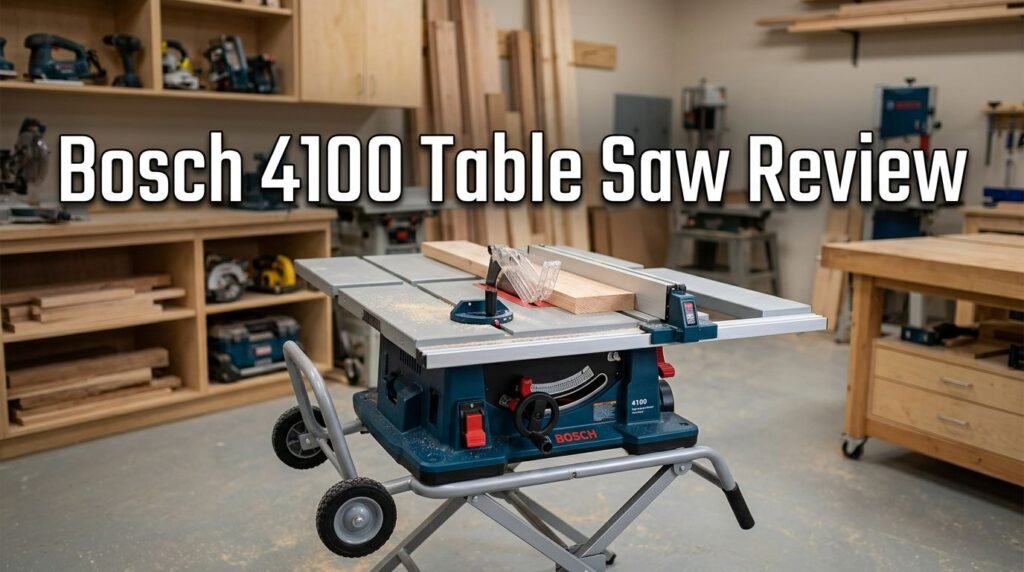
The Bosch 4100 is a 10-inch portable jobsite table saw. Bosch designed it for contractors who need a powerful saw they can take from site to site. It also works great for home workshop users who want solid performance without buying a full cabinet saw.
This saw uses a direct-drive 15-Amp motor that produces 4.0 max horsepower. The blade spins at 3,650 RPM, which is enough speed to cut through most materials cleanly. The large machined aluminum tabletop measures 29 x 21.5 inches and provides a flat, stable surface for precise cuts.
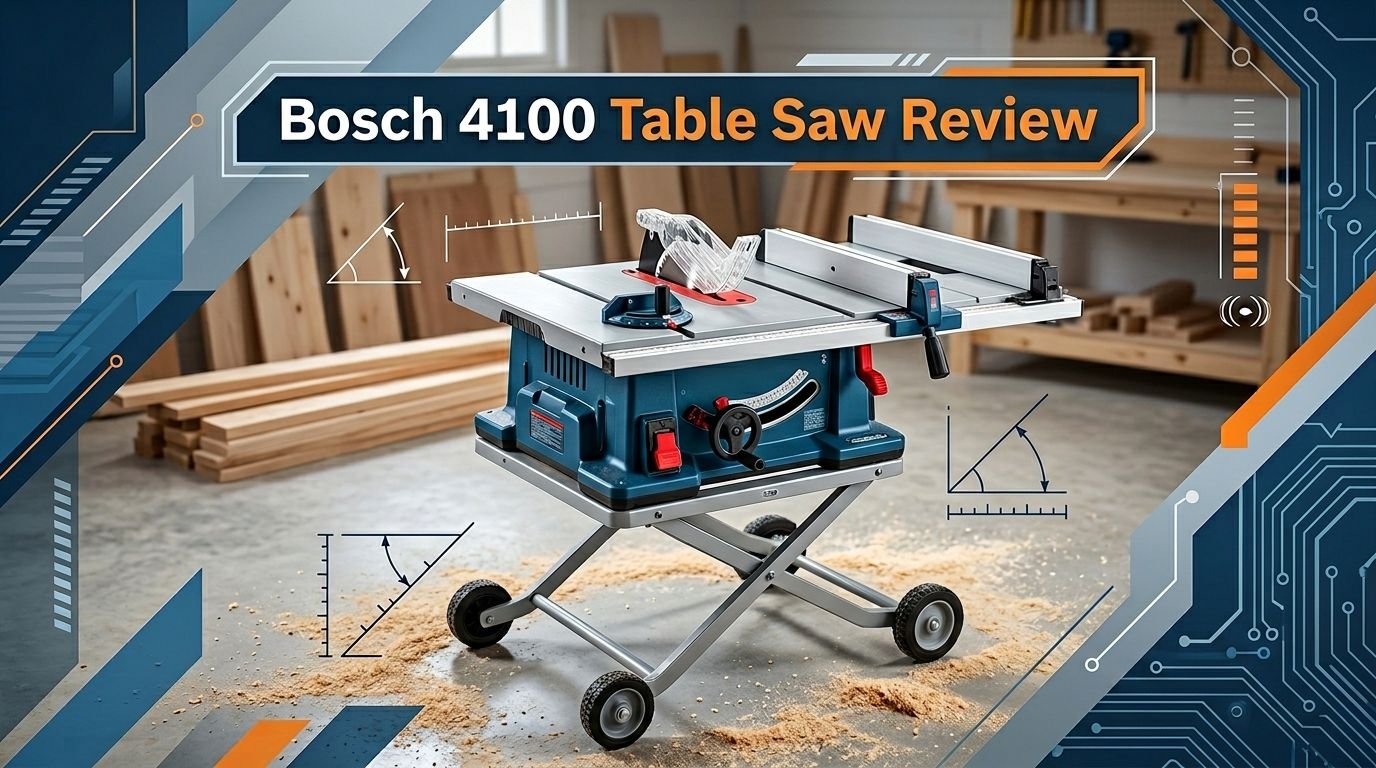
The Bosch 4100 comes with the Gravity-Rise Wheeled Stand (in the 4100-10 model). This stand is one of the biggest selling points. You pull a lever and the stand rises into position on its own. No heavy lifting required. The included Smart Guard System adds a layer of blade protection during operation.
Motor Power and Performance
The heart of the Bosch 4100 is its 15-Amp motor. This motor generates up to 4.0 max HP and spins the blade at 3,650 RPM. These numbers place it right in line with other top jobsite table saws.
In real-world use, this motor handles 2×4 lumber, 3/4-inch plywood, and hardwoods like oak and maple without bogging down. The Constant Response Circuitry helps maintain blade speed under heavy load. This means you get consistent cuts even through thick or dense materials.
The motor does produce noticeable noise during operation. Several users have mentioned this as a minor drawback. However, the power output makes up for it. If you need to rip hardwood stock on a job site, this motor will get the job done. The soft-start feature reduces the initial startup jolt, which extends the motor’s lifespan over time.
Rip Capacity and Cutting Ability
The Bosch 4100 offers a 25-inch rip capacity to the right of the blade. This lets you rip a standard 4-foot sheet of plywood right down the middle. For a portable table saw, this is a very practical number.
The maximum depth of cut at 90 degrees is 3-1/8 inches. At a 45-degree bevel, the depth of cut reaches 2-1/4 inches. The bevel range spans from -2 degrees to 47 degrees, which gives you extra flexibility for angled cuts.
Cross-cutting and bevel cutting are smooth on this saw. The included miter gauge slots accept standard miter gauges and aftermarket sleds. Many users build custom crosscut sleds for this saw to improve accuracy on smaller pieces. The dado capacity is another plus, allowing you to make dado cuts with a stacked dado blade set.
Top 3 Alternatives for Bosch 4100 Table Saw


The Gravity-Rise Wheeled Stand
The Gravity-Rise Wheeled Stand is one of the most talked-about features of the Bosch 4100. This stand uses a simple lever mechanism. You pull the handle, and gravity does the rest as the stand rises into its upright working position.
Folding the stand for transport is just as easy. You release the lever, and the stand collapses with the saw still attached. The 8-inch pneumatic wheels roll smoothly over rough terrain, gravel, and uneven ground. This matters a lot on active construction sites where surfaces are far from flat.
The stand weighs about 42 lbs on its own. Combined with the saw, the total weight sits around 94 lbs. While this is heavier than compact bench-top saws, the wheeled design makes it feel much lighter than the number suggests. You can move it around a job site solo without much effort.
SquareLock Rip Fence System
The Bosch 4100 uses the SquareLock Rip Fence. This fence operates on a rack and pinion adjustment system. You turn a knob, and the fence slides left or right in smooth, measured increments.
Accuracy is a strong point here. The fence locks down firmly and stays parallel to the blade. Many users report that the fence maintains its accuracy over months and years of heavy use. This is critical for getting clean, consistent rip cuts on every pass.
The fence handle is large and easy to grip. Locking and unlocking the fence takes only a quick motion. One small complaint from some users is that the fence can feel a bit lightweight compared to the fences on cabinet saws. However, for a portable jobsite saw, this fence performs above expectations.
Smart Guard System and Safety Features
Safety matters on any table saw. The Bosch 4100 includes the Smart Guard System, which is a blade guard and riving knife assembly. The riving knife prevents kickback by keeping the material from closing on the back of the blade.
The blade guard is transparent, so you can see your cut line clearly while keeping your fingers protected. The guard is easy to remove and reattach, which is helpful if you need to make non-through cuts or use a dado blade setup.
The anti-kickback pawls add another layer of protection. These small teeth grip the wood if it tries to kick back toward you. The saw also includes a push stick for feeding narrow stock through the blade safely. Bosch designed these features to work together as a complete safety package.
Dust Collection Capability
Dust collection on the Bosch 4100 works through a 2.5-inch dust port located on the back of the saw’s body. The port uses a shrouded design that captures a significant amount of sawdust generated during cuts.
Bosch claims up to 70% dust collection when you connect the port to a shop vacuum or dust collector. In practice, most users find this number accurate for rip cuts. Cross cuts and bevel cuts may produce more above-table dust that the port cannot capture.
The Bosch TS1004 dust collector bag is available as an accessory. This bag attaches directly to the port when you do not have a vacuum nearby. It works for quick cuts, but a proper shop vacuum connection gives much better results. Keeping your work area clean reduces health risks from fine wood dust and improves visibility during cuts.
Table Surface and Build Quality
The Bosch 4100 features a machined aluminum tabletop. The surface measures 29 x 21.5 inches, which gives you a decent work area for most cutting tasks. The aluminum is flat and smooth, allowing wood to slide across it with minimal friction.
The miter gauge slots are standard T-slots. This means you can use aftermarket miter gauges and jig systems without modification. The table surface has pre-drilled holes for attaching extension wings if you need extra support for larger workpieces.
Overall build quality feels solid for a portable saw. The housing is mostly plastic with metal internal components. Some users have noted that the table feels thinner compared to saws like the DeWalt DWE7491RS. However, the flatness and accuracy of the surface are excellent. The on-board storage clips hold the rip fence, miter gauge, and push stick securely during transport.
Portability and Transport
Portability is a key strength of the Bosch 4100. The saw and stand together weigh about 94 lbs. While that is not featherweight, the Gravity-Rise Stand with 8-inch pneumatic wheels makes moving it easy.
You can roll this saw across a job site, up a ramp, or into a truck bed without calling for help. The folded dimensions are compact enough to fit in most truck beds and SUV cargo areas. The single-action setup means you go from transport mode to cutting mode in seconds.
The carry handles are positioned well for two-person lifting. But the wheeled stand removes the need for that in most situations. If you work on different sites every week, this level of portability saves real time and energy. Many contractors list this as the main reason they chose the Bosch 4100 over heavier hybrid saws.
Bosch 4100 vs. Bosch GTS15-10
Bosch released the GTS15-10 as the successor to the 4100 series. The GTS15-10 brings several upgrades over the older model. The rip capacity jumps to 32-1/8 inches, which is a major improvement over the 4100’s 25 inches.
The GTS15-10 also features a convenience brake that stops the blade in about three seconds after you release the switch. The motor runs at 3,800 RPM, which is slightly faster than the 4100’s 3,650 RPM. The new model also has an improved switch design with a larger on/off button.
If you are buying new today, the GTS15-10 is the current model. The Bosch 4100 may still be available as new-old stock or on the secondhand market at a lower price. Both saws share the same DNA, but the GTS15-10 offers meaningful improvements in rip capacity, blade stopping speed, and overall fit and finish.
Who Should Buy the Bosch 4100?
The Bosch 4100 fits a specific type of buyer. If you are a contractor who moves between job sites frequently, this saw checks all the right boxes. The Gravity-Rise Stand alone saves time and effort compared to traditional folding stands.
Home workshop users who lack space for a full cabinet saw will also appreciate the Bosch 4100. It offers enough power and precision for most woodworking projects. Building furniture, shelving, cabinets, and trim work is well within this saw’s abilities.
However, if you primarily cut large sheet goods wider than 25 inches, you may want to look at the DeWalt DWE7491RS or the Metabo HPT C10RJS. Both offer larger rip capacities. If safety is your top priority, the SawStop JSS-120A60 is the clear winner with its flesh-detection system.
Pros and Cons of the Bosch 4100
Every tool has strengths and weaknesses. Here is an honest look at both sides.
The biggest pros include the Gravity-Rise Stand, which makes setup and transport extremely fast. The 15-Amp motor with 4.0 max HP delivers consistent power for a range of materials. The SquareLock rip fence is accurate and reliable. Dust collection works well with a connected shop vacuum. The machined aluminum table is flat and smooth.
On the con side, the 25-inch rip capacity falls short of competitors like the DeWalt and Metabo HPT. The motor can be louder than expected during heavy cuts. Some users report the table surface feels thinner than competing models. The saw weighs 94 lbs with the stand, which is heavier than ultra-compact options. The plastic housing, while functional, does not feel as premium as all-metal competitors.
Maintenance Tips for the Bosch 4100
Keeping your Bosch 4100 in top shape requires regular maintenance. Start by cleaning sawdust from the interior after every use. Compressed air works well to blow out dust from hard-to-reach areas around the motor and blade assembly.
Lubricate the elevation and bevel mechanisms every few months. A dry lubricant or paste wax on the table surface reduces friction and prevents rust. Check the blade alignment periodically to make sure the blade runs parallel to the miter slot. A misaligned blade produces poor cuts and increases the risk of kickback.
Replace the blade when you notice burn marks on your wood, increased resistance during cuts, or rough edges. A fresh 40-tooth or 60-tooth carbide-tipped blade makes a huge difference in cut quality. Also inspect the riving knife and blade guard for damage. Replace any bent or cracked safety components immediately.
Final Verdict on the Bosch 4100 Table Saw
The Bosch 4100 remains a solid, reliable portable table saw even in 2026. Its combination of motor power, fence accuracy, and the Gravity-Rise Stand creates a package that few competitors can match on overall convenience.
The 25-inch rip capacity is the one area where it shows its age. Newer saws from DeWalt, Metabo HPT, and even Bosch’s own GTS15-10 offer wider cuts. If rip capacity is your primary concern, consider those alternatives.
For contractors who value quick setup, easy transport, and dependable cutting performance, the Bosch 4100 is still a strong buy. Home workshop users will find it capable of handling most projects. It may not be the newest saw on the shelf, but it has proven itself over years of real-world use. The Bosch 4100 earns its reputation as a workhorse jobsite table saw.
Frequently Asked Questions
What blade size does the Bosch 4100 use?
The Bosch 4100 uses a standard 10-inch blade with a 5/8-inch arbor. This is the most common blade size for jobsite table saws. You can find a wide variety of replacement blades from brands like Freud, Diablo, and Bosch. A 40-tooth general-purpose blade works well for most cuts. A 60-tooth or 80-tooth blade gives you smoother crosscuts in hardwood and plywood.
Can the Bosch 4100 cut dado joints?
Yes. The Bosch 4100 accepts stacked dado blade sets. You need to remove the standard blade guard and riving knife to install a dado set. Bosch sells a separate dado insert plate (TS0800) that provides the wider throat opening required for dado cuts. This is a common accessory purchase for this saw.
How heavy is the Bosch 4100 with the stand?
The saw alone weighs about 52 lbs. The Gravity-Rise Wheeled Stand adds another 42 lbs, bringing the total to approximately 94 lbs. The wheeled design helps offset the weight. Most users can move the saw around a job site without assistance thanks to the pneumatic wheels and balanced design.
Is the Bosch 4100 still being manufactured?
Bosch has transitioned to the GTS15-10 as the current model in this product line. The 4100 series (including the 4100-10 and 4100XC-10) may still be available through some retailers as remaining stock. The GTS15-10 builds on the 4100’s design with improved rip capacity, a convenience brake, and an updated switch layout.
How does the Bosch 4100 compare to the DeWalt DWE7491RS?
Both saws run on 15-Amp motors and accept 10-inch blades. The DeWalt offers a larger 32.5-inch rip capacity compared to the Bosch’s 25 inches. The DeWalt uses a rolling stand, while the Bosch has the Gravity-Rise Stand. Many users prefer the Bosch stand for its one-handed setup. The DeWalt’s micro-adjustable fence is another feature that some woodworkers prefer. Both saws are priced similarly and deliver great performance for their category.
Does the Bosch 4100 have a soft-start feature?
Yes. The Bosch 4100 includes a soft-start function that reduces the initial startup torque. This prevents the saw from jolting when you flip the power switch. The soft start also puts less stress on the motor over time, which can extend the overall lifespan of the tool.