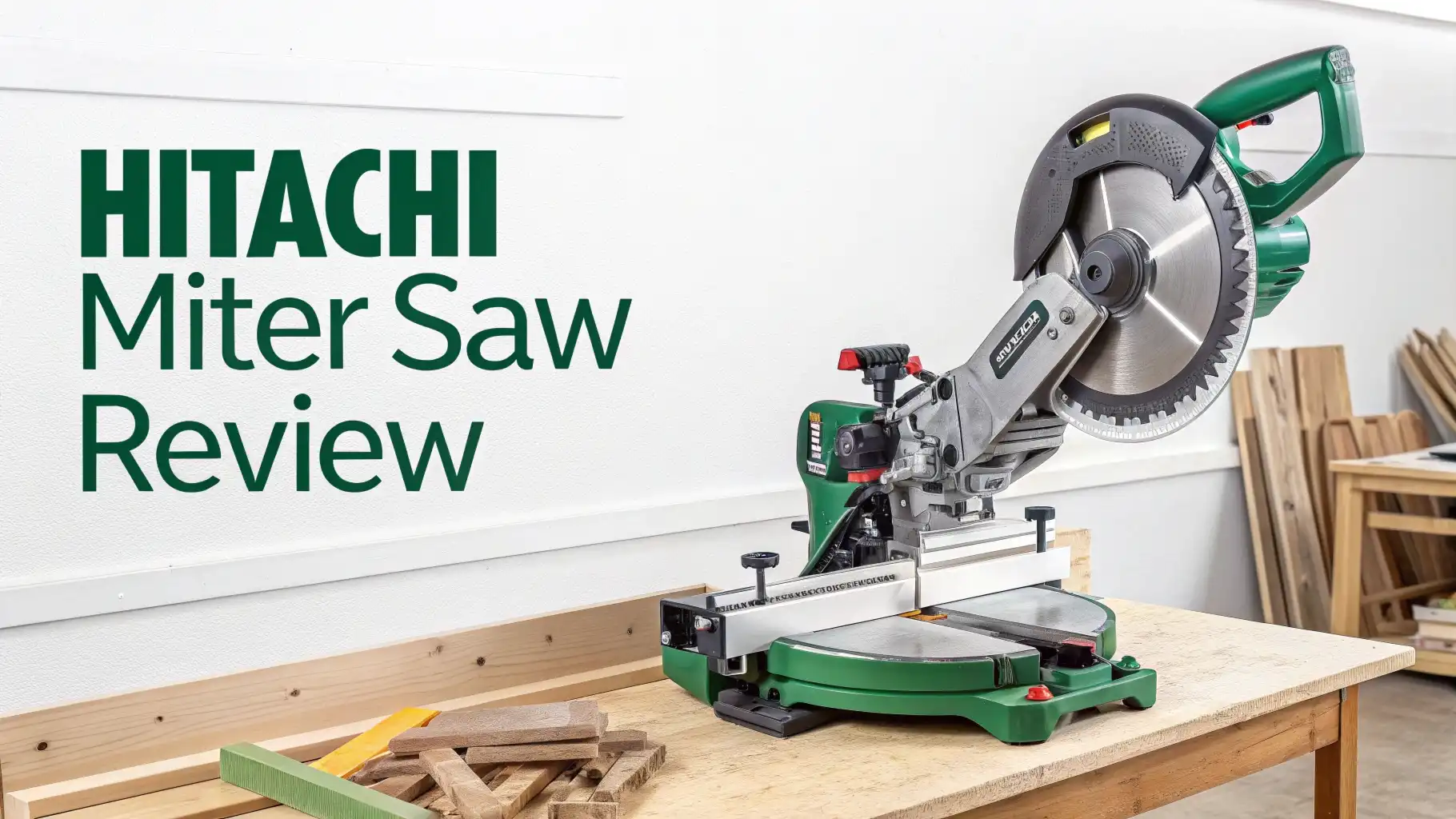
Hitachi Miter Saw Review: Is This Worth The Hype?
Are you tired of struggling with imprecise cuts that ruin your woodworking projects? You know that feeling when you spend hours on a project only to have crooked miters mess up the final result.
Well, your search for the perfect miter saw ends here. Hitachi miter saws have earned a reputation among professional carpenters and weekend warriors alike.
These tools bring Japanese precision to your workshop without emptying your wallet. Today we dive deep into what makes these saws stand out in a crowded market.
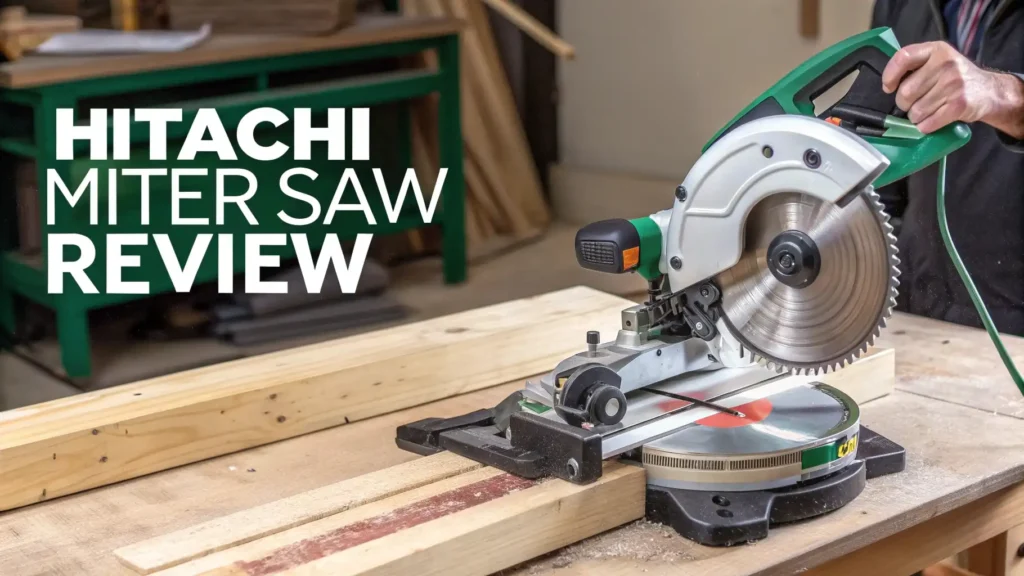
Key Takeaways:
- Power and Performance: Hitachi miter saws pack 15-amp motors that spin at speeds up to 5,000 RPM. This power lets you slice through hardwood and tough materials without bogging down.
- Precision Cutting Systems: Most models feature the innovative Xact Cut Shadow Line system or laser markers that show you exactly where the blade will cut. No more guessing games with your measurements.
- Dual Bevel Capability: Higher-end models offer dual bevel functionality with 0-45 degree ranges on both sides. This feature saves you time by eliminating the need to flip workpieces.
- Safety First Design: Hitachi incorporates electric brake systems that stop the blade within seconds after releasing the trigger. This crucial safety feature prevents accidental cuts and extends blade life.
- Value Proposition: You get professional-grade quality at budget-friendly prices. Hitachi miter saws typically cost 30-40% less than comparable models from premium brands while delivering similar performance.
- Versatile Applications: These saws handle everything from trim carpentry and framing to fine woodworking and crown molding installation with equal confidence.

- POWERFUL AND PRECISE: This 10-inch single bevel compound miter saw features a 15-Amp motor...
- USER-FRIENDLY DESIGN: The miter saw includes an improved miter scale and controls for accurate...

Last update on 2026-07-30 / Affiliate links / Images from Amazon Product Advertising API Some of the links on this website are affiliate links, which means that at no additional cost to you, I earn a commission if you click through and make a purchase. I only recommend products and services that I believe will add value to my readers. Thank you for your support!
Why Hitachi Miter Saws Deserve Your Attention
The woodworking tool market overflows with choices that promise perfect cuts. Hitachi stands out because the company understands what actual users need. The brand evolved into Metabo HPT but maintains the same commitment to quality that made it famous.
These saws combine Japanese engineering precision with practical features that matter on job sites. You get tools that survive daily use without constant adjustments or repairs. The company focuses on delivering consistent accuracy rather than flashy gimmicks.
Professional contractors trust these saws for demanding projects where mistakes cost money. Homeowners appreciate how easy these machines are to set up and use straight from the box.
Hitachi C10FCG2 Single Bevel Compound Miter Saw
This lightweight champion weighs in as the perfect starter saw for DIY enthusiasts and professionals alike. The C10FCG2 features a 10-inch blade that handles most common cutting tasks with ease.
Its 15-amp motor generates enough power to cut through 2×12 lumber in one pass. The single bevel design keeps the price low while still offering versatility. You can make precise miter cuts with positive stops at common angles.
The Xact Cut Shadow Line eliminates the confusion that comes with traditional laser guides. This saw ships with a 40-tooth carbide blade that delivers clean cuts right away. Many users praise how the saw maintains accuracy even after years of heavy use.
Understanding Bevel and Miter Capabilities
Miter saws offer two primary cutting angles that expand your creative possibilities. Miter cuts angle across the face of your workpiece from left to right. These cuts create the corners you see in picture frames and door casings.
Bevel cuts tilt the blade to cut through the thickness of the material at an angle. Compound miter saws combine both movements in a single cut. This capability becomes essential when installing crown molding or building complex furniture.
Single bevel saws tilt in one direction only while dual bevel models tilt both ways. The dual bevel feature saves time because you never need to flip your workpiece. Most Hitachi models include positive stops at common angles like 15, 22.5, 31.6, and 45 degrees for quick setup.
Top 3 Alternative for Hitachi Miter Saw

- Dimensions - 35cm x 45cm x 25cm
- Powerful 1100 watt 15 amp, 3,800 rpm motor designed for heavy duty applications delivers extended...
Last update on 2026-07-30 / Affiliate links / Images from Amazon Product Advertising API Some of the links on this website are affiliate links, which means that at no additional cost to you, I earn a commission if you click through and make a purchase. I only recommend products and services that I believe will add value to my readers. Thank you for your support!

- CHOP SAW WITH BEVEL DETENTS: 0, 33.9, 45 LEFT/RIGHT FOR ACCURATE CUTS
- THESE HIGH POWER MITER SAWS FEATURE PRE-ALIGNED SQUARELOCK FENCES THAT HELP MAINTAIN PRECISION...
Last update on 2026-07-30 / Affiliate links / Images from Amazon Product Advertising API Some of the links on this website are affiliate links, which means that at no additional cost to you, I earn a commission if you click through and make a purchase. I only recommend products and services that I believe will add value to my readers. Thank you for your support!

- Stainless-steel miter detent plate of 12-inch miter saw blade comes with 14 positive stops
- The mitre saw features the precise miter system and machined base fence support
Last update on 2026-07-30 / Affiliate links / Images from Amazon Product Advertising API Some of the links on this website are affiliate links, which means that at no additional cost to you, I earn a commission if you click through and make a purchase. I only recommend products and services that I believe will add value to my readers. Thank you for your support!
The Power Behind Hitachi Motors
Motor performance determines how smoothly your saw cuts through different materials. Hitachi equips most models with 15-amp motors that deliver consistent power throughout the cut. These motors use a series commuter design that provides excellent torque.
The 5,000 RPM no-load speed matches or exceeds competing brands. This speed translates to cleaner cuts with less splintering on the exit side. The motors stay cool during extended cutting sessions thanks to effective ventilation design.
Electronic speed control maintains constant blade speed even when cutting dense hardwoods. Users report these motors lasting for years without losing power or developing problems. The combination of power and reliability makes these saws dependable workhorses.
Hitachi C10FSBS Sliding Compound Dual Bevel Miter Saw

- Sliding Double Bevel Compound Miter Saw
- MOTOR: 12 amp motor for professional power
Last update on 2026-07-30 / Affiliate links / Images from Amazon Product Advertising API Some of the links on this website are affiliate links, which means that at no additional cost to you, I earn a commission if you click through and make a purchase. I only recommend products and services that I believe will add value to my readers. Thank you for your support!
This sliding model opens up new possibilities with its extended cutting capacity. The sliding rails allow the blade to move forward and backward across wider boards. You can crosscut boards up to 12 inches wide at 90 degrees.
The dual bevel function tilts 45 degrees in both directions for ultimate flexibility. Electronic speed control keeps the blade spinning at optimal RPMs under load. The electric brake feature stops the blade within seconds for improved safety.
This model weighs more than non-sliding versions but the extra capacity justifies the weight. Construction crews appreciate how this saw handles larger dimensional lumber without struggling. The laser marker system helps you align cuts quickly and accurately.
Precision Cutting Systems Explained
Accurate cuts separate professional results from amateur work. Hitachi developed two main systems to help you place cuts exactly where you want them. The Xact Cut Shadow Line projects LED light from both sides of the blade.
This creates a clear shadow that shows the exact blade path without adjustment. The system works immediately when you turn on the saw unlike laser systems that need warming up. Traditional laser marker systems project a red line onto your workpiece.
Some users find lasers easier to see in bright conditions while others prefer the shadow line. Both systems improve cutting accuracy compared to relying on fence marks alone.
The key benefit comes from seeing your cut line before the blade starts spinning. This preview lets you make small adjustments that prevent costly mistakes.
Hitachi C8FSES Compact 8.5 Inch Miter Saw

- Linear ball bearing slide system for superior accuracy and ease of use
- Positive miter stops for quick adjustments to 15, 22.5, 31.6, and 45 degrees to the left and right
Last update on 2026-07-30 / Affiliate links / Images from Amazon Product Advertising API Some of the links on this website are affiliate links, which means that at no additional cost to you, I earn a commission if you click through and make a purchase. I only recommend products and services that I believe will add value to my readers. Thank you for your support!
Sometimes smaller tools deliver better results in cramped workshops. The C8FSES uses an 8.5-inch blade that reduces the overall footprint significantly. This compact size makes the saw easier to transport between job sites.
The linear ball bearing slide system provides smooth operation with minimal maintenance. You still get enough cutting capacity for trim work and smaller projects. The reduced blade size means less expensive blade replacements over time.
This model excels for finish carpenters who focus on detail work. The lighter weight reduces fatigue during all-day cutting sessions. Users appreciate how this saw fits on smaller workbenches without hanging over edges.
Dust Collection Performance
Sawdust creates mess and health hazards that smart woodworkers avoid. Hitachi designs dust collection ports into most miter saw models. These ports connect to shop vacuums or dust extraction systems.
The dust bag included with many models captures a decent amount of debris. However most users report better results when connecting to powered vacuum systems. The blade guard design directs sawdust toward the collection port.
Some models include adjustable chip deflectors that improve dust capture. Clean working conditions help you see cut lines clearly and breathe easier.
Regular dust collection extends the life of your saw by keeping internal components clean. You should plan to invest in a good shop vacuum if you do not already own one.
Safety Features That Matter
Workshop accidents happen in split seconds but prevention takes constant attention. Hitachi incorporates several safety features that reduce injury risks. The electric brake stops blade rotation within 2-3 seconds after you release the trigger.
This quick stop prevents accidental contact with a spinning blade. Blade guards cover the sharp teeth except during actual cuts. The guards retract automatically as you lower the blade then snap back when you lift it. Anti-slip rubber feet keep the saw stable during operation.
The handle positioning gives you good control without putting hands near the blade path. Some models include soft start features that reduce the initial jolt when powering up.
These safety elements work together to create a safer cutting environment. You still need to follow proper safety procedures and wear appropriate protective equipment.
Choosing Between Single and Double Bevel Models
Your budget and typical projects determine which bevel system works best. Single bevel saws cost less and weigh less than dual bevel versions. They work perfectly fine for most basic cutting tasks.
You simply flip your workpiece over when you need opposite bevel angles. This extra step takes time but saves money upfront. Double bevel saws eliminate the flipping step by tilting both directions.
This feature becomes valuable when cutting crown molding the flat method. The time savings add up quickly on large projects with many angled cuts.
Professional trim carpenters often consider dual bevel capability essential. Weekend warriors might not justify the extra cost for occasional use. Consider how often you cut compound angles before deciding which style to buy.
Maintenance Tips for Long-Lasting Performance
Simple maintenance keeps your Hitachi miter saw running like new for years. Start by keeping the saw clean with regular brushing and compressed air. Sawdust buildup causes premature wear on moving parts.
Lubricate the sliding rails every few months with dry lubricant spray. Check blade tightness before each use to prevent dangerous vibration. Inspect the power cord regularly for damage or fraying. Replace worn blades promptly because dull blades strain the motor.
The blade changing process takes just minutes with the included wrench. Store your saw in a dry location to prevent rust on metal surfaces.
Cover the saw when not in use to keep dust out of internal mechanisms. Check calibration occasionally by making test cuts on scrap wood. These simple steps extend saw life and maintain cutting accuracy.
Understanding Laser Markers and Alignment
Laser systems project a red line onto your workpiece showing where the blade will cut. The laser marker requires alignment to show the accurate blade path. Hitachi provides adjustment screws that let you fine-tune laser position.
Some users report the laser moves out of alignment over time with heavy use. The alignment process takes just a few minutes following the instruction manual. Battery-powered lasers need occasional battery replacement to maintain brightness.
Laser visibility decreases in bright sunlight or well-lit workshops. Many professionals use the laser for rough cuts but rely on fence marks for precision work. The Xact Cut Shadow Line eliminates alignment issues because it shows the actual blade position.
Both systems help beginners learn proper cutting techniques faster. Choose the system that matches your working conditions and preferences.
FAQs
How accurate are Hitachi miter saws out of the box?
Most Hitachi miter saws arrive with excellent factory calibration. Users consistently report making perfect 90-degree cuts without adjustments. The company tests and calibrates each saw before shipping. You should still verify accuracy with a quality square when you first unpack your saw. Minor adjustments might be needed after shipping and handling. The adjustment process is straightforward with clear instructions in the manual.
Can Hitachi miter saws cut thick hardwoods?
Yes, the 15-amp motors provide plenty of power for hardwoods like oak and maple. The key is using sharp blades designed for hardwood cutting. Take your time and let the blade do the work without forcing it. The electronic speed control maintains consistent blade speed through dense materials. Sliding models handle wider hardwood boards thanks to their extended capacity.
What blade should I use with my Hitachi miter saw?
The included 40-tooth carbide blade works well for general purpose cutting. For finer finish work, upgrade to a 60-80 tooth blade. Rough construction cutting benefits from 24-32 tooth blades that clear chips quickly. Always choose blades rated for your saw’s maximum RPM. Quality blades from reputable manufacturers deliver cleaner cuts and last longer.
How does Hitachi compare to DeWalt and Bosch?
Hitachi offers similar performance at lower prices than premium brands. The build quality and accuracy match more expensive competitors. DeWalt and Bosch charge extra for brand recognition and customer service networks. Many professional contractors use Hitachi saws daily with excellent results. The choice often comes down to personal preference and budget constraints.
Do I need a miter saw stand?
A dedicated stand improves stability and extends support for long workpieces. Portable stands make sense if you move your saw frequently. Mounting your saw permanently on a workbench works great for shop-only use. The stand decision depends on your workspace and how you plan to use the saw.

Hi, I’m Amelia Thornton, the founder of ElectroPro.blog.
I write about smart devices, gadgets, electronics, and tech essentials from Amazon.
My goal is to help you discover reliable and innovative tech that truly makes life easier.
From home automation to everyday gear, I test and share what’s worth your investment.
Join me as I explore the smartest tech trends—one gadget at a time.