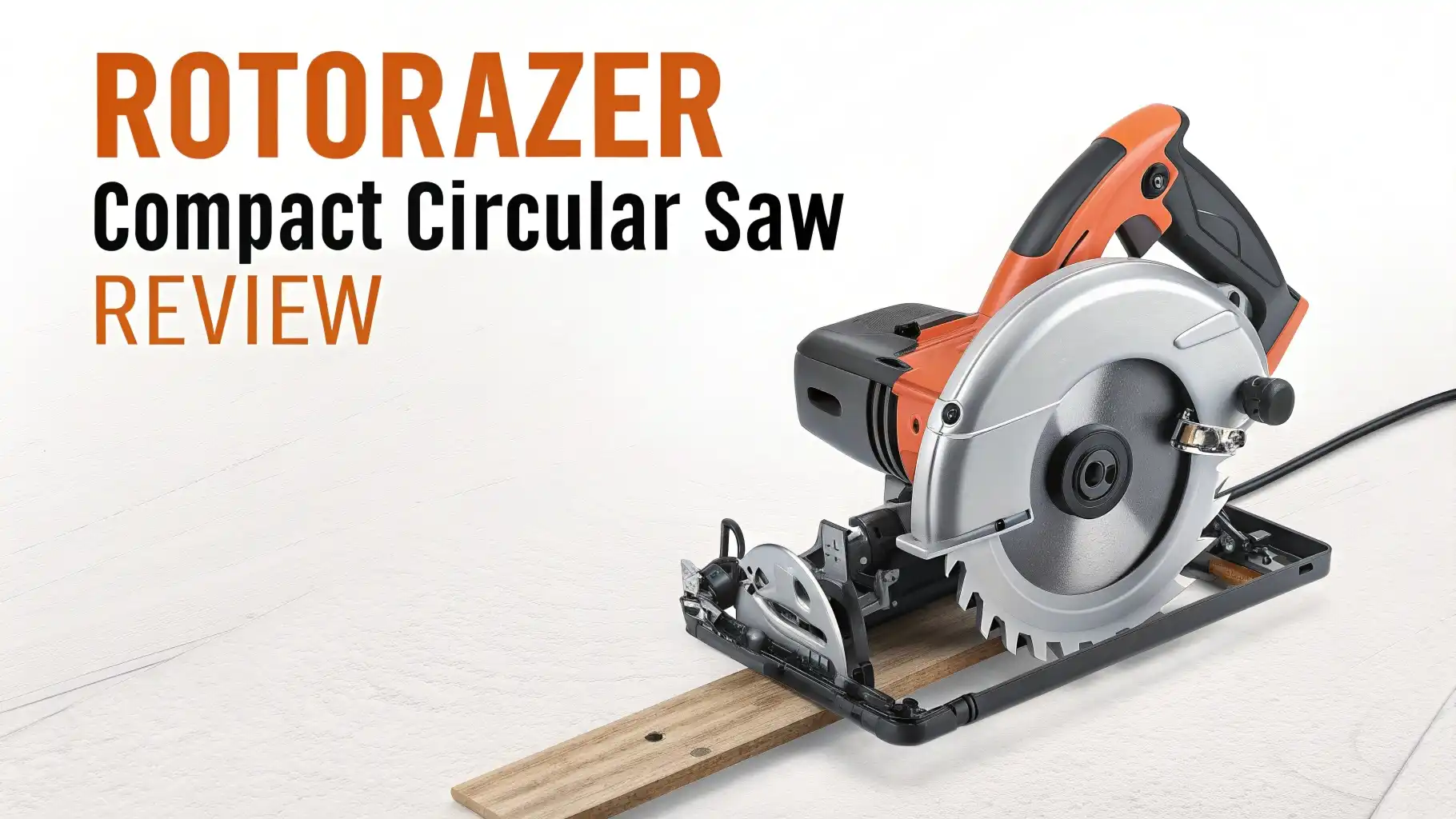
ROTORAZER Compact Circular Saw Review: Is This Worth Your Money?
You know that feeling when you see an infomercial and wonder if the product actually works in real life? The ROTORAZER Compact Circular Saw promises to replace seven different tools with one lightweight device.
Sounds too good to be true, right? Well, I spent weeks researching this popular “As Seen on TV” tool to bring you the complete truth.
Whether you are a beginner DIYer or someone who loves weekend projects, this review will help you decide if ROTORAZER deserves a spot in your toolbox.
Key Takeaways
- The ROTORAZER Platinum model features a 500-watt motor that spins at 4,500 RPM, making it more powerful than the original 400-watt version
- This compact saw can cut through multiple materials including wood, drywall, tile, PVC, metal, and even carpet with the right blade attachment
- The cutting depth reaches 1 inch in a single pass on the Platinum model, while the original only cuts half an inch deep
- Weight is super manageable at just 4.7 pounds for the complete unit, making it perfect for overhead work and tight spaces
- Three specialized blades come included in the set: tungsten carbide for wood, diamond for tile and masonry, and high-speed steel for metal cutting
- The price sits around $120 to $155 depending on the model you choose, with the Platinum version offering better value for serious DIY work

- Durable and lightweight electric mini circular saws: Rotorazer electric saws are both easy and safe...
- 3 Quick-Change Blades for Every Material: Switch instantly between the Tungsten Carbide, Diamond...
Last update on 2026-07-08 / Affiliate links / Images from Amazon Product Advertising API Some of the links on this website are affiliate links, which means that at no additional cost to you, I earn a commission if you click through and make a purchase. I only recommend products and services that I believe will add value to my readers. Thank you for your support!
What Makes ROTORAZER Different from Regular Circular Saws
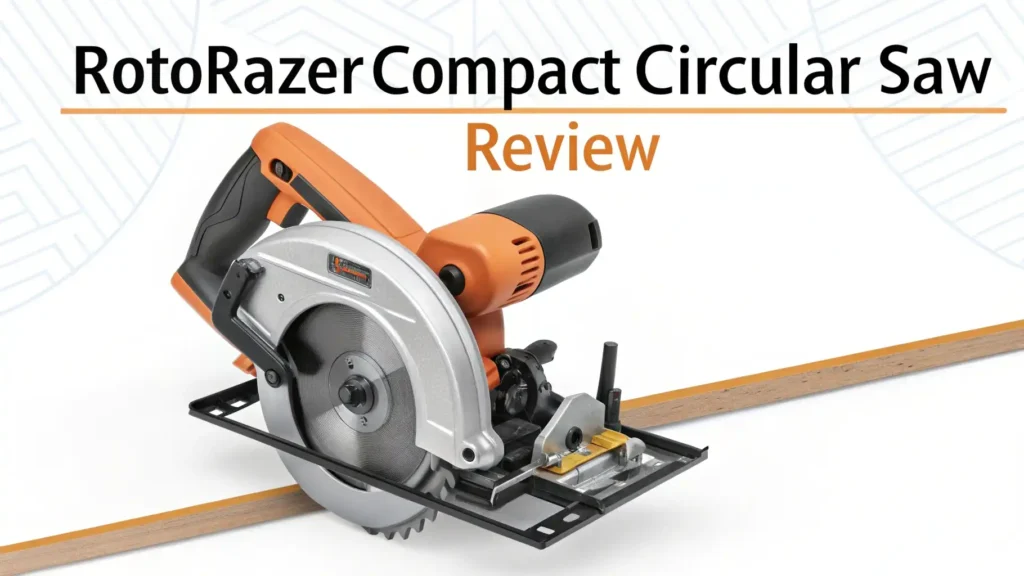
The ROTORAZER stands out because of its unique compact design that fits in one hand. Most circular saws feel bulky and intimidating. This tool changes that completely. You can hold it like a large power drill.
The motor sits in a construction-grade chassis that protects internal components from dust and impacts. Regular circular saws need two hands and serious arm strength. ROTORAZER lets you work with one-handed control in most situations.
The blade size measures just 3.35 inches. This sounds small compared to standard 7.25-inch circular saws. But this size gives you incredible maneuverability.
You can cut curves, make plunge cuts, and work in corners where big saws cannot reach. The adjustable depth control goes from shallow scoring to full 1-inch depth cuts. Professional contractors love this feature for precision work.
Safety features include a thumb-controlled power switch and automatic blade guard. The blade stops spinning when you release the trigger.
Understanding the Two Main ROTORAZER Models Available
ROTORAZER offers two main versions in the market today. The original ROTORAZER comes with a 400-watt motor. It spins at 3,400 RPM and cuts materials up to half an inch thick. This model weighs 2.64 pounds. It works perfectly for light-duty projects around your home. Think picture frame assembly or thin plywood cuts.
The ROTORAZER Platinum brings serious upgrades. The 500-watt motor delivers much more cutting power. Speed increases to 4,500 RPM for faster material removal.
Most importantly, cutting depth doubles to 1 inch. This lets you cut through standard lumber in one single pass. The Platinum model weighs 4.70 pounds due to the stronger motor and better components.
Blade compatibility differs between models too. Original ROTORAZER uses 54.8mm blades. Platinum accepts larger 85mm blades. This means more cutting options with the Platinum version. You can find specialized blades for specific materials easier.
The Complete Set: What You Get in the Box
The ROTORAZER package includes everything you need to start cutting immediately. You receive the main saw unit with the motor and housing.
Three different blades come in the box. The tungsten carbide blade cuts wood, laminate, and soft plastics. The diamond blade tackles tile, concrete, and masonry materials. The high-speed steel blade slices through metal pipes and aluminum sheets.
A dust extraction hose attaches to the saw body. This connects to your shop vacuum for clean cutting. The parallel fence guide ensures straight accurate cuts every time. You slide it along the material edge for perfect lines.
An Allen key lets you change blades and adjust components. The storage case keeps everything organized. You can grab the case and have all your cutting tools in one place.
The instruction manual walks you through setup and blade changes. It shows you the best blade for each material type. Safety guidelines explain proper hand positioning and cutting techniques.
Top 3 Alternatives for ROTORAZER Compact Circular Saw

- Powerful Motor Mini Circular Saw: The powerful motor provides 4500 RPM no-load speed for the Mini...
- Adjustable Cutting Depth and Angle: WORKPRO cordless circular saws come with freely adjustable...
Last update on 2026-08-29 / Affiliate links / Images from Amazon Product Advertising API Some of the links on this website are affiliate links, which means that at no additional cost to you, I earn a commission if you click through and make a purchase. I only recommend products and services that I believe will add value to my readers. Thank you for your support!

- 4.0 Amp Motor and 3500 RPM with 4-1/2 in. Blade and 3/8 in. Arbor
- Barrel Grip for One-Handed Operation - Save time and energy by using a lighter saw!
Last update on 2026-08-29 / Affiliate links / Images from Amazon Product Advertising API Some of the links on this website are affiliate links, which means that at no additional cost to you, I earn a commission if you click through and make a purchase. I only recommend products and services that I believe will add value to my readers. Thank you for your support!

- Powerful 4‑Amp Copper Motor: Delivers 3500 RPM no‑load speed for clean cuts in softwood...
- Laser Guide & Rip Guide for Precise Cuts: The built‑in laser guide projects a red line for...
Last update on 2026-08-26 / Affiliate links / Images from Amazon Product Advertising API Some of the links on this website are affiliate links, which means that at no additional cost to you, I earn a commission if you click through and make a purchase. I only recommend products and services that I believe will add value to my readers. Thank you for your support!
Real User Experiences: What People Actually Say
Customer reviews reveal mixed but mostly positive feedback. Many users praise the lightweight design. One reviewer mentioned using it for a chicken coop project with great results.
Another customer loved making curved cuts for wall decorations. The tool works especially well for beginners who fear power tools. Several women reviewers noted it helped them work independently on DIY projects.
The ease of use gets mentioned repeatedly. People with arthritis find the handles comfortable. The thumb switch makes starting and stopping simple.
One user built a complete wooden box and loved how smooth the cuts came out. The carrying case earns praise for keeping everything organized. Many customers appreciate taking it to different project locations easily.
However, some limitations appear in reviews. Thicker materials cause the motor to bog down or stop. One person tried cutting 3/16-inch aluminum and experienced power loss.
Materials You Can Cut with ROTORAZER
Wood cutting represents the primary use case for ROTORAZER. It handles plywood, pine boards, hardwood flooring, and laminate materials beautifully. The tungsten carbide blade makes clean cuts in lumber up to 1 inch thick.
You can cut baseboards, trim pieces, and craft wood without splintering. The adjustable depth prevents cutting through surfaces underneath your workpiece.
Tile and masonry require the diamond blade. Ceramic tiles, porcelain, slate, and thin concrete all cut cleanly. The high RPM speed prevents cracking that happens with slower tools. You can cut tiles to fit around outlets and fixtures. The small blade size helps with intricate shapes that big tile saws cannot manage.
Metal cutting uses the high-speed steel blade. PVC pipes, copper pipes, aluminum sheets, and thin steel all work well. The saw cuts metal conduit for electrical projects. You can trim metal siding and flashing materials.
Setting Up Your ROTORAZER for First Use
Unbox everything and identify all components. Lay out the saw body, three blades, dust hose, parallel fence, Allen key, and case. Read through the instruction manual completely before touching the tool. Understanding blade types prevents using the wrong blade on materials.
Installing a blade takes just minutes. Press the spindle lock button on the saw body. This prevents the blade shaft from turning. Use the Allen key to loosen the blade bolt.
Remove the outer washer and old blade if present. Slide your chosen blade onto the shaft with teeth pointing forward. Replace the washer and tighten the bolt firmly. Release the spindle lock.
Adjust the cutting depth by loosening the depth adjustment lever. Raise or lower the blade housing to your desired depth. Most cuts work best when the blade extends just slightly through the material.
Safety Tips Every ROTORAZER User Must Know
Always wear safety glasses when operating the ROTORAZER. Flying debris and dust particles can damage your eyes permanently. Add a dust mask when cutting materials that create fine particles. Tile, concrete, and drywall produce dangerous dust you should not breathe.
Keep both hands on the tool during cuts. The thumb-controlled trigger stays in one hand. Your other hand holds the auxiliary handle or steadies the workpiece. Never reach under the material while cutting. The blade can grab material and pull your hand into danger. Let the blade come to complete stop before setting the tool down.
Secure your workpiece before cutting. Clamping prevents materials from moving during cuts. Moving workpieces cause binding and kickback. The ROTORAZER has less kickback than big saws but can still jump unexpectedly.
Check for hidden fasteners before cutting. Nails and screws destroy blades instantly. They also create sparks and send metal fragments flying.
Maintenance and Blade Care for Longevity
Blade cleaning extends cutting performance significantly. Wood resin builds up on blades after several cuts. This buildup causes binding and overheating.
Remove blades and soak them in blade cleaner solution. You can use oven cleaner as a budget alternative. Scrub with a wire brush and rinse thoroughly. Dry blades completely before reinstalling to prevent rust.
Motor maintenance requires minimal effort. Blow out dust from the motor vents after heavy use. Dust accumulation causes overheating and motor failure. Use compressed air or an air compressor on low pressure. Do not take the motor housing apart unless you have electrical experience. The internal components rarely need service.
Check the blade bolt tightness regularly. Vibration loosens bolts over time. A loose blade wobbles and creates dangerous situations.
Inspect blades for damage before each use. Cracked or chipped blades must be replaced immediately. Worn blades make rough cuts and force you to push harder. This increases accident risk and motor strain.
Comparing ROTORAZER Price to Performance Value
The standard ROTORAZER typically sells for around $100 to $120. This price includes the saw, three blades, dust collector, and storage case. Compared to professional compact saws that cost $200 or more, this represents good value. You get multiple blades that would cost $30 to $50 if purchased separately.
The ROTORAZER Platinum ranges from $140 to $155. The extra money buys you significantly more cutting power. The deeper cut capacity and stronger motor handle tougher projects. Professional contractors find this version more useful for daily work demands. The Platinum model reduces time spent making multiple passes through thicker materials.
Budget mini circular saws sell for $40 to $60. These tools use weaker motors and cheaper components. They work for occasional use but lack durability.
Mid-range compact saws from brands like Genesis and WORKPRO cost $70 to $100. These offer better build quality than ultra-budget options. Premium compact saws from Makita and Bosch range from $150 to $300 but provide professional-grade performance.
Consider how often you will use the tool. Weekend DIYers find the standard ROTORAZER perfect for their needs. The price-to-performance ratio makes sense for occasional projects.
Common Problems and How to Solve Them
Motor bogs down during cuts represents the most common complaint. This happens when you push too hard or use the wrong blade. Let the blade do the work at its own pace.
Pushing harder actually slows cutting and strains the motor. Verify you installed the correct blade for your material. Using a wood blade on metal guarantees poor performance.
Rough or splintered cuts usually indicate a dull blade. Replace worn blades immediately for clean results. Check that you installed the blade with teeth pointing forward.
Backward blades tear material instead of cutting cleanly. Adjust cutting depth so the blade barely extends through the material. Too much blade extension creates excessive tear-out on the bottom surface.
Dust collector not working effectively frustrates many users. Ensure the dust hose connects tightly to both the saw and vacuum. Gaps allow dust to escape instead of being captured.
Some materials produce finer dust that clogs hoses quickly. Stop periodically and clear the hose of compacted dust. Using a shop vacuum with strong suction improves dust collection dramatically.
Best Project Types for ROTORAZER Success
Home improvement projects suit the ROTORAZER perfectly. Install baseboards and crown molding with precise miter cuts. Cut door trim to fit around new flooring.
Remove old tile for bathroom renovations. The compact size reaches into tight corners where full-size saws cannot fit. You can work in finished rooms without moving furniture because the tool maneuvers easily.
Craft and woodworking projects benefit from the precision cutting. Build birdhouses, planters, and garden boxes. Create custom picture frames with perfect angles.
Cut plywood for shelf projects. The adjustable depth lets you make decorative scoring cuts without cutting all the way through. This creates design elements that would require specialized tools otherwise.
Outdoor projects like fence installation and deck repairs work well. Cut fence pickets to uniform length. Trim deck boards to fit around posts and corners.
The portable design lets you carry it around your property easily. You avoid running extension cords back to distant workshops. The dust collection becomes less critical for outdoor work where cleanup matters less.
Where to Buy ROTORAZER and What to Watch For
Amazon offers the most convenient purchasing option for most people. You get Prime shipping and easy returns if problems occur. Prices remain competitive with other retailers. Read recent reviews to verify you receive the current model version. Some sellers ship older stock that lacks newer improvements.
Home Depot stocks ROTORAZER in many physical locations. You can examine the tool before buying. Store associates can answer basic questions about features. Home Depot’s return policy gives you 90 days to try the tool. This extended period lets you complete several projects before deciding if you like it.
Walmart and Lowe’s also carry ROTORAZER in stores and online. Prices vary between retailers so compare before buying. Watch for sales during holiday weekends and tool promotion periods. You might save $20 to $40 during these events.
Avoid buying directly from ROTORAZER website according to customer warnings. Multiple reviewers report confusing pricing and automatic upgrades they did not authorize.
Final Verdict: Should You Buy ROTORAZER
The ROTORAZER delivers on most of its promises for the average DIY user. It truly provides versatile cutting in a compact lightweight package.
Beginners appreciate the easy operation and safety features. The included blades eliminate the need for separate tool purchases. For $120 to $155, you get solid value if your projects match the tool’s capabilities.
However, understanding the limitations prevents disappointment. This tool does not replace professional-grade saws for contractors.
The motor lacks power for continuous heavy-duty use. Thicker hardwoods and dense materials challenge the saw. The 7-in-1 marketing claim oversells what you actually receive. You get one versatile circular saw, not seven separate tools.
Frequently Asked Questions
Can ROTORAZER Cut Through a Full 2×4 Lumber Piece?
No, the ROTORAZER cannot cut through a standard 2×4 in one pass. A 2×4 actually measures 1.5 inches thick. The Platinum model cuts 1 inch deep maximum. You need to flip the board and cut from both sides. The original ROTORAZER with 0.5-inch depth requires even more passes. This limitation frustrates users who expected more capability based on marketing materials.
How Long Do ROTORAZER Blades Last?
Blade life depends entirely on what you cut. The tungsten carbide blade lasts for hundreds of wood cuts with proper care. Hitting nails or screws ruins it instantly. The diamond blade handles dozens of tile cuts before wearing out. Metal cutting wears down the high-speed steel blade faster. Most users get several months of weekend project use before needing replacements. Clean blades after use to maximize their lifespan.
Does ROTORAZER Work Better Than Regular Circular Saws?
ROTORAZER excels at different tasks than full-size circular saws. It handles detail work and tight spaces much better. The compact size and one-handed operation give you more control. Full-size saws cut faster and handle thicker materials easily. They provide more cutting depth and stronger motors. Choose ROTORAZER for precision and portability. Choose regular circular saws for heavy-duty cutting and speed.
Can You Use ROTORAZER for Professional Contractor Work?
Professional use pushes ROTORAZER beyond its design limits. The motor overheats with continuous operation. Contractors need tools that run all day without breaks. The 1-inch cutting depth restriction slows down many job site tasks. However, contractors do find it useful as a supplementary tool. It handles detail work and repairs that do not justify setting up larger saws. Keep it in your truck for quick fixes and small adjustments.
What Safety Features Does ROTORAZER Include?
ROTORAZER includes several important safety features. The thumb-controlled trigger requires constant pressure to run. Release the trigger and the blade stops immediately. The automatic blade guard covers the blade when not cutting. It retracts as you push into material. The safety lock button prevents accidental starts. You must press both the lock and trigger simultaneously to start cutting. The tool stops spinning quickly after you release the trigger compared to larger saws.
Where Can You Find Replacement Blades for ROTORAZER?
Replacement blades are available from multiple sources. Amazon stocks various blade sets specifically designed for ROTORAZER. Home Depot and Lowe’s carry replacement blades in their tool departments. The ROTORAZER website sells replacement blades directly. Generic 85mm blades work with the Platinum model if they match the arbor hole size. Three-blade sets typically cost $25 to $35. Individual specialty blades range from $10 to $15 each.

Hi, I’m Amelia Thornton, the founder of ElectroPro.blog.
I write about smart devices, gadgets, electronics, and tech essentials from Amazon.
My goal is to help you discover reliable and innovative tech that truly makes life easier.
From home automation to everyday gear, I test and share what’s worth your investment.
Join me as I explore the smartest tech trends—one gadget at a time.