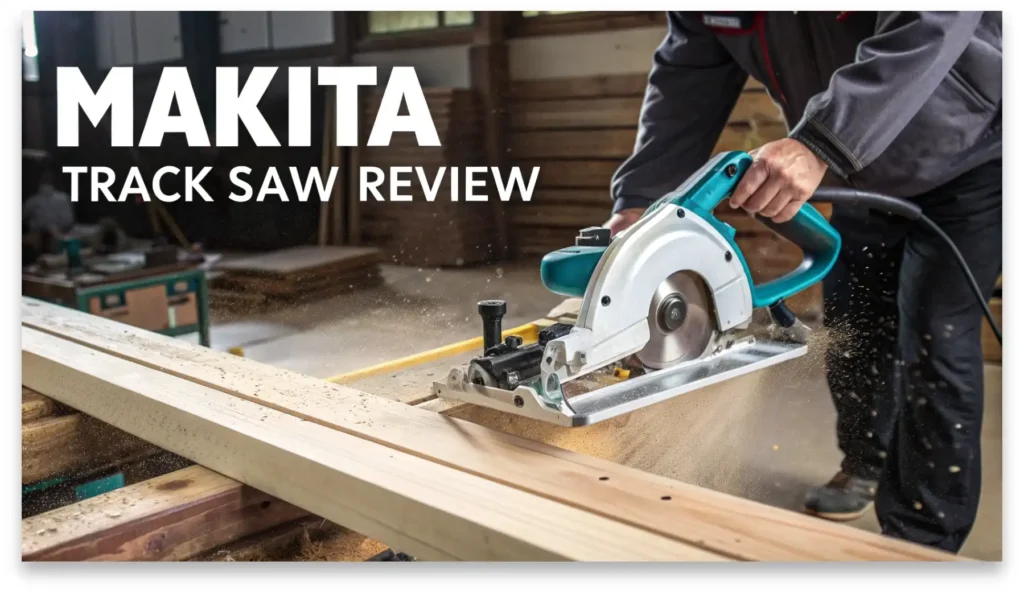
Makita Track Saw Review: A Comprehensive Guide
Are you tired of fighting with your circular saw to get perfectly straight cuts? Do you dream about a tool that combines the power of a table saw with the flexibility of a handheld saw?
Well, grab your coffee and settle in because today we are diving deep into the world of Makita track saws.
These amazing tools have changed the game for woodworkers everywhere, and by the end of this post, you will know exactly which model deserves a spot in your workshop.
Key Takeaways
- Power and Performance: Makita track saws deliver professional-grade cutting power with both corded 12-amp motors and cordless 36V options that rival corded performance. You get clean, splinter-free cuts every single time.
- Versatility Options: The lineup includes the SP6000J1 corded model perfect for workshop use and the XPS01PTJ cordless version ideal for jobsite mobility. Both deliver exceptional accuracy and smooth operation.
- Dust Collection Excellence: These saws feature superior dust management systems with ports that connect directly to vacuum systems, keeping your workspace clean and your lungs healthy.
- Cutting Capacity: You can achieve impressive depths with 2-3/16 inches at 90 degrees and bevel capabilities from -1° to 48° with positive stops at 22.5° and 45° for angled cuts.
- Value Proposition: Makita offers professional quality at competitive prices, typically costing less than premium brands like Festool while delivering comparable performance and reliability.

- 12 AMP motor with variable speed control dial (2,000 - 5,200 RPM) for optimum performance in a...
- Large cutting capacity (2-3/16" at 90° and 1-9/16" at 45°). Power Type- Corded

Last update on 2026-07-27 / Affiliate links / Images from Amazon Product Advertising API Some of the links on this website are affiliate links, which means that at no additional cost to you, I earn a commission if you click through and make a purchase. I only recommend products and services that I believe will add value to my readers. Thank you for your support!
Why Makita Track Saws Stand Out from the Competition
Makita has earned a stellar reputation in the power tool industry. Their track saws continue this tradition of excellence. The brand focuses on delivering tools that work hard without breaking your budget. When you pick up a Makita track saw, you immediately notice the solid construction and thoughtful engineering.
The magnesium components reduce weight without sacrificing strength. This means you can work longer without fatigue. The electronic speed control maintains consistent blade speed under load, ensuring every cut looks like a mirror finish. Many professional woodworkers choose Makita because these saws simply get the job done right.
Makita SP6000J1 Plunge Circular Saw Kit
This model represents the gold standard for corded track saws. The SP6000J1 comes as a complete kit with a 55-inch guide rail, making it ready to use right out of the box. The 12-amp motor delivers plenty of power for cutting through hardwoods, plywood, and engineered materials.
The soft start feature prevents sudden jerks when you power up the saw. This makes the tool easier to control and extends motor life. The variable speed control lets you dial in the perfect cutting speed for different materials. You get speeds ranging from 2,000 to 5,200 RPM.
The 1.5-inch dust port connects easily to shop vacuums. Users consistently praise the dust collection as exceptional. You will barely see any sawdust escaping during cuts. The saw maintains constant speed under load thanks to electronic speed control technology.
Makita XPS01PTJ Cordless Track Saw

- Powered by two LXT batteries; x2 LXT technology delivers more power, speed and run time without the...
- Makita built electronically controlled BL Brushless motor delivers 6, 300 RPM for maximum...
Last update on 2026-07-27 / Affiliate links / Images from Amazon Product Advertising API Some of the links on this website are affiliate links, which means that at no additional cost to you, I earn a commission if you click through and make a purchase. I only recommend products and services that I believe will add value to my readers. Thank you for your support!
Freedom from cords changes everything. The XPS01PTJ uses two 18V LXT batteries to deliver 36 volts of cutting power. This cordless beast performs like a corded saw but gives you the flexibility to work anywhere.
The brushless motor technology provides more power, longer runtime, and extended tool life. You can make approximately 175 cuts in 3/4-inch plywood on a single charge. That is more than enough for most projects.
The Automatic Speed Change Technology adjusts cutting speed based on load conditions. This smart feature optimizes both performance and battery life. The variable speed dial offers settings from 2,500 to 6,300 RPM. You get soft start and electric brake for enhanced control and safety.
Top 3 Alternatives for Track Saw

- Powered by two LXT batteries; x2 LXT technology delivers more power, speed and run time without the...
- Makita built electronically controlled BL Brushless motor delivers 6, 300 RPM for maximum...
Last update on 2026-07-27 / Affiliate links / Images from Amazon Product Advertising API Some of the links on this website are affiliate links, which means that at no additional cost to you, I earn a commission if you click through and make a purchase. I only recommend products and services that I believe will add value to my readers. Thank you for your support!

- Powerful 12.0 AMP motor for optimum performance in a wide variety of materials
- Precision accurate cutting delivers a splinter-free mirror finish
Last update on 2026-07-27 / Affiliate links / Images from Amazon Product Advertising API Some of the links on this website are affiliate links, which means that at no additional cost to you, I earn a commission if you click through and make a purchase. I only recommend products and services that I believe will add value to my readers. Thank you for your support!

- 194368-5 2*55" Track saw Guide Rail.Includes 2 * 55" makita Guide Rail, 2 Rail Connectors,Guide...
- 194368-5 makita guide rail saw rail is made of high hardness alloy with high hardness, high wear...
Last update on 2026-07-27 / Affiliate links / Images from Amazon Product Advertising API Some of the links on this website are affiliate links, which means that at no additional cost to you, I earn a commission if you click through and make a purchase. I only recommend products and services that I believe will add value to my readers. Thank you for your support!
Precision Guide Rail System
The guide rail system makes these saws truly special. The rails feature anti-slip backing that grips your workpiece securely. No clamps needed for most cuts. The rails come in various lengths including 55 inches, 100 inches, and longer options.
The saw base locks firmly to the rail without wobbling. This tight connection ensures dead-straight cuts every time. The rail has measurement markings for quick setup. You can connect multiple rails using connector pieces to handle extra-long cuts.
The guide rail also features a splinter guard strip. This replaceable strip supports wood fibers during cutting, virtually eliminating tearout. Your cuts will look factory-finished right off the saw.
Plunge Cutting Mechanism
The plunge mechanism sets track saws apart from regular circular saws. You start with the blade above the material, then smoothly lower it into the cut. This allows for pocket cuts and precise starting positions.
The Makita plunge action feels smooth and controlled. A natural wrist motion engages the plunge. Spring-loaded returns lift the blade automatically when you release pressure. The depth adjustment dial lets you set exact cutting depths with precision.
The plunge lock button secures the saw at your chosen depth. This feature proves invaluable for making repetitive cuts at the same depth. The depth scale reads clearly and adjusts easily.
Cutting Capacity and Bevel Capabilities
Both the corded and cordless Makita models offer impressive cutting capacity. At 90 degrees, you get 2-3/16 inches of depth. This handles most sheet goods and dimensional lumber easily. At 45 degrees, the capacity measures 1-9/16 inches.
The bevel range extends from -1 degree to 48 degrees. This negative angle capability helps with special joinery techniques. Positive stops at 22.5 degrees and 45 degrees make common angle cuts quick and repeatable.
The saw maintains accuracy throughout the entire bevel range. The blade enters material on the same cutting line whether you cut straight or beveled. This consistency makes complex projects much easier.
Dust Collection Performance
Makita engineers take dust collection seriously. The large dust port directs material away from both the cutting line and the operator. When connected to a shop vacuum, these saws capture nearly all sawdust.
This exceptional dust collection provides three major benefits. First, you maintain better visibility of your cutting line. Second, you keep your workspace cleaner and safer. Third, you protect your respiratory health from fine dust particles.
The dust collection works equally well for straight cuts and bevels. Many users report being amazed at how little cleanup remains after cutting sessions.
Safety Features and Controls
Safety comes first with any power tool. Makita track saws include multiple safety features. The electric brake stops the blade quickly after you release the trigger. This reduces the risk of accidental contact with a spinning blade.
The blade guard spring returns smoothly and reliably. The trigger lock prevents accidental starts during transport or storage. The plunge lock keeps the blade secured at your set depth during cuts.
The ergonomic handle design provides comfortable grip and excellent control. The main handle positions your hand naturally for smooth plunging motion. The front handle stabilizes the saw during cuts.
Real World Performance and User Experience
Woodworkers who switch to track saws rarely go back to other cutting methods. The combination of accuracy, speed, and clean cuts makes projects more enjoyable. You spend less time measuring and more time creating.
Breaking down plywood sheets becomes faster and safer than using a table saw. You bring the saw to the material instead of wrestling heavy sheets across a table. The cuts come out straighter with less chance of kickback.
Professional contractors appreciate the time savings on jobsites. Cabinet installers use track saws for scribing and trimming. Flooring pros rely on them for precise cuts. DIY enthusiasts discover they can achieve professional results in their own workshops.
Maintenance and Longevity
Makita builds tools to last. Regular maintenance keeps your track saw performing like new for years. The brushless motors on cordless models require virtually no maintenance. They run cooler and more efficiently than brushed motors.
Keep the guide rail clean and free from debris. Wipe down the anti-slip strips occasionally. Replace the splinter guard strip when it shows wear. This inexpensive part ensures continued tearout protection.
Blade changes take just seconds with the spindle lock. Use quality carbide blades designed for track saws. The included blade works well, but specialty blades optimize performance for specific materials.
Comparing Cordless vs Corded Models
Choosing between cordless and corded depends on your needs. The corded SP6000J1 offers unlimited runtime. You never worry about battery charge. It costs less initially and weighs slightly less than the cordless version.
The cordless XPS01PTJ provides ultimate flexibility. Take it anywhere without searching for outlets. The battery power proves sufficient for demanding cuts. If you already own Makita 18V LXT tools, you can share batteries across your collection.
Both models deliver professional results. Both offer the same cutting capacity and features. Your choice comes down to convenience versus cost.
Price and Value Comparison
Makita track saws deliver exceptional value. They cost significantly less than premium European brands while matching or exceeding performance. The SP6000J1 typically sells for around $589 with the rail included. The XPS01PTJ kit with batteries and rail runs approximately $699 to $799.
When you compare the cost of mistakes from inaccurate cuts, a track saw pays for itself quickly. The time saved and improved quality make these tools worthwhile investments for serious woodworkers.
Consider the complete system cost including extra rails, connectors, and accessories. Makita rails work with other brands using adapters. This compatibility gives you flexibility as your needs grow.
Should You Buy a Makita Track Saw?
If you regularly work with sheet goods or need perfectly straight cuts, absolutely yes. The Makita track saw transforms how you approach woodworking projects. The combination of power, precision, and value makes these tools easy to recommend.
Professional woodworkers trust Makita for demanding daily use. DIY enthusiasts appreciate the quality at reasonable prices. The learning curve remains gentle. Most users feel confident after just a few practice cuts.
The investment in a quality track saw system changes your capabilities. You can tackle projects that seemed too difficult before. Your results improve dramatically. The satisfaction of making perfect cuts never gets old.
Frequently Asked Questions
What is the difference between Makita SP6000J and SP6000J1?
The SP6000J includes only the saw and case. The SP6000J1 is the complete kit with the saw, case, and 55-inch guide rail. Most buyers choose the J1 model because buying the rail separately costs more. The rail is essential for the track saw to function properly.
Can I use Festool rails with Makita track saws?
Yes, Makita track saws work with Festool rails. Many woodworkers appreciate this compatibility. You can mix and match rails based on price and availability. Some prefer Festool rails while using the more affordable Makita saw. The systems work together seamlessly with proper setup.
How long do batteries last on the cordless model?
The XPS01PTJ with 5.0Ah batteries cuts approximately 175 crosscuts in 3/4-inch plywood on a single charge. Actual runtime varies based on material hardness and cutting depth. Most users report excellent battery life that handles full day of moderate use.
Do I need clamps to hold the rail in place?
Not usually. The anti-slip backing on Makita guide rails grips most surfaces firmly. However, clamps provide extra security for critical cuts or when working on slippery surfaces. Many users keep clamps handy but rarely need them for standard applications.
What blade should I use for different materials?
The included 48-tooth blade works well for plywood and general crosscutting. Use higher tooth count blades (60+ teeth) for melamine and finished surfaces. Lower tooth count blades (24-40 teeth) cut faster through softwoods and framing lumber. Always choose blades specifically designed for track saws when possible.

Hi, I’m Amelia Thornton, the founder of ElectroPro.blog.
I write about smart devices, gadgets, electronics, and tech essentials from Amazon.
My goal is to help you discover reliable and innovative tech that truly makes life easier.
From home automation to everyday gear, I test and share what’s worth your investment.
Join me as I explore the smartest tech trends—one gadget at a time.