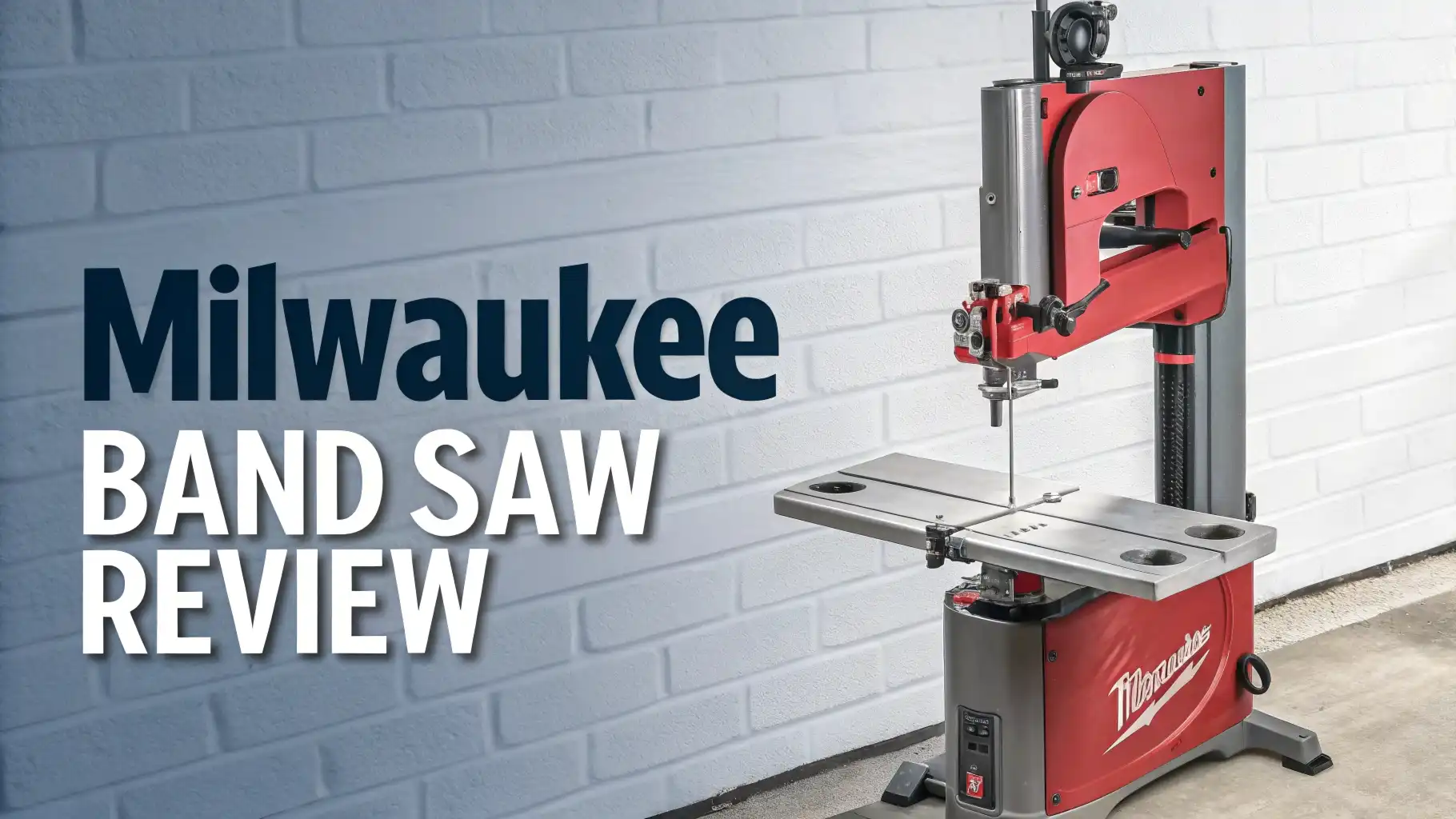
Milwaukee Band Saw Review: A Comprehensive Guide
Hey there, tool lovers! Are you tired of fighting with stubborn metal pipes or struggling to make clean cuts in tight spaces? You just found the solution you have been searching for.
Milwaukee band saws are changing the game for professionals and DIY enthusiasts alike. These powerful cutting machines deliver precision, speed, and reliability that will transform your metalworking projects.
Think about this: cutting through thick metal used to require multiple tools, countless blade changes, and hours of frustration.

Key Takeaways
- Powerful Cordless Performance: Milwaukee band saws deliver exceptional cutting power using M18 and M12 battery platforms. These tools can complete up to 150 cuts per charge on common materials. The FUEL technology provides brushless motor efficiency that matches or beats corded competitors.
- Multiple Size Options Available: You can choose from compact models like the M12 Sub-Compact (weighing just 6.75 lbs) for overhead work, standard M18 models with 3-1/4″ capacity, or the massive Deep Cut versions handling 5″ x 5″ materials. Each size targets specific job requirements.
- Superior Build Quality: Milwaukee constructs these saws with durable metal housings and integrated features like LED lights, adjustable shoes, and tool-free blade changes. The 5-year limited warranty backs their confidence in product longevity.
- Versatile Cutting Capacity: These band saws cut through multiple materials including EMT conduit, strut, angle iron, threaded rod, rebar, and copper pipe. Blade speeds reach up to 480 feet per minute for efficient material removal.
- Professional Grade Features: Milwaukee includes intelligent design elements like integrated hang hooks, onboard blade storage, variable speed triggers, and battery fuel gauges. These features save time and improve safety on every job site.

- One-Handed Cuts: Most compact size and lightest weight of any cordless band saw; SFPM: 280
- Powerful Motor: Cuts 3/4" EMT in 3 seconds, up to 150 cuts per charge with the XC battery; Blade...
Milwaukee M12 Sub Compact Band Saw 2429-21XC
The Milwaukee M12 Sub-Compact Band Saw stands out as the lightest and most maneuverable option in the Milwaukee lineup. This tiny powerhouse weighs only 6.75 pounds and measures just 12 inches in length. You can easily handle this tool with one hand during overhead installations.
This compact model delivers impressive speed for its size. It cuts through 3/4-inch EMT conduit in approximately 3 seconds. The cutting capacity reaches 1-5/8″ x 1-5/8″, which handles most electrical and light plumbing applications perfectly.
The M12 REDLITHIUM battery technology provides over 150 cuts per charge when using the XC 4.0 Ah battery pack.
Electricians absolutely love this model for tight space work. The compact design allows access to areas where larger saws simply cannot fit. The integrated hang hook lets you store the tool safely between cuts. The LED light illuminates dark work areas clearly.
Milwaukee M12 FUEL Compact Band Saw 2529-21XC

- 2-1/2" X 2-1/2" Cut Capacity
- Built-In LED Work Light
The M12 FUEL Compact Band Saw represents a significant upgrade over the standard M12 model. Milwaukee equipped this version with their POWERSTATE brushless motor technology for enhanced performance and efficiency. The FUEL designation means faster cutting speeds and longer battery runtime compared to previous generations.
This model delivers impressive cutting capacity of 2-1/2″ x 2-1/2″. You can tackle thicker materials while maintaining the compact tool size. The brushless motor provides consistent power throughout the entire battery charge. The variable speed trigger offers better control when working with different materials.
The M12 FUEL version includes several premium features. The tool-free blade change system gets you back to work quickly when blade replacement is needed. The onboard battery fuel gauge shows remaining runtime at a glance.
Milwaukee M18 Band Saw 2629-20
The Milwaukee M18 Band Saw 2629-20 delivers serious cutting power in a manageable package. This model weighs only 10.25 pounds, making it 45% lighter than deep cut versions. The compact design measures 18 inches in length, providing excellent maneuverability in confined spaces.
The cutting capacity reaches 3-1/4 inches, handling most common materials encountered in electrical and plumbing work. This includes 2-1/2″ conduit, 3″ angle iron, 3″ copper pipe, and standard strut. The blade speed runs up to 480 feet per minute for efficient material removal. The tool-free shoe adjustment allows flush cutting against walls and ceilings.
Milwaukee built this model with professional durability standards. The metal housing protects internal components from job site abuse. The integrated hang hook provides convenient storage during work.
The LED work light illuminates the cutting area clearly. Variable speed control lets you adjust cutting speed based on material hardness.
Top 3 Alternatives for Band Saws

- 3-3/8" Cut Capacity - Provides Larger Cut Capacity for More Variety in Applicable Materials
- Tool Connect CHIP READY - Chip Pocket Accepts Tool Connect Chip DCE042 and Connects with the Site...

- 5'' Cutting Capacity
- Integrated hang hook allows user to hang the saw without damaging the front handle or base

- Stens replacement parts have become a favorite among lawn and landscape professionals thanks to...
Milwaukee M18 FUEL Compact Band Saw 2829-20

The Milwaukee M18 FUEL Compact Band Saw takes performance to another level entirely. This model features the POWERSTATE brushless motor delivering the fastest cutting speed in its class. The cutting capacity reaches an impressive 3-1/4″ x 3-1/4″, providing versatility for various materials.
Milwaukee engineered this saw with Constant Power Technology. This feature maintains consistent cutting speed regardless of material hardness or battery charge level. You get the same performance from the first cut to the last cut. The lightweight design promotes easy handling during extended work sessions.
The brushless motor provides superior efficiency compared to brushed motor competitors. You will complete more cuts per battery charge. The REDLINK PLUS intelligence system prevents overheating, overloading, and over-discharging.
Understanding Milwaukee Band Saw Technology
Milwaukee invests heavily in technology that makes their band saws stand out. The POWERSTATE brushless motor forms the foundation of their FUEL lineup. Brushless motors eliminate carbon brushes that wear out over time. This design provides longer tool life, increased runtime, and consistent power delivery.
The REDLITHIUM battery technology delivers more work per charge than standard lithium-ion batteries. Milwaukee engineered these batteries to operate in extreme temperatures.
They function reliably in cold weather conditions where other batteries fail. The REDLINK PLUS intelligence system monitors tool and battery performance 1,000 times per second.
Constant Power Technology maintains cutting speed throughout the battery discharge cycle. Traditional cordless tools lose power as the battery drains. Milwaukee tools maintain full performance until the battery reaches complete depletion.
Choosing the Right Cutting Capacity
Selecting the appropriate cutting capacity depends entirely on your specific work requirements. Understanding these differences helps you make the best purchasing decision.
Sub-Compact Models (1-5/8″ capacity) work perfectly for electrical contractors cutting EMT conduit and threaded rod. These tools excel in overhead applications and tight spaces. The lightweight design reduces arm fatigue during extended use.
Compact Models (2-1/2″ to 3-1/4″ capacity) handle most general metalworking applications. These sizes cut standard plumbing pipes, angle iron, and structural materials. Professional tradespeople find this capacity range most versatile.
Deep Cut Models (5″ x 5″ capacity) tackle heavy-duty industrial applications. These powerful saws cut large pipes, thick steel plates, and substantial structural members. The increased size and weight require two-handed operation. Choose this capacity when working with oversized materials regularly.
Consider the materials you cut most frequently. Measure the largest dimension you typically encounter. Select a band saw with slightly more capacity than your maximum requirement. This approach provides flexibility for unexpected cutting situations.
Battery Platform Considerations
Milwaukee offers two distinct battery platforms for their band saws. Understanding these systems helps you maximize tool compatibility and investment value.
The M12 system uses compact 12-volt batteries. These batteries work with over 100 different Milwaukee M12 tools. The M12 platform emphasizes portability and lightweight design. Choose M12 when tool weight and maneuverability matter most. The smaller batteries charge faster but provide less runtime than M18 batteries.
The M18 system delivers 18-volt power for demanding applications. Milwaukee offers extensive M18 tool selection across every trade category. The larger batteries provide longer runtime and sustained power output. M18 batteries handle heavy-duty applications better than M12 versions. Consider M18 when cutting performance and extended runtime outweigh portability concerns.
Battery capacity directly affects cutting performance. Higher amp-hour (Ah) ratings provide more cuts per charge. A 2.0 Ah battery weighs less but depletes faster. A 5.0 Ah battery adds weight but dramatically extends runtime.
Blade Selection and Maintenance
Proper blade selection dramatically impacts cutting performance and blade longevity. Milwaukee designs their band saws to accept standard replacement blades readily available from multiple manufacturers.
Tooth Count (TPI – teeth per inch) determines cutting characteristics. Lower TPI (8-10) cuts faster through thick materials but produces rougher edges. Higher TPI (18-24) creates smoother cuts in thin materials but cuts slower. Medium TPI (14-18) provides versatility across various materials.
Blade Material affects cutting performance and durability. Bi-metal blades combine flexible backing with hardened cutting teeth. These blades resist breaking while maintaining sharp edges. Carbide-tipped blades last significantly longer when cutting abrasive materials. Standard steel blades work fine for occasional use but dull quickly.
Blade Thickness and Width must match your specific Milwaukee model. Compact band saws typically use 35-3/8″ length blades. Deep cut models require 44-7/8″ length blades. Always verify blade specifications before purchasing replacements.
Real World Performance Applications
Milwaukee band saws excel in numerous professional applications. Understanding these practical use cases helps you appreciate their versatility.
Electrical Contractors rely heavily on band saws for conduit installation. These tools make quick work of EMT, rigid conduit, and threaded rod. The cordless design allows easy overhead work without extension cords. Electricians appreciate the clean cuts that require minimal deburring.
Plumbers use band saws daily for copper pipe, black iron, and galvanized pipe cutting. The flush-cutting shoe allows cuts tight against walls and floors. The variable speed control prevents crushing thin-wall copper tubing. Plumbers report significantly faster installation times compared to hacksaws.
HVAC Technicians cut ductwork supports, refrigeration lines, and structural materials. The portability factor means technicians can work efficiently on rooftops and in crawl spaces. The LED work light proves invaluable in dark mechanical rooms.
Metalworkers and Fabricators depend on band saws for precise angle iron, channel iron, and flat bar cutting. The consistent cutting speed produces uniform results. The minimal vibration allows accurate cutting without additional fixtures. Professional fabricators appreciate the clean square cuts that require less finishing work.
Automotive and Equipment Repair shops use band saws for exhaust pipe, frame rails, and structural repairs. The portability allows cutting directly on vehicles. The battery power eliminates sparks from corded tools in sensitive environments.
Safety Features and Best Practices
Milwaukee incorporates numerous safety features into their band saw designs. Understanding and utilizing these features protects you from potential injuries.
The variable speed trigger prevents unintended starts. The tool only operates when you actively squeeze the trigger. Release the trigger and the blade stops immediately. This instant response prevents runaway cutting situations.
The blade guard covers the blade exposure during operation. Never remove or modify this essential safety feature. The guard prevents accidental contact with the moving blade. Keep hands clear of the cutting area at all times.
The adjustable shoe provides stable material support during cutting. Always adjust the shoe firmly against your workpiece. This prevents material movement that could cause binding or kickback. Use clamps or vises to secure workpieces whenever possible.
Eye Protection remains absolutely essential when operating any cutting tool. Flying metal chips and sparks pose serious eye injury risks. Wear ANSI-approved safety glasses with side shields. Consider face shields when cutting materials that produce heavy sparks.
Hearing Protection prevents long-term hearing damage. Band saws produce significant noise levels during operation. Use earplugs or earmuffs rated for industrial noise reduction. Your future self will thank you.
Proper Clothing prevents entanglement hazards. Avoid loose sleeves, jewelry, and dangling accessories. Tie back long hair securely. Wear work gloves appropriate for handling sharp materials. The gloves protect hands from sharp metal edges but should not interfere with tool control.
Comparing Milwaukee Models Side by Side
Understanding the differences between Milwaukee band saw models helps you select the perfect tool. Here is a detailed comparison of key specifications:
M12 Sub-Compact (2429-21XC) weighs just 6.75 lbs with 1-5/8″ capacity. This ultra-lightweight option cuts 3/4″ EMT in 3 seconds. Battery runtime provides 150+ cuts per charge. Perfect for electricians and overhead work.
M12 FUEL Compact (2529-21XC) weighs approximately 8 lbs with 2-1/2″ capacity. The brushless motor delivers faster cutting and extended runtime. This model balances portability with increased capacity. Ideal for contractors needing versatility.
M18 Band Saw (2629-20) weighs 10.25 lbs with 3-1/4″ capacity. This model handles most common metalworking applications. The larger M18 batteries provide extended runtime. Best choice for general professional use.
M18 FUEL Compact (2829-20) weighs under 11 lbs with 3-1/4″ capacity. The POWERSTATE motor delivers fastest cutting speed in class. Constant Power Technology maintains consistent performance. Professional metalworkers prefer this advanced model.
M18 FUEL Deep Cut (2729-20/2929-20) weighs 14-15 lbs with 5″ x 5″ capacity. These powerful saws handle heavy-duty industrial applications. The adjustable shoe allows cutting materials larger than 5″. Choose this monster capacity when cutting oversized materials regularly.
Value and Investment Considerations
Milwaukee band saws represent significant tool investments. Understanding the value proposition helps justify the purchase decision.
Initial Cost varies considerably between models. M12 Sub-Compact kits start around $300. M18 FUEL models range from $350-450 for bare tools. Complete kits including batteries and chargers cost $100-200 more. Deep Cut models command premium pricing above $600.
Battery Compatibility adds tremendous value. If you already own Milwaukee cordless tools, you can purchase bare tools only. This saves substantial money compared to buying complete kits. The battery platform investment pays dividends across your entire tool collection.
Durability and Longevity justify higher initial costs. Milwaukee builds professional-grade tools designed for daily commercial use. The 5-year limited warranty demonstrates manufacturer confidence. Many professionals report using Milwaukee tools for 10+ years with minimal maintenance.
Productivity Gains deliver measurable financial returns. Faster cutting speeds mean more completed jobs. The cordless convenience eliminates extension cord hassles. Time savings translate directly into increased profitability for contractors.
Reduced Blade Costs result from Milwaukee’s efficient cutting technology. The tools cut more material per blade compared to competitors. Longer blade life reduces ongoing operational expenses. Professional users report significant blade cost savings annually.
Maintenance Tips for Long Tool Life
Proper maintenance extends your Milwaukee band saw’s operational lifespan significantly. Follow these essential maintenance practices:
Regular Cleaning prevents dust and debris buildup. Use compressed air to blow out motor vents after heavy use. Wipe down the exterior housing with a clean cloth. Remove metal shavings from the blade area frequently.
Blade Tension Adjustment ensures optimal cutting performance. Check blade tension before each work session. Proper tension prevents premature blade breakage. Follow Milwaukee’s specifications for your specific model.
Battery Care maximizes battery lifespan and performance. Charge batteries fully before first use. Avoid completely draining batteries whenever possible. Store batteries at room temperature in dry locations. Remove batteries from tools during extended storage periods.
Lubrication Requirements vary by model. Most Milwaukee band saws require minimal lubrication. Check the user manual for specific recommendations. Apply lubricant sparingly to pivot points if specified.
Inspection Routine catches potential problems early. Check power cords and battery contacts for damage. Examine the blade guard for cracks or looseness. Test the trigger operation regularly. Inspect the shoe adjustment mechanism for proper function.
Professional Service addresses complex issues. Milwaukee authorized service centers handle warranty repairs. These facilities have genuine replacement parts and trained technicians. Schedule professional maintenance annually for heavy-use tools.
Frequently Asked Questions
What size blade does a Milwaukee band saw use?
Milwaukee band saw blade sizes vary by model. The M12 Sub-Compact uses 27″ blades. Compact models including the 2629-20 and 2829-20 require 35-3/8″ x 1/2″ x .020″ blades. Deep Cut models use larger 44-7/8″ blades. Always verify your specific model number before purchasing replacement blades. Using incorrect blade sizes damages the tool and creates safety hazards.
How many cuts can I get from one battery charge?
Battery runtime depends on several factors including battery capacity, material thickness, and material hardness. The M12 Sub-Compact with a 4.0 Ah battery delivers over 150 cuts through 3/4″ EMT conduit. M18 models with 5.0 Ah batteries provide similar performance on larger materials. The M18 FUEL Deep Cut achieves approximately 78 cuts through 4″ black iron pipe per charge. Using HIGH OUTPUT batteries increases these numbers substantially.
Can Milwaukee band saws cut wood?
Milwaukee designs their portable band saws primarily for metal cutting applications. The blade speeds and tooth configurations optimize metal cutting performance. However, these tools can cut wood in emergency situations. Wood cutting dulls metal-cutting blades rapidly. The fine teeth clog quickly with sawdust. Dedicated wood-cutting tools provide better performance and economy for woodworking applications. Use Milwaukee band saws for their intended metalworking purpose.
Are Milwaukee band saws compatible with other battery brands?
Milwaukee band saws work exclusively with Milwaukee battery systems. M12 tools require M12 batteries. M18 tools use M18 batteries. The batteries and tools contain proprietary electronics that communicate during operation. Using adapter systems voids warranties and creates potential safety issues. Milwaukee offers extensive battery options within their systems. Invest in genuine Milwaukee batteries for optimal performance and safety.
What materials can Milwaukee band saws cut?
Milwaukee band saws excel at cutting various metal materials. This includes EMT conduit, rigid conduit, steel pipe, copper pipe, aluminum, angle iron, channel iron, flat bar, threaded rod, rebar, and strut. The appropriate blade selection determines cutting performance on specific materials. Use lower TPI blades for thick materials. Higher TPI blades work better on thin-wall materials. These tools handle most common metalworking applications encountered in electrical, plumbing, and HVAC trades.
How do I change the blade on my Milwaukee band saw?
Milwaukee band saws feature tool-free blade change systems. First, release the blade tension using the tension lever. Remove the old blade from the wheels. Install the new blade ensuring proper orientation with teeth pointing in the correct direction. Re-engage the tension lever to proper tension. Check blade tracking by rotating the wheels manually. The blade should center on both wheels. Adjust tracking if necessary using the adjustment mechanism. Always disconnect the battery before changing blades for safety.

Hi, I’m Amelia Thornton, the founder of ElectroPro.blog.
I write about smart devices, gadgets, electronics, and tech essentials from Amazon.
My goal is to help you discover reliable and innovative tech that truly makes life easier.
From home automation to everyday gear, I test and share what’s worth your investment.
Join me as I explore the smartest tech trends—one gadget at a time.