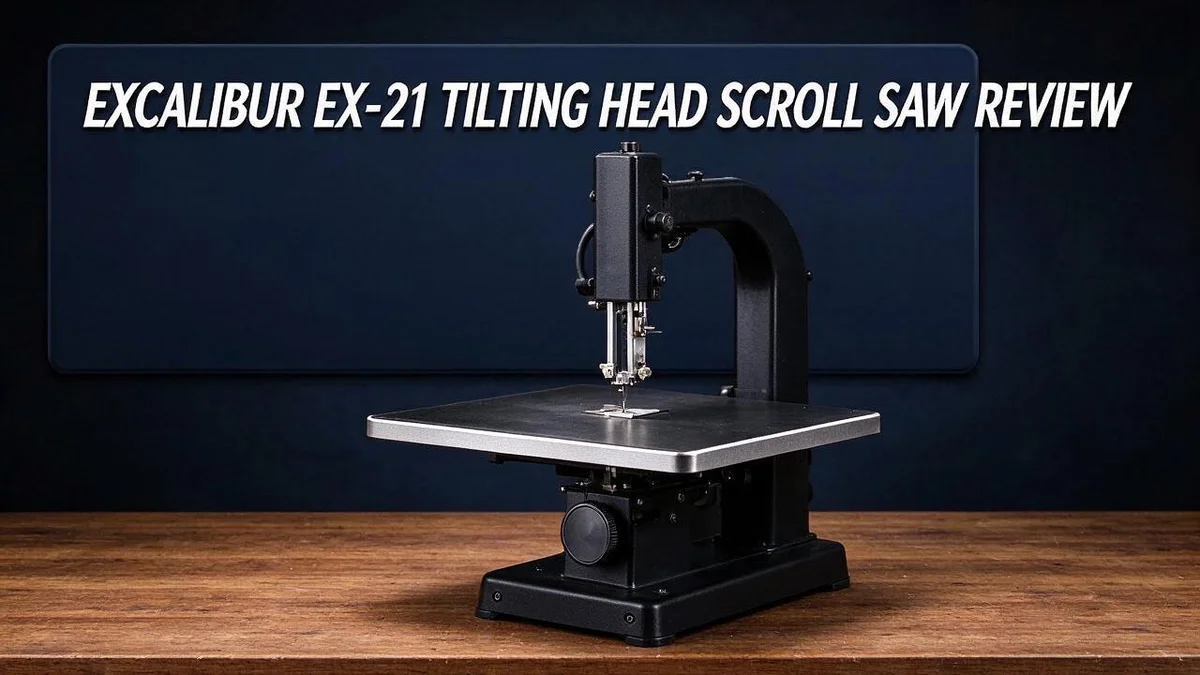
Excalibur EX-21 Tilting Head Scroll Saw Review
Looking for a scroll saw that cuts smooth and quiet? The Excalibur EX-21 tilting head scroll saw could be the tool you need.
The EX-21 offers a 21 inch tilting head and variable speed control. Its parallel link arm keeps the blade moving almost straight up and down. You get a clear view of your cut.
Many users praise how little vibration this saw makes. The arm also stays up during blade changes, which saves time. Still, check the blade clamps before you start. Some owners report slipping that can bend or break blades.
In a Nutshell
- Quiet work at steady speed: Reviewers say this saw runs smoothly at about 80 percent speed. Many people enjoy cutting without loud noise filling the room.
- A clear view of the cut: You can see the line you follow with ease. This helps beginners stay on track and reduces mistakes.
- True vertical blade travel: The blade moves straight up and down. This helps produce clean, square edges on your projects.
- Blade size and type: The saw takes 5 inch unpinned blades. Check your blade supply before you start so you can begin cutting right away.
- Blades are an extra purchase: You must supply your own blades. Plan to keep a spare pack on hand, since blades can wear out quickly.
- Strong contender in its class: Buyers often compare it with the DeWalt DW788, Delta scroll saws, and Hegner models. Look at cutting depth and ease of use to find the best fit for your projects.
Cutting Performance and Blade Travel

- Unique design accepts blades in two directions (standard and 90 degrees) to allow for infinite...
- Variable speed goes from 400 to 1600 strokes per minute

Last update on 2026-11-16 / Affiliate links / Images from Amazon Product Advertising API Some of the links on this website are affiliate links, which means that at no additional cost to you, I earn a commission if you click through and make a purchase. I only recommend products and services that I believe will add value to my readers. Thank you for your support!
The EX-21 uses a parallel-link four-arm design. This design keeps the blade moving in a near-vertical path. Straight travel gives cleaner cut walls and fewer surprises along your pattern lines.
Blade travel matters most on tight curves. When the blade stays upright, it follows your pencil line with less drift. You can steer the workpiece slowly and stay in control.
The 21 inch tilting head adds another option. You can tilt the table for bevel cuts on decorative boxes, puzzle edges, and inlay pieces. Lock the table firmly and test a scrap piece first.
Variable speed helps you match the material. Use a higher speed for thin plywood and softer woods. Drop to a lower speed for dense hardwoods or thick stock. Let the blade do the cutting instead of pushing the wood.
Clamp stability affects the final result. Some users report that clamps slip, which leads to bent or broken blades. Tighten the clamps again after a few minutes of cutting, because repeated strokes can loosen them during long sessions.
Different blade choices also change results. Fine blades with many teeth per inch cut smooth edges in thin material. Coarser blades remove wood faster in thicker boards. Match the blade to your project for the best finish.
Practice on scrap wood before a real project. Watch how the blade enters the wood. A relaxed grip and steady pace give the best control. Small changes in feed pressure can improve cut quality a lot.
Cut relief patterns with care. Back out of tight corners slowly. Keep the blade in the kerf while you turn. This habit protects your blade and your workpiece from sudden stress.
Many hobbyists enjoy long sessions at the saw. Plan short breaks to check clamp tension and blade condition. A quick check keeps your cuts accurate and your workflow smooth from start to finish.
Build Quality and Vibration Control
Build quality shapes how a scroll saw feels every day. A steady machine keeps your cuts clean and your hands relaxed.
The EX-21 runs quietly, and that calm comes from how its moving parts work together. When the arms stay aligned, the blade tracks with less effort.
Start with a firm setup. Bolt the saw to a heavy workbench or a solid stand. A loose base lets the whole machine shift during cuts.
Rubber feet or a bench pad can also help. They soak up small shakes before those shakes reach the blade.
Set the saw on a level surface too. A tilted base can change how the blade meets the wood.
Vibration does more than annoy you. It can push a thin blade off line and leave rough edges on fine detail work.
Check the arms before every session. Look for play at the pivot points and the tilt lock. Gently move the upper arm. Any movement you can feel means something needs tightening.
Tighten the table lock and blade holder bolts regularly. Loose hardware creates wobble that spreads through the frame. Use the correct wrench so you do not strip the threads.
Keep the moving parts clean. Dust and resin can build up on the arm pivots. A light wipe with a dry cloth keeps the motion smooth.
Lubrication follows the manual. Use only the oil or grease the maker lists. Too much lubricant can drip onto your wood and leave stains.
Less shaking also means less strain on your hands and wrists. Your grip stays easier to hold, and your control improves.
Listen to the saw. A smooth hum signals good balance. A rattle or knocking sound means you should stop and inspect the machine.
Good habits protect the saw for years. Simple checks take only a few minutes. They prevent bigger problems later and keep every project on track.
Blade Changes and Clamping System
Changing blades on the EX-21 becomes easy with a steady routine. Always unplug the saw first. This step protects your hands from the moving parts.
Next, loosen the upper and lower blade clamps. Hold the blade gently while you release it. Slow movements prevent sudden snaps.
Choose the right blade for each project. A 5 inch unpinned blade works well with this saw. Thin blades suit tight curves, while wider blades suit straight cuts and thick stock.
Clamping keeps the blade straight and tight during every cut. Good clamping also protects the blade from early failure.
Seat the blade with the teeth pointing down. Push the bottom end into the lower clamp first. Then insert the top end into the upper clamp.
Tighten both clamps evenly. Uneven pressure can pull the blade off center. Turn each knob a little at a time, then check the blade alignment.
Test the tension before you cut. Pluck the blade gently with a fingertip. It should give a clear tone and feel firm, not loose.
Clamp slippage remains the main concern for many owners. Check the clamps after the first few minutes of cutting. Retighten them whenever you notice any movement. Blade slippage can bend or break a fresh blade quickly.
Keep spare blades within reach. Fresh blades help you finish projects faster. Store them flat in a dry box so the teeth stay sharp.
Small habits make blade changes smoother over time. Wipe the clamps clean and remove sawdust regularly. A clean grip holds the blade better.
Remember to recheck the blade after a break. Heat and vibration can loosen the grip over a long session. A quick check keeps your cuts clean and accurate.
Practice the swap on scrap wood first. You will build confidence and speed. Soon, changing blades will feel like a quick routine.
Top 3 Alternatives
DeWalt DW788

- 20 in. Variable-Speed Scroll Saw
Last update on 2026-11-16 / Affiliate links / Images from Amazon Product Advertising API Some of the links on this website are affiliate links, which means that at no additional cost to you, I earn a commission if you click through and make a purchase. I only recommend products and services that I believe will add value to my readers. Thank you for your support!
The DeWalt DW788 offers a 20 inch cutting capacity. This gives you extra room for large projects.
Its variable speed lets you slow down for tight curves. A built in dust blower keeps your cut line clear while you work. Many woodworkers like its blade changes without any tools.
Shop Fox W1713

- 20" x 20" to 29-1/2" x 29-1/2"
- Corner pads measure 4" square
Last update on 2026-11-18 / Affiliate links / Images from Amazon Product Advertising API Some of the links on this website are affiliate links, which means that at no additional cost to you, I earn a commission if you click through and make a purchase. I only recommend products and services that I believe will add value to my readers. Thank you for your support!
The Shop Fox W1713 suits hobbyists who want steady performance at a comfortable size. It features a tilting table, so you can make bevel cuts at many angles.
Variable speed control helps you match the blade to your material. Plywood, hardwood, and thin craft stock all feel smooth under the blade. Setup takes little time.
WEN 3921 Scroll Saw
- Unique design accepts blades in two directions (standard and 90 degrees) to allow for infinite...
- Variable speed goes from 400 to 1600 strokes per minute
Last update on 2026-11-16 / Affiliate links / Images from Amazon Product Advertising API Some of the links on this website are affiliate links, which means that at no additional cost to you, I earn a commission if you click through and make a purchase. I only recommend products and services that I believe will add value to my readers. Thank you for your support!
The WEN 3921 Scroll Saw fits people who need a compact tool for small workshops. It also tilts for angled cuts.
Its light frame makes it easy to move from room to room. Beginners often enjoy its simple controls and clear view of the blade. This helps them follow fine patterns with confidence.
Workspace Setup and Operating Noise
Your workspace shapes how the EX-21 feels during every session. Give the saw enough room for long boards.
Plug the saw into a grounded 120 V outlet. Avoid long extension cords, because they can cause the motor to lose power.
Noise planning starts with your schedule. Run the saw at a lower speed during late evening sessions. The motor stays calm, and your household sleeps better.
Think about neighbors and family members too. Dense hardwood creates more noise than soft pine, so plan heavy cuts for daytime hours.
Hearing protection still matters. Wear earplugs or earmuffs during long sessions. Noise adds up over an afternoon.
Good lighting makes a big difference. Place a bright task light so the blade line stays easy to see. Clear sight helps you follow pencil lines without squinting.
Dust is the next challenge. Fine sawdust drifts toward your face, so place a shop vacuum nearby.
Chair height matters as well. Sit on a stool that lets your elbows rest comfortably at table height. Keep both feet flat on the floor.
Keep a brush, tweezers, and a pin tool within reach. Quick access saves time and keeps your focus on the cut.
Finally, leave open space behind the saw. Good airflow keeps the motor cool, and a clear area lets you move freely.
Sound travels through open rooms and hard floors. Close a door or hang a heavy curtain when you work in a shared space.
Ventilation also helps during long days. Open a window or run a fan so warm air leaves the room. Fresh air keeps you alert.
Make a short checklist before each session. Confirm the outlet, lighting, dust control, and seating. A quick check prevents interruptions.
A calm, organized workspace makes the EX-21 more enjoyable. You will focus on the saw and cut with confidence.
Blade Costs and Ongoing Running Expenses
The EX-21 relies on blades as its main ongoing need. Blades wear down, snap, and bend over time. Plan for replacements from the start.
Some owners report bent or broken blades more often than they expect. Keep a simple log of each blade you use. Note the reason it failed, because this record shows how fast your supply runs down.
Match the blade to the material. Thin blades suit tight curves in thin wood. Thicker blades handle hardwood with less strain. Good matches mean fewer blades wasted on poor cuts.
Buy blades in larger packs so you never run out mid project. Bigger packs also save trips to the store. Compare blade types before each order so you pick the right fit for your work.
Store blades flat and dry. Moisture dulls the teeth and can rust the steel. Keep them in their original sleeves or a small case near the saw.
The saw draws power from a standard 120 V outlet. Long sessions use more electricity, so switch off the saw when you step away. Small habits make a real difference over months of use.
Task light bulbs will wear out too. Check them every few months. Keep a spare bulb on a shelf so your workspace stays bright.
Watch for signs of blade fatigue. Teeth that look dull or discolored may need replacing. A clean cutting sound tells you when a blade still performs well.
Track your project size. Large batches of cuts wear blades faster. Plan your stock around your typical workload each season, so you always have fresh blades ready.
Used saws can still work well with fresh blades. Check the arms and clamps before you bring one home. This quick check helps you avoid repeat blade losses.
Ongoing supplies stay simple when you plan ahead. Blades, bulbs, and storage items cover most of your needs. A little routine keeps your bench ready for the next project.
Pros and Cons
Pros
- Quiet running helps you work without disturbing the household.
- Near-vertical blade travel keeps your cuts square and true.
- The clear line of sight makes it easy to follow your cut line.
- The raised arm gives you easy access when you swap blades.
- Low vibration keeps your workpiece steady as you cut.
Cons
- New units are hard to find, so many buyers look at used saws.
- Beginners may need practice before blade setup feels natural.
- The bench-mounted design means it does not travel well to job sites.
- Owners who want a different arm style may compare other models before buying.
Who Should Buy It
Hobbyists who love decorative work will feel at home with this saw. Fretwork, intarsia, and puzzle making all need clean lines on tight curves.
The tilting head opens up a new kind of project. You can cut bevels for inlays, picture frames, and angled signs.
Makers who sell small wooden pieces often find this saw useful. Ornaments, coasters, and wall art can all come from the same setup.
Owners who enjoy small adjustments will get along well. The blade clamps need a quick check before each session. Many people treat this as a simple habit.
Patient cutters tend to get the best results here. Slow feeding protects the blade and keeps the line steady. Rushing through a cut often leads to snapped blades.
Teachers and club leaders can use it for group demos. The steady running makes it easy to show technique step by step.
Parents and families with young makers may find it inspiring. Supervised projects can build skills and patience. Always keep fingers clear of the blade path, even with simple cuts.
Some buyers should look elsewhere. Anyone who wants a saw with no setup steps may prefer a different model.
Those who cut thick stock all day might also want a heavier machine. Think about how you like to learn. Some people prefer videos, others learn by trial. This saw rewards hands on trial because every cut teaches something new about feed pressure. Hands on practice builds real confidence over time.
Your goals should guide the choice, not hype or trends. Take your time and weigh each point before you decide. If your projects involve angled edges and detailed curves, this saw fits the job well.
Final Verdict
The Excalibur EX-21 suits scroll sawing fans who want precision. It runs smoothly, sits steady on the bench, and gives you a clear view of the cut. It does ask for care during setup and blade choice.
Our final verdict is positive for the right user. If you plan to cut fine patterns, decorative pieces, or angled cuts, this saw can grow with your skills. Think about your projects before you commit.
Treat blade seating as a setup habit, not a dealbreaker. Check the blade tension and position each time you start a new piece. Good habits prevent most frustration with this machine.
Used units need a closer look. Ask the seller about the blade mechanism, the arm movement, and the tilt lock. A quick test cut on scrap wood reveals a lot about the saw’s condition.
Online communities offer helpful support. Many owners share setup tips, pattern ideas, and tension advice. Use these resources to shorten your learning curve.
Who should say yes? Hobbyists, small makers, and teachers who want a dependable scroll saw will likely enjoy it. Shoppers chasing speed for large production runs should compare other options.
Think about your workspace too. A sturdy table and good lighting help you see fine lines and keep control. Plan your layout before the saw arrives.
Final thought: the EX-21 rewards patience and careful work. Choose it for control, quiet operation, and detailed results. Read recent reviews, test your needs, and let your own projects guide the decision.
Frequently Asked Questions
Does the EX-21 take unpinned blades?
Yes, it takes 5 inch unpinned blades. Check the blade size on the package before you buy. Unpinned blades give you more options for fine detail work.
How do I stop the blade from slipping?
Some owners report that the factory clamps can slip. Tighten both clamps firmly and check the blade every few cuts. If a clamp wears out, replacing it can also help.
What accessories help the most?
A dust blower keeps the cut line visible. Some people also add a stable table or a small clamp to hold the workpiece. Dust control matters most because fine sawdust can hide your pencil lines.
What should I check on a used saw?
Test the tilt lock and look for arm play. Turn the saw on and listen for rattles or grinding. Ask the seller for a short test cut if you can.

Hi, I’m Amelia Thornton, the founder of ElectroPro.blog.
I write about smart devices, gadgets, electronics, and tech essentials from Amazon.
My goal is to help you discover reliable and innovative tech that truly makes life easier.
From home automation to everyday gear, I test and share what’s worth your investment.
Join me as I explore the smartest tech trends—one gadget at a time.