Ryobi P737D Cordless Tire Inflator Review: Specs, Performance, and Verdict
Flat tires can ruin a good day fast. You need air now, not after a long trip to a gas station. That is where the Ryobi P737D cordless tire inflator comes in.
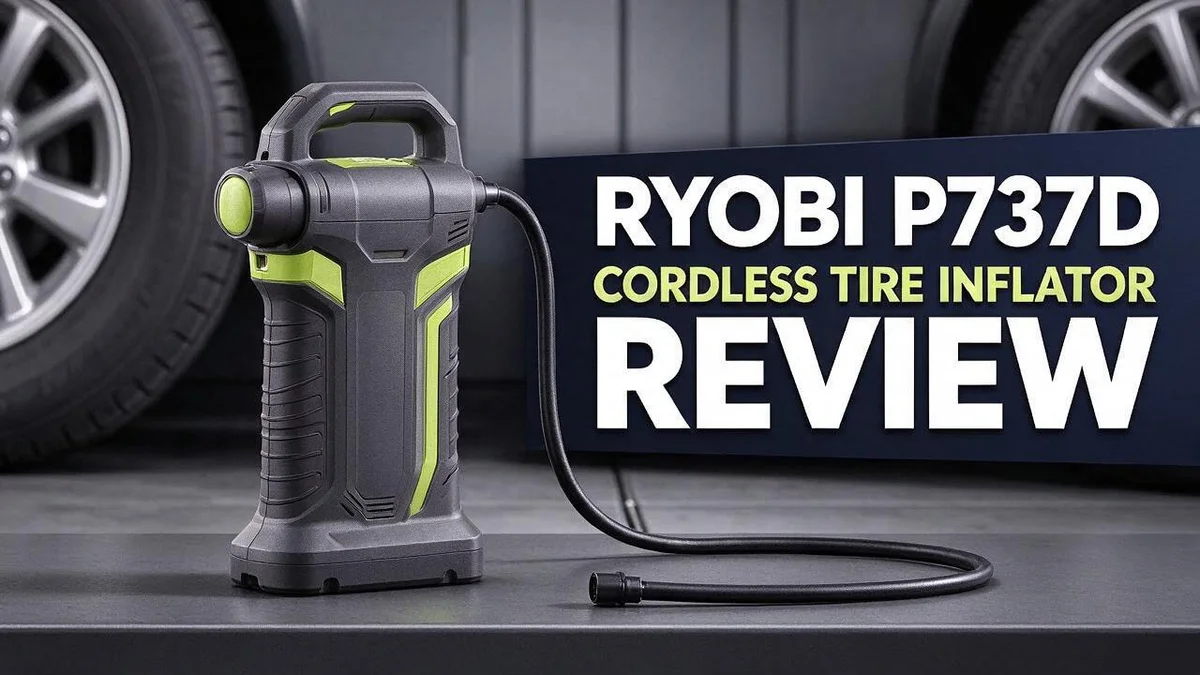
This compact tool runs on an 18V ONE+ battery. It reaches up to 150 PSI, which suits many car and bike tires. A 20 inch hose and a 2 inch pressure gauge help you reach each valve with ease.
Many reviewers say it packs a punch for its size. Some even keep it under a seat for emergencies. Still, one user notes that it is not very ergonomic when the valve sits low to the ground.
Read on to see how it performs, what it does well, and where it falls short. You will also find a handy comparison to help you decide.
In a Nutshell
-
Easy to stow for emergencies: Many drivers keep it under a seat, so it stays close when a flat happens on the road. Having it ready can save a long wait for roadside help.
-
Light enough to carry: At about 2.5 pounds, it lifts without strain. You can toss it in a trunk or a backpack and forget about it until you need it.
-
Clear pressure reading: The 2 inch gauge makes it simple to watch the air level as the tire fills. Reading the numbers at a glance helps you reach the right PSI without guessing.
-
Useful hose length: The 20 inch hose reaches wheels with ease. You can connect it without bending or crouching in an awkward spot.
-
Handling can feel clumsy: One owner says the design is not comfortable to hold. When the valve sits low, you need one hand to hold the unit and another to press the button, so plan for that extra effort.
-
Ryobi PCL001 is the main alternative: Research names it as the only direct rival. Compare its features with this model before you decide which one fits your needs.
Inflation Power and Pressure Range

- Powerful Inflator: This 18V cordless inflator provides high pressure inflation for tires and other...
- Compact Design: The lightweight body is easy to carry and store.
Last update on 2026-11-16 / Affiliate links / Images from Amazon Product Advertising API Some of the links on this website are affiliate links, which means that at no additional cost to you, I earn a commission if you click through and make a purchase. I only recommend products and services that I believe will add value to my readers. Thank you for your support!
Pressure range decides whether a tool can handle your tires. This inflator reaches up to 150 PSI, so it covers most passenger cars and light trucks.
Most car tires sit between 30 and 35 PSI when cold. That means the unit has plenty of headroom above normal use.
Extra headroom also helps with larger tires that need more air than a typical sedan. Owners of bigger vehicles will appreciate that margin.
Keep in mind that the listed specs come from the P737 model. The P737D may differ slightly, so confirm details on the box.
Fill speed depends on how low the tire starts. A nearly flat tire needs more time to reach its target pressure.
Battery charge also affects performance. A fully charged pack gives the best results when you need to reach higher pressure.
Check the door sticker first. It lists the correct pressure for your vehicle. Stop once the gauge matches that number.
Overfilling is easy to avoid. Add air in short bursts and check the reading after each pause. This gives you more control.
Small steps protect your tires. Slow filling also helps you spot leaks, since the gauge drops quickly if air escapes.
Temperature changes can shift tire pressure too. Cold mornings often lower the reading, so check tires before a long drive.
Many drivers check pressure once a month. Keeping a routine makes this compact tool more useful over time.
Think about your typical driving. Frequent road trips make a reliable pressure range even more valuable.
Pressure matters for fuel use as well. Underinflated tires create extra drag, which can lower mileage over a season.
Good inflation also supports handling and braking. Correct pressure keeps the tire contact patch even, so grip stays steady.
Use the tool in a shaded spot when possible. This keeps the battery cool and the gauge easy to read in bright sun.
Hose, Gauge, and Build Design
The hose and gauge shape how this tool feels in daily use. Small design choices matter more than most people expect.
Think about where the valve stem sits. On many cars, it sits low and tucked behind the wheel. You need a hose that lets you reach it without awkward angles.
Check the fitting before you rely on it. Every inflator uses a chuck that clamps onto the valve stem. Make sure the chuck style suits your car.
When you kneel beside a tire, you look down at the gauge. Bright sunlight can wash out small numbers. Shade the face with your hand to read it clearly.
Pay attention to how the hose handles. A stiff hose can kink and slow your work. Let the hose hang loose while you fill.
Built in gauges give a quick reading. It still helps to confirm the number with a separate tool now and then.
Storage matters too. Wrap the hose loosely so it does not pinch or crack. Cold weather can make hoses stiff, so store the unit somewhere sheltered.
Check the seal before each reading. A loose connection leaks air and skews the number. Press the chuck firmly onto the stem every time.
Think about your own vehicle first. Trucks and SUVs often need more room and more air. A short hose may reach the stem but feel cramped.
Good design also supports safety. A clear gauge helps you stop at the right pressure. Small mistakes add up when a tire needs precise air.
Practice once at home. Connect the chuck, add a little air, and read the gauge. Learning the feel now saves stress later. Roadside work is harder in the dark or rain.
Keep the hose clear of debris. Dirt and grit can clog the chuck and damage the seal. Wipe the end after each use to keep it working well.
Ease of Use and Handling
Using this inflator feels simple at first. You attach the chuck, press the button, and watch the air flow. The overall ease of use depends on where your valve stem sits.
Valves that sit low on the wheel are the easiest case. You can rest the tool on the ground and keep both hands free for the chuck.
High or hard to reach valve stems change the picture. When the valve stem is off the ground, you must hold the unit with one hand.
With your other hand, you press the button to run the compressor. This routine needs both hands and more focus than a simple floor pump.
Stay alert to your grip on the tool. A steady hold keeps the chuck square on the stem. A slipping chuck can leak air and waste your time.
Plan for conditions outside. Cold mornings, wet pavement, or gritty roadsides make hands slide and fingers stiffen. Place a mat or cloth under your knees for extra comfort.
Clear space around the wheel also helps. Move loose gear, bags, and cords away from the tire. You can then focus on the chuck and the reading without distraction.
Test the tool in your garage before a road trip. A quick run shows how your hands feel after a few minutes of work.
Build a simple routine. Start with the cold pressure listed on the door sticker. Then add air in short bursts, pause, and check the gauge each time.
Regular practice at home makes the process feel more natural. You learn the sounds and pauses before you face a real emergency.
Overall, ease of use depends on your setup and habits. Choose a flat spot, plan your hand position, and the job becomes much simpler.
Top 3 Alternatives
DEWALT 20V Tire Inflator

- High-pressure inflation mode with automatic shutoff
- Three power sources : 20v max battery, 12v dc, or 110v ac
Last update on 2026-11-16 / Affiliate links / Images from Amazon Product Advertising API Some of the links on this website are affiliate links, which means that at no additional cost to you, I earn a commission if you click through and make a purchase. I only recommend products and services that I believe will add value to my readers. Thank you for your support!
The DEWALT 20V Tire Inflator fits well into a busy garage. It runs on a 20V battery, so you can move it around with ease. Many drivers like its bright display and clear pressure readings.
It works best for trucks, SUVs, and family cars. Its large hose reaches each tire without strain. Inflation feels fast and steady.
The auto shutoff helps you hit the right PSI every time. You set the number once and let the tool do the rest.
AstroAI Cordless Tire Inflator

- 【FAST 160 PSI INFLATION WITH DURABLE METAL CONSTRUCTION】This tire inflator portable air...
- 【20V BATTERY & 12V DC DUAL POWER SUPPLY】Equipped with both a rechargeable 20V battery and a 12V...

Last update on 2026-11-16 / Affiliate links / Images from Amazon Product Advertising API Some of the links on this website are affiliate links, which means that at no additional cost to you, I earn a commission if you click through and make a purchase. I only recommend products and services that I believe will add value to my readers. Thank you for your support!
The AstroAI Cordless Tire Inflator offers a compact design. It slips into a glove box or trunk without taking much space. People who want a simple tool for quick top-ups often pick this model.
The digital gauge shows readings in easy steps. Its built in light helps you see the valve at night. Many users also praise the sturdy hose and steady airflow.
This model suits road trips and emergency roadside stops. You can keep it ready in the car at all times.
Kensun Cordless Tire Inflator
No products found.
The Kensun Cordless Tire Inflator suits drivers who want strong airflow. It fills tires quickly and keeps a steady pressure. Its rechargeable battery means you can skip the hassle of cords.
This model also works for bikes, balls, and other inflatables. Its preset mode stops at your chosen PSI. Beginners find the controls easy to learn.
Each option has clear strengths. Pick the one that matches your vehicle, your storage space, and your daily driving needs.
Ryobi ONE+ Platform Value
If you already own Ryobi tools, the ONE+ system makes this inflator an easy fit. The same battery that runs your drill or trimmer can power the P737D. You do not need a separate pack just for tire work.
This shared battery approach saves space in your garage. You store one charger and a few batteries instead of a shelf full of pumps. Less clutter means less searching when you need air fast.
Think about how often you use each tool. A battery that powers yard work can also handle a flat tire on a Saturday morning. Rotating batteries between tools keeps every device ready.
Keep a spare battery charged. A dead pack turns a simple top-up into a stuck trip. Many owners charge batteries overnight so they start the day full. This habit matters most in cold months, when batteries drain faster.
Reviewers say the inflator packs a punch for its size. Its compact body fits in a trunk or under a seat. Some drivers keep it there for emergencies, so help is always close by.
Ryobi also lists the PCL001 as another option. Comparing the two helps you match a tool to your driving habits. Ask yourself how many vehicles you service and how much air each one needs.
A platform approach rewards loyal users. Each new ONE+ tool shares the same batteries, so your collection grows smoothly. Over time, the setup becomes simpler to manage and easier to trust.
Pick the battery size that fits your needs. Larger packs run longer between charges. Smaller packs feel lighter in your hand. Choose the mix that suits how you work.
Shared batteries also lower the chance of mismatched gear. You avoid guessing which charger fits which tool. Everything in the ONE+ family works together, which keeps your setup clean and predictable.
Portability and Roadside Storage
Portability is where this inflator really stands out. At around 2.5 lb, it feels light enough to carry in one hand.
A compact body fits easily into a trunk organizer or a side pocket. Many drivers prefer that kind of quick access.
Storage spots vary by vehicle. Sedans, hatchbacks, and SUVs each offer different room. Check your own layout before you plan.
The design suits stowing under a seat for emergencies. Measure the gap under your seat before you decide where it lives.
Trunk layout changes the plan. Loose groceries or sports gear can bury the tool fast. A small bin keeps it easy to grab.
A pickup bed may offer open space, but dust and rain can reach it. A cover or a sealed case solves that problem.
Grab and go access matters most. When a flat happens, you want the unit within reach. Keep it in the same spot every time.
Safety comes first on the roadside. Park away from traffic and turn on your hazard lights.
Keep the inflator near your jack so everything comes out together. A reflective vest adds another layer of visibility.
Light weight also helps when you carry the tool across a parking lot or down a dark embankment. Less weight means less strain on your arm.
Heat is a quiet risk inside a closed trunk. Hot days can wear on batteries and electronics, so keep the tool out of direct sun when possible.
Think about who rides with you. Kids, older passengers, and frequent travelers may need quick help too. Keeping the tool within reach helps everyone. Clear labels help everyone find it fast.
Portability suits drivers who want a compact and ready backup tool. Keep it stored where it stays dry, cool, and easy to reach.
Pros and Cons
Pros
- Reaches up to 150 PSI for higher pressure needs.
- A cordless design means no cord to tangle or find an outlet for.
- The 20 inch hose gives you extra reach to the valve stem.
- The 2 inch pressure gauge makes it easy to read your tire pressure.
- Works with the same ONE+ battery as other Ryobi tools.
Cons
- The specs come from the P737 listing, so model details may differ.
- Filling several tires in a row may tire out your hands.
- Few long term user reviews are available right now.
- Check the exact model number before you buy.
Who Should Buy It
This inflator suits drivers who want a simple answer to small tire problems. It works well for a slow leak found on a weekday commute.
Current Ryobi owners should look at this model first. If you already own an 18V ONE+ battery, you can skip buying a new power source.
New tool buyers also benefit from its simple setup. You get one cordless unit without learning a complicated system.
Commuters who drive alone often want gear that stays out of the way until needed. A ready unit at home or in the car gives quick peace of mind.
Parents of new drivers may also find it useful. A ready tool at home lets teen drivers check tire pressure before longer trips.
Owners of older vehicles can use it for routine top-ups. Regular checks help tires hold their pressure, which supports safer driving.
Rideshare and delivery drivers may appreciate fast roadside help. Time matters on long shifts, so keep the battery charged and ready.
Hobbyists with bikes or sports equipment could test whether the hose and nozzle fit their valves. The research did not cover that use, so try it carefully.
Some buyers should think twice. People who inflate large truck or trailer tires often may need more airflow than this compact unit offers. Ask whether its output matches your needs before you commit.
Those with weak grip strength should also consider comfort. Hold the unit steady and press the button at the same time, especially when the valve sits low.
Buyers who want a long track record may prefer to wait. More owner feedback will likely appear over time, so later reviews may offer fresh insight.
Bottom line: This inflator suits casual drivers and existing Ryobi fans. Heavy users and buyers who need strong airflow should explore other options.
Final Verdict
The Ryobi P737D earns a clear spot in a basic roadside kit. It handles small tire problems with ease. Most drivers want a tool that just works. This model fits that need well.
Think of it as a backup plan rather than a shop replacement. It packs a punch for quick fills and emergency inflation. Owners who already use Ryobi batteries get the most from it.
The biggest strength is the setup. You charge one battery, grab the hose, and start filling. Little time goes into prep, which matters when a tire goes flat in a parking lot.
The main tradeoff involves comfort during use. When the valve sits low, you hold the unit with one hand and press the button with the other. Practice once in your driveway first.
Heavy truck and trailer owners should choose a larger unit. Passenger tires suit this model best.
Keep the inflator in a dry spot between trips. Moisture and dust wear down any tool over time.
Your typical trip also matters. Long road trips in remote areas call for a kit that carries more than one tool. Pair this inflator with a tire plug kit for a stronger backup plan.
Test the unit at home before a trip. Note how long it takes to reach your target pressure. That quick test builds confidence before you need it.
Drivers who skip the test often feel lost in a crisis. A calm first run sets you up for success. Stay calm, and the job goes faster.
Overall, this inflator suits a practical driver who wants simple help. Simple tools often prove the most useful on the road.
If you want an emergency tool only, this one fits well. If you fill tires daily or service a fleet, look at heavier equipment.
The P737D makes a sound pick for everyday roadside needs. Keep it charged and stored within reach. That single habit makes the biggest difference when trouble strikes.
Frequently Asked Questions
How do I hold it when the valve sits low?
Kneel or crouch beside the wheel. Rest the chuck on the valve stem first. Brace your elbow on your knee for support. Then press the button with your free hand. This setup reduces strain on your wrist. Take short breaks if your arms feel tired.
What if the battery dies during a fill?
Swap in a charged ONE+ battery from another Ryobi tool. Keep one spare battery in your car for emergencies. Charge the spare before a long road trip. A dead battery can leave you stuck, so plan ahead.
Do I need 150 PSI for my car?
Most passenger car tires need far less pressure than the top range. Check the number printed on your tire sidewall first. The higher range helps mainly with heavy duty or specialty tires. Set your target pressure, then stop the fill.
How often should I charge the battery?
Charge it every few months, even if you rarely use the tool. A charged battery stays ready for a sudden flat. Store the battery at room temperature for longer life.
Can I use it to top up a spare tire?
Yes, and this is a smart habit. Spare tires often lose air while they sit unused. Check the spare along with your main tires. Use the gauge to confirm the pressure before you drive.

Hi, I’m Amelia Thornton, the founder of ElectroPro.blog.
I write about smart devices, gadgets, electronics, and tech essentials from Amazon.
My goal is to help you discover reliable and innovative tech that truly makes life easier.
From home automation to everyday gear, I test and share what’s worth your investment.
Join me as I explore the smartest tech trends—one gadget at a time.