ARB Twin Compressor Review: The Ultimate Guide
Picture this. You are deep in the wilderness, miles away from civilization, and your tires need airing up after a challenging trail. Your compressor takes forever, or worse, it fails completely.
That nightmare ends with ARB twin compressors. These powerful dual motor systems have changed the game for off road enthusiasts, overlanders, and 4×4 adventurers worldwide.
This review dives deep into everything you need to know about these amazing machines. We will explore the best ARB twin compressor models on Amazon, compare their features, discuss installation tips, and help you decide if this investment suits your needs.

Key Takeaways:
- Performance That Matters: ARB twin compressors deliver an impressive 6.16 CFM at no load and maintain 4.65 to 4.68 CFM at 29 PSI. This means you can inflate four 35 inch tires from 15 PSI to 35 PSI in under 10 minutes, which is roughly twice as fast as single motor compressors.
- Built to Last: These compressors feature 100% ball bearing construction with no bushings, water sealed motors, and a unique linear brush pre load system. Most users report years of trouble free operation with minimal maintenance required beyond occasional air filter cleaning.
- Versatile Applications: Beyond tire inflation, ARB twin compressors handle air lockers, air horns, pneumatic tools, and air suspension systems. The 150 PSI maximum pressure capability means you have enough power for virtually any vehicle based air need.
- Two Main Options Available: The classic CKMTA12 brushed model offers proven reliability at a lower price point, while the newer CKBLTA12 brushless model provides 50% more output, improved efficiency, and IP67 water resistance for ultimate protection.
- Investment Worth Making: While ARB twin compressors cost more upfront than budget alternatives, their durability, speed, and performance make them a smart long term investment. Most owners consider them essential equipment rather than optional accessories after experiencing their capabilities firsthand.

- Motors are water sealed, 100% ball bearing equipped (i.e. no bushings), and feature a unique linear...
- Compact twin motor, dual cylinder design makes it the highest flowing compressor in its class...
Last update on 2026-07-27 / Affiliate links / Images from Amazon Product Advertising API Some of the links on this website are affiliate links, which means that at no additional cost to you, I earn a commission if you click through and make a purchase. I only recommend products and services that I believe will add value to my readers. Thank you for your support!
ARB CKMTA12 Twin Motor On Board High Performance Air Compressor
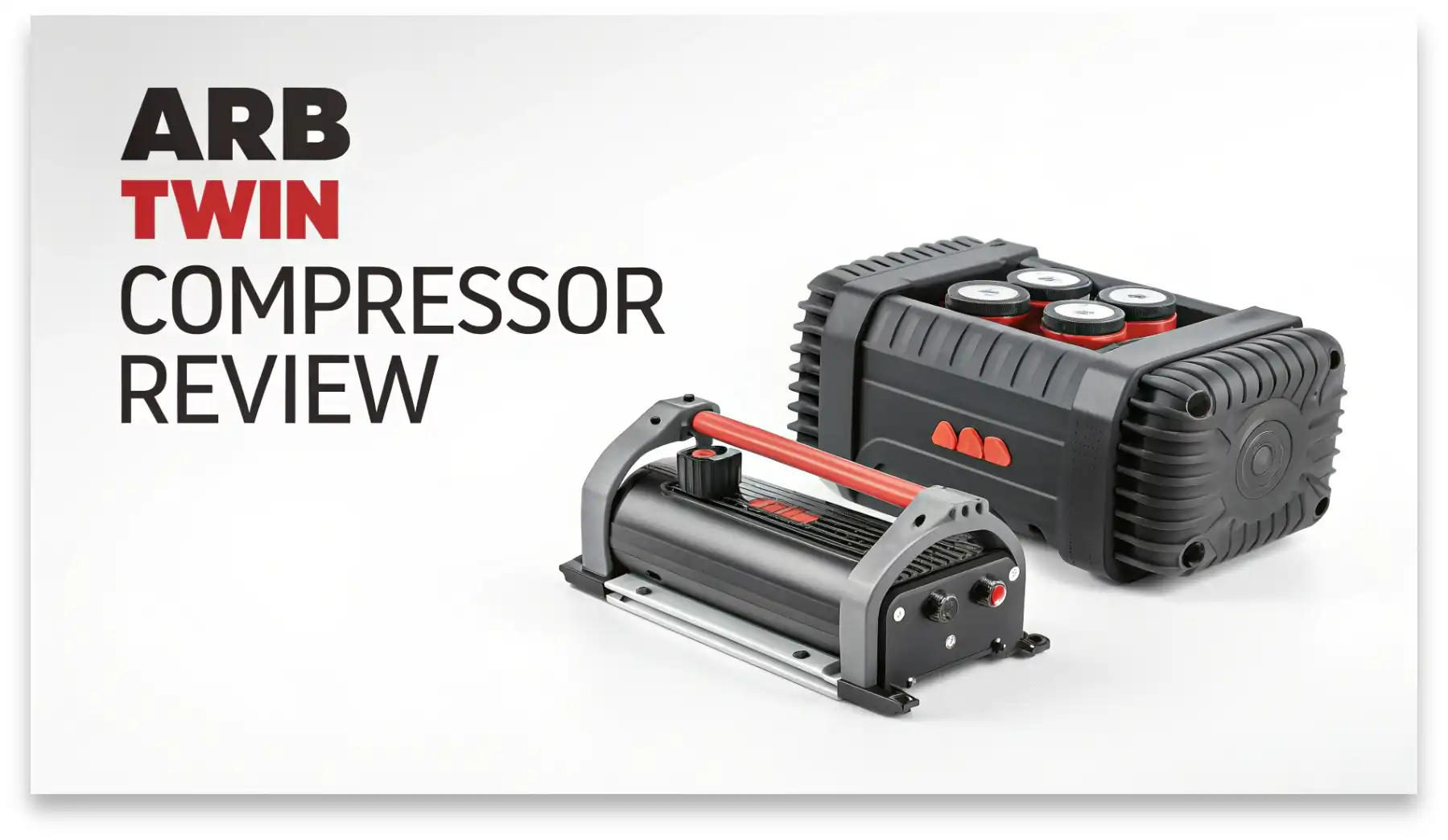
The ARB CKMTA12 represents the classic twin motor design that built the company’s legendary reputation.
This 12V on board compressor delivers exceptional performance with its dual motor configuration. The unit measures 10.8 inches in length, 7.5 inches in width, and 4 inches in height, making it compact enough to mount in various vehicle locations.
This model pushes out 6.16 cubic feet per minute at no load and maintains 4.68 CFM at 29 PSI working pressure. The maximum pressure reaches 150 PSI, which handles everything from tire inflation to running air tools.
The compressor draws a maximum of 68.6 amps during operation, so proper wiring with adequate gauge wire is essential for safe installation.
ARB CKBLTA12 Brushless Twin Motor Premium Air Compressor

- 50% INCREASE IN OUTPUT: ARB Brushless boasts an additional 50% in output when compared to our...
- ABOUT BRUSHLESS MOTOR TECHNOLOGY: Brushless motors have less wearing parts, rev faster and can...
Last update on 2026-07-27 / Affiliate links / Images from Amazon Product Advertising API Some of the links on this website are affiliate links, which means that at no additional cost to you, I earn a commission if you click through and make a purchase. I only recommend products and services that I believe will add value to my readers. Thank you for your support!
ARB launched the CKBLTA12 brushless model in 2026, and it immediately raised the bar for portable air compressor technology.
This next generation compressor delivers 50% more output than the classic brushed models, making it the fastest option for serious off roaders running large tires or needing quick inflation times.
The brushless motor technology brings several advantages. First, it provides better efficiency, drawing less power for the same or greater output.
Second, brushless motors run cooler and last longer since there are no brushes to wear out. Third, the IP67 water resistance rating means this compressor can handle extreme conditions including water crossings and heavy rain without worry.
This model outputs 6.20 CFM at 29 PSI, which translates to noticeably faster inflation times compared to the classic twin.
Owners with 40 inch tires report inflating all four tires in approximately 5 minutes, which is remarkable performance. The unit handles a maximum of 90 amps, so you need robust electrical wiring for proper operation.
Top 3 Alternatives for ARB Twin Compressor

- FEATURES: Max Pressure 150 PSI, Air Flow 12.35ft³/min, with Weight of 24 LBS, Hollow Metal Shell...
- PROTECTION: Auto-thermal Cut-Off Switch and over-current protection, protect the motor from Damage...
Last update on 2026-07-27 / Affiliate links / Images from Amazon Product Advertising API Some of the links on this website are affiliate links, which means that at no additional cost to you, I earn a commission if you click through and make a purchase. I only recommend products and services that I believe will add value to my readers. Thank you for your support!

- Tire Inflator Kit: Stay prepared at all times with the VIAIR 300P Compressor. Whether you are airing...
- Easy-to-Use: Clamp the power leads to your car or truck battery, connect the tire chuck to the valve...

Last update on 2026-07-27 / Affiliate links / Images from Amazon Product Advertising API Some of the links on this website are affiliate links, which means that at no additional cost to you, I earn a commission if you click through and make a purchase. I only recommend products and services that I believe will add value to my readers. Thank you for your support!

- Auto-thermal cutoff switch - protects motor against damage
- Maximum continuous cycle time (duty cycle) - 40 minutes at 40 psi at 75 degrees Fahrenheit
Last update on 2026-07-27 / Affiliate links / Images from Amazon Product Advertising API Some of the links on this website are affiliate links, which means that at no additional cost to you, I earn a commission if you click through and make a purchase. I only recommend products and services that I believe will add value to my readers. Thank you for your support!
ARB CKMTP12 Twin Motor High Performance Portable Air Compressor

- Ultra compact twin motor, dual cylinder design makes this the high flowing portable compressor of...
- Integrated aluminum air tank and pressure switch regulates pressure between 135 PSI and 150 PSI...
Last update on 2026-07-27 / Affiliate links / Images from Amazon Product Advertising API Some of the links on this website are affiliate links, which means that at no additional cost to you, I earn a commission if you click through and make a purchase. I only recommend products and services that I believe will add value to my readers. Thank you for your support!
The CKMTP12 offers the same powerful twin motor technology as the on board CKMTA12 but in a portable configuration. This design appeals to people who want the flexibility to use their compressor on multiple vehicles or prefer not to permanently mount equipment under the hood.
This portable unit comes in a rugged carrying case with integrated handles for easy transport. The kit includes everything needed for operation: heavy duty alligator clips for battery connection, an air hose with fittings, and the compressor itself. The setup takes just minutes, making it convenient for trail side use or helping fellow wheelers.
The performance specifications match the on board model with 6.16 CFM at no load and 4.65 CFM at 29 PSI. The 150 PSI maximum pressure capability means you can handle any tire size or air tool application. The twin motor design ensures fast inflation times that save precious time during trail rides or rock crawling sessions.
Understanding CFM Ratings and Why They Matter
CFM stands for cubic feet per minute, which measures the volume of air a compressor can deliver.
This specification directly impacts how fast you can inflate tires or power air tools. ARB twin compressors deliver approximately 6.16 CFM at zero PSI and maintain 4.65 to 4.68 CFM at 29 PSI working pressure.
These numbers matter because larger tires require more air volume to inflate. A 35 inch tire holds significantly more air than a stock tire, so a high CFM rating dramatically reduces inflation time.
With ARB twin compressors, you can air up four 35 inch tires in about 8 to 10 minutes, compared to 20 minutes or more with lower CFM single motor compressors.
The CFM rating drops as pressure increases because the compressor works harder against resistance. ARB rates their compressors at 29 PSI, which represents realistic working conditions for tire inflation. Some competitors rate CFM at zero PSI only, which looks impressive but does not reflect real world performance.
Installation Tips for ARB Twin Compressors
Installing an ARB twin compressor requires careful planning and proper execution. Most owners can complete the installation in a few hours with basic tools and mechanical knowledge. The process involves choosing a mounting location, running electrical wiring, installing an air line, and setting up controls.
Choosing the Right Location: Popular mounting spots include under the hood, in the bed, or inside the vehicle. Under hood installations keep the compressor close to the battery for shorter wire runs and provide easy access.
However, engine heat can reduce efficiency slightly. Bed mounting protects the compressor from engine heat but requires longer wiring. Interior mounting offers maximum protection but takes up valuable storage space.
Electrical Considerations: ARB twin compressors draw significant current, with the classic model needing up to 68.6 amps and the brushless model requiring up to 90 amps.
You must use proper gauge wire for the distance between the battery and compressor. Most installations need 6 or 8 gauge wire with appropriate inline fuses. Using undersized wire creates voltage drop, reduces compressor performance, and poses fire risk.
Maintenance Requirements and Long Term Reliability
ARB twin compressors require minimal maintenance, which contributes to their excellent reputation for reliability.
The primary maintenance task involves cleaning the air filter periodically to ensure optimal airflow. The filter housing removes easily, and you can clean the filter element with compressed air or mild soap and water.
Filter Maintenance: Check the air filter every few months or after dusty conditions. A clogged filter reduces airflow and forces the compressor to work harder, which decreases performance and increases heat buildup.
Cleaning the filter takes just a few minutes and significantly extends compressor life. Replacement filters are inexpensive and readily available if the original filter becomes damaged or excessively dirty.
Motor Brushes: The classic brushed models use carbon brushes that wear gradually over time. ARB designs these brushes with linear pre load systems that maintain optimal contact as they wear.
Most users get years of service before needing brush replacement. When the time comes, replacement brush sets are available and the procedure is straightforward for anyone comfortable with basic mechanical tasks.
Real World Performance: Speed Tests and Comparisons
Understanding real world performance helps you appreciate what ARB twin compressors deliver in actual use conditions. Independent testing and user reports provide valuable insights into inflation times, power consumption, and overall capability compared to alternatives.
Tire Inflation Times: An ARB twin compressor inflates four 35 inch tires from 15 PSI to 35 PSI in approximately 8 to 10 minutes. The same task with a typical single motor 2.5 CFM compressor takes 25 to 30 minutes. This time savings means you spend less than a third of the time inflating compared to budget options.
For larger tires, the advantage grows even more dramatic. Users running 37 inch tires report inflation times around 10 to 12 minutes for all four tires. With 40 inch tires, the process takes roughly 12 to 15 minutes. Budget compressors might require 45 minutes or longer for the same task, often overheating before completing the job.
ARB Inflation Kit: Complete Portable Solution

- 1- Motors are water sealed, 100% ball bearing equipped (i.e. no bushings), and feature a unique...
- 2- Compact twin motor, dual cylinder design makes it the highest flowing compressor in its class...
Last update on 2026-07-27 / Affiliate links / Images from Amazon Product Advertising API Some of the links on this website are affiliate links, which means that at no additional cost to you, I earn a commission if you click through and make a purchase. I only recommend products and services that I believe will add value to my readers. Thank you for your support!
The ARB Inflation3 kit bundles the CKMTA12 twin compressor with essential accessories for convenient portable use. This complete package includes extension hardware, quality air hoses, and proper connectors that make setup and operation straightforward.
This kit arrives in updated packaging with everything organized for easy storage and transport. The extension hardware simplifies connecting the compressor to your vehicle battery and includes proper gauge wiring with integrated fuses for safety. Many users appreciate having all components properly matched rather than sourcing parts separately.
The included air hose features quality construction that resists kinks and handles the high flow from the twin motors. The fittings connect securely to prevent frustrating air leaks that waste time and reduce pressure. The complete system stores neatly in the carrying case when not in use.
Understanding Maximum PSI and Pressure Capabilities
The 150 PSI maximum pressure rating of ARB twin compressors provides versatility for various applications beyond basic tire inflation. Understanding this specification helps you recognize the full capability of these powerful air systems.
Tire Inflation Needs: Most vehicle tires operate between 15 and 50 PSI depending on the application. Off road enthusiasts air down to 10 to 20 PSI for improved traction, then air back up to 30 to 40 PSI for highway travel.
The 150 PSI maximum pressure provides substantial overhead beyond typical tire needs, ensuring the compressor operates efficiently throughout the pressure range.
Air Tool Compatibility: Many pneumatic tools require 90 to 120 PSI for proper operation. Impact wrenches, air ratchets, blow guns, and spray guns all benefit from adequate pressure. ARB compressors deliver sufficient pressure for most portable air tools, though high demand tools may require an air tank for sustained operation.
Air Locker Operation: ARB’s own air lockers typically engage at 80 to 90 PSI. The twin compressor provides more than enough pressure and volume to operate multiple air lockers simultaneously. The high CFM output ensures quick locker engagement even when running front and rear lockers together.
Comparing Classic Brushed vs New Brushless Models
ARB offers both traditional brushed motor compressors and newer brushless technology. Understanding the differences helps you choose the right model for your needs and budget.
Performance Differences: The brushless CKBLTA12 delivers 50% more airflow than the classic CKMTA12 at the same working pressure. This translates to noticeably faster inflation times, especially with very large tires.
Efficiency and Heat: Brushless motors convert electrical energy to mechanical work more efficiently than brushed motors. This improved efficiency means less wasted energy as heat and cooler operation under load.
Durability Considerations: Brushed motors use carbon brushes that wear gradually and eventually require replacement after years of service. Brushless motors eliminate this wear item entirely, which reduces long term maintenance and extends service life.
Size and Weight: The classic CKMTA12 measures 10.8 x 7.5 x 4 inches and weighs 17.4 pounds. The brushless CKBLTA12 measures 14.49 x 13.31 x 6.69 inches and weighs 15.8 pounds.
Electrical Requirements: The classic model draws up to 68.6 amps maximum, while the brushless model requires up to 90 amps. Both need robust wiring, but the brushless model demands more from your vehicle electrical system.
Price Difference: The brushless CKBLTA12 costs approximately $300 more than the classic CKMTA12. For budget conscious buyers or those with tires in the 33 to 35 inch range, the classic model provides excellent value.
Which Model Makes Sense: Choose the classic CKMTA12 if you want proven reliability, lower cost, and excellent performance for typical off road use. Select the brushless CKBLTA12 if you run very large tires, need maximum speed, want cutting edge technology, or prefer the longest possible service life with minimal maintenance.
Budget Friendly Alternatives Worth Considering
While ARB twin compressors represent premium quality, several alternative brands offer good performance at lower price points. These options suit buyers with tighter budgets or less demanding requirements.
Viair Compressors: Viair produces respected compressors used by many overlanders and off road enthusiasts. Their 400P model delivers 2.3 CFM at 0 PSI and handles most tire inflation tasks, though it runs slower than ARB twins.
Viair compressors cost significantly less than ARB, making them accessible for budget builds. The build quality is solid, and reliability is generally good with proper maintenance.
Smittybilt Air Compressors: Smittybilt offers both single and dual motor compressors at competitive prices. Their dual motor models deliver around 5.65 CFM, approaching ARB twin performance at a lower cost.
All Top Air Compressors: All Top produces dual cylinder compressors with impressive specifications including 12.35 CFM output in some models. These Chinese manufactured units cost a fraction of ARB prices and include digital controls.
Rough Country Portable Compressors: Rough Country entered the air compressor market with competitive twin motor options. Their RS208A portable twin compressor delivers 6.16 CFM and 150 PSI for about $550, significantly less than ARB portable models.
Trade offs with Budget Options: Lower priced compressors typically use cheaper materials, less robust motors, and simpler construction. They may work fine for occasional use but often fail prematurely under heavy duty applications.
When Budget Options Make Sense: If you wheel occasionally, have smaller tires, or need backup inflation capability, budget compressors offer reasonable value. They work fine for casual users who inflate tires a few times per year.
The Value Equation: ARB compressors cost more initially but deliver superior performance, reliability, and service life. When you calculate cost per year of service, the premium often disappears. A $600 ARB compressor lasting 10 years with minimal maintenance costs $60 per year.
Common Problems and Troubleshooting Tips
Even quality compressors like ARB twins occasionally experience issues. Understanding common problems and solutions helps you keep your compressor running reliably for years.
Compressor Will Not Start: Check battery connections first, as loose or corroded connections prevent proper current flow. Verify the inline fuse is intact and properly seated.
Slow Inflation or Reduced Output: A clogged air filter is the most common cause of reduced performance. Remove and clean the filter element thoroughly.
Compressor Overheating: Continuous operation beyond recommended duty cycles causes overheating. Allow adequate rest periods between prolonged inflation sessions. Ensure the compressor has proper ventilation and is not enclosed in a sealed box.
Moisture in Air Lines: Moisture naturally accumulates during compression, especially in humid conditions. Install an inline moisture separator if using the compressor for air tools or other applications where water causes problems.
Electrical Issues: Voltage drop due to inadequate wiring reduces performance and can damage components. Verify you are using proper gauge wire for the distance and current draw.
Unusual Noises: Rattling or grinding noises may indicate loose mounting hardware. Tighten all mounting bolts to secure the compressor properly. Squealing sounds can suggest worn motor brushes in brushed models, which require replacement.
Air Leaks: Hissing sounds indicate air escaping somewhere in the system. Apply soapy water to all connections and watch for bubbles that reveal leak locations. Tighten loose fittings and replace damaged O rings or seals. Thread sealant tape helps ensure airtight connections on threaded fittings.
Frequently Asked Questions
How long can an ARB twin compressor run continuously?
ARB twin compressors are rated for intermittent duty rather than continuous operation. In practice, you can run them for 20 to 30 minutes at a time without issues under normal conditions. Allow the compressor to cool for 15 to 20 minutes if extended operation is necessary. The thermal protection system automatically shuts down the compressor if it overheats, protecting it from damage.
Can I install an ARB twin compressor myself or do I need professional help?
Many owners successfully install ARB compressors themselves with basic tools and mechanical knowledge. The process requires running proper gauge electrical wire, mounting the compressor securely, and routing air lines. If you are comfortable with automotive electrical work and have installed accessories before, you can likely handle the installation.
What size wire do I need for an ARB twin compressor?
Wire size depends on the current draw and distance from the battery to the compressor. The classic CKMTA12 draws up to 68.6 amps and typically requires 6 or 8 gauge wire. The brushless CKBLTA12 draws up to 90 amps and needs 4 or 6 gauge wire depending on length. Longer wire runs require heavier gauge to minimize voltage drop. Always use marine grade wire with proper insulation and install an appropriately sized inline fuse near the battery.
Do ARB twin compressors come with a warranty?
Yes, ARB backs their compressors with a three year warranty covering manufacturing defects and component failures. This warranty demonstrates ARB’s confidence in their product quality and provides peace of mind for buyers. Keep your purchase receipt and follow proper installation and maintenance procedures to ensure warranty coverage if needed.
Can an ARB twin compressor fill an air tank?
Absolutely. ARB twin compressors work excellently with air tanks to create complete on board air systems. The high CFM output fills tanks relatively quickly compared to lower flow compressors. Combine the compressor with a 2 to 5 gallon tank and pressure switch for an automated system that maintains constant air availability. This setup provides reserve capacity for running air tools or rapid tire inflation.
How often should I clean the air filter on my ARB compressor?
Inspect the air filter every three months or after trips in dusty conditions. Clean it whenever you notice visible dirt accumulation. Cleaning takes just a few minutes and significantly impacts compressor performance and longevity. Use compressed air to blow out the filter element or wash it gently with mild soap and water, allowing it to dry completely before reinstallation.
Will an ARB twin compressor drain my vehicle battery?
Running the compressor draws significant current and will drain a battery if the engine is not running. Always operate the compressor with the engine running so the alternator supplies power and maintains battery charge. A healthy alternator rated 130 amps or higher easily handles the compressor load while also charging the battery and powering other vehicle systems.
What is the difference between on board and portable ARB twin compressors?
On board models like the CKMTA12 are designed for permanent mounting in or on your vehicle with hardwired electrical connections. Portable models like the CKMTP12 include a carrying case and use heavy duty alligator clips to connect to the battery. Both offer identical performance specifications and build quality.
Can ARB compressors handle 40 inch tires?
Yes, ARB twin compressors handle 40 inch tires effectively, though inflation times increase with tire size. Expect 12 to 15 minutes to inflate four 40 inch tires from low pressure to highway pressure. The brushless CKBLTA12 performs this task even faster thanks to its 50% higher output.

Hi, I’m Amelia Thornton, the founder of ElectroPro.blog.
I write about smart devices, gadgets, electronics, and tech essentials from Amazon.
My goal is to help you discover reliable and innovative tech that truly makes life easier.
From home automation to everyday gear, I test and share what’s worth your investment.
Join me as I explore the smartest tech trends—one gadget at a time.