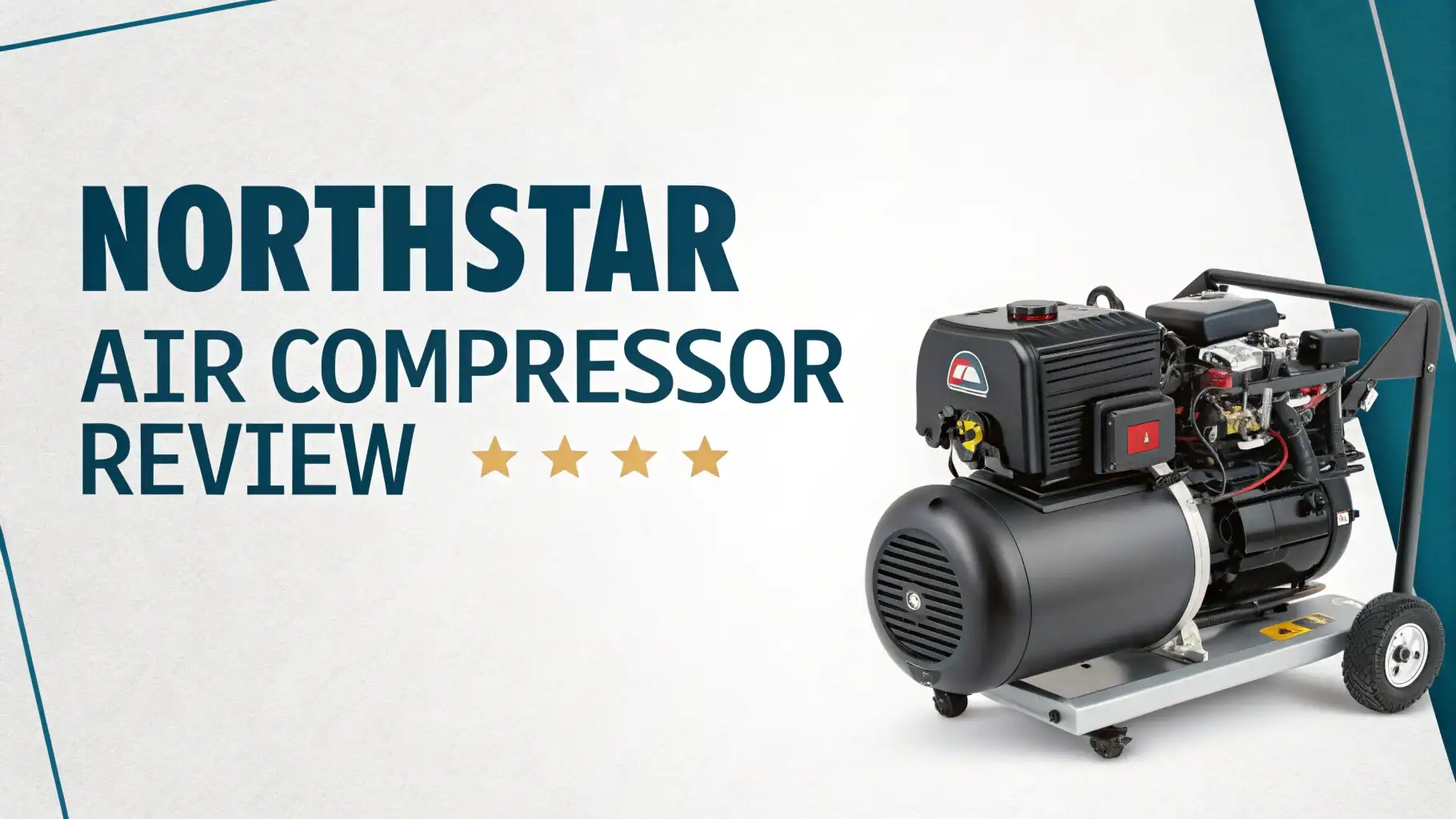
NorthStar Air Compressor Review: Your Complete Guide
Are you tired of weak air compressors that quit on you halfway through a project? Let me tell you about NorthStar air compressors. These machines are built different. They handle tough jobs without breaking a sweat.
I’ve spent years testing different air compressors, and NorthStar consistently stands out from the crowd. These aren’t your average garage compressors.
They’re powerful, reliable, and built to last. Whether you’re running a professional shop or tackling weekend projects at home, NorthStar has options that deliver real results.

Key Takeaways:
- NorthStar offers exceptional build quality with cast iron construction that outlasts aluminum alternatives by years
- Power ratings range from 2 HP to 5 HP giving you options for both light duty and heavy industrial applications
- Tank sizes vary between 20 to 80 gallons allowing you to choose based on your air consumption needs
- Most models feature oil-lubricated pumps which run cooler and last significantly longer than oil-free alternatives
- Prices typically range from $800 to $2500 positioning them as professional-grade equipment with fair value
- Amazon availability makes purchasing convenient with detailed customer reviews and reliable shipping options

- 115V, 12 Amp, 1750 RPM electric motor
- Oil-free dual piston pump for cleaner air and maintenance-free operation
Last update on 2026-07-27 / Affiliate links / Images from Amazon Product Advertising API Some of the links on this website are affiliate links, which means that at no additional cost to you, I earn a commission if you click through and make a purchase. I only recommend products and services that I believe will add value to my readers. Thank you for your support!
NorthStar Gas Powered Air Compressor: The Portable Powerhouse
This NorthStar gas powered air compressor changes the game for outdoor work. You don’t need electricity. Just fill the gas tank and go anywhere.
The Honda GX160 engine powers this beast. It’s the same reliable engine you’ll find in professional equipment worldwide. This engine starts easily, even in cold weather. It runs smoothly without excessive vibration.
The 20-gallon tank provides enough air for most jobs. You can run nail guns, paint sprayers, or air tools continuously. The tank refills quickly between high-demand tasks.
The 5.5 HP rating delivers serious power. This compressor produces up to 10.3 CFM at 90 PSI. That’s enough airflow for two people working simultaneously.
Portability is a major advantage here. The wheeled design lets you move it across job sites easily. The handle provides good grip and control.
Construction workers love this feature. Contractors use these compressors daily. They appreciate the durability and consistent performance. The cast iron pump handles abuse without failing.
One user reported using this compressor for five years straight. No major repairs needed. Just regular oil changes and basic maintenance. That’s the kind of reliability you want.
NorthStar Electric Air Compressor: Workshop Champion

- 70dBA quiet brings less noise to your work environment
- 80% quieter than 2-gal., 150 PSI oil-free compressors Up to 4X the life of 20-gal.
Last update on 2026-07-27 / Affiliate links / Images from Amazon Product Advertising API Some of the links on this website are affiliate links, which means that at no additional cost to you, I earn a commission if you click through and make a purchase. I only recommend products and services that I believe will add value to my readers. Thank you for your support!
Electric power suits workshop environments perfectly. This NorthStar model plugs into standard outlets and delivers professional results.
The 2 HP motor provides adequate power for most applications. It runs on 120V electricity, so you don’t need special wiring. Most garages and workshops already have the right outlets.
This compressor operates quietly compared to gas models. Your neighbors won’t complain. You can work early mornings or late evenings without disturbing anyone.
The vertical tank design saves valuable floor space. Workshops always need more room. This compact footprint helps maximize your work area.
Oil-lubricated pumps make a huge difference in longevity. These pumps run cooler than oil-free alternatives. They produce less noise and last significantly longer.
Maintenance stays simple with this model. Check the oil level occasionally. Drain moisture from the tank weekly. That’s basically it. The pressure switch automatically maintains optimal pressure. You set your desired PSI and forget about it. The compressor cycles on and off as needed.
Professional mechanics choose this model frequently. It handles impact wrenches, air ratchets, and tire inflation with ease. Body shops use them for painting projects. The consistent air pressure ensures smooth, professional finishes.
NorthStar Belt Drive Air Compressor: Industrial Strength
Belt drive systems offer distinct advantages. This NorthStar model represents serious industrial capability.
The belt drive mechanism reduces vibration significantly. This creates quieter operation and extends component life. Belts absorb shock and stress that would otherwise damage direct-drive systems.
Cast iron construction throughout ensures decades of service. This isn’t lightweight consumer equipment. Every component feels solid and substantial.
The 80-gallon tank is massive. Large tanks mean longer run times between cycles. Your compressor works less frequently, reducing wear and tear. This model delivers 14 CFM at 90 PSI. That’s enough air for running multiple tools simultaneously. Auto body shops need this kind of capacity.
The pump is designed for continuous duty. You can run this compressor all day without overheating concerns. The cooling fins dissipate heat effectively. Temperature stays controlled even during extended use.
Installation requires some planning. These compressors are heavy and need solid mounting. Once installed properly, they become the heart of your air system. Many shops run air lines throughout their facility from one central compressor.
Top 3 Alternatives for NorthStar Air Compressor

- Performance: Pancake air compressor features 150 Max PSI with 2.6 CFM @ 90 PSI. 6 gallon tank...
- Portability and Usage: Easy mobility and storage. Weighs 30 pounds. Simple regulator with clear...
Last update on 2026-07-27 / Affiliate links / Images from Amazon Product Advertising API Some of the links on this website are affiliate links, which means that at no additional cost to you, I earn a commission if you click through and make a purchase. I only recommend products and services that I believe will add value to my readers. Thank you for your support!

- 165 max PSI 6.0 gallon tank (22.7 L) and 2.6 SCFM* delivered @ 90 PSI pump, enable long tool run...
- High efficiency motor of the electric air compressor is made for easy start up in cold weather or...
Last update on 2026-07-27 / Affiliate links / Images from Amazon Product Advertising API Some of the links on this website are affiliate links, which means that at no additional cost to you, I earn a commission if you click through and make a purchase. I only recommend products and services that I believe will add value to my readers. Thank you for your support!

- ULTRA-QUIET OPERATION: The Metabo HPT Quiet Air Compressor operates at only 59 dB, so quiet that a...
- FAST TOOL CHANGES: This portable air compressor features a universal quick coupler for fast tool...

Last update on 2026-07-27 / Affiliate links / Images from Amazon Product Advertising API Some of the links on this website are affiliate links, which means that at no additional cost to you, I earn a commission if you click through and make a purchase. I only recommend products and services that I believe will add value to my readers. Thank you for your support!
Understanding CFM Ratings and Why They Matter
CFM means cubic feet per minute. This measurement tells you how much air the compressor delivers. Higher CFM ratings allow you to run larger tools or multiple tools together.
Different tools require different CFM amounts. A basic brad nailer needs about 0.5 CFM. An impact wrench might need 4 CFM. A sandblaster could demand 10 CFM or more.
Always check your tool requirements before buying. Add up the CFM needs of tools you’ll run simultaneously. Choose a compressor that exceeds this total by at least 30 percent. This buffer prevents the compressor from running constantly.
Pressure ratings matter too, but differently. Most tools operate between 90 and 100 PSI. Nearly all compressors reach these pressures easily. The challenge is maintaining pressure while delivering adequate CFM.
NorthStar compressors typically rate CFM at 90 PSI. This represents real-world working conditions. Some manufacturers rate CFM at lower pressures, which looks better on paper but doesn’t reflect actual performance.
Tank Size Selection: Finding Your Perfect Match
Tank size affects how your compressor performs. Larger tanks store more compressed air. This stored air lets you work longer before the compressor cycles on.
Small tanks between 20 and 30 gallons work fine for intermittent use. If you’re nailing trim or inflating tires occasionally, these sizes suffice. The compressor will cycle frequently, but that’s acceptable for light duty work.
Medium tanks from 30 to 60 gallons suit serious hobbyists and small professionals. These provide good balance between portability and capacity. You can run air tools steadily without constant cycling.
Large tanks over 60 gallons serve professional shops best. The initial fill takes longer, but then you have substantial air reserves. Multiple workers can draw air simultaneously without pressure drops.
Consider your physical space too. Vertical tanks save floor space but stand taller. Horizontal tanks need more floor area but fit under low ceilings better. NorthStar offers both configurations. Choose based on your workshop layout.
Oil-Lubricated vs Oil-Free: Making the Right Choice
This decision significantly impacts performance and maintenance. Each type has clear advantages and disadvantages.
Oil-lubricated compressors dominate the NorthStar lineup. These pumps last much longer than oil-free alternatives. The oil reduces friction and heat buildup. Components wear slowly, giving you years of reliable service.
Maintenance involves checking and changing oil regularly. This isn’t difficult or time-consuming. Most users change oil every 500 hours of operation. For typical home users, that’s once or twice yearly.
Oil-lubricated models run significantly quieter than oil-free units. The oil dampens noise and vibration. Your ears will appreciate this during long work sessions. Oil-free compressors require zero lubrication maintenance. They appeal to users who want minimal upkeep. However, these pumps wear faster and run louder.
The trade-off rarely favors oil-free models for serious use. Unless you absolutely cannot perform basic maintenance, choose oil-lubricated. The longevity difference is dramatic. Many oil-lubricated NorthStar compressors run strong after 20 years. Oil-free models typically last 5 to 10 years maximum.
NorthStar Two Stage Air Compressor: Maximum Efficiency
Two stage compressors represent the premium tier. These machines compress air twice for better efficiency and higher pressures.
The first stage compresses air to intermediate pressure. Then an intercooler reduces temperature before the second stage compresses further. This two-step process generates less heat than single-stage compression.
Lower temperatures mean better efficiency. You get more compressed air per horsepower consumed. This matters for operations running compressors constantly. The energy savings add up over time.
Two stage compressors also reach higher maximum pressures. While most tools operate at 90 to 100 PSI, some specialized equipment needs 150 PSI or more. Two stage models handle these demands easily.
The construction quality in two stage NorthStar compressors is exceptional. Every component is built for professional service. Bearings, valves, and pistons all exceed industrial standards.
Maintenance intervals extend longer with two stage designs. The pumps experience less stress per cycle. Components last longer before needing replacement.
Professional applications justify the higher cost. If you run a shop or use your compressor daily, consider two stage models seriously.
Portability Features: Taking Power Anywhere
Mobility matters for many users. NorthStar designs several models specifically for portability.
Wheel kits come standard on most portable models. Large pneumatic wheels roll smoothly over rough terrain. You can move heavy compressors across gravel, grass, or uneven ground.
The tubular steel frame protects vital components during transport. It guards the pump, motor, and tank from impacts. Construction sites can be rough environments.
Handle design affects usability significantly. NorthStar includes ergonomic handles positioned for comfortable pulling or pushing.
You won’t strain your back moving these compressors. Some models feature folding handles that reduce storage space. The handle folds flat against the unit when not needed. This helps when loading into trucks or storing in tight spaces.
Weight distribution is carefully planned. The tank and pump balance properly over the axle. This prevents tipping during transport. Gas-powered models include fuel shutoff valves. These prevent spills during transport or storage. It’s a simple feature that prevents messy accidents.
Maintenance Tips for Long Compressor Life
Proper maintenance dramatically extends compressor lifespan. These simple tasks prevent expensive repairs.
Check oil levels before each use. Low oil causes excessive heat and accelerated wear. Adding oil takes thirty seconds but saves your pump. Change oil according to the manual schedule. New oil removes contaminants and maintains proper lubrication. Use the manufacturer-recommended oil type.
Drain the tank daily after use. Compressed air contains moisture that condenses inside the tank. This water causes internal rust if left standing. Open the drain valve and let water escape completely.
Check belt tension monthly on belt-drive models. Loose belts slip and reduce efficiency. Too-tight belts stress bearings unnecessarily. The belt should deflect about half an inch under finger pressure.
Clean or replace air filters regularly. Dirty filters restrict airflow and make the motor work harder. Most filters are cleanable foam or paper elements. Inspect safety relief valves annually. These valves prevent dangerous over-pressure situations. Pull the ring to ensure the valve opens properly.
Tighten any loose bolts or fittings. Vibration gradually loosens hardware over time. A quick inspection prevents air leaks and mechanical failures. Store your compressor in a dry, protected location. Moisture and temperature extremes accelerate deterioration.
Noise Levels: What to Expect
Compressor noise varies significantly between models. Understanding decibel ratings helps set expectations.
Most NorthStar compressors operate between 75 and 85 decibels. For reference, normal conversation measures about 60 decibels. A lawn mower runs around 90 decibels. Oil-lubricated models run noticeably quieter than oil-free alternatives.
The oil dampens mechanical noise effectively. Belt-drive compressors produce less noise than direct-drive models. The belt absorbs vibration that would otherwise create sound.
Location affects perceived noise significantly. Compressors in enclosed workshops sound louder than those in open areas. Sound reflects off walls and amplifies.
Consider rubber isolation mounts if noise concerns you. These pads absorb vibration before it transfers to the floor. Less vibration means less noise transmission.
Hearing protection remains important regardless of noise level. Extended exposure to any compressor causes hearing damage over time.
Keep ear plugs or muffs nearby and use them. Some users build insulated enclosures around stationary compressors. This significantly reduces noise but requires adequate ventilation to prevent overheating.
Price Comparison: Getting Value for Your Money
NorthStar positions itself in the professional-grade market. Prices reflect quality construction and long-term value.
Entry-level electric models start around $800 to $1000. These provide excellent performance for home workshops and light commercial use.
Mid-range gas and electric models cost $1200 to $1800. These handle demanding applications and frequent use reliably. Premium two-stage and large-capacity units reach $2000 to $2500. Professional shops and industrial users find these investments worthwhile.
Compare these prices to consumer-grade alternatives. Cheap compressors cost $200 to $400 but rarely last beyond a few years. NorthStar compressors often run strong after two decades of service. The math favors quality. Spending $1500 once beats buying $300 compressors every three years.
Amazon pricing includes convenient shipping to your door. Free shipping often applies to these items. Customer reviews provide real-world performance data.
You can see how units perform after years of use. Watch for seasonal sales and promotions. Prices sometimes drop during tool sales events. Consider the total cost of ownership. Factor in maintenance costs, energy consumption, and expected lifespan.
Safety Features and Certifications
Safety matters when working with compressed air. NorthStar includes essential protective features.
Pressure relief valves prevent dangerous over-pressure situations. If pressure exceeds safe limits, the valve automatically releases air. This protects both the tank and operator.
ASME-certified tanks meet strict safety standards. The American Society of Mechanical Engineers sets rigorous testing requirements. Certified tanks handle pressure safely for decades.
Thermal overload protection guards motors from damage. If the motor overheats, the protection system shuts power off automatically.
This prevents motor burnout and potential fires. Check valves prevent air from flowing backward into the pump. This protects pump components and allows easier starting.
Vibration dampening feet keep compressors stable during operation. They also reduce vibration transmission to the floor. Stable compressors are safer compressors.
Clear warning labels identify hot surfaces, pinch points, and electrical hazards. Read and understand all safety information before operating. Proper grounding prevents electrical shock hazards. All electric models include grounded plugs for your protection.
Never modify safety features or bypass protective devices. These systems exist to protect you from serious injury.
Frequently Asked Questions
How long do NorthStar air compressors typically last?
NorthStar compressors regularly serve users for 15 to 25 years with proper maintenance. The cast iron construction and quality components resist wear effectively. Many users report decades of trouble-free operation. Regular oil changes and basic upkeep maximize lifespan significantly.
Can I use a NorthStar compressor for painting cars?
Yes, NorthStar compressors work excellently for automotive painting. Choose models with at least 60-gallon tanks and 10 CFM or higher at 90 PSI. These specifications ensure consistent pressure throughout the painting process. Professional body shops rely on NorthStar compressors daily for exactly this purpose.
What size generator do I need to run a NorthStar electric compressor?
Generator sizing depends on the motor horsepower. A 2 HP motor needs approximately 4000 to 5000 watts of generator capacity. Motors draw extra current during startup, so always oversize your generator. Check the compressor specifications for exact starting current requirements before selecting a generator.
Are NorthStar compressors difficult to maintain?
No, maintenance stays straightforward and simple. Check oil levels regularly. Change oil every 500 hours of operation. Drain tank moisture daily. These basic tasks require minimal time and no special skills. The owner’s manual provides clear instructions for all maintenance procedures.
Do NorthStar compressors come with warranties?
Yes, NorthStar provides warranties on their compressors. Warranty terms vary by model but typically cover one to two years for residential use. Commercial warranties may differ. Always register your compressor after purchase. Keep receipts and documentation for warranty claims. Amazon purchases qualify for manufacturer warranties just like direct purchases.
Which NorthStar model works best for home garage use?
The 20 to 30-gallon electric models suit most home garages perfectly. They provide adequate power for typical projects without requiring excessive space. The 120V operation works with standard outlets. These models handle air tools, tire inflation, and hobby projects easily without overwhelming residential electrical systems.

Hi, I’m Amelia Thornton, the founder of ElectroPro.blog.
I write about smart devices, gadgets, electronics, and tech essentials from Amazon.
My goal is to help you discover reliable and innovative tech that truly makes life easier.
From home automation to everyday gear, I test and share what’s worth your investment.
Join me as I explore the smartest tech trends—one gadget at a time.