Malco Hole Cutter Review 2026: Worth the Price Tag?
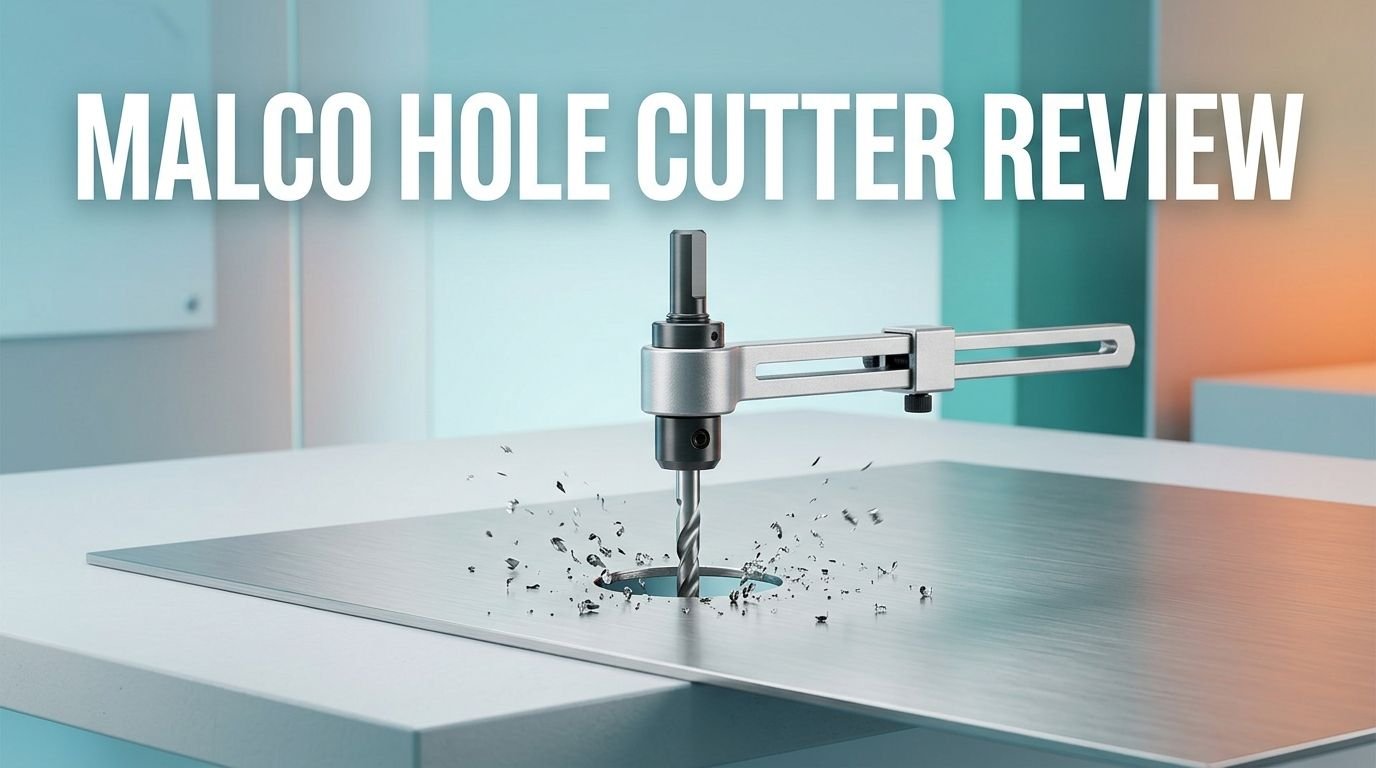
If you work with sheet metal, you already know how frustrating it is to cut clean, round holes without the right tool. The Malco Hole Cutter has held its ground as one of the most trusted names in the HVAC and roofing trades for years. But does it still deserve your hard earned money in 2026?
Whether you are an HVAC technician, a roofer, or a DIY homeowner, getting perfect circular cuts in galvanized steel or aluminum can make or break a project.
The Malco HC1 and HC2 models promise lightweight construction, long lasting cutter bits, and easy adjustments. In this review, we put those claims to the test.
Key Takeaways:
- The Malco HC1 cuts holes from 2 inches to 12 inches in diameter, and the Malco HC2 extends that range up to 20 inches. Both models handle up to 20 gauge galvanized steel and 22 gauge mild steel with ease. This wide range means a single tool replaces an entire set of fixed hole saws.
- Lightweight aluminum frames keep the tool portable and reduce arm fatigue during long jobs. The HC1 weighs only 16 ounces, and the HC2 weighs 22 ounces. You can toss either model in your tool bag without noticing extra weight.
- Malco’s “Gold Standard” Impact Cutter Bits are made from high speed steel (HSS) and feature a mill type cutting edge. These bits last longer than standard alternatives. You can also adjust the bit up or down to expose a fresh cutting edge, which extends the life of each bit even further.
- The tool fits into any corded or cordless drill with a 1/4 inch or larger chuck. This means you do not need a special driver or adapter. Just chuck it in and start cutting.
- Replacement parts are easy to find. The CB cutter bit comes in single packs, 6 packs, and bulk 100 packs. Pivot pins and bearings are also sold separately. This makes the Malco Hole Cutter a long term investment rather than a disposable tool.
- Both models include a combination English and Metric diameter gauge printed directly on the pivot slide. This eliminates the need for a separate measuring tape when setting your hole diameter.

- Cuts 2"-12" (51-305 mm) holes in sheet metal including up to 20 gauge galvanized steel
- Commonly used by HVACR and Roofing Professionals

Last update on 2026-08-29 / Affiliate links / Images from Amazon Product Advertising API Some of the links on this website are affiliate links, which means that at no additional cost to you, I earn a commission if you click through and make a purchase. I only recommend products and services that I believe will add value to my readers. Thank you for your support!
Malco HC1 Hole Cutter: Overview and First Impressions
The Malco HC1 is the compact model in the Malco hole cutter lineup. It adjusts from 2 inches to 12 inches in diameter. This makes it ideal for most standard HVAC takeoffs, light fixture cutouts, and pipe penetrations.
Right out of the box, the HC1 feels solid but surprisingly light. The aluminum frame keeps the total weight at just 16 ounces (454 grams). You can hold it with one hand while operating your drill with the other.
The pivot slide moves smoothly along the arm. A set screw locks the cutter bit at your chosen diameter. The English and metric gauge molded into the slide makes setup fast. You simply loosen the screw, slide the bit to the correct measurement, and tighten it back down.
Malco ships the HC1 with one Gold Standard Impact Cutter Bit already installed. This HSS bit features a flat surface that allows you to reposition it when the cutting edge wears. A 5/64 inch hex key is all you need to adjust or replace the bit.
The tool installs into any drill chuck that accepts a 1/4 inch shank or larger. Malco recommends a drill speed of around 1,350 RPM for best results. Both corded and cordless drills work well. Many users report great performance with standard 18V or 20V cordless models.
Overall, the HC1 gives a strong first impression. It looks professional, feels balanced, and sets up in seconds. The real question is how it performs on the job site.
Malco HC2 Hole Cutter: The Larger Model

- Cuts 2"-20" (51-508 mm) holes in sheet metal including up to 20 gauge galvanized steel
- Commonly used by HVACR and Roofing Professionals
Last update on 2026-08-29 / Affiliate links / Images from Amazon Product Advertising API Some of the links on this website are affiliate links, which means that at no additional cost to you, I earn a commission if you click through and make a purchase. I only recommend products and services that I believe will add value to my readers. Thank you for your support!
The Malco HC2 serves professionals who need to cut larger holes. It adjusts from 2 inches to 20 inches in diameter. This extra reach makes it perfect for large return air openings, roof penetrations, and oversized duct connections.
The HC2 shares the same aluminum frame construction as the HC1. It weighs 22 ounces (624 grams), which is still manageable for overhead or extended work. The longer arm provides the extra reach needed for those bigger cuts.
Both models use the same cutter bit and replacement parts. If you already own the HC1, your spare bits and pivot pins work with the HC2. This interchangeability saves money and reduces the number of spare parts you need to carry.
The HC2 also includes the same English and metric gauge on the pivot slide. Setup is identical to the HC1. You loosen the set screw, position the bit at your target diameter, and tighten. The process takes under 30 seconds once you get used to it.
For most homeowners and general contractors, the HC1 covers 90% of projects. But if you work in commercial HVAC or large scale roofing, the HC2 is worth the extra investment. Having that 20 inch capacity means you will not run into a hole that is too big for your tool.
Cutting Performance and Speed
The Malco Hole Cutter delivers clean, burr free holes in sheet metal. The mill type HSS bit shaves through galvanized steel, mild steel, and aluminum with steady pressure. Most users complete a standard 6 inch hole in under 30 seconds.
Speed depends on your drill and technique. Malco recommends 1,350 RPM. Running too fast can overheat the bit and reduce its lifespan. Running too slow can cause the bit to grab and stall. A medium speed with consistent downward pressure produces the best results.
One helpful tip from experienced users is to set your drill to screwdriver mode and lower the torque setting. This prevents the bit from catching too aggressively. If the clutch releases, you simply back off, reposition, and continue cutting. This technique reduces bit breakage significantly.
The tool handles 24 gauge steel and 26 gauge stainless steel without issues. It also cuts aluminum, though Malco notes the bit can load up with aluminum shavings. For aluminum work, go slower and clear debris frequently.
Each cut produces a perfectly round hole with smooth edges. You rarely need to file or deburr after cutting. This clean finish saves time on every installation and gives a more professional result.
Top 3 Alternatives for Malco Hole Cutter
1. Klein Tools 89552 Adjustable Hole Cutter

- CUTS 2 TO 12-INCH HOLES: Easily cuts holes ranging from 2 to 12 inches in sheet metal for versatile...
- SUITABLE FOR VARIOUS MATERIALS: Designed for up to 24 gauge steel and 26 gauge stainless steel...
Last update on 2026-08-26 / Affiliate links / Images from Amazon Product Advertising API Some of the links on this website are affiliate links, which means that at no additional cost to you, I earn a commission if you click through and make a purchase. I only recommend products and services that I believe will add value to my readers. Thank you for your support!
2. HURRICANE Adjustable Hole Cutter

- ADJUSTABLE RANGE: Versatile hole cutter adjusts from 2 inches to 12 inches in diameter,No need to...
- SUITABLE FOR MATERIALS: Effectively cuts through 24 gauge steel and 26 gauge stainless steel...
Last update on 2026-08-29 / Affiliate links / Images from Amazon Product Advertising API Some of the links on this website are affiliate links, which means that at no additional cost to you, I earn a commission if you click through and make a purchase. I only recommend products and services that I believe will add value to my readers. Thank you for your support!
3. Mutt Tools Adjustable Hole Cutter

- Sheet Metal Hole Cutter Excellence: Precision-engineered tool delivers accurate circular openings...
- Duct Hole Cutter for Professionals: Purpose-built for HVAC technicians creating ventilation openings...
Last update on 2026-08-29 / Affiliate links / Images from Amazon Product Advertising API Some of the links on this website are affiliate links, which means that at no additional cost to you, I earn a commission if you click through and make a purchase. I only recommend products and services that I believe will add value to my readers. Thank you for your support!
Build Quality and Durability
The Malco Hole Cutter is built to last through years of professional use. The aluminum frame resists corrosion and stays rigid under load. Unlike plastic bodied competitors, the Malco frame does not flex or crack over time.
The precision fit sealed bearings are a standout feature. These bearings keep the cutting arm spinning smoothly around the center point. Sealed construction keeps dust and metal shavings out. This extends bearing life and maintains cutting accuracy over hundreds of holes.
The pivot pin holds the cutter bit arm securely to the center shaft. Malco’s pin design allows for smooth adjustment without wobble. Replacement pivot pins are available if the original ever wears out, though most users report years of service before needing one.
The Gold Standard Impact Cutter Bit is the heart of this tool. Made from high speed steel, it holds its edge through dozens of cuts. The flat on the bit shank allows you to shift the cutting edge up or down. This simple feature effectively gives you multiple cutting edges from a single bit.
Both the HC1 and HC2 are REACH and RoHS compliant. This means they meet strict environmental and safety standards. For professionals working on government or institutional projects, this compliance can be a requirement.
The overall construction inspires confidence. Every component feels intentional and well made. This is not a tool you replace every season. It is a tool you pass down to your apprentice.
Ease of Use and Setup
Setting up the Malco Hole Cutter takes less than a minute, even for first time users. No instruction manual is really needed. The design is intuitive and self explanatory.
You start by loosening the set screw on the pivot slide. Then you slide the cutter bit arm to your desired diameter using the built in gauge. Tighten the screw, and you are ready. The gauge shows both inches and millimeters, so you do not need a separate ruler or tape.
Next, you insert the 1/4 inch hex shank into your drill chuck. Any standard drill works. There is no adapter needed and no proprietary attachment. Just tighten the chuck and go.
During cutting, you hold the tool steady and let the drill do the work. Apply light, consistent pressure. Let the bit cut at its own pace. Forcing it will only wear the bit faster or cause it to snag.
One thing to remember is eye protection is a must. The tool generates a lot of fine metal fragments during cutting. Several users specifically mention this in their reviews. Safety glasses or goggles should always be worn.
Cleanup is also simple. The tool does not require oiling or special maintenance. Just wipe it down after use and store it in your tool bag. The lightweight frame makes it easy to carry from job to job.
Replacement Parts and Long Term Value
One of the biggest advantages of the Malco Hole Cutter is its strong replacement parts ecosystem. You do not throw this tool away when a component wears out. You simply replace the worn part and keep working.
The CB cutter bit is the part you will replace most often. It comes in a single pack (CB), a 6 pack (CBB), and a bulk 100 pack (CB100). Buying in bulk saves a significant amount per bit. Professional HVAC techs often keep a 6 pack in their van at all times.
The pivot pin (HC1B) is another available replacement. This pin holds the sliding arm to the center shaft. It rarely needs replacing, but having the option means your tool never becomes obsolete.
Sealed bearings can also be replaced if they eventually wear out. This is unusual for tools in this price range. Most competitors require you to buy a whole new unit when the bearings go.
When you add up the cost of the tool and a year’s worth of replacement bits, the Malco Hole Cutter still costs less than buying a full set of fixed diameter hole saws. A set of carbide hole saws covering 2 to 12 inches can easily cost $200 or more. The Malco HC1 and a pack of bits come in well under that.
This makes the Malco a smart long term investment. You spend more upfront compared to cheap knockoffs, but you save money and time over the life of the tool.
Malco Hole Cutter vs. Klein Tools 89552
The Klein Tools 89552 is the most common alternative to the Malco HC1. Both tools cover the same 2 to 12 inch range. Both cut 24 gauge steel and 26 gauge stainless. So how do they compare?
Build quality goes to the Malco. The aluminum frame feels more rigid than the Klein’s body. Malco’s sealed bearings also outlast Klein’s bearing system in extended use. The Malco pivot pin adjusts more smoothly with less play.
Bit quality is another Malco advantage. The Gold Standard HSS bit holds its edge longer. The ability to shift the bit to a fresh cutting edge is a feature Klein does not match. Klein’s replacement bits are also slightly harder to find in bulk packs.
Price is where Klein has a slight edge. The 89552 typically costs a few dollars less than the Malco HC1. For budget conscious buyers, that difference matters. But the extra cost of Malco bits lasting longer often offsets the initial savings.
User reviews on both Amazon and Home Depot show similar satisfaction levels. Malco edges ahead with professional HVAC technicians who rely on the tool daily. Klein is popular with electricians and general contractors who use a hole cutter less frequently.
If you cut holes in sheet metal every day, the Malco is the better choice. If you cut holes once a month, the Klein does the job well at a lower entry price.
Who Should Buy the Malco Hole Cutter?
The Malco Hole Cutter is purpose built for HVAC professionals. If you install ductwork, cut supply and return openings, or punch holes for pipe penetrations, this tool belongs in your kit. It will save you time on every job.
Roofers also benefit from the Malco. Cutting round holes in metal roofing panels for vents, stacks, and flashing is easy with this tool. The clean cuts reduce the chance of leaks and look professional.
Electricians who work with metal junction boxes, panels, and conduit openings will find the Malco useful. The adjustable range covers most standard electrical cutout sizes.
DIY homeowners can also justify the purchase for specific projects. If you are installing a wood furnace, adding HVAC returns, or building a metal workshop, this tool pays for itself on the first job. One reviewer mentioned saving $150 in labor by using the Malco instead of hiring a contractor.
The tool is not ideal for thick materials. It works best on sheet metal up to 22 gauge. If you need to cut through heavy plate steel or structural components, you need a different tool.
It is also not recommended for cutting aluminum composite panels with insulated cores. Malco’s own testing confirmed the bit loads up with aluminum in these applications.
Tips for Getting the Best Results
Getting maximum performance from your Malco Hole Cutter comes down to technique and maintenance. Here are the most effective tips from experienced users.
Use the right drill speed. Malco recommends around 1,350 RPM. This sweet spot gives the bit enough speed to cut efficiently without overheating. If your drill has a variable speed trigger, practice maintaining a consistent speed.
Set your drill to screwdriver mode if available. Lower the torque setting to the minimum. This allows the clutch to release if the bit catches, which prevents bit breakage. Multiple reviewers credit this technique with extending their bit life by 10x or more.
Apply steady, light pressure. Let the bit do the cutting. Pushing too hard bends the bit or causes it to grab the metal. A patient approach produces cleaner holes and less bit wear.
Wear safety goggles. This tool throws tiny metal fragments in all directions. Standard safety glasses work, but goggles provide better protection. Do not skip this step.
Clear metal shavings frequently when cutting aluminum. The softer material tends to clog the bit. Stopping every few seconds to clear debris prevents the bit from binding.
Adjust the bit to a fresh edge before it gets completely dull. The flat on the bit shank lets you shift the cutting edge up or down by a fraction of an inch. This small adjustment exposes a new sharp edge and dramatically extends bit life.
Common Issues and How to Fix Them
No tool is perfect, and the Malco Hole Cutter has a few known issues. The good news is that every one of them has a simple fix.
Bit breakage is the most common complaint. This almost always happens because the drill speed is too high or the torque is too aggressive. Switching to screwdriver mode and reducing speed solves this problem for most users. One reviewer broke their first bit on the second hole, then cut 40 more holes on the second bit after adjusting their technique.
The bit not cutting aluminum well is another concern. Malco openly states the tool is not optimized for aluminum. The bit clogs with soft metal shavings and stops cutting. If you must cut aluminum, reduce your speed significantly and clear shavings often.
Pivot pin looseness can develop after extended use. The fix is straightforward. You can tighten the pivot pin or replace it with a new HC1B pin set. These are available from Malco and third party sellers.
Measurement drift occasionally happens if the set screw is not fully tightened. Always double check your diameter setting before cutting. Give the set screw an extra quarter turn to be safe.
Center drill walking on smooth surfaces can occur if you do not start with a center punch mark. A small dimple at the center point keeps the pilot drill in place and prevents the tool from wandering.
Where to Buy the Malco Hole Cutter
The Malco HC1 and HC2 are widely available both online and in stores. You can find them at Amazon, Home Depot, Lowe’s, and most HVAC supply houses across the United States.
Amazon often has the best prices, especially if you are a Prime member. Free shipping and easy returns make it a convenient option. You can also find replacement bits and parts on the same listing page.
Home Depot and Lowe’s carry the HC1 in stores. This is helpful if you need the tool today and cannot wait for shipping. You can also check stock online before making the trip.
HVAC supply distributors like SupplyHouse, TruTech Tools, and Big Rock Supply stock both models. These retailers also carry the full range of replacement parts. If you have an account with a local supplier, you may get trade pricing.
Prices typically range from $45 to $60 for the HC1 and $55 to $75 for the HC2. Replacement cutter bits run about $7 to $10 for a single pack and $20 to $30 for a 6 pack.
Buying directly from the Malco Tools website is another option. Their site includes a dealer locator that helps you find authorized sellers near your location.
Final Verdict: Is the Malco Hole Cutter Worth It?
The Malco Hole Cutter remains one of the best sheet metal hole cutters available in 2026. It is well built, easy to use, and backed by a strong replacement parts system. The Gold Standard cutter bits genuinely last longer than competing products.
For HVAC professionals, this tool is close to essential. It saves time, produces clean cuts, and holds up through thousands of holes. The ability to adjust and reuse bits adds real value over the life of the tool.
For DIY users and occasional professionals, the Malco is still a solid purchase. The initial cost is higher than budget options, but the quality difference is immediately noticeable. You will not regret spending the extra money.
The only situations where we would not recommend the Malco are thick plate steel cutting and aluminum composite panel work. For those materials, you need different tools entirely.
If you need to cut round holes in sheet metal, the Malco Hole Cutter has earned its reputation. It is a reliable, professional grade tool that delivers consistent results year after year.
Frequently Asked Questions
What size holes can the Malco HC1 cut?
The Malco HC1 cuts holes from 2 inches to 12 inches in diameter. It works on sheet metal up to 20 gauge galvanized steel and 22 gauge mild steel. A built in English and metric gauge on the pivot slide helps you set the exact diameter quickly.
Can the Malco Hole Cutter work with a cordless drill?
Yes. The Malco Hole Cutter fits into any corded or cordless drill with a 1/4 inch or larger chuck. Most 18V and 20V cordless drills provide enough power. Malco recommends a drill speed of around 1,350 RPM for the best cutting performance.
How long does the Malco cutter bit last?
Bit life depends on the material you cut and your technique. Most users get 30 to 50 holes from a single bit when cutting standard gauge galvanized steel. Using screwdriver mode with low torque and adjusting the bit to a fresh edge can extend this life even further.
Is the Malco Hole Cutter good for cutting aluminum?
The Malco Hole Cutter can cut aluminum, but it is not ideal for this material. The HSS bit tends to load up with aluminum shavings, which slows cutting. Malco does not recommend using it on aluminum composite panels with insulated cores.
What is the difference between the Malco HC1 and HC2?
The HC1 cuts holes from 2 to 12 inches in diameter. The HC2 cuts holes from 2 to 20 inches. Both models use the same cutter bit, pivot pin, and replacement parts. The HC2 has a longer arm and weighs slightly more at 22 ounces compared to the HC1’s 16 ounces.
Where can I buy replacement bits for the Malco Hole Cutter?
Replacement bits are available at Amazon, Home Depot, Lowe’s, and most HVAC supply distributors. They come in single packs (CB), 6 packs (CBB), and bulk 100 packs (CB100). All replacement bits fit both the HC1 and HC2 models.
Do I need any special tools to change the cutter bit?
You only need a 5/64 inch hex key to loosen and tighten the bit set screw. No other tools are required. Bit changes take under a minute once you are familiar with the process.

Hi, I’m Amelia Thornton, the founder of ElectroPro.blog.
I write about smart devices, gadgets, electronics, and tech essentials from Amazon.
My goal is to help you discover reliable and innovative tech that truly makes life easier.
From home automation to everyday gear, I test and share what’s worth your investment.
Join me as I explore the smartest tech trends—one gadget at a time.