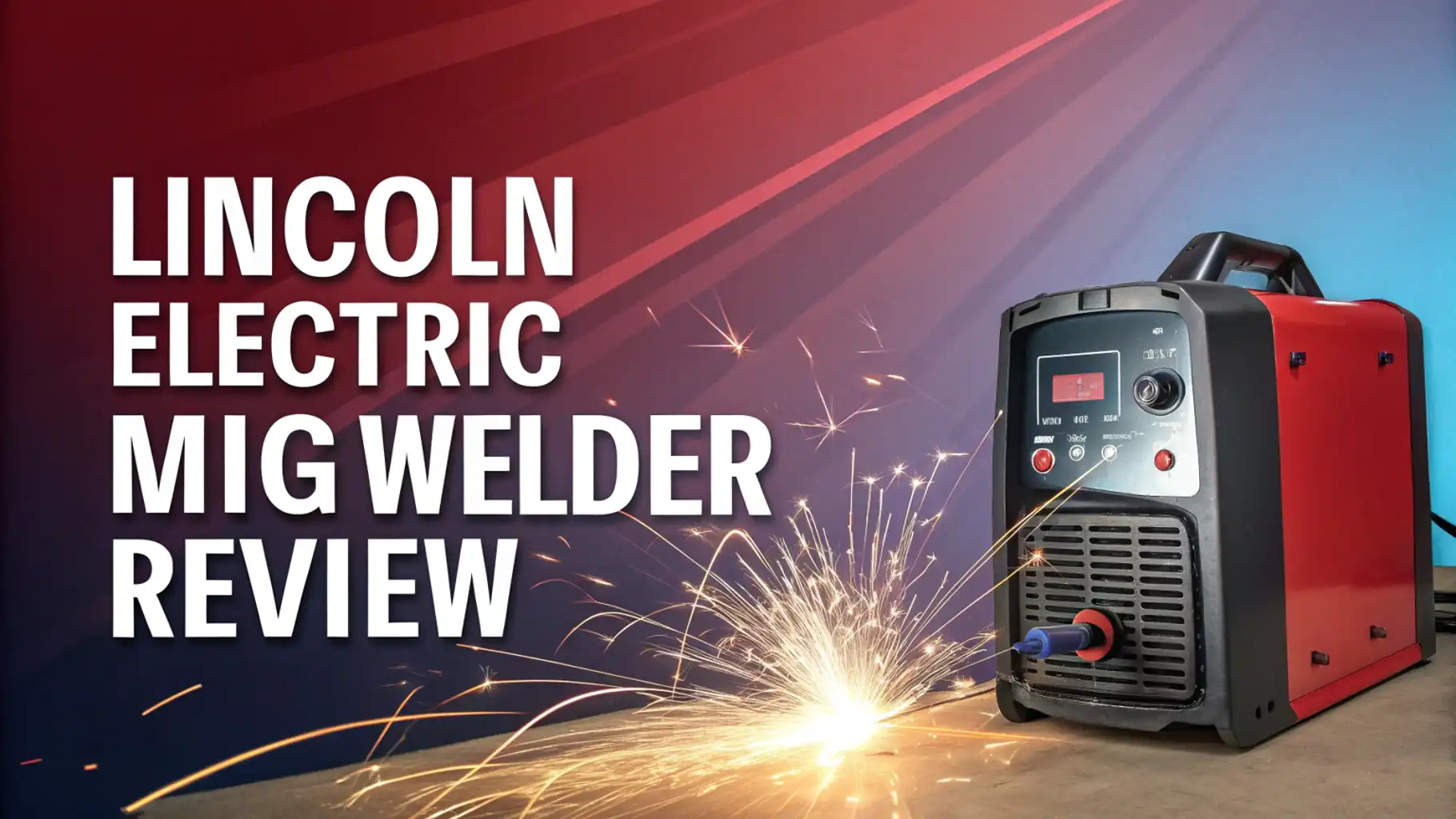
Lincoln Electric MIG Welder Review: Your Complete Guide 2026
Finding the right MIG welder can feel like searching for a needle in a haystack. You want something powerful enough to handle your projects but simple enough that you won’t need an engineering degree to operate it.
Lincoln Electric has been building welders for over a century, and their MIG welders consistently rank among the top choices for both beginners and professionals on Amazon.
We’ve tested, researched, and compared the best Lincoln Electric MIG welders available on Amazon to help you make the perfect choice for your workshop, garage, or job site.
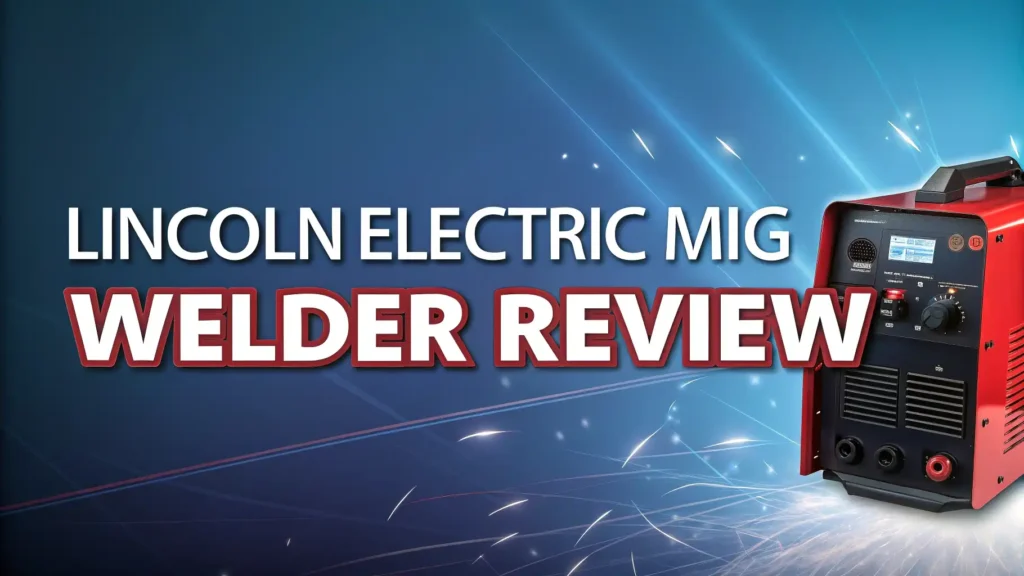
Key Takeaways
- Lincoln Electric Power MIG 211i stands out as the best overall choice with dual voltage capability (120V/230V), allowing you to weld anywhere with 20-211 amp output range
- Easy MIG 140 offers the perfect entry point for beginners with simple two-knob controls and ability to weld up to 140 amps on standard household power
- Duty cycle matters significantly for extended welding sessions – higher-end models can run longer without overheating
- All Lincoln Electric MIG welders come backed by a three-year warranty, demonstrating the company’s confidence in their build quality
- Multi-process capability adds tremendous value, with models like the 215 MPi handling MIG, TIG, Stick, and Flux-Core welding
- Price ranges vary dramatically from around $500 for entry-level units to $1,600+ for professional-grade dual-voltage models

- INTUITIVE DIGITAL CONTROLS: Seven-segment display with easy-turn knobs for fast setup of voltage and...
- AUTO-SENSING INPUT: Automatically detects power source, eliminating adapters when switching between...
Last update on 2026-07-27 / Affiliate links / Images from Amazon Product Advertising API Some of the links on this website are affiliate links, which means that at no additional cost to you, I earn a commission if you click through and make a purchase. I only recommend products and services that I believe will add value to my readers. Thank you for your support!
Lincoln Electric Power MIG 211i MIG Welder
The Power MIG 211i represents Lincoln Electric’s commitment to creating versatile, user-friendly welding equipment. This machine delivers exceptional performance across a wide range of applications, making it a favorite among both hobbyists and professional welders.
The dual-voltage input system stands as the star feature here. You can plug this welder into a standard 120-volt household outlet for lighter work, then switch to 230-volt power when tackling thicker materials.
The output ranges from 20 to 211 amps, giving you incredible flexibility for different projects. You can weld up to 3/8-inch thick steel at 230V and 3/16-inch at 110V, which covers most home and small shop applications.
The simple seven-segment display with basic knob controls makes setup intuitive. You don’t need to be a welding expert to get started.
The machine handles MIG, flux-cored, and spool gun welding processes, and at just 41 pounds, you can move it around your workspace easily. Many users appreciate the smooth arc with minimal spatter, which means cleaner welds and less cleanup time.
Lincoln Electric Easy MIG 140 Wire Feed Welder

- Easy-mig? 140 120 volt ac input compact wire welder
Last update on 2026-07-27 / Affiliate links / Images from Amazon Product Advertising API Some of the links on this website are affiliate links, which means that at no additional cost to you, I earn a commission if you click through and make a purchase. I only recommend products and services that I believe will add value to my readers. Thank you for your support!
The Easy MIG 140 lives up to its name by offering straightforward operation that welcomes beginners while still satisfying experienced welders. This compact welder packs serious capability into a lightweight 34-pound package that you can carry with one hand.
With output ranging from 30 to 140 amps, this machine handles everything from thin sheet metal to 1/4-inch steel plate. The durable cast aluminum gear box delivers excellent wire feed performance while running quietly. The two-knob tapped control system eliminates guesswork during setup.
This welder excels at both gas-shielded MIG welding and gasless flux-cored welding. The forgiving arc makes dialing in your settings easy, even if you’re new to welding.
You can plug it into any standard 120-volt outlet, making it incredibly accessible for home garage use. The included Magnum 100L gun provides reliable performance, and you can add a spool gun later for aluminum welding if needed.
Lincoln Electric Weld Pak 180HD
The Weld Pak 180HD brings professional-grade capabilities to the 230-volt power category. This machine shines when you need to tackle thicker materials regularly but don’t want to break the bank.
Operating on 208/230-volt input power, this welder delivers 30 to 180 amps of output. You can weld 24-gauge sheet metal for autobody work or push through 1/2-inch thick steel with flux-cored wire. The heavy-duty wire drive system features full adjustability to reduce wire tangling and crushing, while the brass-to-brass gun connection enhances electrical conductivity.
The user-friendly interface simplifies the setup process. The machine produces a smooth arc with minimal spatter, leading to clean, professional-looking welds. Many users choose this model for farm equipment repairs, light fabrication work, and automotive projects.
The reliability and consistent performance make it a solid investment for anyone serious about welding but not quite ready for industrial-grade equipment.
Top 3 Alternatives for Lincoln Electric MIG Welders

- READY OUT OF THE BOX: Start welding immediately! It masterfully handles Gasless Flux Core MIG...
- SAY GOODBYE TO BURN-THROUGHS: Unlike rigid auto-welders, our upgraded Synergic Control automatically...
Last update on 2026-07-27 / Affiliate links / Images from Amazon Product Advertising API Some of the links on this website are affiliate links, which means that at no additional cost to you, I earn a commission if you click through and make a purchase. I only recommend products and services that I believe will add value to my readers. Thank you for your support!
![ARCCAPTAIN 165A MIG Welder 110V/220V [Large LED Display] 4 in 1 Gasless/Gas MIG/Lift TIG/Stick Welding Machine Multiprocess Welder Machine, IGBT Inverter Welder with Synergy, 2T/4T](https://electropro.blog/wp-content/plugins/aawp/public/image.php?url=YUhSMGNITTZMeTl0TG0xbFpHbGhMV0Z0WVhwdmJpNWpiMjB2YVcxaFoyVnpMMGt2TlRGSFZ6SlVWVUY1TVV3dWFuQm58MTc4NTQxMzAxOA=)
- 4-IN-1 MIG Welder: The welder machine offers GAS MIG/Flux Core MIG/Lift TIG/ MMA welding modes...
- TECHNICAL UPGRADE: This welding machine features upgraded MCU and IGBT technologies, enabling users...

Last update on 2026-07-27 / Affiliate links / Images from Amazon Product Advertising API Some of the links on this website are affiliate links, which means that at no additional cost to you, I earn a commission if you click through and make a purchase. I only recommend products and services that I believe will add value to my readers. Thank you for your support!

- POWERFUL 6-IN-1 MIG WELDER: The multi-process welding machine that included Gas/Solid Wire...
- SYNERGIC MIG: Digital control and automatically match the recommend current and wire feeding speed...
Last update on 2026-07-27 / Affiliate links / Images from Amazon Product Advertising API Some of the links on this website are affiliate links, which means that at no additional cost to you, I earn a commission if you click through and make a purchase. I only recommend products and services that I believe will add value to my readers. Thank you for your support!
Lincoln Electric Handy MIG Welder
The Handy MIG represents the most accessible entry point into Lincoln Electric’s MIG welder lineup. This ultra-compact welder weighs just 26 pounds and plugs into any standard household outlet, making it perfect for light-duty welding tasks.
With 35 to 88 amps of output, you can weld mild steel up to 1/8-inch thick. The four voltage settings combined with continuous wire-feed speed adjustment give you good control over your welding parameters. This machine handles both MIG welding with shielding gas and flux-cored welding without gas.
While it won’t handle heavy fabrication work, the Handy MIG excels at repairs, small projects, and learning the basics of MIG welding. The included gun, wire, hand shield, gas regulator, and hose provide everything you need to start welding right away. It’s an excellent choice for occasional users or those just beginning their welding journey.
Why Choose Lincoln Electric MIG Welders
Lincoln Electric has earned its reputation through more than 125 years of manufacturing welding equipment. The company follows the Golden Rule philosophy of treating customers fairly, which translates into reliable products backed by excellent customer support.
Quality construction defines every Lincoln Electric welder. From the cast aluminum gear boxes to the industrial-grade wire drive systems, these machines use premium components designed to last. The three-year warranty demonstrates the company’s confidence in their products.
Lincoln Electric welders consistently receive high ratings on Amazon for good reason. Users praise the smooth arc characteristics, reliable wire feeding, and intuitive controls. The company maintains strong customer service and readily available replacement parts, ensuring your investment remains protected for years to come.
Understanding Amp Output and Material Thickness
The amp output determines the thickness of metal you can effectively weld. Lower amp machines like the Handy MIG (88 amps) work well for thin materials up to 1/8-inch. Mid-range machines like the Easy MIG 140 handle up to 1/4-inch steel comfortably.
Higher amp machines such as the Power MIG 211i and Weld Pak 180HD tackle thicker materials effectively. The 211i welds 3/8-inch steel in a single pass, while the 180HD pushes through 1/2-inch material with flux-cored wire.
Consider the typical material thickness you’ll weld most often. Choose a machine with adequate power for your thickest anticipated projects, but remember that more power means higher cost and usually requires 230-volt power supply.
Duty Cycle Explained for Real-World Use
Duty cycle represents the percentage of a 10-minute period that a welder can operate before needing to cool down. A 20% duty cycle at maximum output means you can weld for 2 minutes, then must wait 8 minutes before welding again.
Higher-end Lincoln Electric models offer better duty cycles, especially at lower amp settings. The Power MIG 211i, for example, can run much longer at 140 amps than at maximum 211 amps output.
For occasional hobby welding, a lower duty cycle works fine. However, if you plan longer welding sessions or professional use, invest in a machine with a higher duty cycle. This prevents frustrating interruptions during projects and increases productivity significantly.
Power Requirements and Your Workshop
Understanding your available power sources helps narrow your welder choices quickly. Standard household outlets provide 120 volts, which powers entry-level machines like the Easy MIG 140 and Handy MIG.
Garages and workshops often have 230-volt outlets for larger tools and appliances. These outlets provide the power needed for machines like the Weld Pak 180HD that handle thicker materials.
Dual-voltage machines like the Power MIG 211i offer maximum flexibility. You can use 120-volt power for portable work or lighter projects, then switch to 230-volt power when tackling heavier fabrication. This versatility justifies the higher cost for many welders who work in various locations or handle diverse projects.
Flux-Core Versus Gas-Shielded MIG Welding
Most Lincoln Electric MIG welders handle both flux-cored and gas-shielded MIG welding. Flux-cored welding uses special wire with flux material inside, eliminating the need for shielding gas. This works great outdoors where wind would blow away shielding gas, and reduces equipment costs since you don’t need a gas cylinder.
Gas-shielded MIG welding produces cleaner welds with less spatter, especially on thinner materials. The shielding gas (usually 75% argon and 25% CO2) protects the molten weld pool from atmospheric contamination.
For beginners, flux-cored welding offers a simpler starting point. As you gain experience, adding a gas cylinder and regulator expands your welding capabilities significantly. All the Lincoln Electric welders we’ve reviewed support both methods, giving you options as your skills develop.
Multi-Process Capability and Value
The Lincoln Electric Power MIG 215 MPi represents the pinnacle of versatility in Lincoln’s consumer-grade lineup. This multi-process welder handles MIG, flux-cored, stick, and DC TIG welding in one compact package.
Multi-process capability provides tremendous value for welders who tackle diverse projects. Instead of buying separate machines for different welding processes, you invest in one versatile unit that handles everything. The 215 MPi delivers up to 220 amps for MIG welding, 175 amps for TIG, and 175 amps for stick welding.
The dual-voltage input works with both 120V and 230V outlets. The built-in TIG solenoid and simple interface make switching between processes straightforward. If you anticipate expanding your welding skills or need flexibility for various projects, multi-process welders deliver excellent long-term value despite higher initial costs.
What Comes in the Box
Lincoln Electric welders arrive ready to work with comprehensive accessory packages. Most models include the welding gun, ground clamp and cable, gas regulator and hose (for gas-shielded welding), sample wire, and a hand shield for basic eye protection.
The Power MIG 211i includes everything you need for MIG and flux-cored welding right out of the box. Some models offer additional accessories like TIG torches or aluminum spool guns as optional add-ons or in special package deals.
Before purchasing additional accessories separately, check what comes included with your chosen model. Many Lincoln Electric welders include more accessories than competing brands, which adds significant value to your investment.
Maintenance and Long-Term Ownership
Lincoln Electric welders require minimal maintenance to deliver years of reliable service. Regular cleaning of the wire drive system, replacing contact tips as they wear, and keeping the machine free from dust and debris covers most maintenance needs.
Replacement parts remain readily available through Lincoln Electric’s extensive dealer network and online retailers. Contact tips, nozzles, drive rolls, and other consumables cost reasonably and install easily.
The three-year warranty covers manufacturing defects and provides peace of mind during the critical break-in period. Many Lincoln Electric welders continue working reliably for decades with proper care. This longevity makes Lincoln Electric welders excellent value despite higher initial costs compared to budget brands.
FAQs
Can Lincoln Electric MIG welders weld aluminum?
Most Lincoln Electric MIG welders can weld aluminum with the addition of a spool gun accessory. The Power MIG 211i and 215 MPi models support spool guns, which deliver aluminum wire reliably since aluminum wire feeds poorly through standard MIG guns. You’ll also need pure argon shielding gas for aluminum welding rather than the mixed gas used for steel.
What thickness of metal can a 140-amp MIG welder handle?
A 140-amp MIG welder like the Lincoln Electric Easy MIG 140 effectively welds mild steel up to 1/4-inch thick in a single pass. With multiple passes, you can tackle slightly thicker materials, though the process becomes more time-consuming. For thin sheet metal work (24-gauge and lighter), these machines perform excellently.
Do I need 230-volt power for home welding projects?
Standard 120-volt power handles many home welding projects adequately. Machines like the Easy MIG 140 provide enough power for most repairs, light fabrication, and hobby welding on household current. However, if you regularly work with materials thicker than 3/16-inch or plan longer welding sessions, 230-volt power becomes valuable for better performance and improved duty cycle.
How does Lincoln Electric compare to Miller and Hobart welders?
Lincoln Electric, Miller, and Hobart all manufacture quality welders with excellent reputations. Lincoln Electric machines typically offer competitive pricing with solid performance and reliability. Miller welders often command premium prices but deliver exceptional arc characteristics. Hobart (owned by Miller) provides good value in the mid-range market. All three brands serve welders well, with choice often coming down to specific features, dealer support, and personal preference.
What’s the difference between the Power MIG 211i and the 215 MPi?
The Power MIG 211i focuses specifically on MIG and flux-cored welding, delivering 20-211 amps of output. The 215 MPi adds stick and DC TIG welding capabilities, making it a true multi-process welder. The 215 MPi outputs up to 220 amps for MIG but includes built-in circuitry for other welding processes. If you only need MIG welding, the 211i offers excellent value. If you want flexibility for multiple welding processes, the 215 MPi justifies its higher cost.
Can beginners use Lincoln Electric MIG welders successfully?
Absolutely! Lincoln Electric designs their consumer MIG welders with user-friendly controls and forgiving arc characteristics that help beginners achieve good results quickly. The Easy MIG 140 and Handy MIG particularly excel as first welders. The simple two-knob or four-setting controls eliminate complex setup procedures, allowing new welders to focus on developing proper technique rather than struggling with equipment settings.

Hi, I’m Amelia Thornton, the founder of ElectroPro.blog.
I write about smart devices, gadgets, electronics, and tech essentials from Amazon.
My goal is to help you discover reliable and innovative tech that truly makes life easier.
From home automation to everyday gear, I test and share what’s worth your investment.
Join me as I explore the smartest tech trends—one gadget at a time.